
Wallets & custody
Self-custody is the skill that separates crypto ownership from exchange IOUs. These guides explain wallet types, seed phrases, hardware devices, and the operational security habits that keep funds yours.
 Wallets & Custody
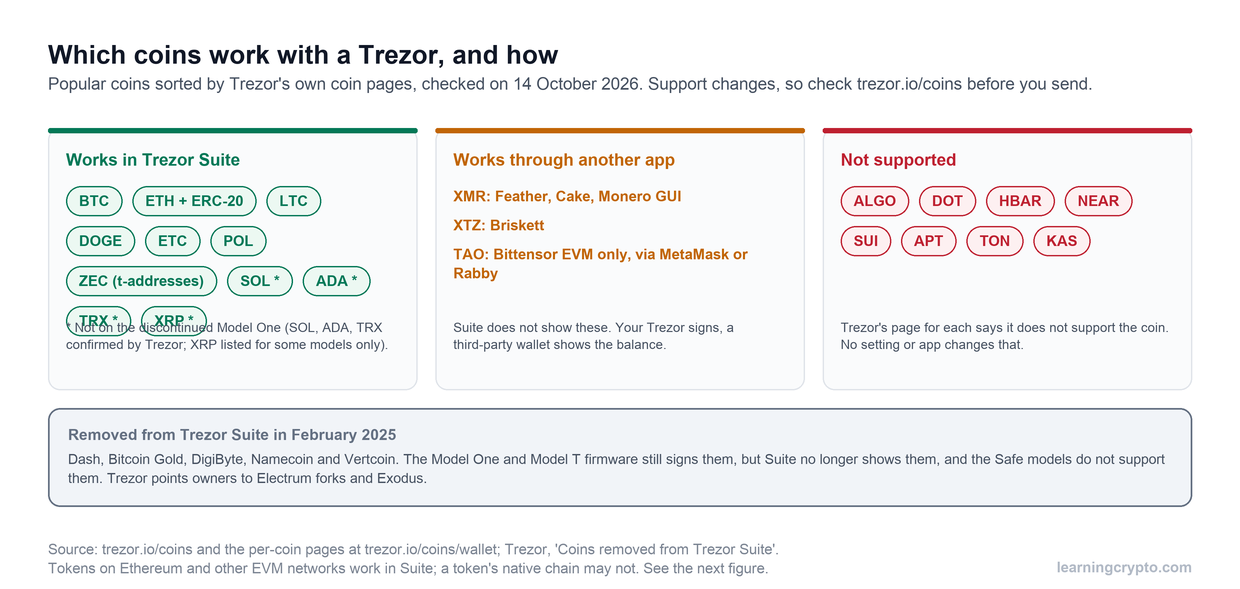
Which Coins Does Trezor Support? ALGO, DOT, HBAR, TAO and the Workarounds
Trezor Suite handles Bitcoin, Ethereum and its tokens, Solana, Cardano, XRP, Tron, Litecoin, Dogecoin and a few others directly. Monero, Tezos and Bittensor's EVM network work through partner apps. Algorand, Polkadot, Hedera, NEAR, Sui, Aptos, TON and Kaspa are not supported at all as of October 2026, so those coins need a different wallet.
Toby CunninghamWallets & Custody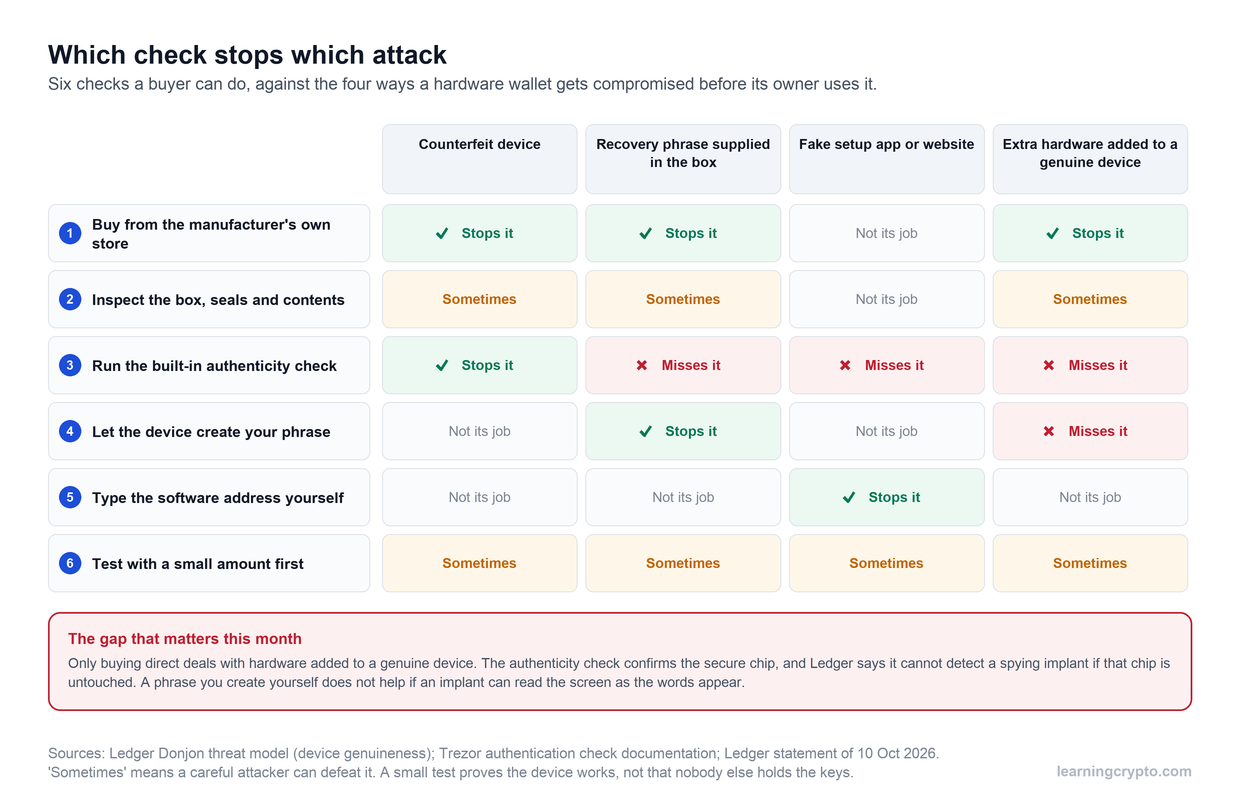 Wallets & Custody
How to Check a Hardware Wallet Is Genuine, and What the Checks Miss
Buy the device from the manufacturer's own store, refuse any wallet that arrives with a recovery phrase or PIN already set, download the setup software from an address you type yourself, and run the built-in authenticity check. That check proves the secure chip is real. It cannot detect extra hardware added around the chip, which is why where you buy matters most.
Toby CunninghamWallets & Custody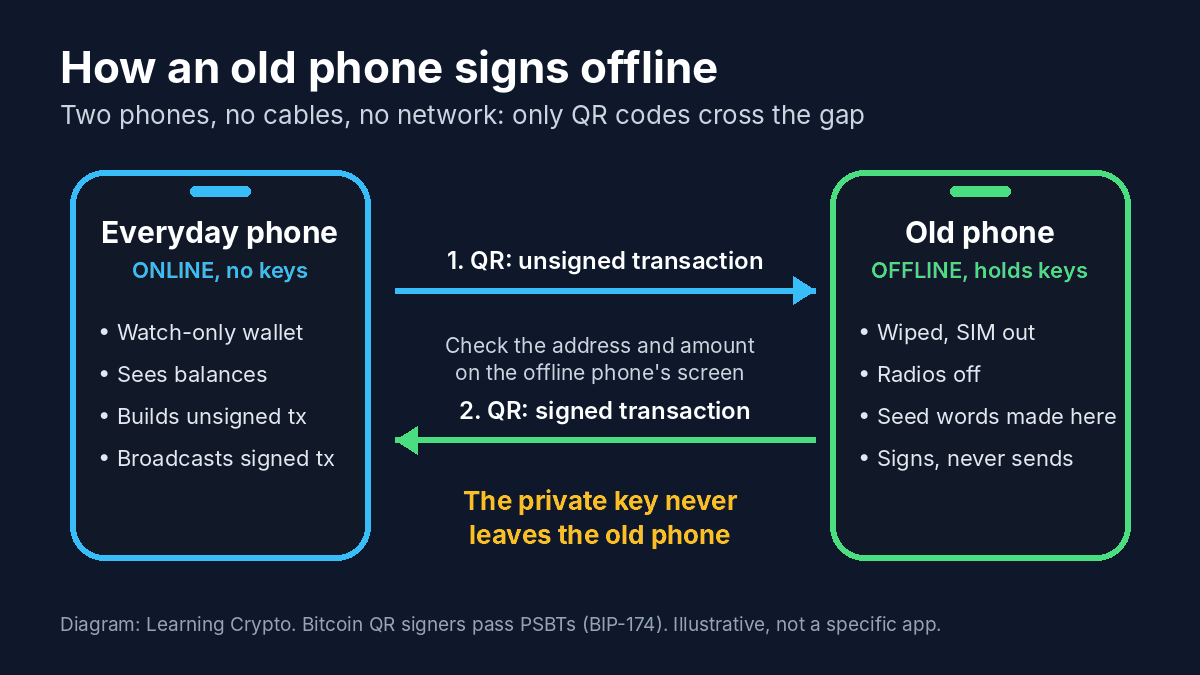 Wallets & Custody
How to Turn an Old Phone Into a Hardware Wallet (and When to Just Buy One)
Yes, a spare phone can work like a hardware wallet. Wipe it, take the SIM out, install an open-source signing app such as AirGap Vault, then keep it offline for good and sign by QR code. It is cheaper but weaker than a dedicated device: the phone was built to be online, and old phones stop getting security updates.
Heidi ChakosWallets & CustodyWallets & CustodyLedger "Hack" Explained: Who Is Affected, What Happened and Why You Should Never Buy a Hardware Wallet From a Reseller
The Ledger thefts traced so far involve devices sold by one reseller, CryptoBilis, in Malaysia, Indonesia and the Philippines. Ledger has confirmed a hidden hardware implant in one affected device and sees no sign its own systems were compromised. Losses are estimated near $93 million. If you bought direct from Ledger and made your own recovery phrase, nothing reported points at you.
Toby CunninghamWallets & Custody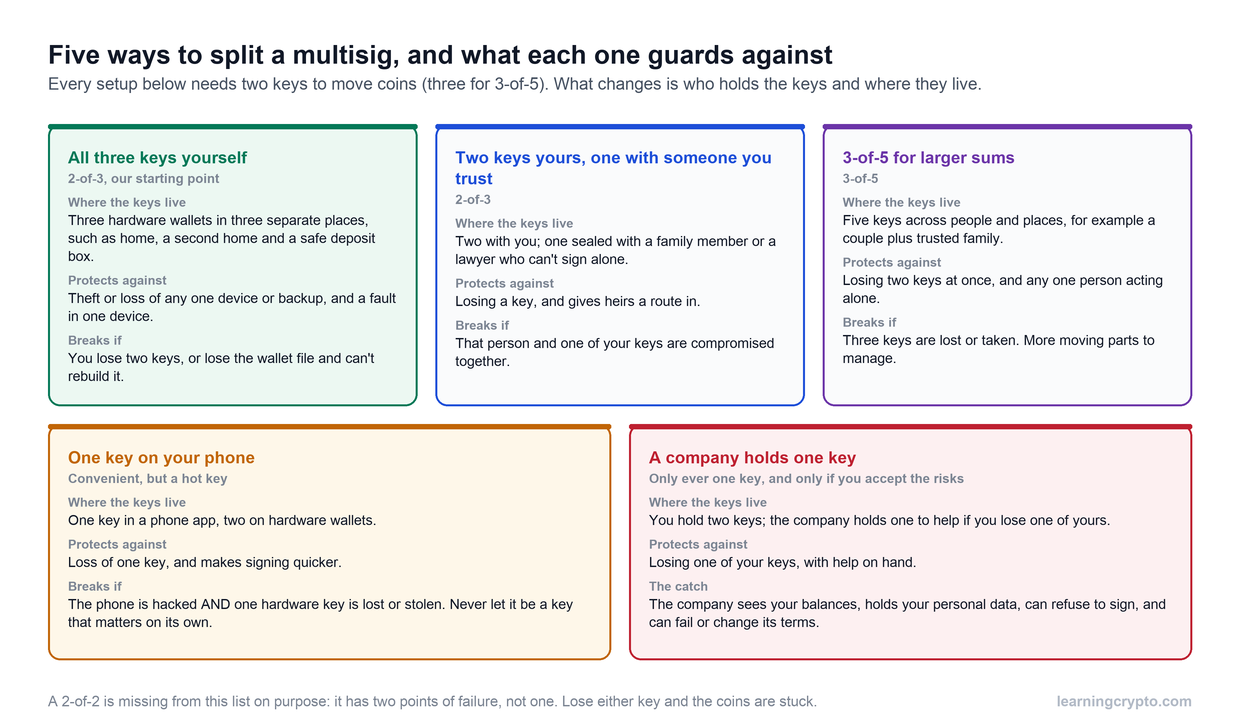 Wallets & Custody
Multisig Explained: How to Split Your Bitcoin Keys and Why It Matters
Multisig means your bitcoin only moves when a set number of keys sign, for example any 2 of 3. No single lost, stolen or faulty key can empty the wallet. In the July 2026 Coldcard drain, single-key wallets were emptied, while multisig wallets with only one affected key were not reported drained.
Heidi ChakosWallets & Custody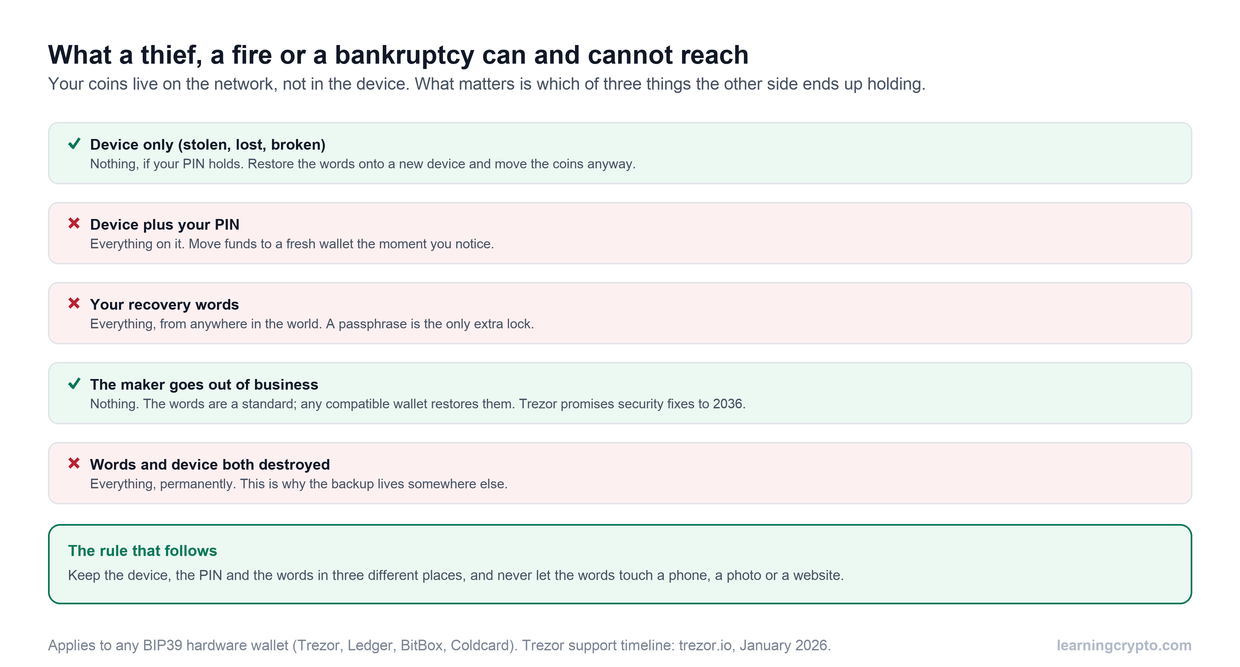 Wallets & Custody
Lost or Stolen Hardware Wallet, or the Maker Goes Bust: What Happens to Your Crypto
Your crypto is not inside the hardware wallet; it is on the network, and the device only holds the key. Lose the device and your recovery words restore everything onto any compatible wallet. Lose the words and the device together and the coins are gone. If the maker goes bust nothing changes, because the words follow an open standard.
Heidi ChakosWallets & Custody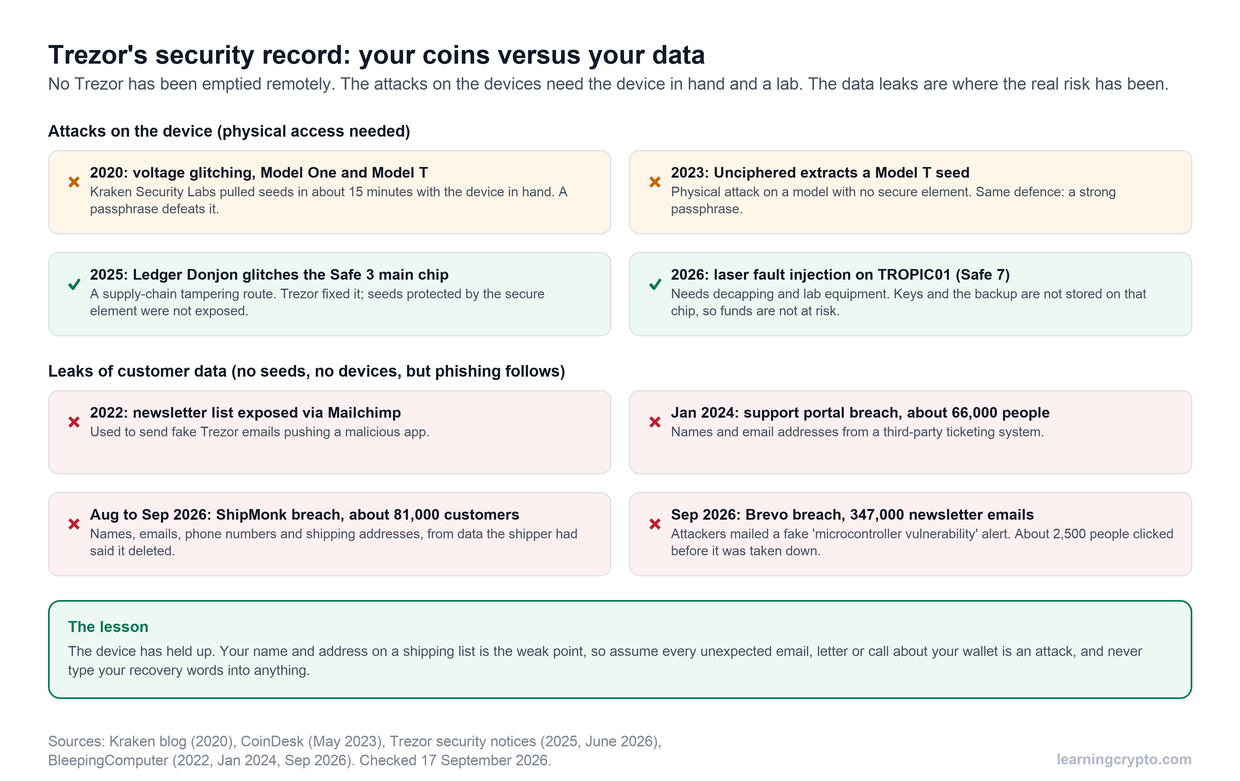 Wallets & Custody
Is Trezor Safe? The Honest Record for the Safe 3, Safe 5 and Safe 7
Yes. No Trezor has been emptied through a remote hack, and the Safe 3, Safe 5 and Safe 7 protect your PIN and backup with a certified secure element. The real problems have been leaks of customer contact data through suppliers, most recently in August and September 2026, which fuel phishing. Add a passphrase and never type your recovery words into anything.
Toby CunninghamWallets & Custody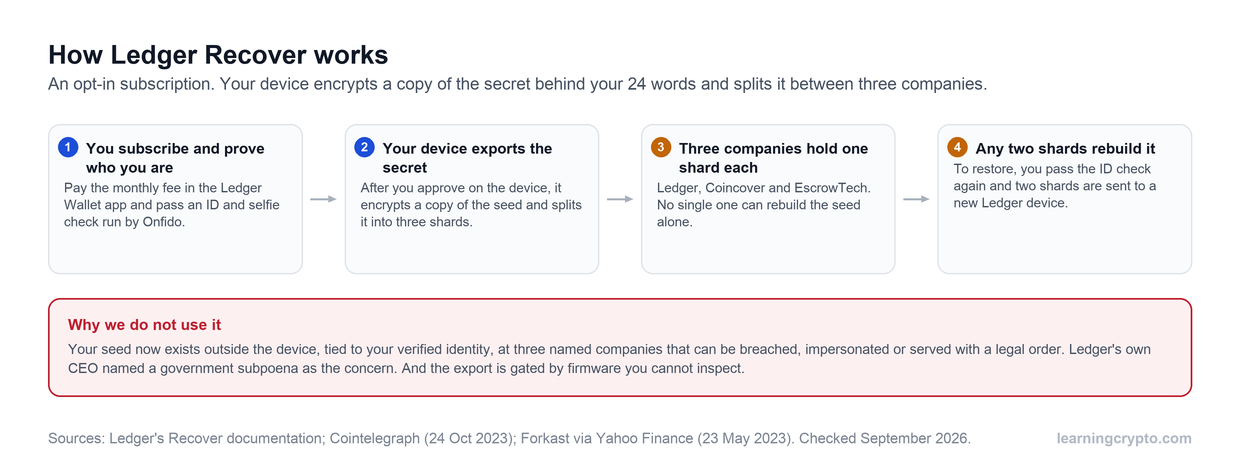 Wallets & Custody
Ledger Recover Explained: How It Works and Why We Don't Use It
Ledger Recover is an optional paid service in which your Ledger encrypts a copy of your seed, splits it into three shards and sends them to Ledger, Coincover and EscrowTech after an ID check. Any two shards can rebuild your wallet. We do not use it: it ties your identity to your keys and relies on firmware you cannot inspect.
Heidi ChakosWallets & Custody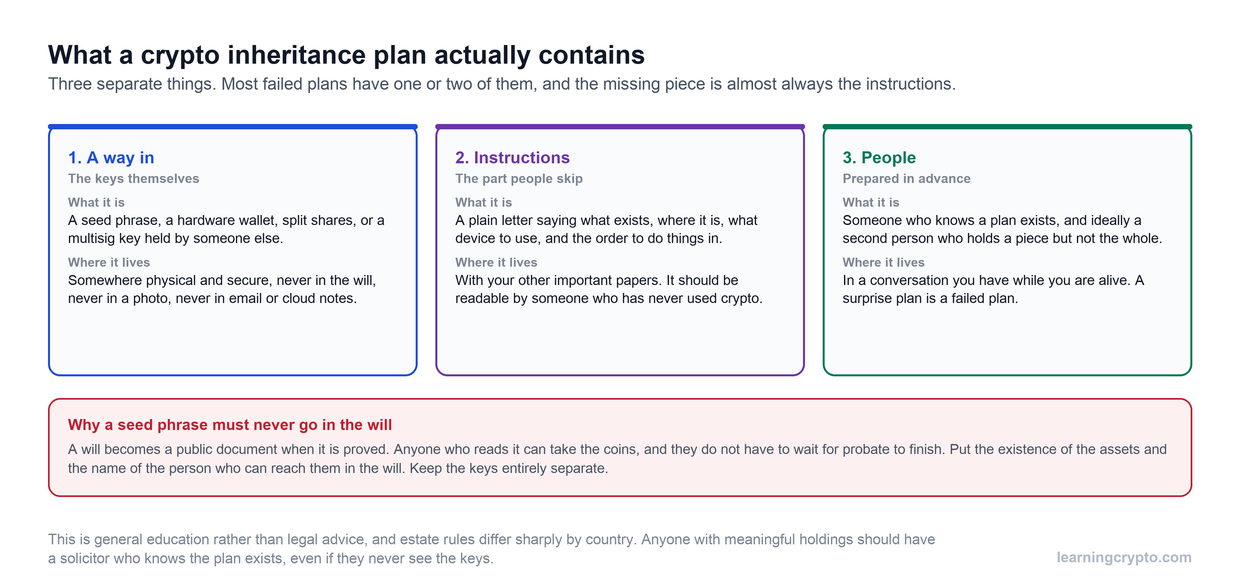 Wallets & Custody
Crypto Inheritance: How to Pass On Your Crypto Safely
A crypto inheritance plan needs three things: an access method that gets keys to your heir, plain-language instructions they can follow, and a will that establishes who is entitled to what. Never write a seed phrase in the will itself, because probate usually makes it a public document.
Heidi ChakosWallets & Custody Wallets & Custody
Multisig Operational Playbook: A Guide to Secure Shared Crypto Custody
A multisig operational playbook is a written set of procedures for running a multi-signature wallet: who initiates, signs, audits and recovers; how signers are geographically spread and backed up on hardware wallets; a step-by-step signing ceremony with independent checks of address, amount and network; and scheduled audits and drills. The M-of-N threshold and separation of duties stop any one person controlling the funds.
Heidi ChakosWallets & Custody Wallets & Custody
How to Set Up a Multisig Wallet: Bitcoin and Ethereum, Step by Step
You can build a multisig yourself, with no company holding a key. On Bitcoin, a free app such as Sparrow ties three hardware wallets into a 2-of-3 wallet. On Ethereum and similar networks, a Safe account does the same with a smart contract. Back up every key plus the wallet file or Safe address, and test recovery first.
16 min read/Toby CunninghamWallets & Custody Wallets & Custody
What Is a BTC Wallet Address?
A BTC wallet address is the public identifier for receiving Bitcoin; it is derived from your private key and safe to share. Addresses come in four formats: Legacy (starts with 1), P2SH (3), Native SegWit (bc1q) and Taproot (bc1p). Use Native SegWit by default: its transactions are 40-60% smaller than Legacy, so fees are lower, and every major wallet and exchange supports it.
Heidi ChakosWallets & Custody Wallets & Custody
What Is a Crypto Wallet Address and How Does It Work?
A crypto wallet address is a 26 to 42 character string that acts as your receiving identifier on a blockchain. It is derived one-way from your public key, so sharing it is safe; only your private key and seed phrase stay secret. Bitcoin addresses start with 1, 3, or bc1; Ethereum and EVM chains use 0x. Verify the network and send a small test first.
17 min read/Heidi ChakosWallets & Custody Wallets & Custody
How to Send Bitcoin to Another Wallet: A Step-by-Step Guide
To send Bitcoin to another wallet, open your wallet, tap Send or Withdraw, paste or scan the recipient's address, enter the amount, choose a fee speed, review everything and confirm. Bitcoin addresses start with 1, 3 or bc1; check the first and last six characters, because transactions cannot be reversed. Send a small test amount first, then track the transaction ID on a blockchain explorer.
Heidi ChakosWallets & Custody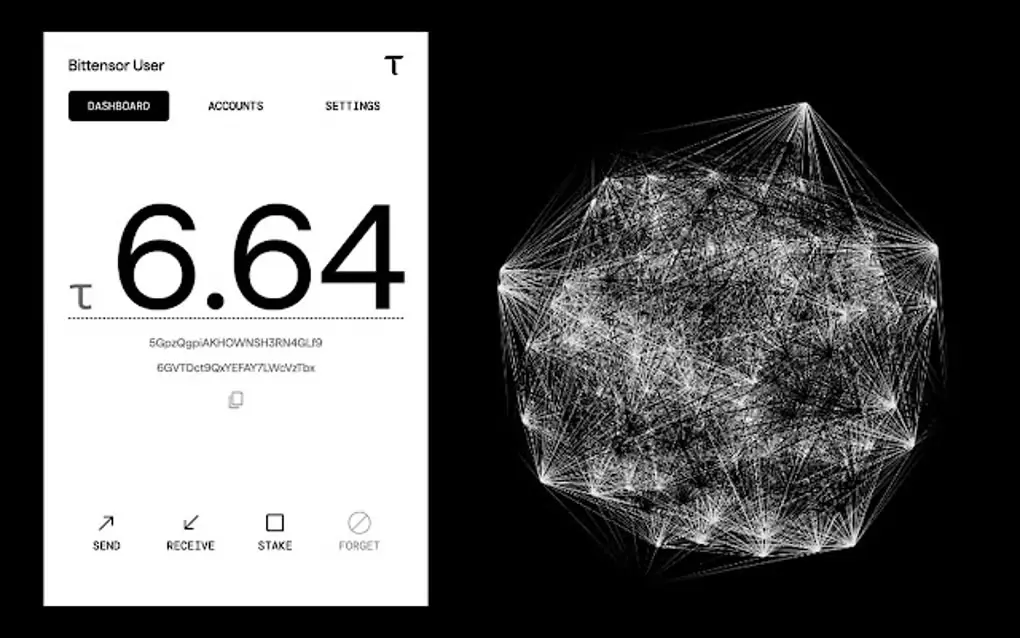 Wallets & Custody
Comprehensive Guide to Bittensor Wallets: Securing Your TAO
A Bittensor wallet is a non-custodial wallet holding the key pair that proves identity, signs transactions and accesses TAO. It has two parts: an always-encrypted coldkey that controls funds, transfers and subnet creation, and hotkeys for everyday tasks like running miners or validators. Create one via the web wallet or btcli, back up the seed phrase offline, and consider a hardware wallet for larger balances.
Heidi ChakosWallets & Custody Wallets & Custody
Crypto Wallet For Beginners: Types, Factors, How to Setup
For beginners, a hardware wallet such as the Trezor Safe 3 or BitBox02 is the safest choice because private keys stay offline; entry-level models cost roughly $50 to $150. Free software wallets like Exodus, MetaMask and Trust Wallet suit small, everyday balances. Whatever you choose, buy hardware direct from the manufacturer, write the seed phrase on paper, and test with a small transfer.
14 min read/Heidi ChakosWallets & Custody Wallets & Custody
What is a Lightning Wallet? [Explained] - How it Works?
A Lightning wallet is a Bitcoin wallet that sends and receives BTC through the Lightning Network, a second layer built on top of Bitcoin. Payments move through off-chain payment channels, so they settle in seconds and cost tiny routing fees instead of miner fees, compared with roughly 10-minute confirmations on the base chain. Popular options include Phoenix, Muun, Zeus, Breez and Wallet of Satoshi.
Heidi ChakosWallets & Custody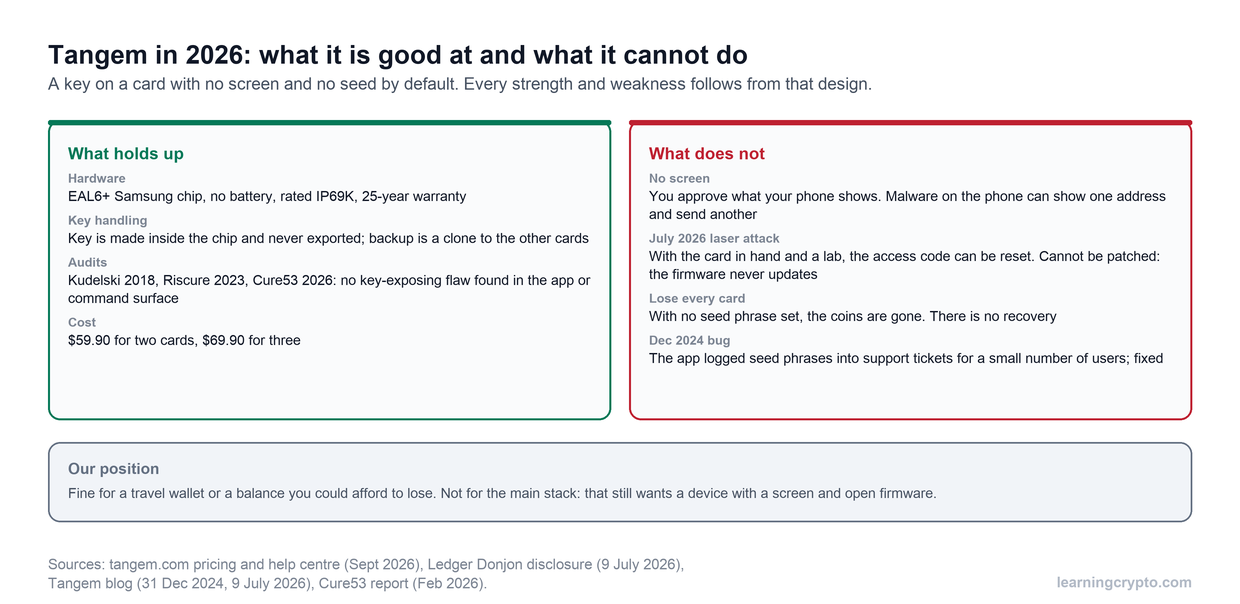 Wallets & Custody
Tangem Wallet Review (2026): Tough, Cheap, and Not for Your Main Stack
Tangem is a $59.90 NFC card that makes the key inside an EAL6+ chip and backs it up by cloning to a second card; no seed phrase unless you choose one. It survived our hammer test, but it has no screen, its firmware cannot be updated, and a July 2026 laser attack showed a stolen card can be reset in a lab. Travel money only.
Heidi ChakosWallets & Custody Wallets & Custody
Cold Wallet vs Hot Wallet: Key Differences Explained
A hot wallet keeps your private keys on an internet-connected device, so it is free and fast but exposed to malware and phishing. A cold wallet, usually a $50 to $300 hardware device, keeps keys offline and signs transactions internally. Most experienced holders use both: 80 to 90% of long-term holdings in cold storage, with a small hot-wallet balance for trading and DeFi.
24 min read/Heidi ChakosWallets & Custody Wallets & Custody
How to Use Cold Wallets for Crypto Like a Pro (Step-by-Step)
To use a cold wallet, buy a hardware device directly from the manufacturer, initialize it, write the 12 to 24 word seed phrase on paper or metal, set a PIN, install the companion app and coin apps, verify receiving addresses with a small test transfer, then disconnect. Cold wallets keep private keys off the internet, which is why they suit long-term, high-value holdings.
Heidi ChakosWallets & Custody Wallets & Custody
What Is a Hot Wallet in Crypto? Benefits and Risks Explained
A hot wallet is a crypto wallet whose private keys live on an internet-connected device such as a phone app, browser extension or desktop program. That gives instant access for trading, DeFi and NFTs, but exposes you to phishing, malware and malicious approvals. Keep only what you actively use, typically 10 to 20 percent of a portfolio, and sweep profits to cold storage.
18 min read/Heidi ChakosFAQ
Should I use a hot wallet or a cold wallet?
Use a hot wallet for small, active amounts and a cold (hardware) wallet for long-term holdings. Never store life-changing sums only on an exchange or a phone.
What is the single most important custody rule?
Anyone who sees your seed phrase can steal your funds. Write it offline, never photograph it, and never type it into a website.