
A multisig operational playbook is a critical document outlining clear procedures for managing a multi-signature cryptocurrency wallet. It details roles, key distribution, transaction processes, and audit protocols to minimize human error, prevent unauthorized access, and ensure secure, resilient shared custody of digital assets. Implementing a playbook is essential for anyone serious about the security and continuity of their crypto holdings, especially for groups or institutions.
Disclaimer: This article provides educational information on multisig operational best practices. It is not financial, legal, or security advice. Always consult with qualified professionals for specific guidance tailored to your situation. Securely managing crypto involves significant risks, and proper due diligence is essential.
What is a multisig operational playbook and why do you need one?
A multisig operational playbook is a comprehensive set of documented procedures for managing a multi-signature (multisig) wallet. While multisig inherently enhances security by requiring multiple keys to authorize transactions and eliminating a single point of failure, its effectiveness depends on meticulous planning. A playbook formalizes these processes, significantly reducing the risk of human error, internal collusion, or external compromise. It acts as a living guide, ensuring consistency, auditability, and business continuity, especially when multiple individuals or entities share custody responsibilities for significant crypto assets. Beyond security, a well-crafted playbook is crucial for organizational governance, providing a clear framework for decision-making and preventing disputes. It ensures that even with personnel changes or emergencies, established protocols for accessing and managing funds remain intact and understood. This structured approach is indispensable for institutions, DAOs, or groups pooling significant crypto assets, transforming potential chaos into controlled and secure operations.
How do you establish clear roles and responsibilities for multisig signers?
Defining clear roles and responsibilities is fundamental to a robust multisig setup. Your playbook should explicitly name individuals or positions responsible for key functions. Typical roles include initiators (propose transactions), signers (approve with their keys), auditors (review history), and recovery agents (emergency key recovery). The "M-of-N" threshold (e.g., 2-of-3) dictates required signers, influencing power distribution. Segregation of duties is paramount; the same person should not initiate, sign, and audit. This prevents unilateral fund control and mitigates risks like internal fraud, fostering checks and balances. Each role requires clearly defined, documented, and agreed-upon permissions and limitations. This clarity is vital for operational efficiency and accountability, especially for legal entities or DAOs. Regular reviews are essential to adapt to organizational changes, ensuring the multisig structure aligns with governance and security needs.
How should you distribute and back up multisig signers?
Effective signer distribution and robust backup strategies are critical for multisig security. Signers should ideally be geographically dispersed and not privy to each other's key information, minimizing the risk of a single physical attack or natural disaster compromising multiple keys. Each signer should use a dedicated hardware wallet to store their individual key securely offline. The seed phrases for these hardware wallets must be backed up meticulously, following best practices for offline, redundant, and encrypted storage. This might involve splitting seed phrases, using metal backups, and storing them in separate, secure locations like safety deposit boxes. Regular, scheduled drills for key recovery or "break-glass" procedures can ensure that these protocols remain viable and understood in an emergency.

Two signatures move the money and one on its own does nothing. The whole point is defeated if a single fire, burglary or firmware flaw can reach two of the three keys at once.
What should a multisig signing ceremony include?
A multisig signing ceremony is the formal process of executing a transaction. Your playbook should detail a step-by-step checklist to ensure every transaction is handled consistently and securely. This includes pre-signing verification: independent confirmation of the recipient address, amount, network, and purpose of the transaction by all involved signers. Communication should occur over secure, encrypted channels, explicitly prohibiting the sharing of private keys or seed phrases. During the actual signing, each signer independently connects their hardware wallet, reviews the transaction details on the device screen, and approves it. Post-signing, confirmation of the successful transaction on the blockchain and meticulous record-keeping are essential to maintain an immutable audit trail for all operations.
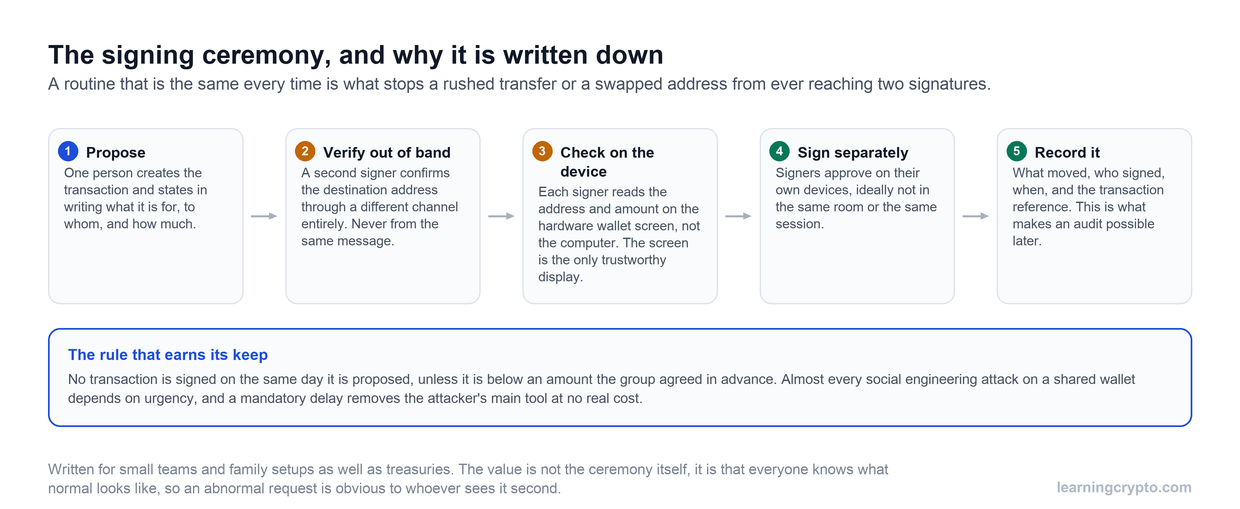
The value is not the ritual itself, it is that everyone knows what normal looks like, so an abnormal request is obvious to whoever sees it second.
How can you maintain and audit multisig operations over time?
A multisig operational playbook isn't a static document; it requires ongoing maintenance and regular audits to remain effective. Periodically review and update the playbook to reflect changes in personnel, security best practices, or wallet configurations. Conduct regular health checks of signer keys and hardware wallets, ensuring they are functional and secure. Implement continuous monitoring of the multisig wallet's transaction history on the blockchain, reconciling it against internal records to detect any unauthorized or anomalous activity. Formal internal and potentially external audits should be scheduled to assess compliance with the playbook, identify vulnerabilities, and test incident response plans for scenarios like a lost key or a compromised signer. This proactive approach ensures the long-term integrity and security of your shared crypto custody.
Managing a multisig wallet effectively demands discipline and a well-defined process. For those looking to keep track of their diverse crypto holdings, a comprehensive tool like the Learning Crypto Portfolio Tracker can be invaluable. It helps you monitor your assets across various wallets, including multisig setups, providing a holistic view of your portfolio's performance and security posture. To further enhance your crypto journey and gain access to advanced tools and insights, explore our membership options. See all plans to find the right fit for your needs and join a community dedicated to secure and informed crypto engagement.
Frequently asked questions
Should the same person initiate, sign and audit a multisig transaction?
No. Segregation of duties is central to a sound multisig setup. The playbook should name separate people or positions as initiators, signers, auditors and recovery agents, each with documented permissions and limits. Keeping these roles apart prevents any one person controlling funds unilaterally and reduces the risk of internal fraud. Review the assignments regularly so they still match the organisation's structure after personnel changes.
What does 2-of-3 mean in a multisig wallet?
It is an M-of-N threshold: the wallet has three keys and any two of them must sign to authorise a transaction. The threshold you choose decides how power is distributed among signers and how much redundancy you have if a key is lost. The playbook should record the threshold, who holds each key, and the recovery procedure for replacing a lost or compromised signer.
How often should a multisig playbook be reviewed?
Treat it as a living document rather than a one-off. Review and update it whenever personnel, wallet configuration or security best practices change, run regular health checks on signer keys and hardware wallets, and reconcile the wallet's on-chain history against internal records continuously. Schedule formal internal, and possibly external, audits that test incident response for scenarios such as a lost key or a compromised signer, plus periodic recovery drills.
Do DAOs and small groups need a multisig operational playbook?
Yes. A playbook is indispensable for institutions, DAOs and any group pooling significant crypto assets. Multisig only removes the single point of failure if the people around it follow consistent procedures; without written roles, backup rules and a signing checklist, human error and disputes creep in. A playbook also keeps funds accessible when members leave or emergencies hit. This is educational guidance, not legal or security advice.
Keep learning
- What Is a Crypto Wallet Address and How Does It Work?
- Trezor Safe 7 Review - Is It Worth It?
- Is Exodus Wallet Safe? Breaking Down Its Security Features
- More guides in the Wallets & Custody hub
- Members: Portfolio Tracker, see all your wallets in one place