
If you've spent any time exploring cryptocurrency beyond just buying on an exchange, you've probably encountered hot wallets.
Every time someone swaps tokens on Uniswap, mints an NFT, or sends Bitcoin from their phone, there's usually a hot wallet making it happen.
The name sounds dramatic, but it's actually pretty straightforward. "Hot" just means connected to the internet and ready to go, like a hot coffee versus one sitting in the fridge. Your hot wallet is always on, always accessible, always ready to sign transactions the moment you need it.
This connectivity is what makes hot wallets essential for anyone who actually uses their crypto rather than just holding it.
Want to jump on a DeFi opportunity at 2 AM? Your hot wallet is already there. Need to claim an airdrop before the deadline? No hardware device to dig out and connect. Spot a trading opportunity? Execute it in seconds.
But being always-on and internet-connected you're also trading convenience for elevated risk. A hot wallet isn’t “worse” than a cold wallet. It just has a different job.
That’s what we are going to talk about - what makes a wallet "hot," when you actually need one, how the security risks stack up, and how to use hot wallets without constantly worrying about whether your funds are safe.
What Defines a Hot Wallet?
The Connectivity Factor
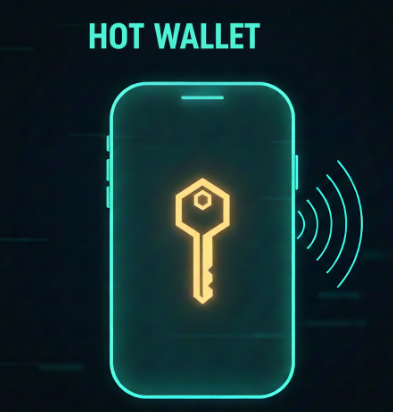
At its core, a hot wallet is any cryptocurrency wallet where your private keys live on a device connected to the internet.
Your private keys - those cryptographic codes that prove you own your crypto - are on your phone, computer, or browser. They're encrypted and password-protected, sure, but they're on hardware that's constantly chatting with the internet.
Which means your wallet can check your balance instantly, broadcast transactions the second you hit send, and stay synced with the blockchain without you lifting a finger.
This connection is why hot wallets feel so smooth-running.
Immediate transactions? Check. Live portfolio tracking? Yep. Real-time gas fees so you don't overpay? Got it. Your wallet doesn't need to "wake up" or spend five minutes syncing. It's already there, ready to go.
That same connection also means your private keys are living on a device that's exposed to the entire internet. Anyone who can compromise your device or the software running on it could theoretically access your wallet.
You're not just worried about someone stealing your phone anymore, you're also thinking about malware, phishing sites, and remote attacks.
It's the fundamental tradeoff baked into the design. Maximum accessibility means accepting some level of online exposure.
Where Hot Wallets Live
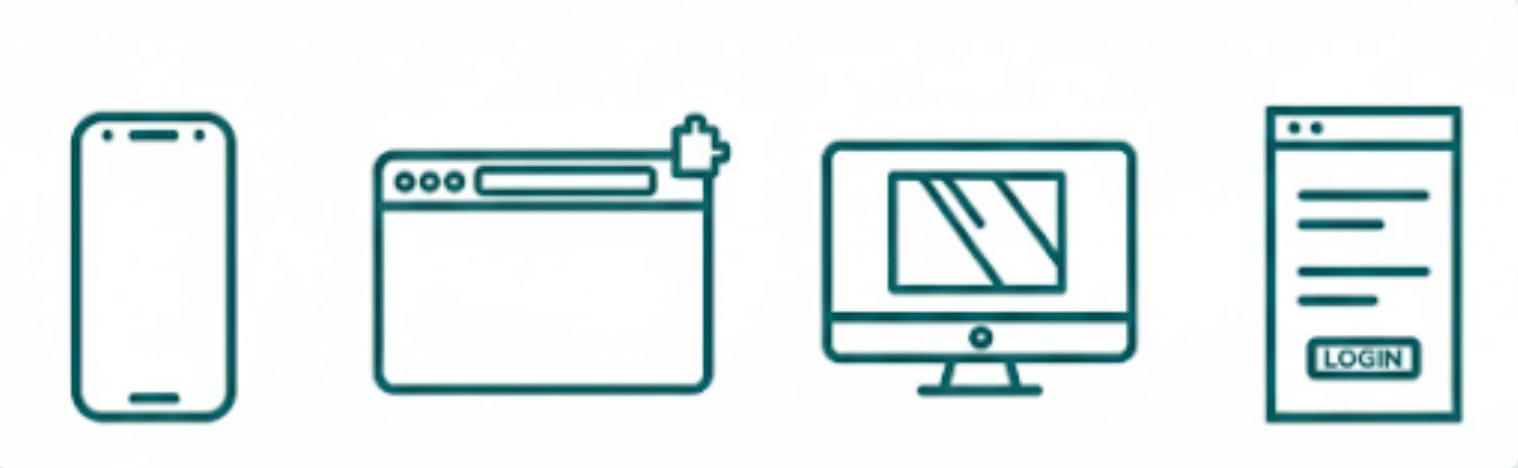
Hot wallets come in a few different forms:
Mobile apps dominate because, let's be honest, we all live on our phones now. Trust Wallet, Coinbase Wallet, and Exodus Mobile give you crypto access from anywhere - your morning commute, the grocery store checkout, that moment at 11 PM when you suddenly need to check if your portfolio is still intact. Biometric security means unlocking with your face or fingerprint, and push notifications keep you updated on transactions.
Browser extensions like MetaMask, Phantom, and Rabby are the DeFi power tools. They live right in your Chrome or Brave browser, ready to connect with any decentralized app you visit. Want to swap tokens on Uniswap? Your browser extension is the bridge that makes it happen. These wallets basically invented the "connect wallet" button that's everywhere in Web3 now.
Desktop applications bring the big screen energy. Exodus Desktop and Electrum are perfect when you want to really dig into your portfolio, manage complex positions, or just not squint at transaction details on a phone screen. They're the wallets serious traders and portfolio managers tend to gravitate toward.
Web wallets are the "no download required" option just log into a website and you're good. Super convenient, but usually the least secure option in the hot wallet world. Many of these are actually exchange wallets in disguise. If you're typing in a username and password to access your crypto rather than unlocking with a seed phrase, you're probably not in a real self-custody wallet.
The Self-Custody Distinction
Here's where things get important: not all hot wallets actually give you control of your crypto.
Non-custodial hot wallets are the real deal. You control the private keys. Period. MetaMask, Trust Wallet, Exodus generate a seed phrase when you set them up, and that phrase is your ticket to everything.
The wallet software is just a fancy interface. The company running it never sees your keys, never has access to your funds, and can't freeze your account. If they shut down tomorrow, your crypto is still yours as long as you have that seed phrase.
Custodial hot wallets are more like crypto bank accounts. When you keep funds in your Coinbase exchange account or Binance wallet, the exchange is actually holding your crypto. You're accessing it through login credentials, but they control the keys.
It's convenient, there’s no doubt about it you get customer support, password resets, familiar login flows. But you're trusting the company's security, and they can technically restrict your access.
Both types are "hot" in the sense that they're online and accessible. But the security model is completely different. With non-custodial, you're the single point of failure.
This might sound scary until you realize it also means you're the only one who can mess it up. With custodial, you're trusting a company's security practices, regulatory compliance, and long-term solvency.
Hot Wallet Types Quick Guide | ||||
|---|---|---|---|---|
Type | Examples | Security | Convenience | Best For |
Mobile App | Trust Wallet, Coinbase Wallet, Exodus Mobile | Medium | Very High | On-the-go access, beginners, quick transactions |
Browser Extension | MetaMask, Phantom, Rabby | Medium | High | DeFi users, dApp interaction |
Desktop App | Exodus Desktop, Electrum, Atomic Wallet | Medium-High | Medium | Portfolio management, larger transactions |
Web Wallet | Exchange wallets, some hosted wallets | Low-Medium | Very High | Ease of access, password recovery |
Custodial Hot Wallet | Coinbase account, Binance wallet | Varies | Very High | Beginners, those wanting support |
How Hot Wallets Work
The mechanics are pretty straightforward once you look under the hood.
Key Storage
When you create a hot wallet, it generates your private keys using cryptographic randomness and immediately encrypts them with your password. These encrypted keys live in your device's storage and tucked into a protected app sandbox on mobile, browser extension storage, or an encrypted file on your desktop.
The encryption is typically AES-256, the same standard protecting classified government data.
Transaction Process
Every time you send crypto, here's what happens behind the scenes:
You initiate a transaction in the wallet interface; enter the recipient address, specify the amount, maybe adjust the gas fee
The wallet constructs the transaction data with all those details
It temporarily decrypts your private key using your password, pulling it into your device's active memory
It uses that key to cryptographically sign the transaction, proving you authorized it
The signed transaction gets broadcast to the blockchain network
Your wallet watches the blockchain for confirmations
Your balance updates once the transaction is verified
The whole thing happens in seconds. The private key never leaves your device in unencrypted form. It just briefly comes to life in memory to sign the transaction, then disappears again.
Seed Phrase System
The genius of modern wallets is the seed phrase, those 12 or 24 random words you write down during setup.
This isn't just a backup code. It's actually the master key that mathematically generates all your private keys using something called the BIP-39 standard. Give that same seed phrase to any compatible wallet software, and it will regenerate the exact same private keys, giving you access to all the same addresses and funds across every blockchain your wallet supports.
You can access the same wallet from your phone, computer, and browser simultaneously because they're all deriving the same keys from the same phrase.
It also means that seed phrase is your single point of failure. Anyone who gets those words can access everything.
This is why hot wallet security ultimately comes down to how well you protect 12 to 24 words.
Internet Connectivity Role
The constant internet connection is what makes hot wallets "hot," and it's what enables all their functionality.
Your wallet stays synchronized with the blockchain automatically, which gives you:
Real-time balance updates the moment transactions hit the network
Instant transaction broadcasting without delays or syncing
Current gas fee information so you're not overpaying
Live price data and portfolio tracking
DeFi protocol interaction
Automatic blockchain synchronization in the background
This constant connectivity also creates the security considerations we'll dig into later. For now, just know that hot wallets are built for speed and accessibility. The architecture assumes you need frequent, immediate access to your crypto.
Hot Wallet Benefits and Use Cases
Instant Access When It Matters
Hot wallets exist for one reason: they make crypto actually usable.
There's no device to plug in, no waiting for hardware to sync, no friction between "I need to do this" and actually doing it. If you need to send funds, claim an airdrop, or jump into a trade, your wallet is already there.
Real scenarios where this matters:
Minting an NFT during a limited drop where every second counts
Executing a trade when you spot a price movement
Claiming an airdrop before the deadline hits
Paying for something with crypto while you're standing at the register
Participating in a governance vote that's about to close
With a cold wallet, you'd be fumbling for cables and waiting for confirmations. With a hot wallet, you're done before you even think about it.
Built for DeFi and Web3
If you're trading on DEXs, interacting with lending protocols, or browsing NFT marketplaces, you need a wallet that lives in the browser.
Hot wallets are wired directly into the Web3 ecosystem. That "Connect Wallet" button on Uniswap, OpenSea, or Aave? It's looking for a hot wallet. Browser extensions like MetaMask and Phantom were specifically designed to bridge the gap between websites and blockchain transactions.
Cold wallets can technically do this too, but not at the pace DeFi demands. Providing liquidity, harvesting yield, swapping between tokens multiple times in a session. These activities require rapid-fire transaction signing. Doing that with a hardware device means constant plugging, unplugging, and screen confirmations.
Hot wallets let you move at the speed of decentralized finance.
Fast Workflow for Active Users
Approving transactions with your fingerprint or a quick password makes repetitive actions painless.
This matters when you're:
Managing positions across multiple DeFi protocols
Switching between different blockchain networks
Reacting to fast-moving market conditions
Testing new platforms with small amounts
Making regular purchases or payments
Perfect for Learning and Experimenting
Trying out new protocols, testing unfamiliar blockchains, connecting to Web3 apps, exploring NFT platforms all of this depends on having a wallet that can plug in instantly.
For people actively learning crypto rather than just accumulating it, a hot wallet is less of a tool and more of an operating system. It's how you interact with the entire ecosystem.
You can experiment with small amounts, figure out how things work, make mistakes that don't cost much, and build genuine understanding. That's harder to do when every interaction requires pulling out a hardware device.
Live Portfolio Visibility
Hot wallets give you real-time insight into what's happening with your crypto.
Live balance updates, current price feeds, complete transaction histories, visual portfolio breakdowns. You're not guessing about your holdings or checking multiple sources. Everything updates automatically as the blockchain confirms transactions.
This visibility matters for active management. You can see exactly where your assets are, what they're worth right now, and what's changed since you last looked. For traders and DeFi participants, this real-time data is essential.
Multi-Device Flexibility
Your hot wallet isn't locked to one device.
Because everything is backed up by your seed phrase, you can access the same wallet from your phone, computer, and browser. Check your portfolio on mobile, execute complex transactions from your desktop, use browser extensions for quick swaps.
Lost your phone? Restore the wallet on a new device in minutes. Traveling? Access your funds from any device with your seed phrase.
Hardware wallets require you to have the physical device. Hot wallets go wherever you go.
The Risks of Hot Wallets (And Where They Actually Come From)
For all that convenience, hot wallets carry one unavoidable reality: they live on internet-connected devices. And the internet is where most crypto losses actually happen.
The biggest risks don’t usually come from someone “hacking the blockchain.” They come from attacking the user.
Common real-world threats include:
Phishing websites that trick users into signing malicious transactions
Fake wallet popups that steal seed phrases
Malware on compromised devices
Browser extensions abusing permissions
Clipboard hijackers that replace copied wallet addresses
In most major theft cases, the wallet software worked exactly as designed. The failure happened at the human or device level.
Hot wallets also create transaction-level risk. Once you sign a bad transaction, there is no undo button. If you connect to a malicious smart contract and approve it, the blockchain will treat that approval as fully valid. That’s not a flaw in the wallet. That’s how permissionless systems work.
The other core risk is single-point-of-failure exposure. Your seed phrase controls everything. If it’s photographed, phished, stored in cloud storage, or typed into the wrong website even once, your wallet can be emptied at any time in the future.
There’s also something that is little talked about the risk that grows over time. Successful hot wallet users tend to accumulate more in them than they should.
You start with $500 for DeFi trading. You make some profitable trades. Suddenly you're sitting on $3,000, then $5,000, then more. You tell yourself you'll move it to cold storage "soon," but the convenience of having it accessible keeps winning.
This is how people end up with life-changing amounts in hot wallets that were only meant for pocket change.
Hot Wallet vs Cold Wallet: Different Tools, Different Jobs
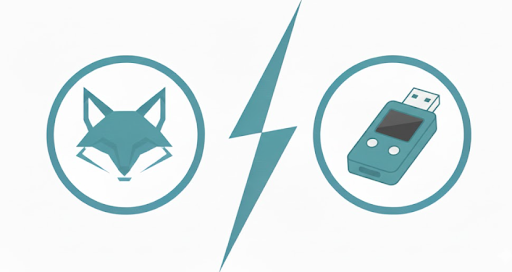
Hot wallets and cold wallets aren't competing.
Hot wallets optimize for accessibility. They're built for frequent access, active trading, DeFi participation, and Web3 interaction. The security model accepts online exposure as the cost of convenience.
Cold wallets optimize for security. They're designed for long-term storage where you can tolerate the friction of connecting hardware whenever you need access. Your keys stay completely offline.
The Hybrid Approach (What Most People Actually Do)
Most experienced crypto users don't choose between hot and cold. They use both strategically.
A typical setup:
Hot wallet: 10-20% of portfolio for active use
Cold wallet: 80-90% for long-term holdings
Small exchange balance for instant trading if needed
The workflow: Trade and participate using your hot wallet. When profits accumulate or your balance gets uncomfortable, sweep funds to cold storage. Keep your cold wallet disconnected except when moving significant amounts.
Real example:
Someone with a $15,000 portfolio might keep $2,000 in MetaMask for DeFi and trading, $13,000 on a Ledger for long-term holds, and $500 on an exchange for instant liquidity. They transfer profits from hot to cold monthly, or whenever the hot wallet exceeds $3,000.
The specific numbers matter less than the principle: only keep amounts in your hot wallet that you're comfortable risking for the convenience they provide.
Hot wallets enable crypto utility. Cold wallets enable crypto security. You probably need both.
Want to understand the full technical breakdown and specific use cases? We've covered everything in our complete guide to hot wallets vs cold wallets.
Securing Your Hot Wallet: Essential Practices
Hot wallet security comes down to a few non-negotiable rules and one critical principle: never keep more in a hot wallet than you're comfortable losing.
Protect your seed phrase like it's the master key to everything - because it is. Write it on paper immediately. Never screenshot it, never store it digitally, never type it into anything except the wallet you're restoring. Multiple physical copies in secure locations. That's it.
Use strong, unique passwords. 20+ characters, managed through a password manager like 1Password or Bitwarden. Never reuse passwords across wallets or services.
Verify every transaction carefully. Check the first and last 6 characters of addresses before sending. Be especially careful with smart contract approvals—avoid unlimited token allowances and regularly audit what you've approved using tools like revoke.cash.
Set hard limits and stick to them. Decide your maximum hot wallet balance based on what you can afford to lose ($500? $2,000? $5,000?) and transfer anything above that to cold storage. The most common mistake isn't getting hacked—it's letting profits accumulate until your "spending wallet" holds more than your emergency fund.
Keep your device secure. Updated OS and apps, strong device passcode, only official wallet apps from verified sources. Don't jailbreak your phone or access your wallet on shared computers.
For comprehensive security guidance, check out our crypto security best practices guide.
Hot Wallets: The Right Tool for the Right Job
Hot wallets make crypto functional. They're not a security compromise they're purpose-built for active use, DeFi participation, and Web3 interaction.
The strategy is simple: keep amounts you're actively using in hot wallets, protect your seed phrase obsessively, set hard limits on your balance, and sweep profits to cold storage regularly. Hot and cold wallets work together. One for utility, the other security.
Most people need both. The split matters less than the discipline.
If you want to build genuine competence with crypto wallets, security practices, and trading strategies, Learning Crypto provides AI-powered interactive learning and advanced tools to match your experience level.
FAQs
What happens if I lose my phone with a hot wallet?
Your crypto is safe if you have your seed phrase backed up. Download the wallet app on a new device, select "restore wallet," enter your seed phrase, and everything reappears. Without it, a lost device means lost funds permanently. With it, device loss is just an inconvenience.
What's the difference between a hot wallet and a software wallet?
They're essentially the same thing. Both refer to wallets where your private keys are stored on software running on an internet-connected device. The term "hot wallet" emphasizes the internet connectivity aspect, while "software wallet" emphasizes that it's software-based rather than hardware-based. In practical usage, if someone says "software wallet," they usually mean a hot wallet.
Can I use a hot wallet for NFTs?
Hot wallets are actually the primary way most people interact with NFTs. Browser extensions like MetaMask and Phantom are built specifically for connecting to NFT marketplaces like OpenSea, Blur, and Magic Eden. In fact, the entire NFT ecosystem assumes you're using a hot wallet. You can store NFTs in cold storage for security, but you'll move them to a hot wallet whenever you want to actually do anything with them.
Do hot wallets charge fees?
The wallet software itself is free. You don't pay anything to download most hot wallets. You do pay blockchain transaction fees (gas fees) whenever you send crypto, which go to network validators, not the wallet company. Some wallets charge small convenience fees if you use their built-in swap features or purchase crypto directly through the app, but these are optional services. The core wallet functionality is free.
Are hot wallets anonymous?
No. Hot wallets give you pseudonymity, not anonymity. Your wallet address and all transactions are public on the blockchain. What's not automatic is linking that address to your real identity. But privacy breaks easily. Using a KYC exchange, receiving payments, or reusing addresses creates identity trails. Assume anything you do with a hot wallet is traceable and potentially linkable to you.
Disclaimer: This article is for educational purposes only and does not constitute financial advice. Cryptocurrency investments carry risk; you should always do your own research before making any investment decisions.
Keep learning
- How to Use Cold Wallets for Crypto Like a Pro (Step-by-Step)
- Trezor vs Ledger: Which Hardware Wallet Should You Choose?
- A Look into Litecoin MWEB Wallet and Privacy Extension Block
- More guides in the Fundamentals hub
- Members: Ask Crypto AI, ask it any beginner question, privately