
Bitcoin guides
Bitcoin is the monetary base layer of crypto. These guides cover why it exists, how to secure it, how supply issuance works, and how to think about it across market cycles — without the hype.
 Bitcoin
What Is a Soft Fork? How Blockchain Upgrades Work Without a Split
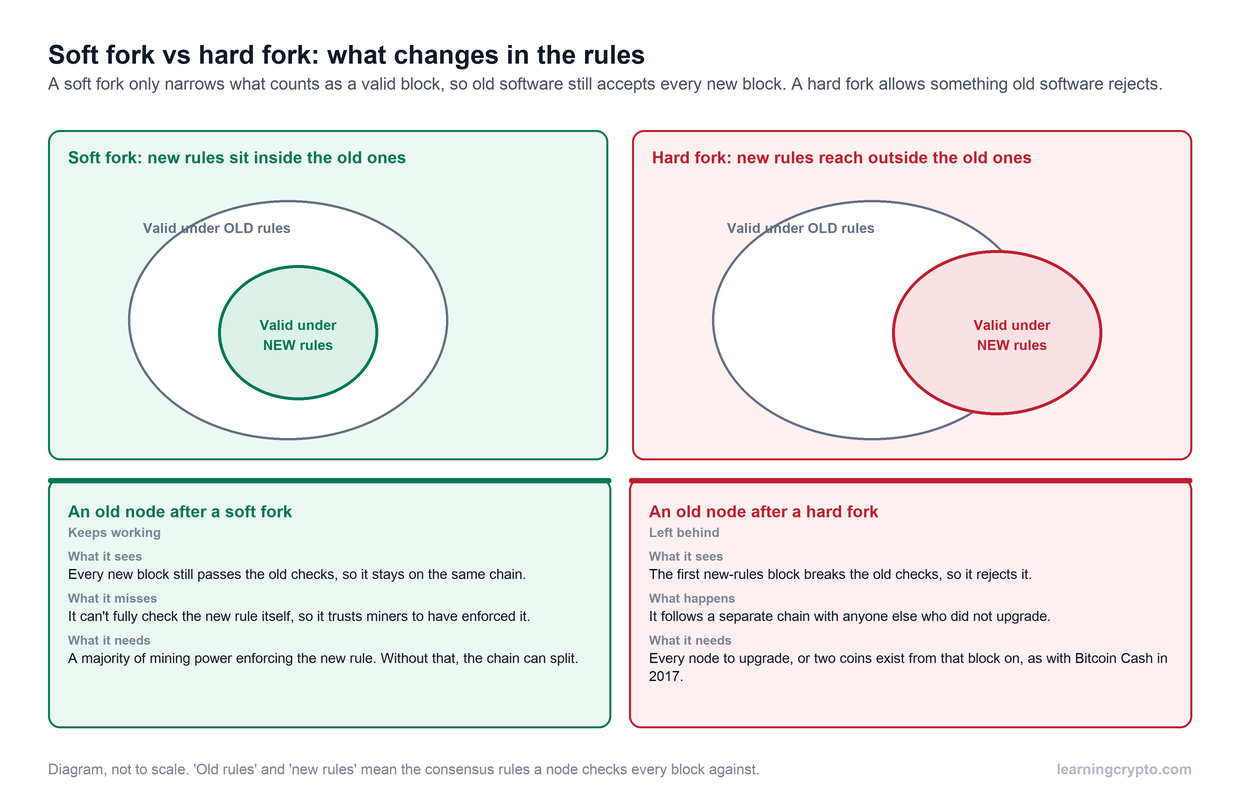
A soft fork is a backward-compatible change to a blockchain's rules. It tightens what counts as a valid block, so nodes that don't upgrade still accept new blocks and the network stays on one chain, with no new coin created. It needs most miners to enforce it. Bitcoin's SegWit (2017) and Taproot (2021) are the best-known examples.
Toby CunninghamBitcoin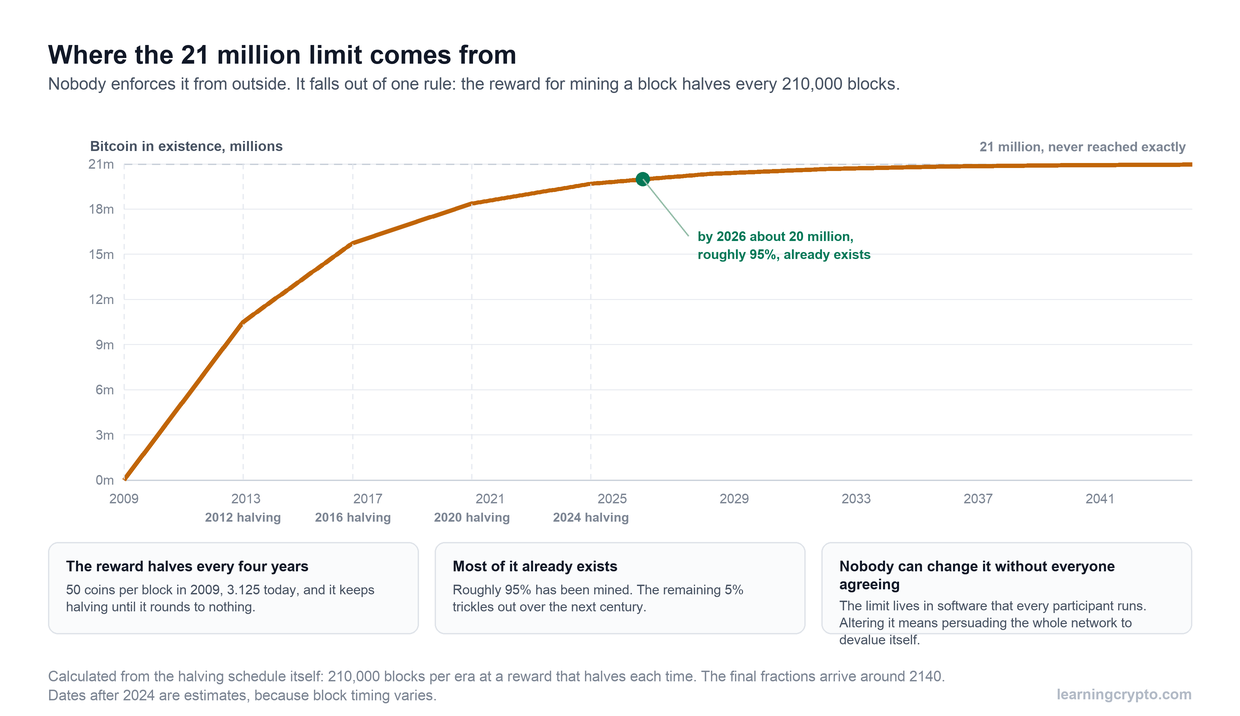 Bitcoin
What Is Bitcoin? A Complete Guide for Beginners
Bitcoin is digital money that no company, bank or government runs. A network of independent computers keeps a shared record of every transaction, ownership is proved by a private key rather than an account, and the supply is capped at 21 million coins so no one can create more. It has run continuously since January 2009.
Toby CunninghamBitcoin Bitcoin
The Cypherpunk Movement: Origins, Manifesto & Enduring Legacy
The cypherpunk movement was a loose network of cryptographers and privacy activists, emerging in the late 1980s and organised around a 1992 mailing list, who argued that strong encryption rather than legislation was the only reliable defence against surveillance. Eric Hughes' 1993 manifesto framed privacy as code. The Bitcoin whitepaper cites members' work, and Hal Finney received the first Bitcoin transaction.
Heidi ChakosBitcoin Bitcoin
Bitcoin vs Gold: Bitcoiner, Gold Bug, or Still Deciding?
Neither wins outright. Gold has a 5,000-year record, a market cap above $33 trillion, low volatility and industrial demand. Bitcoin is scarcer (21 million hard cap, inflation now below gold's), far more portable, and resistant to seizure with self-custody, but suffers 40 to 50% drawdowns. If you want stability, gold; if you want protection from censorship and asymmetric upside, Bitcoin. Many serious investors hold both.
Heidi ChakosBitcoin Bitcoin
What Are Privacy Coins and Are They Legal?
Privacy coins are cryptocurrencies that use cryptography (stealth addresses, ring signatures, zk-SNARKs, CoinJoin) to hide who sent what to whom. Owning them in a private wallet is legal in most countries, including the US; restrictions target exchanges, not holders. Japan and South Korea banned exchange listings, India prohibited exchange dealings in 2026, and the EU's AMLR bars licensed providers from handling them from July 2027.
Heidi ChakosBitcoin Bitcoin
What Is Wrapped BTC (WBTC)
Wrapped Bitcoin (WBTC) is an ERC-20 token on Ethereum backed 1:1 by real Bitcoin held by custodians such as BitGo. It lets Bitcoin holders lend, trade and earn yield in DeFi without selling their BTC. The trade-off is trust: you swap Bitcoin's trustless model for custodial, smart contract and peg risk, so it suits active DeFi users rather than long-term cold storage.
Heidi ChakosBitcoin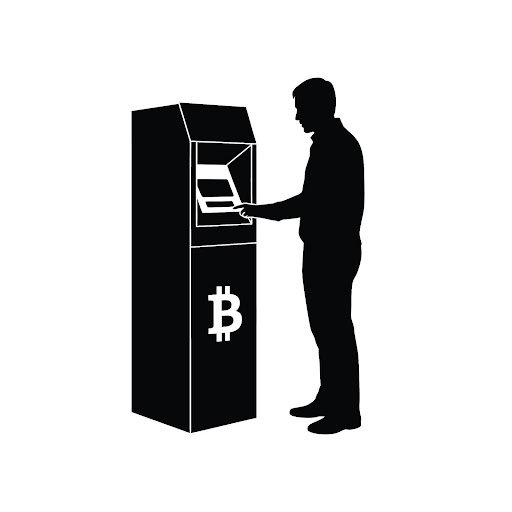 Bitcoin
How Do Bitcoin ATMs Work? A Beginner’s Guide
Bitcoin ATMs are cash-to-crypto kiosks run by private operators, not banks. You verify a phone number, scan your wallet's QR code, feed in cash, and the machine buys Bitcoin through an exchange and sends it to your address within minutes. Total fees typically run 10 to 25%, versus under 1% on online exchanges, so they only make sense for small, urgent cash purchases.
Heidi ChakosBitcoin Bitcoin
What Happens When All The Bitcoin Is Mined?
When all 21 million Bitcoin are mined, around 2140, block rewards stop and miners earn only transaction fees, a gradual handoff driven by halvings every four years. As of January 2026 about 19.6 million BTC (93.3%) already exist, with roughly 450 new coins a day at the 3.125 BTC reward. Security will then depend on fees being worth enough to keep miners running.
16 min read/Heidi ChakosBitcoin Bitcoin
What Is a BTC Wallet Address?
A BTC wallet address is the public identifier for receiving Bitcoin; it is derived from your private key and safe to share. Addresses come in four formats: Legacy (starts with 1), P2SH (3), Native SegWit (bc1q) and Taproot (bc1p). Use Native SegWit by default: its transactions are 40-60% smaller than Legacy, so fees are lower, and every major wallet and exchange supports it.
Heidi ChakosBitcoin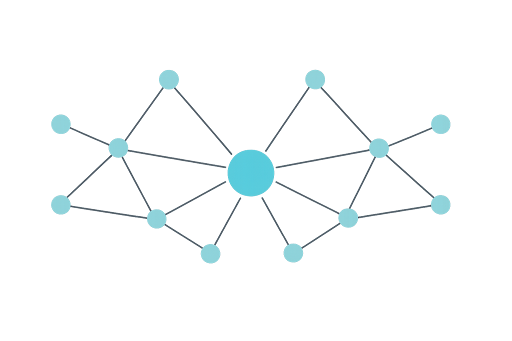 Bitcoin
What Are Nodes in Crypto and How Do They Power Blockchain Networks?
A blockchain node is any computer running the network's software. It stores transaction history, checks that new transactions follow the rules, and relays blocks to its peers, so thousands of independent machines replace a central server. Full nodes verify everything (Bitcoin's chain is over 500GB), light nodes keep only block headers, and validators and miners also produce blocks. Most users never need to run one.
Heidi ChakosBitcoin Bitcoin
What Is a Fork in Crypto? Hard Forks vs. Soft Forks Explained
A fork in crypto is a change to a blockchain's protocol rules. A soft fork is backward-compatible, so the network stays on one chain, as with Bitcoin's SegWit. A hard fork is incompatible and can split the chain in two, which is how Bitcoin Cash (2017) and Ethereum Classic (2016) were created. Holders with their own private keys usually get coins on both chains.
Heidi ChakosBitcoin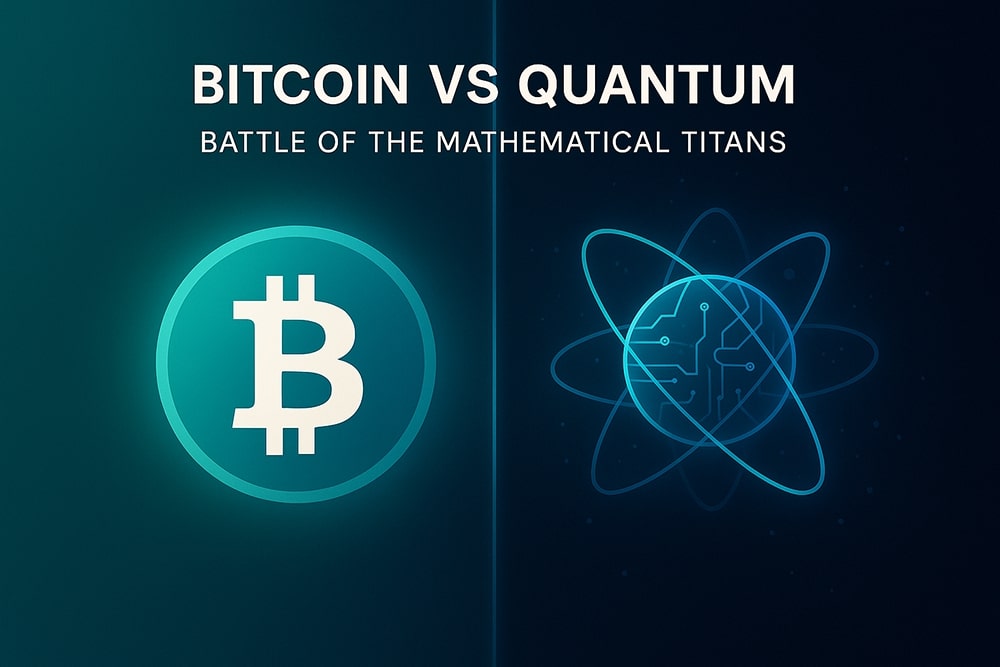 Bitcoin
Will Quantum Computers Break Bitcoin? Battle of the Mathematical Titans
Quantum computers will not break Bitcoin anytime soon. Cracking its ECDSA signatures would need roughly 13 million stable, error-corrected qubits, while today's best machines have fewer than 1,500 noisy physical qubits. Experts put the realistic threat window at 2035 to 2045, and Bitcoin can adopt NIST-standardized post-quantum signatures through a soft fork. Until then, never reuse addresses and move coins out of old P2PK addresses.
Heidi ChakosBitcoin Bitcoin
How to Send Bitcoin to Another Wallet: A Step-by-Step Guide
To send Bitcoin to another wallet, open your wallet, tap Send or Withdraw, paste or scan the recipient's address, enter the amount, choose a fee speed, review everything and confirm. Bitcoin addresses start with 1, 3 or bc1; check the first and last six characters, because transactions cannot be reversed. Send a small test amount first, then track the transaction ID on a blockchain explorer.
Heidi ChakosBitcoin Bitcoin
Difference Between Bitcoin & Ethereum: Breaking Down the Basics
Bitcoin and Ethereum solve different problems. Bitcoin, launched in 2009 with a hard cap of 21 million coins and proof-of-work mining, is built to be digital gold: a secure store of value and payment network. Ethereum, launched in 2015 and running proof-of-stake since 2022, is a programmable blockchain for smart contracts, DeFi and dApps with no fixed supply. Many investors hold both.
15 min read/Heidi ChakosBitcoin Bitcoin
How to Sell Pi Coins in 2026? [An Expert Guide]
To sell Pi Coin, first complete KYC in the Pi app, migrate your balance to mainnet and set up a Pi Wallet in the Pi Browser. Then transfer PI to an exchange that lists it, such as OKX, Gate.io, MEXC or Bitget, and sell into USDT, ideally with a limit order because liquidity is thin. Binance and Coinbase do not list PI.
Heidi ChakosBitcoin Bitcoin
Bitcoin Security Explained Simple: How to Protect Your Wallet from Hacks, Scams, etc
The Bitcoin protocol itself is secure; your coins are only as safe as your own key management. Hackers stole over $2.2 billion from crypto platforms in 2024, so hold your own keys, keep long-term funds on a hardware wallet, store encrypted seed phrase backups offline, enable 2FA, and verify every recipient address to defeat clipboard malware and phishing. Multi-sig adds another layer for larger holdings.
11 min read/Heidi ChakosBitcoin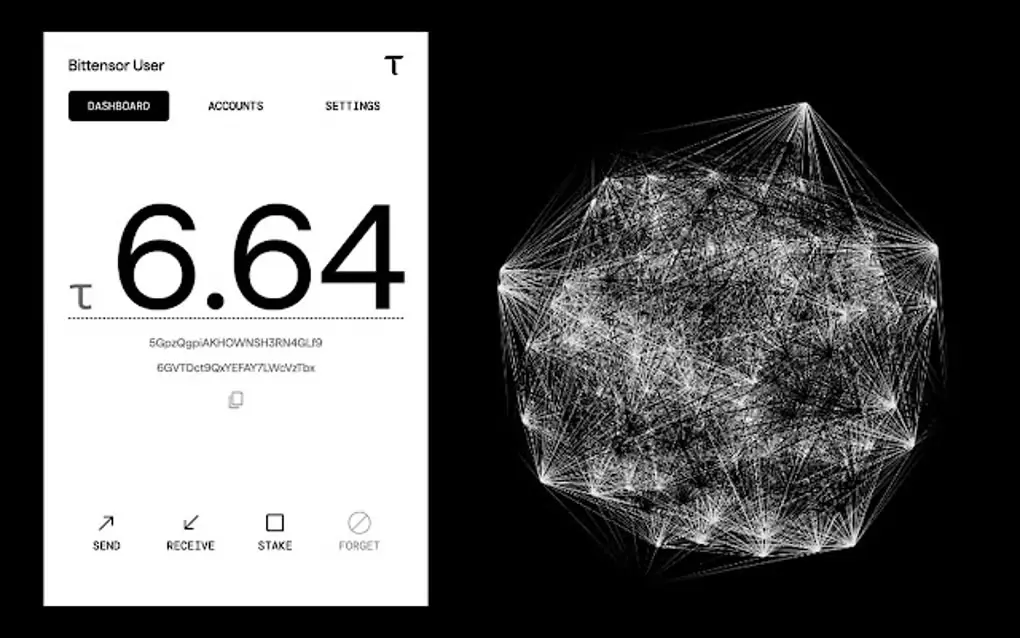 Bitcoin
Comprehensive Guide to Bittensor Wallets: Securing Your TAO
A Bittensor wallet is a non-custodial wallet holding the key pair that proves identity, signs transactions and accesses TAO. It has two parts: an always-encrypted coldkey that controls funds, transfers and subnet creation, and hotkeys for everyday tasks like running miners or validators. Create one via the web wallet or btcli, back up the seed phrase offline, and consider a hardware wallet for larger balances.
Heidi ChakosBitcoin Bitcoin
Will Cryptocurrency Fail? An In-Depth Expert Analysis
Cryptocurrency has evolved from a niche digital currency into a significant component of the global financial ecosystem. As of early 2025, the cryptocurrency market boasts a total capitalization of approximately $3.8 trillion, encompassing over 25,000 active cryptocurrencies.
Learning Crypto TeamBitcoin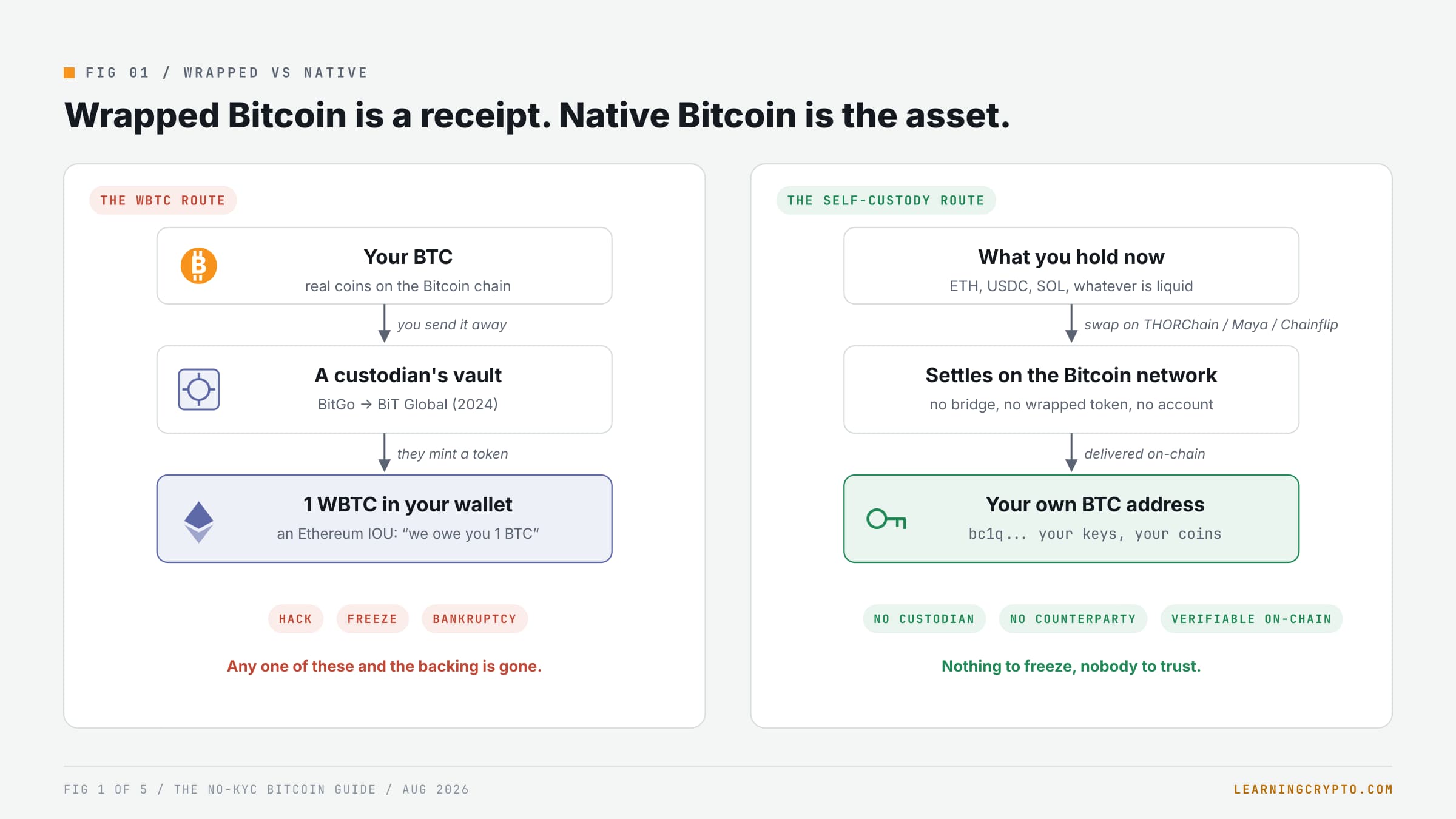 Bitcoin
No-KYC Bitcoin in 2026: How to Buy, Swap, and Cash Out Without Handing Over Your ID
There is no perfect no-KYC Bitcoin solution, only trade-offs. For fiat in and out, peer-to-peer platforms like Bisq and RoboSats never learn your identity, though your bank still sees the transfer. For native BTC without a custodian, swap through THORChain, Maya Protocol or Chainflip rather than holding wrapped Bitcoin, which is an IOU. A real DEX never asks for ID. You still owe taxes.
Heidi ChakosBitcoin Bitcoin
What is a Lightning Wallet? [Explained] - How it Works?
A Lightning wallet is a Bitcoin wallet that sends and receives BTC through the Lightning Network, a second layer built on top of Bitcoin. Payments move through off-chain payment channels, so they settle in seconds and cost tiny routing fees instead of miner fees, compared with roughly 10-minute confirmations on the base chain. Popular options include Phoenix, Muun, Zeus, Breez and Wallet of Satoshi.
Heidi ChakosBitcoinBitcoinStrategic Bitcoin Reserve: Everything Explained
The Strategic Bitcoin Reserve is a US government stockpile of Bitcoin created by President Trump's executive order on March 6, 2025. It is funded only with roughly 200,000 BTC seized through forfeiture proceedings, not taxpayer purchases, and is managed by the Treasury under a no-sell rule unless Congress decides otherwise. A separate Digital Asset Stockpile holds seized non-Bitcoin crypto that Treasury may sell.
Heidi ChakosBitcoin Bitcoin
Stablecoins vs Bitcoin: Which Crypto is Right for You?
Stablecoins and Bitcoin do different jobs. Stablecoins such as USDT and USDC are pegged to assets like the US dollar, so they suit payments, remittances and parking value in DeFi, but you rely on the issuer's reserves. Bitcoin has a fixed 21 million supply and no central issuer, making it a long-term store of value, at the cost of large price swings.
Heidi ChakosBitcoinBitcoinAmir Taaki: Bitcoin Pioneer and Privacy Prophet
Amir Taaki is a self-taught programmer and early Bitcoin developer, born in London in 1988. He founded Britcoin, the first UK Bitcoin exchange, helped introduce the Bitcoin Improvement Proposal (BIP) process, built libbitcoin, and co-founded the privacy-focused Dark Wallet with Cody Wilson in 2014. A self-described hacktivist, he spent several years in Syria and now works on DarkFi and an anonymous DAO.
Heidi ChakosBitcoinBitcoinWhy Bitcoin Was Created: An Introduction To Bitcoin
Bitcoin was created in response to the 2008 global financial crisis, when trust in banks and governments collapsed. Satoshi Nakamoto designed it as decentralized, peer-to-peer money that no central authority controls, with a transparent public ledger, cryptographic security, and a fixed supply of 21 million coins as a hedge against inflation. Those founding goals still shape how Bitcoin is used today.
Heidi ChakosBitcoinBitcoinHow Long Does It Take To Send or Receive Bitcoin? - Understanding Crypto Transactions
Sending Bitcoin usually takes 10 minutes to an hour. The first confirmation arrives in about 10 minutes and the 6 confirmations most exchanges treat as final take roughly 60 minutes. Low fees and a congested mempool can stretch that to hours or, rarely, days. A stuck transaction can be sped up with replace-by-fee or child-pays-for-parent, and Lightning payments settle in seconds.
Heidi ChakosFAQ
Is Bitcoin still the best starting point?
For most people, yes. Bitcoin has the deepest liquidity, the strongest brand, and the clearest monetary narrative. Learn custody and risk sizing before chasing alts.
Where does Learning Crypto cover Bitcoin signals?
Educational Bitcoin content lives in these guides. Active DCA and cycle context for members is on the Satoshi Indicator and Daily Brief.