
Everything we know,
written down.
182 guides covering wallets, DeFi, stablecoins, on-chain analysis, tax and the ways people lose money. No sponsored posts, no affiliate reviews dressed up as research.
4 guides, in this order.
If you are starting from nothing, read these before anything else. Roughly 51 minutes end to end.
Browse all 182.
 Bitcoin
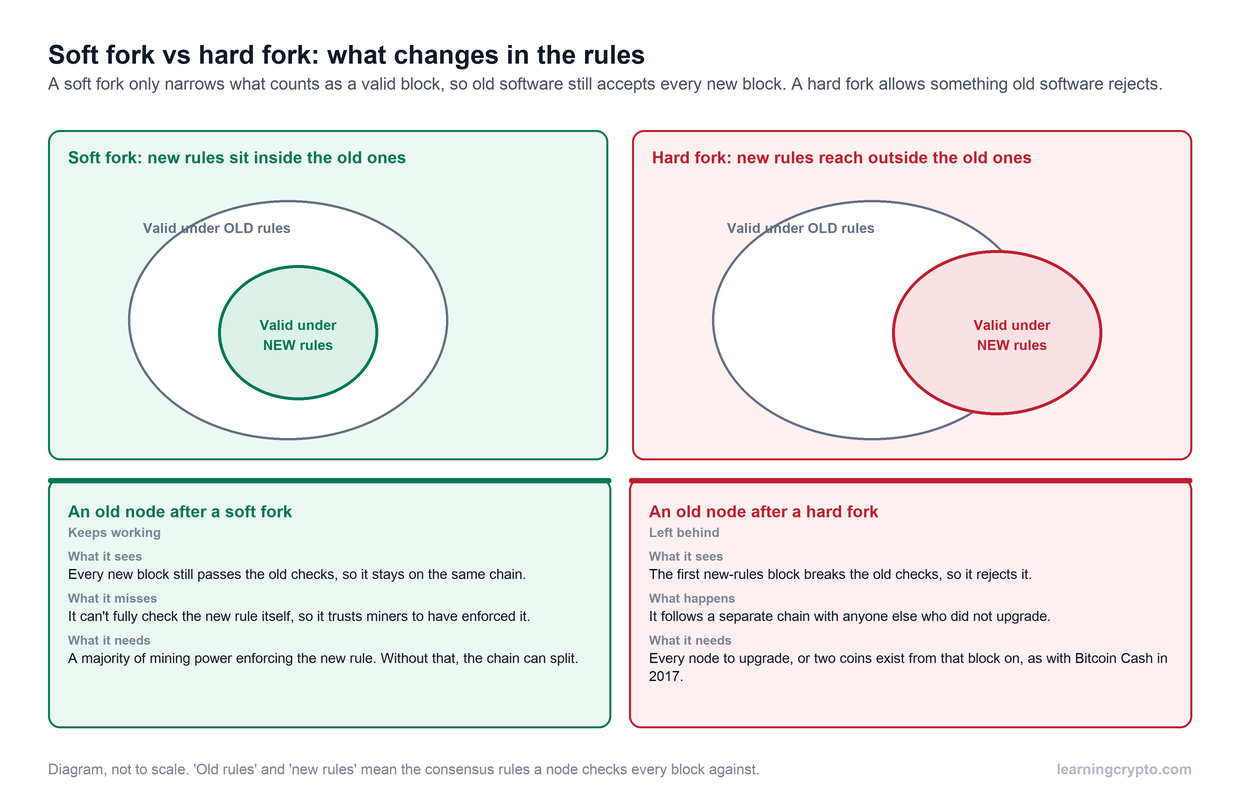
What Is a Soft Fork? How Blockchain Upgrades Work Without a Split
A soft fork is a backward-compatible change to a blockchain's rules. It tightens what counts as a valid block, so nodes that don't upgrade still accept new blocks and the network stays on one chain, with no new coin created. It needs most miners to enforce it. Bitcoin's SegWit (2017) and Taproot (2021) are the best-known examples.
Toby CunninghamWallets & Custody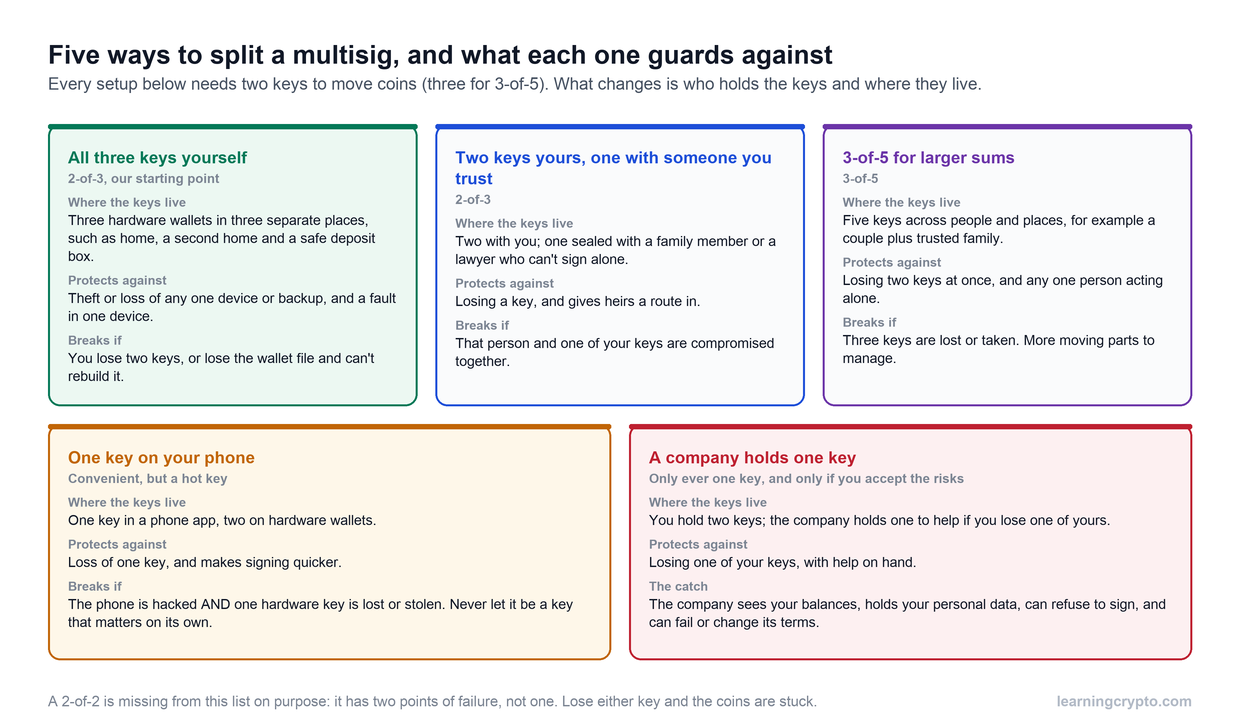 Wallets & Custody
Multisig Explained: How to Split Your Bitcoin Keys and Why It Matters
Multisig means your bitcoin only moves when a set number of keys sign, for example any 2 of 3. No single lost, stolen or faulty key can empty the wallet. In the July 2026 Coldcard drain, single-key wallets were emptied, while multisig wallets with only one affected key were not reported drained.
Heidi ChakosAnalysis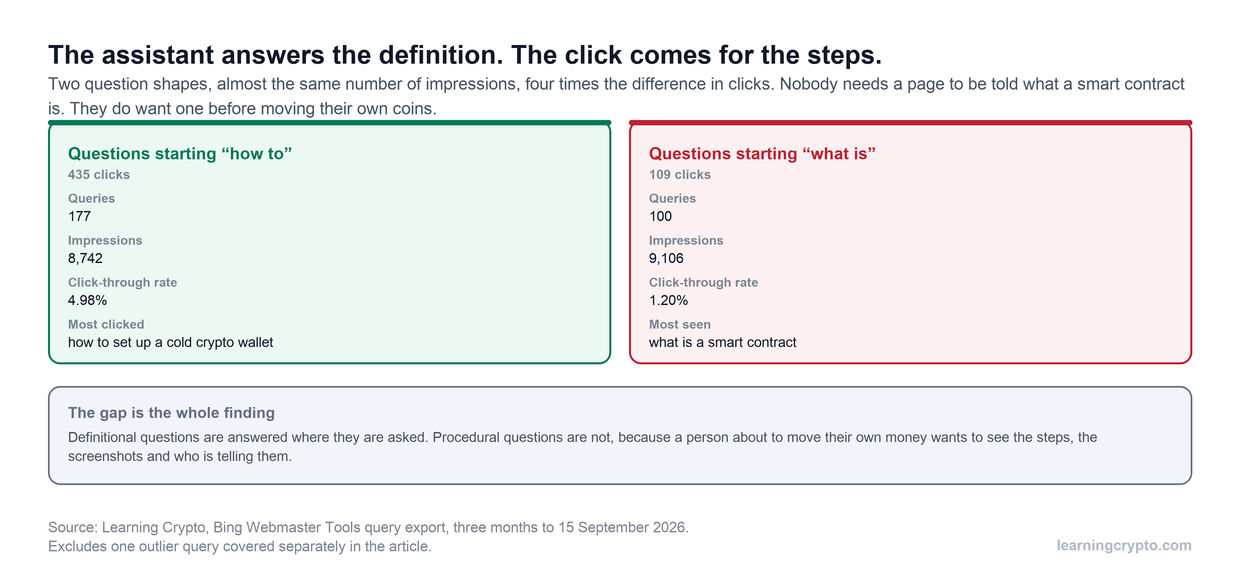 Analysis
What People Actually Ask AI About Crypto: 1,018 Real Questions
We exported every search query that brought someone to our site through Bing, the index Microsoft Copilot searches, over three months. It came to 1,018 questions, most of them written as full sentences. Here is what people asked, what they clicked, and the whole dataset to download and check for yourself.
Toby CunninghamAnalysis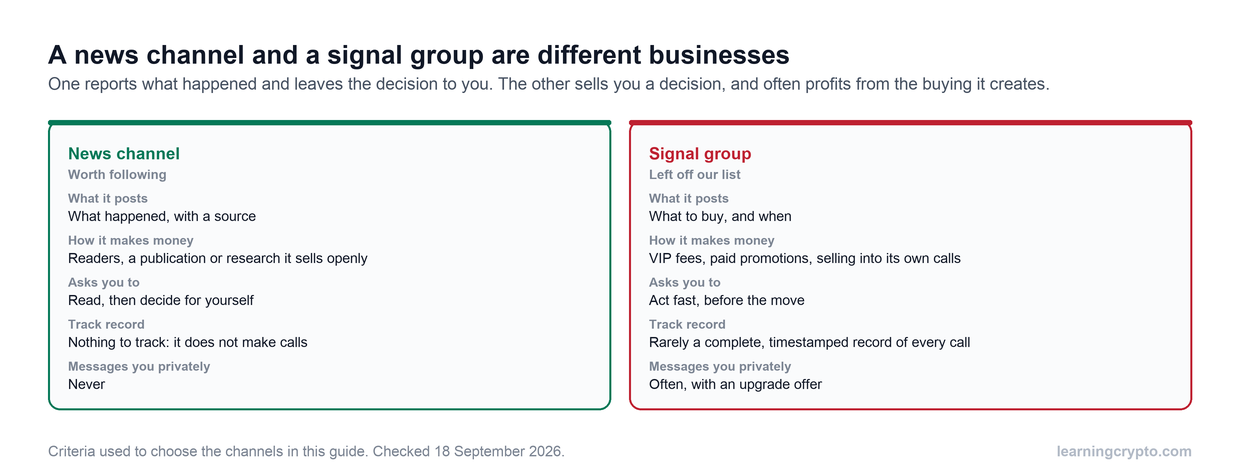 Analysis
The Best Crypto News Telegram Channels in 2026 (No Signal Groups)
The crypto Telegram channels worth following report news; they do not sell signals. Our nine picks cover breaking headlines, whale movements, Asian markets, exchange listings and hack investigations, each with a handle we checked on 18 September 2026. Join through the publisher's own website, never through a link someone sends you.
Toby CunninghamScams & Risk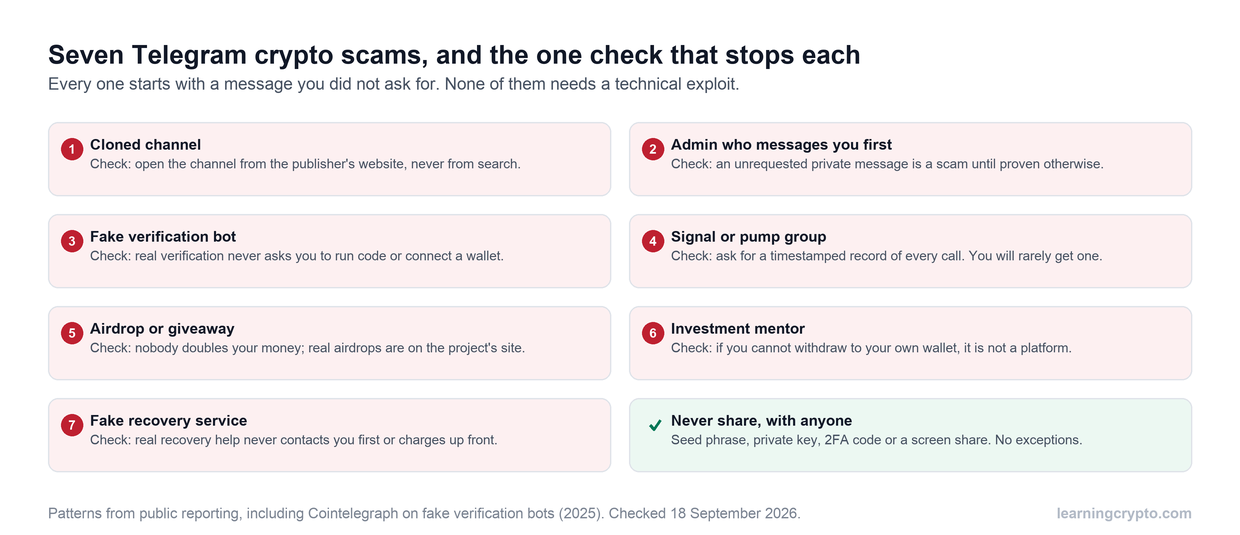 Scams & Risk
Crypto Scams on Telegram: How to Spot a Fake Channel, Admin or Bot
Almost every crypto scam on Telegram starts the same way: someone you did not contact offers help, profit or verification. Real channels broadcast one way and never ask for your seed phrase, a wallet connection or a payment. Join channels only from the publisher's website, and check the handle letter by letter.
Heidi ChakosWallets & Custody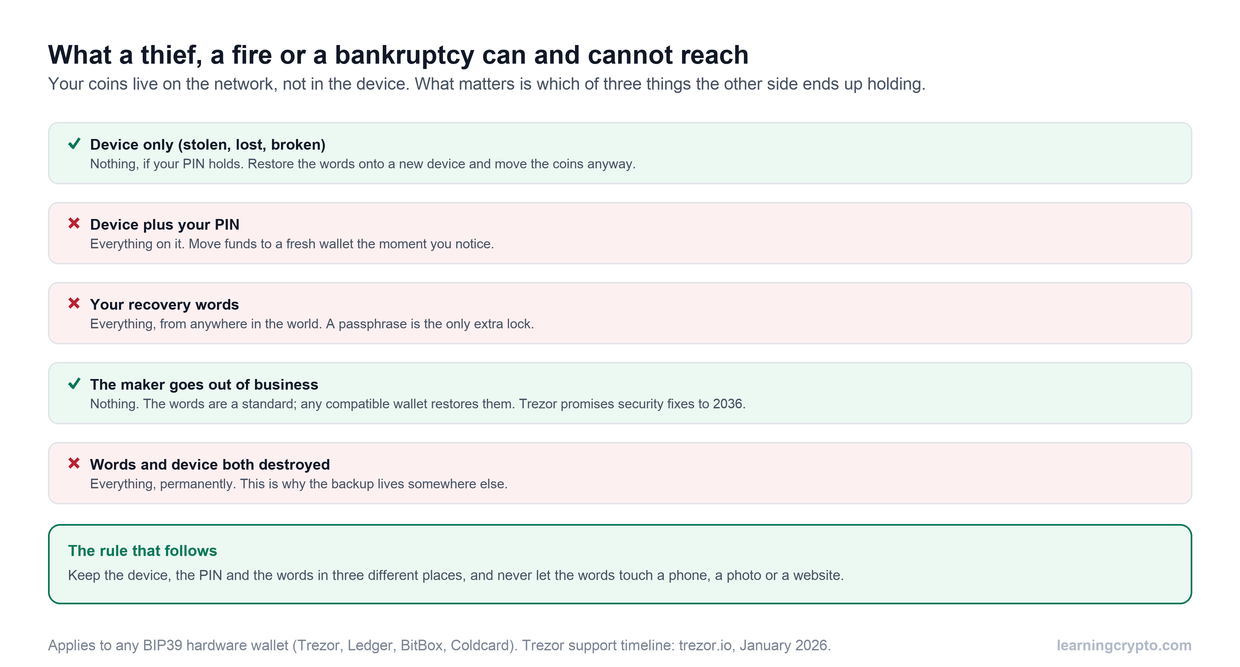 Wallets & Custody
Lost or Stolen Hardware Wallet, or the Maker Goes Bust: What Happens to Your Crypto
Your crypto is not inside the hardware wallet; it is on the network, and the device only holds the key. Lose the device and your recovery words restore everything onto any compatible wallet. Lose the words and the device together and the coins are gone. If the maker goes bust nothing changes, because the words follow an open standard.
Heidi ChakosRegulation & Tax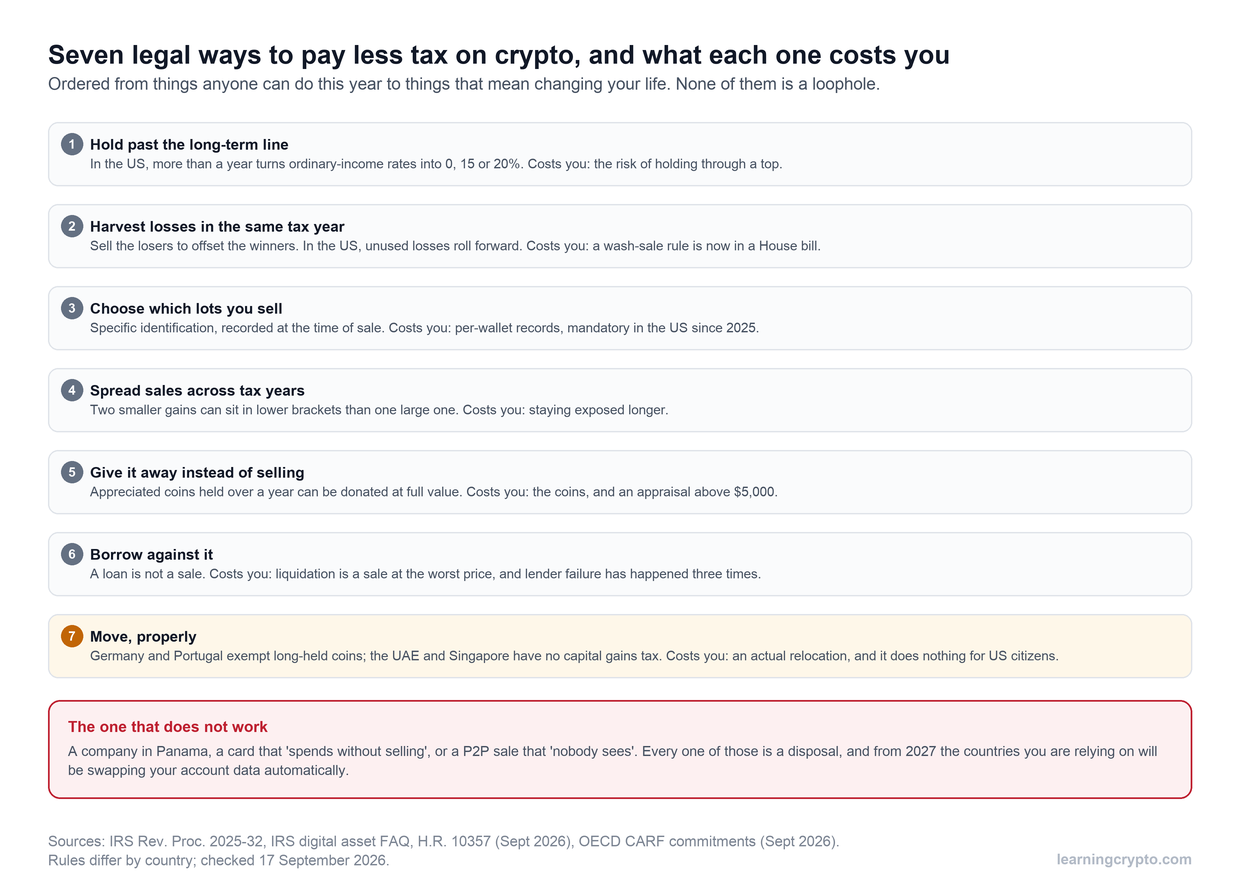 Regulation & Tax
How to Legally Reduce Your Crypto Taxes: What We Did and What Actually Works in 2026
You cut crypto tax legally by holding past the long-term line, harvesting losses in the same year, choosing which lots you sell, spreading sales across tax years, donating instead of selling, borrowing rather than selling, or genuinely moving to a country that exempts long-held coins. Spending on a card, swapping into stablecoins and offshore paper companies do not work. We moved; here is what changed.
Heidi ChakosRegulation & Tax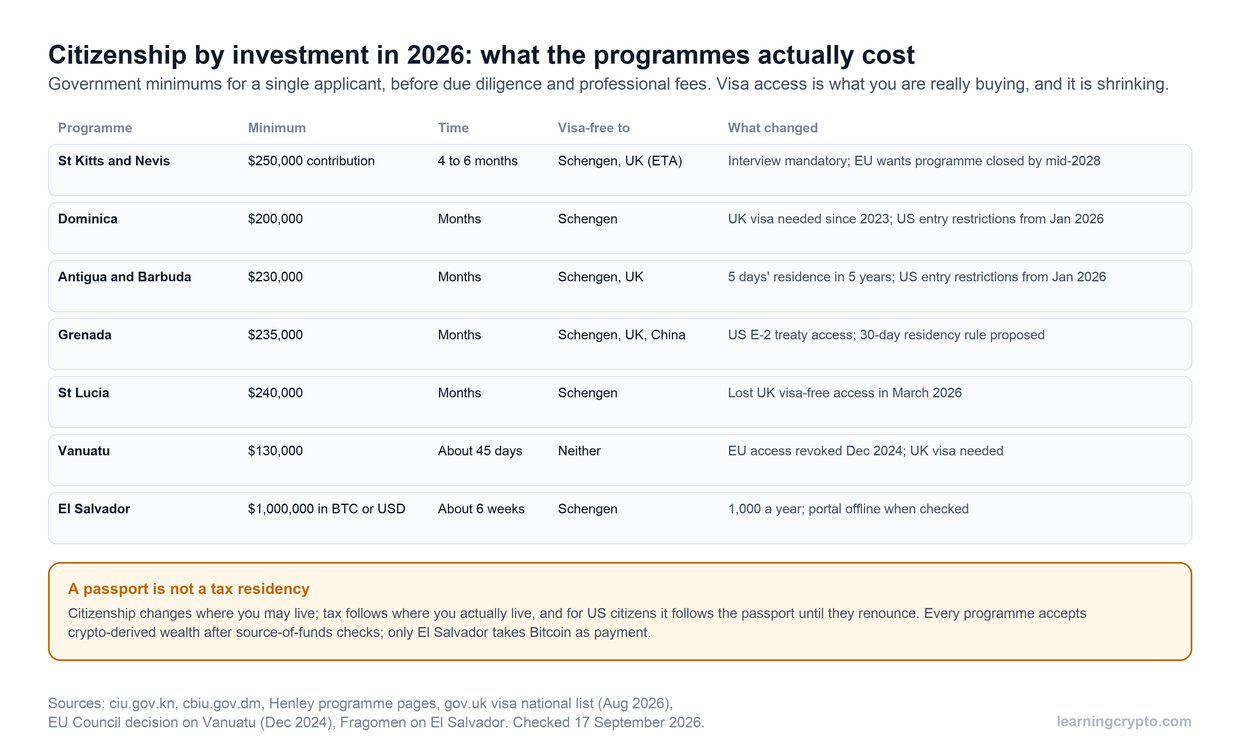 Regulation & Tax
Second Citizenship by Investment for Crypto Holders: What It Costs in 2026 and What We Learned Doing It
Citizenship by investment gives you a second passport for a government contribution, from about $200,000 in the Caribbean to $1 million in El Salvador, after source-of-funds checks that accept crypto wealth. It buys optionality, not a tax break: a passport is not a tax residency. Heidi got St Kitts citizenship in 2018; here is what changed since and what to check before paying anyone.
Heidi ChakosRegulation & Tax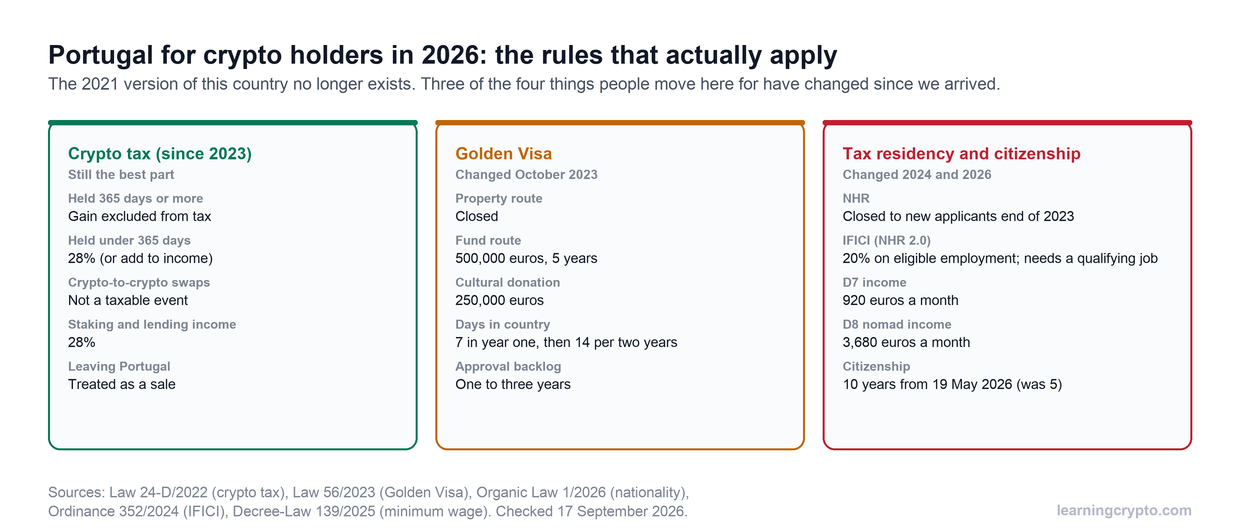 Regulation & Tax
Portugal Residency and Crypto Taxes in 2026: What Changed and What We've Learned Living Here
Portugal still excludes gains on crypto held 365 days or more and does not tax crypto-to-crypto swaps, but almost everything else has changed: the Golden Visa property route closed in 2023, NHR closed to newcomers, and from 19 May 2026 citizenship takes 10 years of residence instead of 5. We moved here in 2021; this is the 2026 picture.
Heidi ChakosReading is the cheap part.
The guides give you the grounding. Membership gives you the live on-chain data, the indicators and the analysts, so you can apply it while it still matters.