

148 guides by Heidi.
 Analysis
How Much To Invest In Crypto Monthly? [A Quick Complete Guide]
A sensible starting point is 1-5% of your monthly income, invested on a fixed schedule through dollar-cost averaging. On a $3,000 income that is $30 to $150 a month; even $10 to $50 builds the habit. Lower-risk investors keep 1-2% in Bitcoin and Ethereum, higher-risk up to 5% with some altcoins. Automate recurring buys and only use money you can afford to lose.
Heidi ChakosReviews & Safety Reviews & Safety
Is Coinbase Safe? Security, Risks and a Beginner's Guide to Using It
Yes, Coinbase is one of the safest crypto exchanges for beginners. It is publicly traded, licensed in all 50 US states and 100+ countries, keeps 98% of crypto in offline cold storage, carries $255 million in crime insurance, and USD deposits are FDIC insured up to $250,000. The trade-off is higher fees, around 1.49% on bank transfers, and no insurance covers your own mistakes.
Heidi ChakosFundamentals Fundamentals
What Backs Up Cryptocurrency? - Explained Simply!
Cryptocurrency is not backed by a physical commodity or a government promise. Its value rests on supply and demand (Bitcoin is capped at 21 million coins), decentralized networks that resist censorship, real utility such as paying for Ethereum transactions, and the social consensus of users, developers and businesses. Fiat currencies, since the gold standard ended, are likewise backed only by government credit and trust.
Heidi ChakosFundamentalsFundamentalsWhat's the Purpose of Cryptocurrency: A Balanced Understanding
The purpose of cryptocurrency is to let people transact directly, securely and without banks or governments in the middle. Bitcoin launched in January 2009 as a response to the 2008 financial crisis, and its Genesis Block references the bank bailouts. Today crypto is used for online payments, cheaper cross-border transfers and DeFi, though volatility, regulation and security remain real risks.
Heidi ChakosWallets & Custody Wallets & Custody
Crypto Wallet For Beginners: Types, Factors, How to Setup
For beginners, a hardware wallet such as the Trezor Safe 3 or BitBox02 is the safest choice because private keys stay offline; entry-level models cost roughly $50 to $150. Free software wallets like Exodus, MetaMask and Trust Wallet suit small, everyday balances. Whatever you choose, buy hardware direct from the manufacturer, write the seed phrase on paper, and test with a small transfer.
14 min read/Heidi ChakosDeFi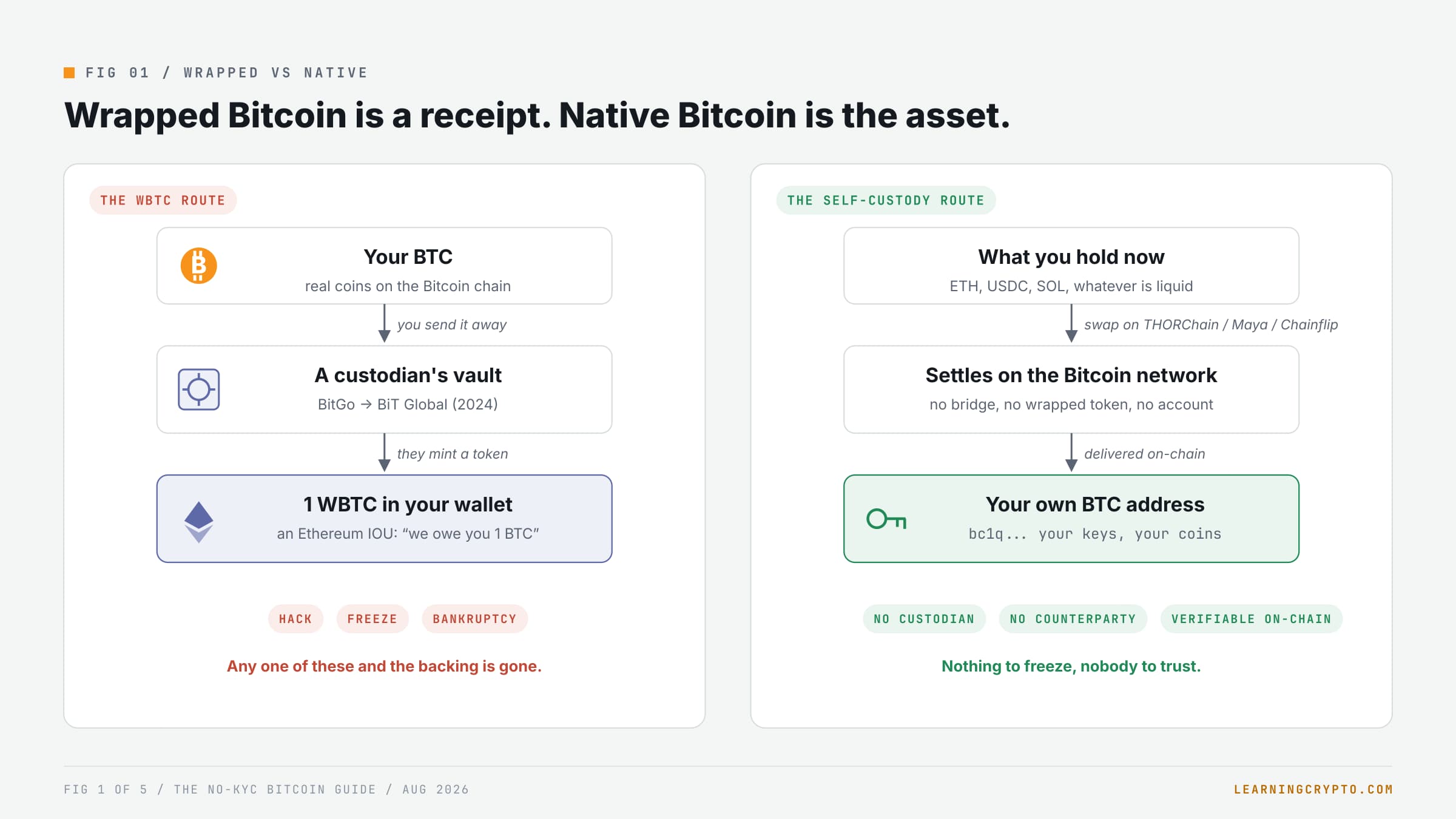 DeFi
No-KYC Bitcoin in 2026: How to Buy, Swap, and Cash Out Without Handing Over Your ID
There is no perfect no-KYC Bitcoin solution, only trade-offs. For fiat in and out, peer-to-peer platforms like Bisq and RoboSats never learn your identity, though your bank still sees the transfer. For native BTC without a custodian, swap through THORChain, Maya Protocol or Chainflip rather than holding wrapped Bitcoin, which is an IOU. A real DEX never asks for ID. You still owe taxes.
Heidi ChakosWallets & Custody Wallets & Custody
What is a Lightning Wallet? [Explained] - How it Works?
A Lightning wallet is a Bitcoin wallet that sends and receives BTC through the Lightning Network, a second layer built on top of Bitcoin. Payments move through off-chain payment channels, so they settle in seconds and cost tiny routing fees instead of miner fees, compared with roughly 10-minute confirmations on the base chain. Popular options include Phoenix, Muun, Zeus, Breez and Wallet of Satoshi.
Heidi ChakosFundamentals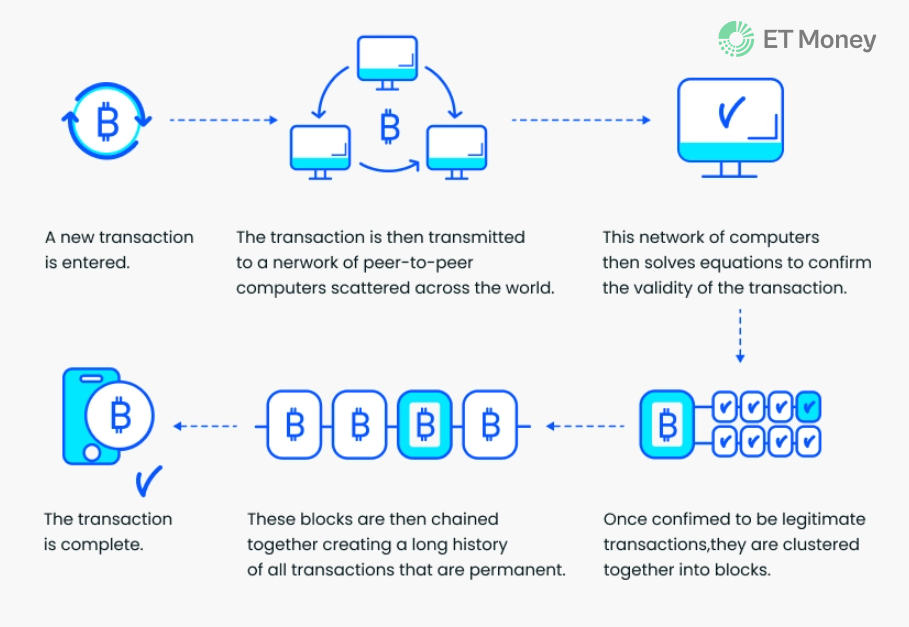 Fundamentals
Crypto Explained Simple: A Beginner’s Guide to Understanding Cryptocurrency
Cryptocurrency is digital money secured by cryptography and recorded on a blockchain, a shared ledger kept by a network of computers rather than a bank. Transactions are signed with a private key, validated by miners (Proof of Work) or stakers (Proof of Stake), and grouped into linked blocks. Bitcoin and Ethereum are the largest examples, bought through exchanges like Coinbase or Kraken.
Heidi ChakosStablecoins Stablecoins
What Does Pegging Mean in Crypto? A Comprehensive Guide
Pegging in crypto means tying a token's value to another asset at a fixed ratio, usually a stablecoin tracking the dollar 1:1. Pegs are held by collateral reserves (USDC, USDT, DAI), by algorithms (TerraUSD, which collapsed in 2022), or a mix. Pegged is not the same as backed, and pegs can break: USDC fell to $0.87 in March 2023 when Silicon Valley Bank failed.
Heidi Chakos