

142 guides by Heidi.
How Does Blockchain Work? A Beginner's Guide
A blockchain is a shared, append-only ledger kept by thousands of independent computers instead of one company. Transactions are grouped into blocks, each cryptographically linked to the last, and the network agrees on new blocks through consensus rules like Proof of Work or Proof of Stake. Once recorded, data is practically impossible to alter, which is what lets Bitcoin and other networks run without a central authority.
2 min read/Heidi ChakosFundamentals Fundamentals
A Look into Litecoin MWEB Wallet and Privacy Extension Block
Litecoin MWEB (MimbleWimble Extension Blocks) is an opt-in privacy layer that runs alongside the main Litecoin chain. You peg LTC into MWEB to hide transaction amounts and sender and recipient addresses, then peg out when you need normal LTC again. It shipped in Litecoin Core 0.21.3 (March 2024) and requires a supporting wallet. It is not a default-private replacement for Monero.
Heidi ChakosFundamentalsFundamentalsIs Cryptocurrency Hard to Learn? A Beginner’s Guide to Mastering Crypto in 2025
Cryptocurrency is not hard to learn, but it is easy to learn in the wrong order. Most people can grasp the essentials, how Bitcoin works, what a wallet is, and how to buy and store coins safely, in a few weeks of focused reading. The difficulty comes from jargon, hype and trying to master DeFi or trading before the basics.
Heidi ChakosFundamentals Fundamentals
New to Blockchain? Here’s Your Step-by-Step Beginner's Guide To Master
A blockchain is a distributed ledger that stores data across a network of computers (nodes) instead of one central database. Transactions are grouped into blocks, each linked to the previous one by a cryptographic hash, which makes past records practically impossible to alter. Nodes verify transactions through consensus such as Proof of Work or Proof of Stake. Public chains like Bitcoin are open to anyone.
Heidi ChakosFundamentalsFundamentalsBest Cryptocurrency YouTubers to Watch in 2025
The best crypto YouTubers in 2026 depend on what you need. For beginners, 99Bitcoins and CryptoTips explain the basics clearly. For data-driven analysis, Benjamin Cowen and Coin Bureau stand out. For daily news, Altcoin Daily, Digital Asset News and CryptosRUs, and for deeper industry discussion, Bankless and DataDash. Watch all of them with a sceptical eye.
Heidi ChakosDeFi DeFi
DeFiEthereum Pectra Upgrade Explained: Here’s What Experts are Saying
Ethereum's Pectra upgrade bundles the Prague execution-layer and Electra consensus-layer changes into one hard fork. Its key EIPs let regular wallets act like smart contracts (EIP-7702), raise the maximum effective validator balance from 32 to 2,048 ETH (EIP-7251), allow exits triggered from the execution layer (EIP-7002), and double blob capacity for cheaper Layer 2 transactions. Validator activation drops from about 6 hours to 12 minutes.
Heidi ChakosReviews & SafetyReviews & SafetyCentralized vs Decentralized Exchanges: Which is Best for Your Crypto?
The main difference between centralized and decentralized exchanges is custody. A CEX holds your funds and acts as intermediary, offering high liquidity, simple interfaces and regulatory compliance. A DEX lets you trade peer-to-peer while keeping control of your private keys, but has lower liquidity, needs more technical knowledge and still carries smart contract risk. Many traders use both.
4 min read/Heidi ChakosFundamentals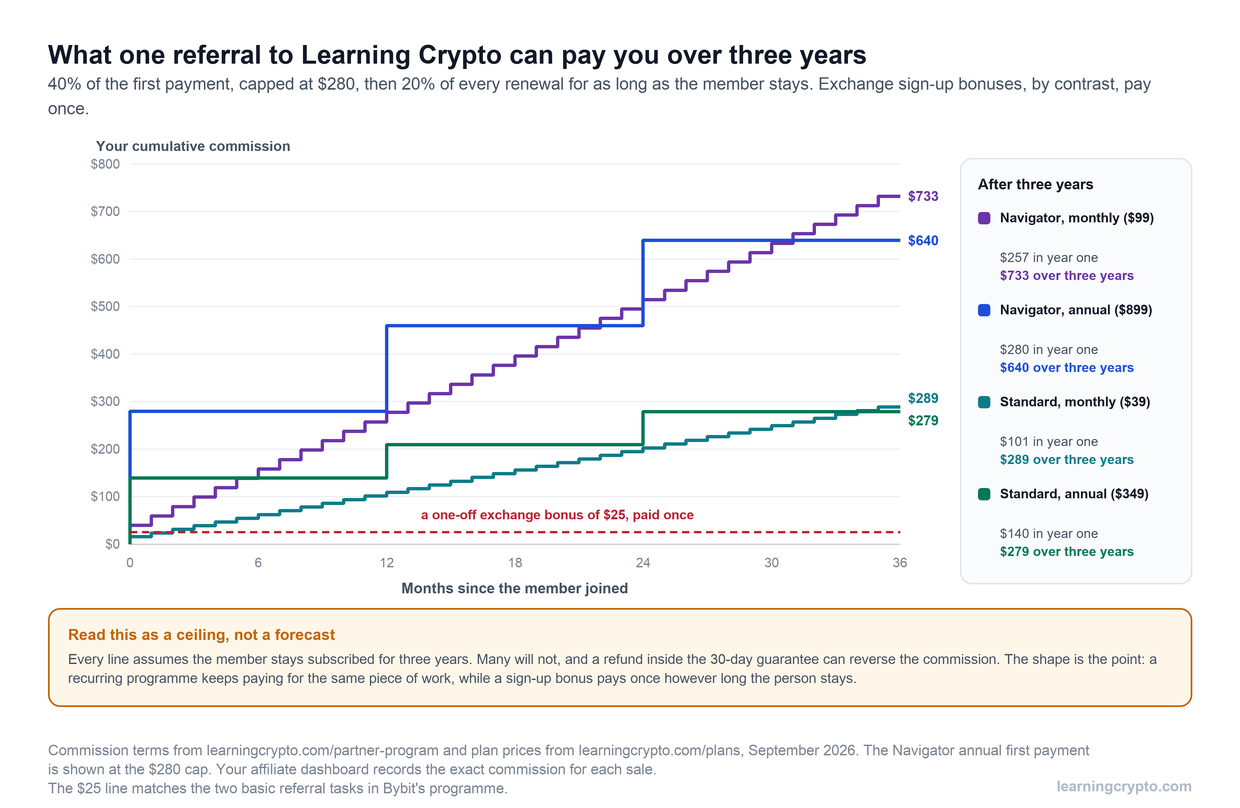 Fundamentals
Best Crypto Referral Programs in 2026: What Each One Actually Pays
A crypto referral program pays you for bringing new users to a platform, either as a one-off bonus when they sign up and trade or as a recurring share of what they spend. Exchange bonuses from Coinbase, Kraken and Bybit are small and easy to earn. Recurring programs, such as Learning Crypto's 20% commission, pay far more over time if you have an audience.
Heidi ChakosMining Mining
Staking vs Mining: What’s the Difference, and Which Is Better for You?
Staking suits most people; mining only pays with cheap power and capital. Mining (Proof of Work) needs ASIC or GPU hardware, technical skill, and $2,000 to $15,000 or more upfront. Staking (Proof of Stake) needs only coins, starts from around $50, and pays roughly 3 to 20 percent APY with lock-up and slashing risks. Choose mining only with power under $0.08/kWh.
21 min read/Heidi Chakos