

147 guides by Heidi.
 Wallets & Custody
How to Use DeFi With a Hardware Wallet: Connecting, Signing and Staying Safe
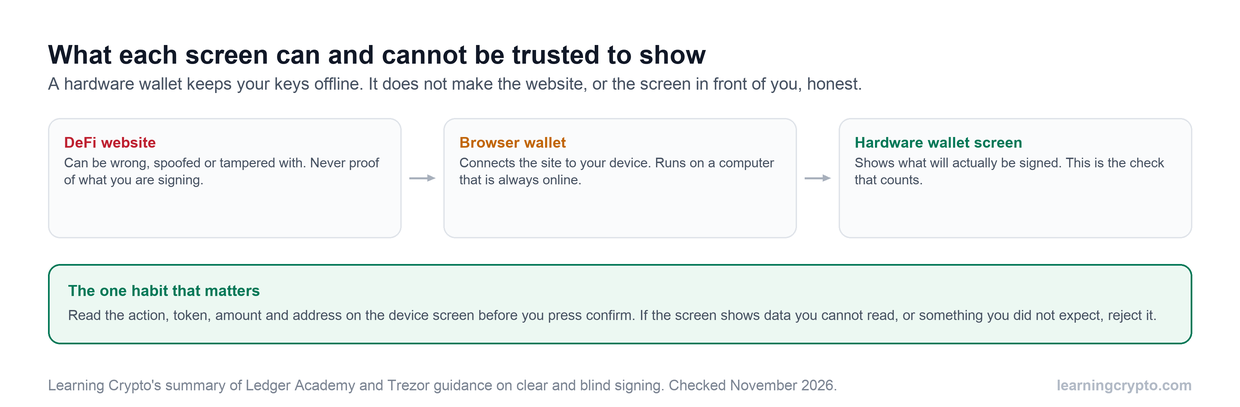
Yes, you can use DeFi with a hardware wallet. Your keys stay on the device, and you approve every transaction on its screen. The risk moves from stolen keys to what you sign, so read the details on the device, avoid blind signing, use a separate account for DeFi and revoke old approvals.
Heidi ChakosScams & Risk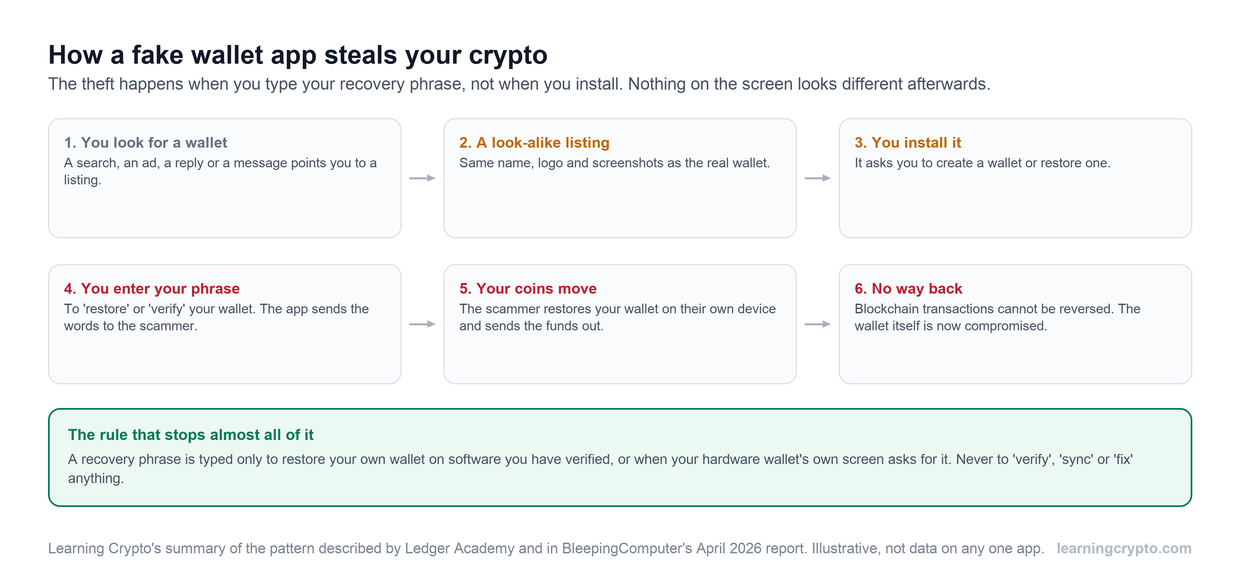 Scams & Risk
Fake Wallet Apps and Wallet Impersonation Scams: How They Work and How to Stay Safe
A fake wallet app copies a real wallet's name and logo to get your recovery phrase, then empties your wallet from another device. Official app stores can carry fakes too. Reach a wallet only through its own website, never through an ad or a message, and never type your recovery phrase to 'verify', 'sync' or 'restore' anything.
Heidi ChakosBitcoin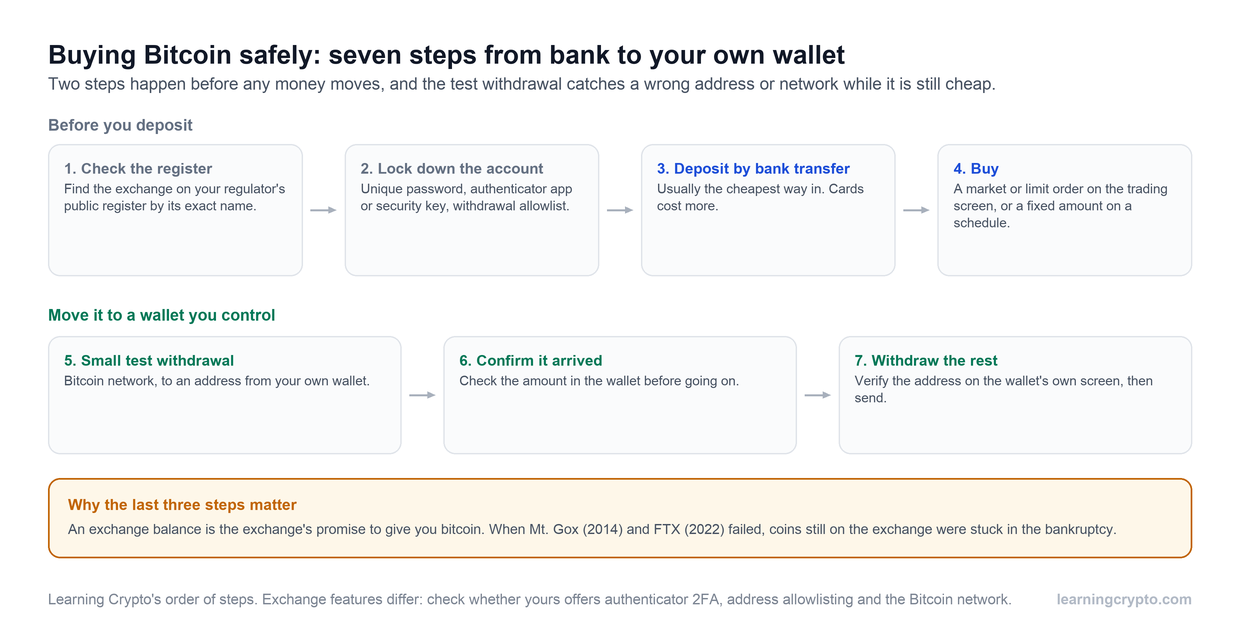 Bitcoin
How to Buy Bitcoin Safely, Then Move It to Your Own Wallet
To buy Bitcoin safely, use a registered exchange you reached by typing its address, secure the account with an authenticator app, buy by bank transfer, then withdraw to a wallet you control: send a small test amount first, check the address on the wallet's own screen, then move the rest. Coins left on an exchange belong to the exchange until you withdraw them.
Heidi ChakosScams & Risk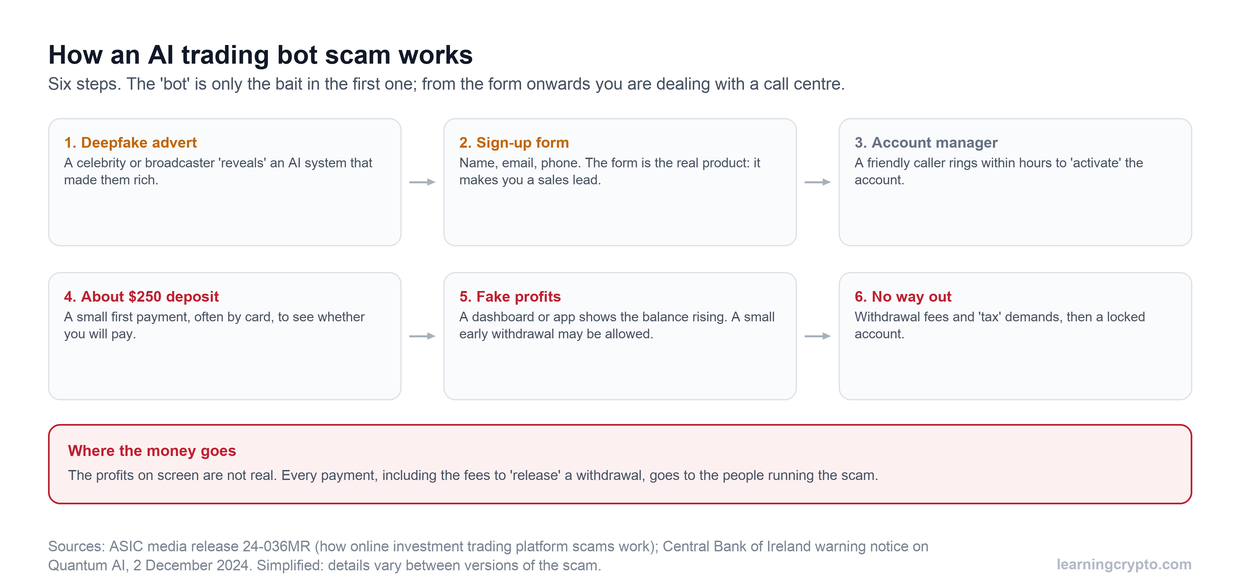 Scams & Risk
AI Trading Bot Scams: How Quantum AI and Its Clones Work
Quantum AI is not a real trading robot. It is a scam brand that regulators in the UK, Ireland, Canada, Germany and Australia have warned about: deepfake celebrity ads lead to a sign-up form, an "account manager" takes a first deposit of around $250, a dashboard shows fake profits, and withdrawals never arrive. No AI bot can promise steady trading returns.
Heidi ChakosWallets & Custody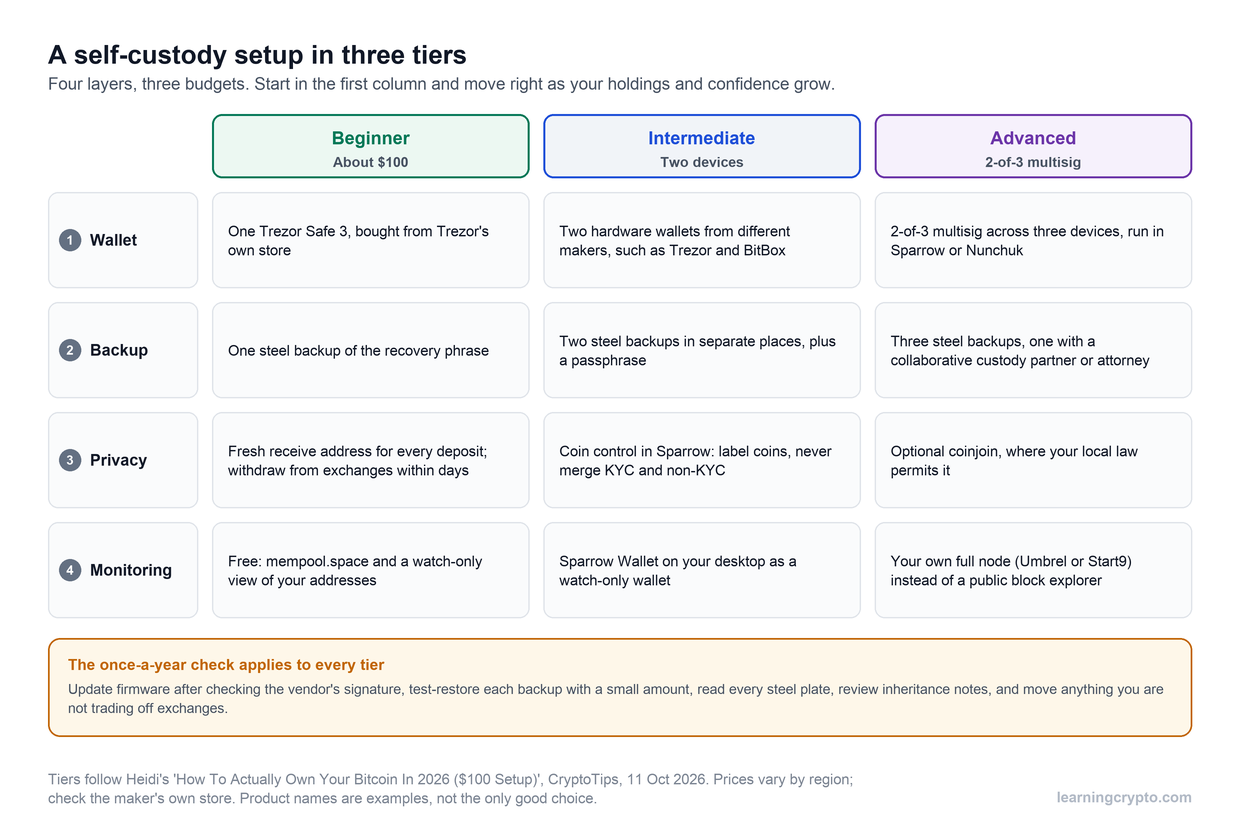 Wallets & Custody
How to Self-Custody Bitcoin in 2026: The $100 Setup and the Next Steps Up
To self-custody bitcoin you need four things: a hardware wallet bought from the maker, a steel backup of the recovery phrase, a passphrase kept apart from that backup, and one day a year to test it all. The starter version costs about $100. Two devices from different makers, then 2-of-3 multisig, are the next steps up.
Heidi ChakosWallets & Custody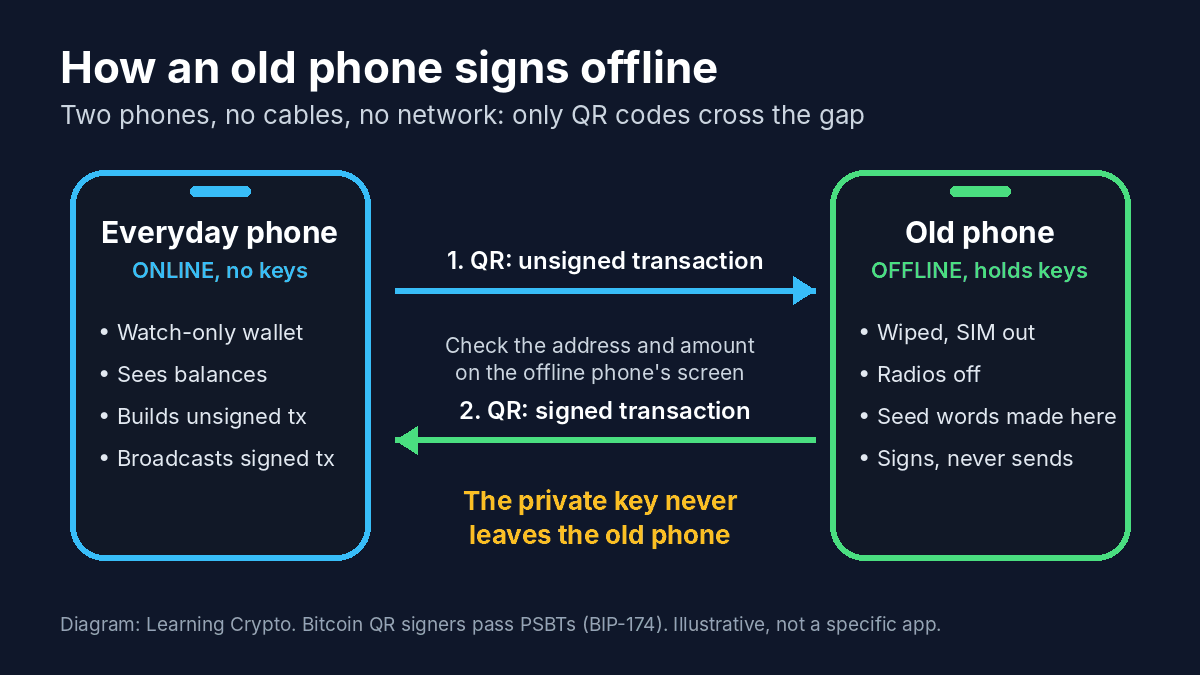 Wallets & Custody
How to Turn an Old Phone Into a Hardware Wallet (and When to Just Buy One)
Yes, a spare phone can work like a hardware wallet. Wipe it, take the SIM out, install an open-source signing app such as AirGap Vault, then keep it offline for good and sign by QR code. It is cheaper but weaker than a dedicated device: the phone was built to be online, and old phones stop getting security updates.
Heidi ChakosWallets & Custody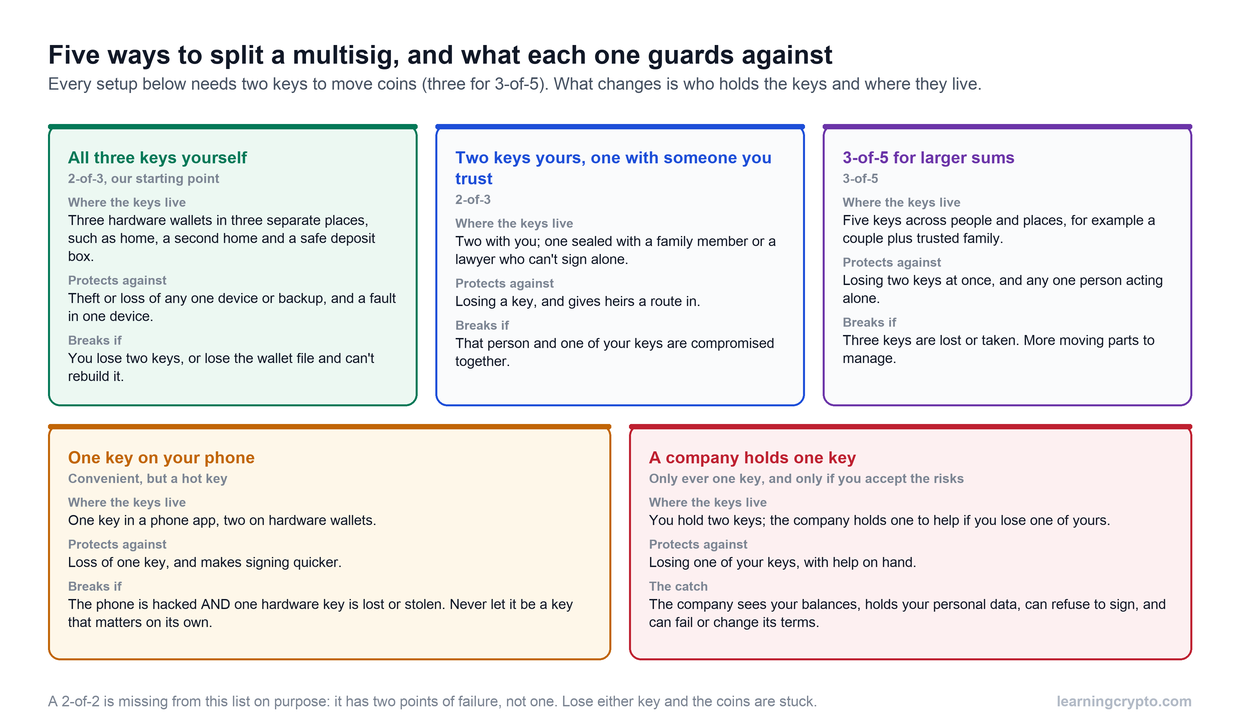 Wallets & Custody
Multisig Explained: How to Split Your Bitcoin Keys and Why It Matters
Multisig means your bitcoin only moves when a set number of keys sign, for example any 2 of 3. No single lost, stolen or faulty key can empty the wallet. In the July 2026 Coldcard drain, single-key wallets were emptied, while multisig wallets with only one affected key were not reported drained.
Heidi ChakosScams & Risk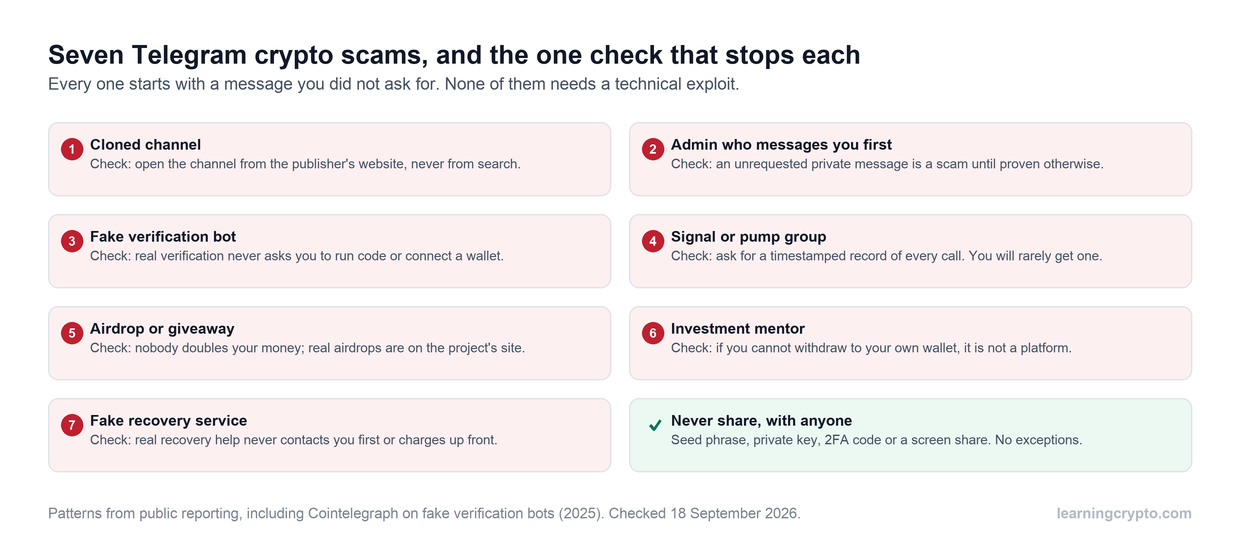 Scams & Risk
Crypto Scams on Telegram: How to Spot a Fake Channel, Admin or Bot
Almost every crypto scam on Telegram starts the same way: someone you did not contact offers help, profit or verification. Real channels broadcast one way and never ask for your seed phrase, a wallet connection or a payment. Join channels only from the publisher's website, and check the handle letter by letter.
Heidi ChakosWallets & Custody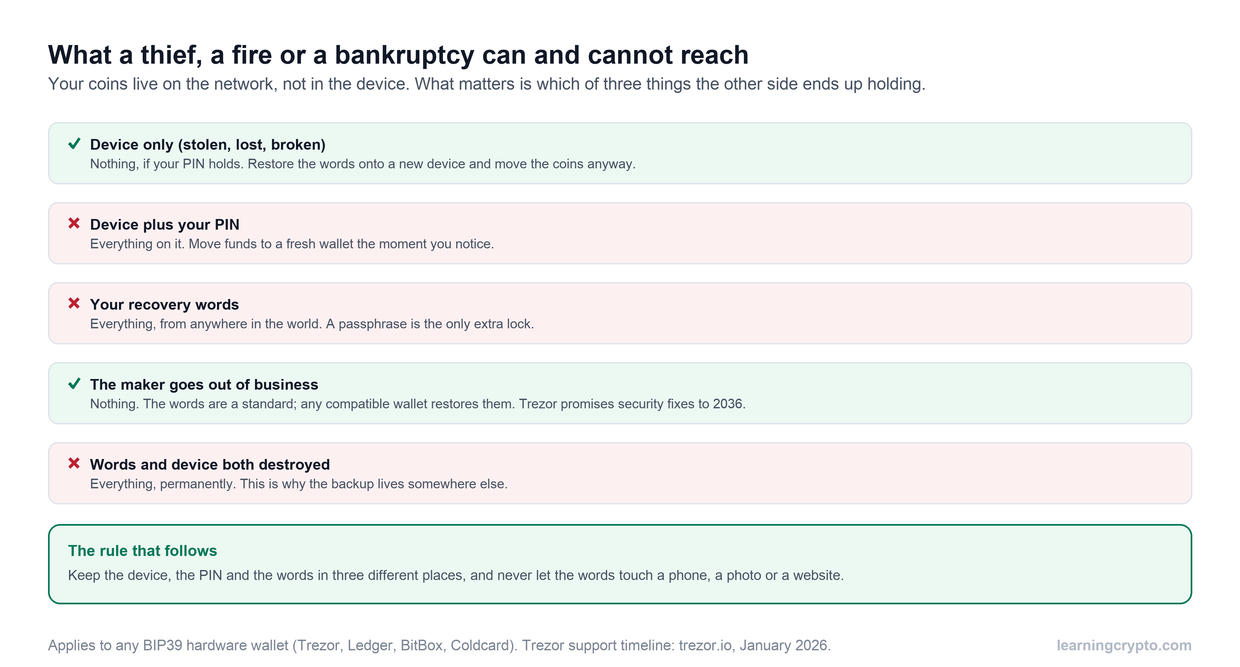 Wallets & Custody
Lost or Stolen Hardware Wallet, or the Maker Goes Bust: What Happens to Your Crypto
Your crypto is not inside the hardware wallet; it is on the network, and the device only holds the key. Lose the device and your recovery words restore everything onto any compatible wallet. Lose the words and the device together and the coins are gone. If the maker goes bust nothing changes, because the words follow an open standard.
Heidi Chakos