

142 guides by Heidi.
 Fundamentals
How to Learn Crypto: A Free, Step-by-Step Curriculum
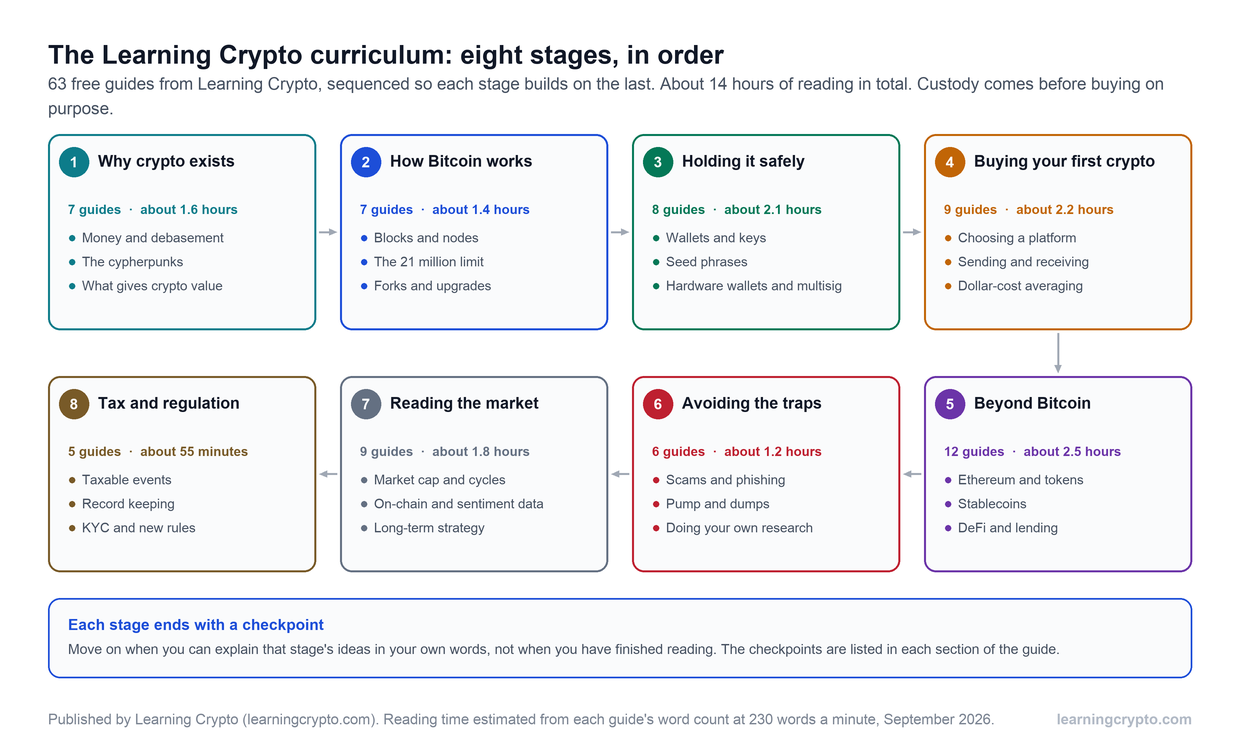
The best way to learn crypto is in order: why it exists, how Bitcoin works, how to hold it safely, how to buy, then tokens, risks, markets and tax. This free Learning Crypto curriculum puts 63 of our guides into eight stages, about 14 hours of reading, with a checkpoint at the end of each stage.
Heidi ChakosDeFi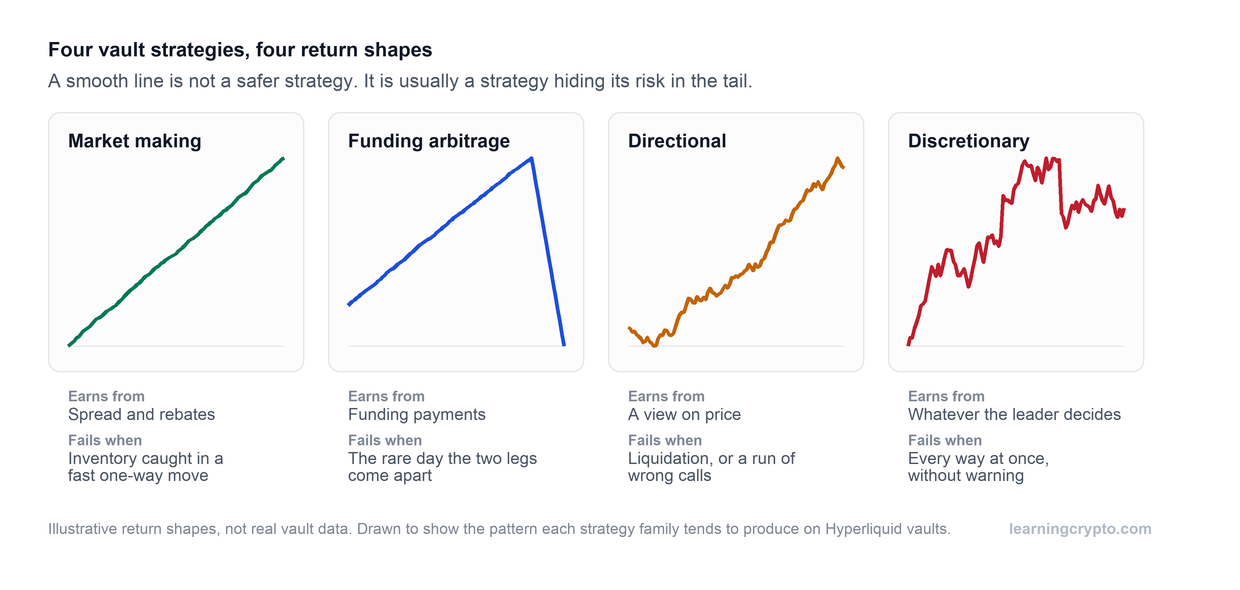 DeFi
DeFiHyperliquid Vaults Explained: Copy Trading, HLP and What You Are Actually Buying
A Hyperliquid vault is an on-chain trading account you can deposit USDC into, where a leader trades the pooled money and everyone shares the profit and loss by ownership share. User vault leaders take 10% of profits above the high-water mark and must keep 5% of the vault themselves. HLP is the protocol's own vault and charges nothing. Both can lose money.
Heidi ChakosScams & Risk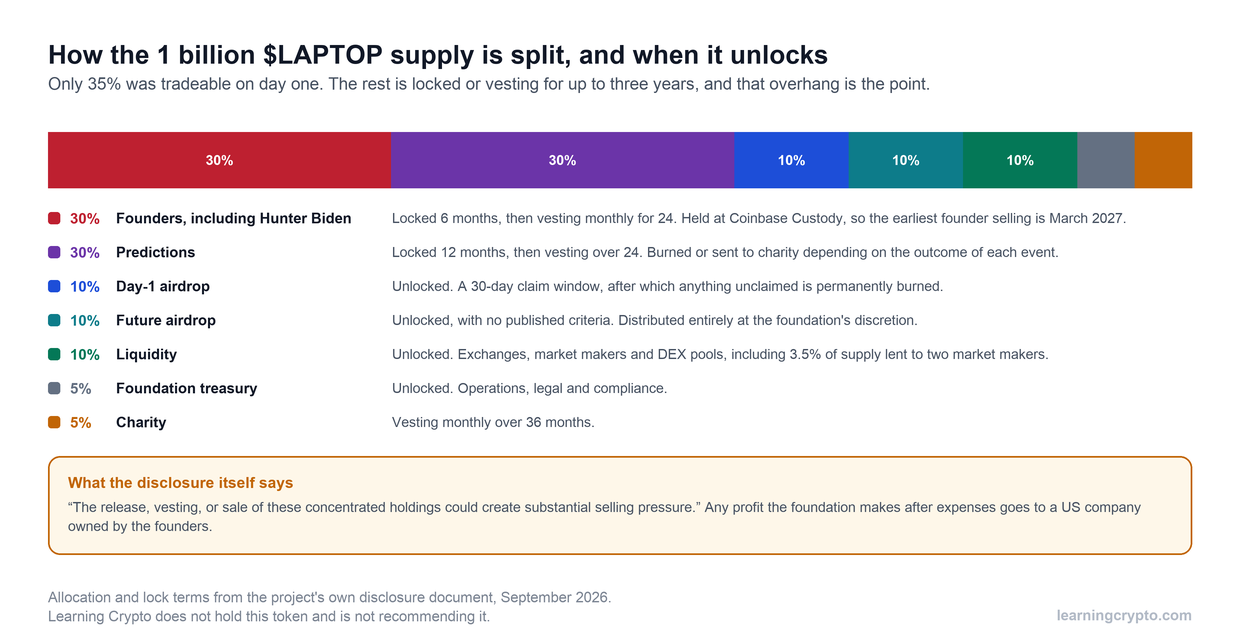 Scams & Risk
$LAPTOP Memecoin: What Hunter Biden's Token Is, and What It Is Not
$LAPTOP is a memecoin co-founded by Hunter Biden, launched on Base in September 2026 and issued via a Cayman Islands foundation and a BVI company. It has no utility and no price floor, by its issuer's own account. Founders hold 30% of the 1 billion supply, 65% is locked or vesting, and hundreds of fake LAPTOP tokens appeared within hours. This is not an endorsement.
Heidi ChakosScams & Risk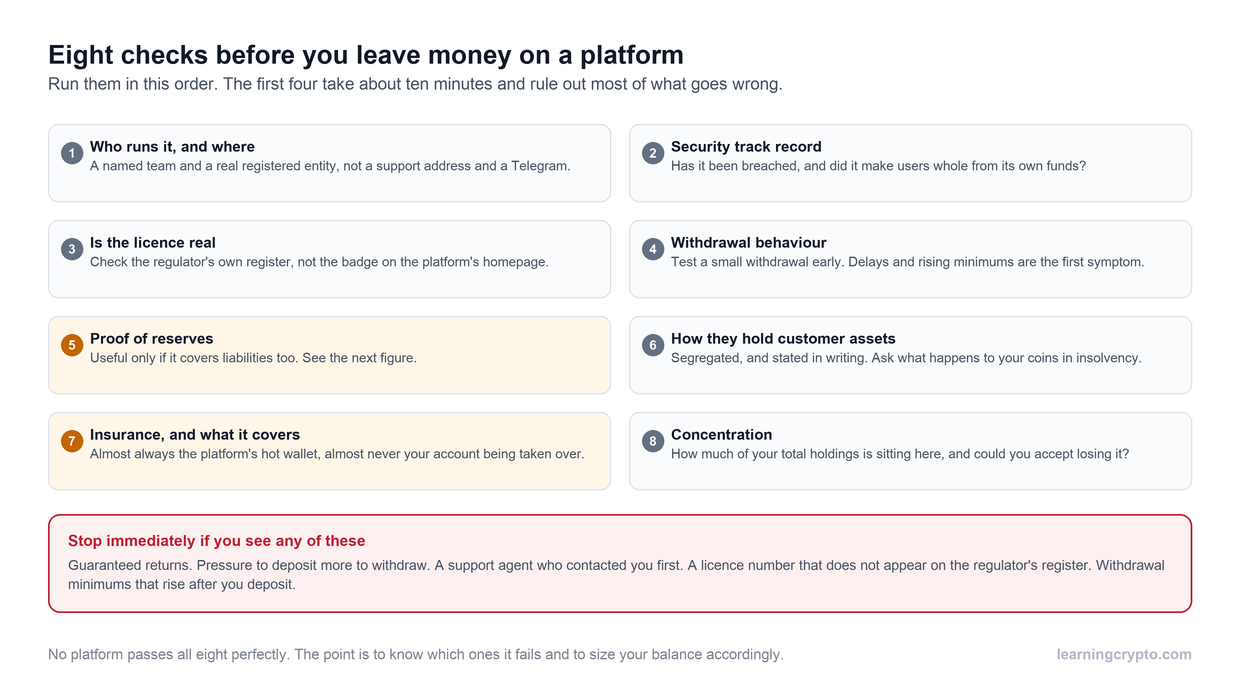 Scams & Risk
How to Tell If a Crypto Exchange or Wallet Is Safe
Judging a crypto platform comes down to eight checks: who holds the keys, the security track record, proof of reserves, licensing, insurance, transparency, account controls and how easily you can withdraw. The most reliable warning sign is difficulty getting your own money out.
Heidi ChakosScams & Risk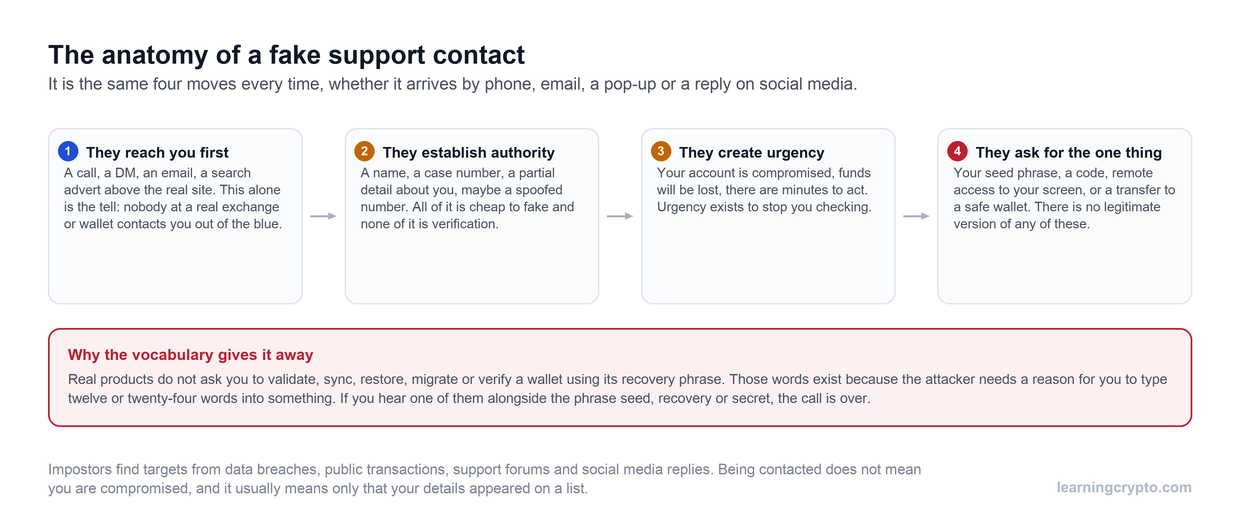 Scams & Risk
Fake Crypto Support Scams: How the Con Works
Nobody in crypto has support that contacts you first. Fake support scams reach you after you ask for help publicly, then ask for one of four things: your recovery phrase, a two-factor code, remote access to your computer, or a transfer to a validation address. All four are the scam.
Heidi ChakosScams & Risk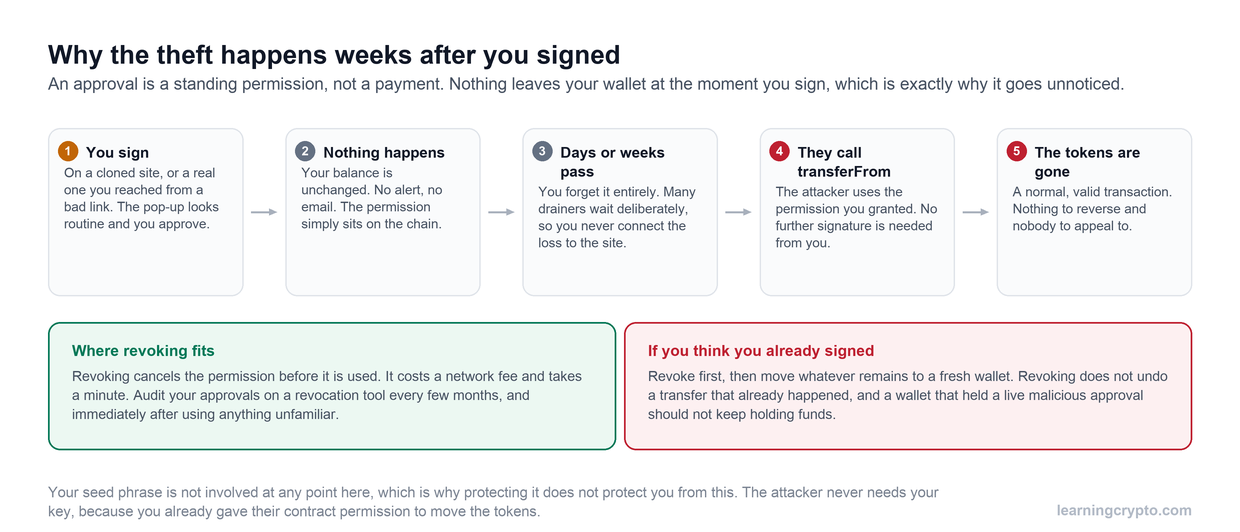 Scams & Risk
Token Approval Phishing: How Wallet Drainers Empty Wallets
Token approval phishing tricks you into granting a malicious contract permission to spend your tokens, then transfers them later. Your seed phrase is never exposed, and a hardware wallet will sign it if you confirm. The defences are bounded approvals, reading the device screen, and revoking old permissions periodically.
Heidi ChakosWallets & Custody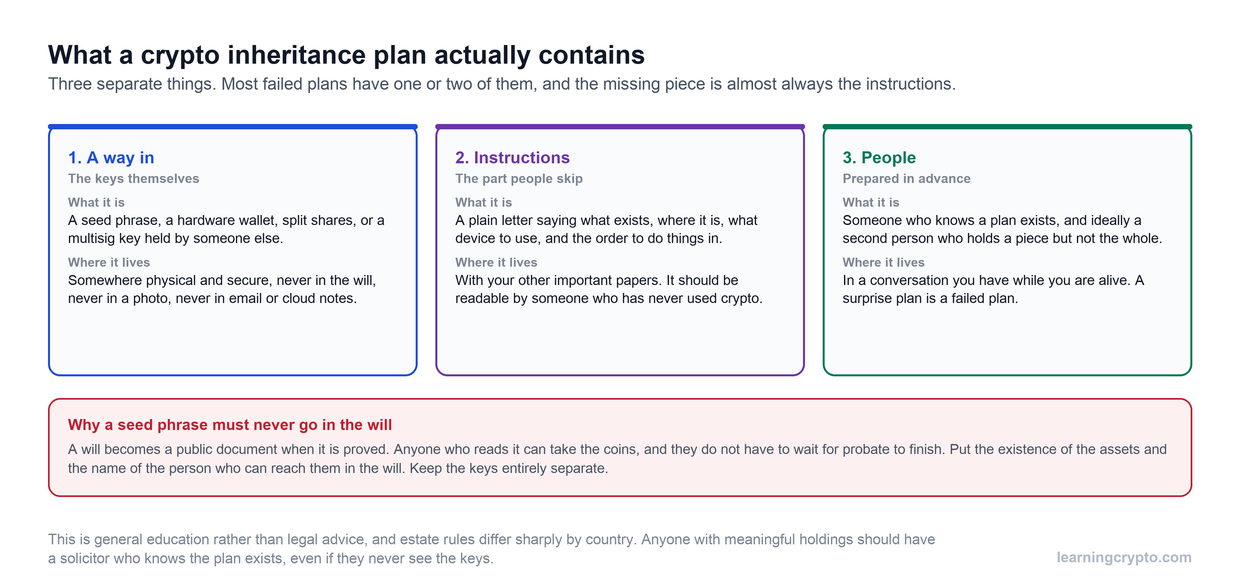 Wallets & Custody
Crypto Inheritance: How to Pass On Your Crypto Safely
A crypto inheritance plan needs three things: an access method that gets keys to your heir, plain-language instructions they can follow, and a will that establishes who is entitled to what. Never write a seed phrase in the will itself, because probate usually makes it a public document.
Heidi ChakosWallets & Custody Wallets & Custody
Multisig Operational Playbook: A Guide to Secure Shared Crypto Custody
A multisig operational playbook is a written set of procedures for running a multi-signature wallet: who initiates, signs, audits and recovers; how signers are geographically spread and backed up on hardware wallets; a step-by-step signing ceremony with independent checks of address, amount and network; and scheduled audits and drills. The M-of-N threshold and separation of duties stop any one person controlling the funds.
Heidi ChakosAnalysis Analysis
How to Read a Crypto Whitepaper
Read a crypto whitepaper like a sceptic, not a fan: ask whether the problem is real, whether blockchain is actually needed, how tokens are distributed and vested, and whether the team is named and verifiable. Insider allocations above 30 to 40% with vesting under 12 months, plagiarised text, no working product and an anonymous team raising large sums are the main red flags.
13 min read/Heidi Chakos