
Realistically, the industry expects a decade-plus runway 2035–2045 to complete migration to quantum-safe algorithms. The transition will be gradual and manageable. A genuine engineering challenge, not an extinction event for Bitcoin.
What You'll Learn about Bitcoin & Quantum Computing
The real numbers behind quantum computing today vs. what's actually needed to threaten Bitcoin
Which Bitcoin are vulnerable right now and the simple steps to protect yours from future quantum attacks
Why headlines exaggerate the threat and how to separate quantum hype from scientific reality
Bitcoin's upgrade roadmap to quantum-resistant cryptography and why the network has years of advance warning
The bigger picture: How banks, governments, and the entire internet face the exact same quantum challenge
Every few months, a new headline drops: "Google's Willow chip achieves quantum breakthrough!" or "IBM hits 1,000 qubits!" And every time, Bitcoin holders ask the same question: Should I be panicking right now?
The short answer? No. But the full story is way more interesting than that.
Yes, quantum computers could theoretically crack Bitcoin's encryption. But there's a massive gap between "theoretically possible" and "actually happening."
We’re going to cut through the fear-mongering to show you what quantum computers can actually do today, and when they might become a real challenge for Bitcoin.
The Quantum Threat to Bitcoin
Quantum computing represents a new frontier in processing power. Unlike classical computers that use bits (0 or 1), quantum computers use qubits, which can exist in multiple states at once, a property called superposition. Combined with entanglement and quantum interference, this allows them to test many possible solutions simultaneously.
For cryptography, that’s a big deal, because Bitcoin’s security depends on certain problems being practically impossible to solve using normal computers.
How Bitcoin Encryption Works
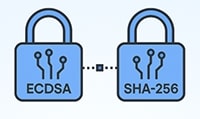
Bitcoin’s security relies on two cryptographic systems working together:
1. ECDSA (Elliptic Curve Digital Signature Algorithm) – this governs ownership.
➜ Public key = your account number (everyone can see it)
➜ Private key = your password (only you should know it)
When you send Bitcoin, you sign the transaction with your private key. That signature proves ownership with no valid signature, no spend.
2. SHA-256 hashing – this protects the mining process.
Miners compete to solve SHA-256 puzzles to add new blocks to the blockchain, securing the network’s history.
Together, these systems have kept Bitcoin unbroken for 16+ years. That’s a serious track record.
The Two Types of Bitcoin Addresses
Pay-to-Public-Key (P2PK) – The original format (2009–2010)
Early Bitcoin addresses exposed your full public key directly on the blockchain. Anyone can see it from the moment coins arrive.
Around 2 million BTC still sit in these old addresses; this includes roughly 1.1 million believed to belong to Satoshi Nakamoto.
Pay-to-Public-Key-Hash (P2PKH) – The smarter successor
Introduced in 2010, this format hides your public key behind two layers of hashing (SHA-256 + RIPEMD-160).
Your actual public key stays secret until you spend from that address.
Once you spend, your public key becomes visible forever - which is why address reuse is a bad idea. One and done.
What Quantum Computers Could Theoretically Break
Shor’s Algorithm: The Real Threat
In 1994, mathematician Peter Shor proved that a sufficiently powerful quantum computer could defeat ECDSA by solving the discrete logarithm problem - the mathematical wall protecting private keys.
The attack sequence would look like this:
Public key becomes visible when you spend.
Quantum computer runs Shor’s algorithm.
Private key derived from the public key.
Attacker forges your signature and steals your Bitcoin.
That’s the core quantum risk, but it remains entirely theoretical today.
Grover’s Algorithm: The Mining Myth
Grover’s algorithm can search faster through possible hashes, theoretically giving a 2× speedup in mining.
Sounds scary? Not really.
It’s a quadratic, not exponential, advantage.
Quantum chips are far slower than ASIC miners.
Even if it ever mattered, Bitcoin could simply upgrade to SHA-512 or another hash function.
Building a quantum miner powerful enough to compete is a far greater challenge than breaking signatures. If that day ever comes, the fix is simple: double the hash length and move on.
The Current State of Quantum Computing
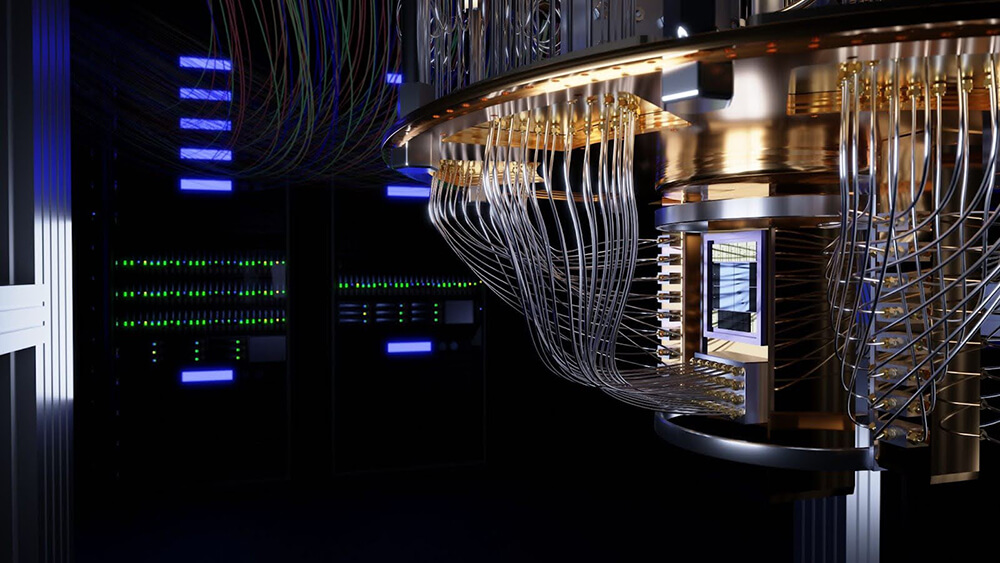
Quantum computing has come a long way since IBM’s first five-qubit processor in 2016, but it’s still a prototype technology, not a weapon capable of breaking Bitcoin.
To threaten modern cryptography, we’d need a fully functional “cryptographically relevant quantum computer” (CRQC). One that can run Shor’s algorithm on a large scale with millions of stable, error-corrected qubits. Today’s machines aren’t anywhere near that mark.
Where Quantum Technology Actually Stands
IBM unveiled its Condor chip in late 2024, boasting just over 1,000 physical qubits - a milestone, but still plagued by instability and noise.
Google’s Willow processor hit roughly 200 qubits, demonstrating complex quantum simulations but not cryptographic workloads.
IonQ, Rigetti, and Quantinuum are making progress in coherence time and error correction, yet each logical (usable) qubit may require 1,000 or more physical qubits for reliable computation.
What's needed to break Bitcoin? ~13 million stable qubits.
See the problem? We're not even close. We're about 13,000 times away from the firepower needed to threaten Bitcoin.
The Qubit Quality Problem
Here's the dirty secret about today's quantum computers: their qubits are noisy as hell.
Current qubits suffer from something called decoherence. They lose their quantum state crazy fast, leading to tons of errors.
This is why scientists distinguish between:
Physical qubits = the actual quantum bits in the machine (noisy, error-prone)
Logical qubits = reliable quantum bits after error correction
The ratio? You might need 1,000 physical qubits to create just 1 logical qubit that can actually perform useful calculations reliably.
So when IBM says they have 1,000 qubits, that might translate to maybe 1-10 usable logical qubits after error correction. And remember, Bitcoin needs 13 million logical qubits.
Do the math. We're not just years away but potentially more like decades away.
The Timeline Question
So when should you actually start worrying?
Conservative estimates (the realistic ones):
NIST and cybersecurity experts: 2035-2040 at the earliest
Some research pushes this to 2045-2050 or later
The UK's National Cyber Security Centre is planning a full post-quantum migration by 2035
Optimistic estimates (from quantum computing companies with funding to raise):
"Maybe 2030-2035!"
Take these with a massive grain of salt
What history tells us:
Qubit counts have roughly doubled every 1 to 2 years. Sounds like Moore's Law for quantum, right? Except that those extra qubits come with mounting error rates and stability challenges. It's not a clean exponential curve to 13 million functional qubits.
The consensus view is that Bitcoin has at least 10-15 years of preparation time, probably considerably more.
That's not "quantum computers are coming next Tuesday." That's "we have over a decade to get our house in order."
So while the quantum race is heating up, Bitcoin isn’t on the chopping block.
Bitcoin's Current Vulnerability Profile
How Many Bitcoin Are Actually at Risk?
If someone flipped a switch and had a Bitcoin-breaking quantum computer right now, how much could they steal?
The answer: About 4.5 million Bitcoin
Here's how it breaks down:
~2 million Bitcoin in old P2PK addresses
These are from Bitcoin's first year (2009-2010)
Public keys are permanently visible on the blockchain
Includes Satoshi's estimated 1.1 million Bitcoin that have never moved
Most of these are probably lost forever (private keys gone)
~2.5 million Bitcoin in reused P2PKH addresses
These were safe when created
But owners spent from them at least once, exposing the public key
Now permanently vulnerable
Interestingly, research shows that reused P2PKH addresses grew from 2010 to 2014 as Bitcoin exploded in popularity. Since 2014, that number has been slowly declining. People are finally following best practices and not reusing addresses.
Fun fact: About 95% of those early P2PK Bitcoin have never moved. They're not sitting in some careful holder's wallet; rather, they are almost certainly lost to history.
The "Harvest Now, Decrypt Later" Attack
Here's where it gets a touch unsettling.
The Federal Reserve published a paper recently warning about something called "Harvest Now, Decrypt Later" (HNDL). Catchy name, scary concept.
Here's how it works:
The Bitcoin blockchain is completely public, so anyone can download the entire thing
Bad actors can copy it right now (or already have)
They store all that encrypted data
They wait for quantum computers to become available
Then they decrypt everything retroactively
This threat is already active. It started the moment Bitcoin launched.
For P2PK addresses and reused P2PKH addresses, the public keys are already visible. An adversary could have them stored, ready to crack the moment they get quantum access.
For unused P2PKH addresses, you're safe until the moment you make a transaction. Then your public key enters the mempool (the waiting room for unconfirmed transactions), giving attackers a brief window to strike.
The Federal Reserve researchers call this a "present and ongoing" vulnerability. The clock's already ticking. We just don't have quantum computers powerful enough to exploit it yet.
It’s like someone taking photos of your locked safe right now, betting that in 15 years they'll have a tool that can crack it just by analyzing the photos.
Bitcoin’s Quantum Defense Mechanisms
Despite the buzz, Bitcoin isn’t sitting idle. Its core design already includes several layers of protection that delay or even prevent quantum attacks, and developers are planning ahead for the day when post-quantum cryptography becomes necessary.
Built-In Protections Already in Place
1. Hidden Public Keys
Most Bitcoin addresses (P2PKH or P2WPKH) don’t expose their public keys until coins are spent. This means that as long as you haven’t made a transaction, a potential quantum attacker has nothing to target. It’s like keeping your safe locked and your key hidden.
2. Automatic Address Rotation
Modern wallets already generate a fresh address each time you receive Bitcoin. This “address-per-transaction” rule prevents reuse and limits any exposure window. Even if one address were compromised, others remain secure.
3. The Narrow Attack Window
When you do send Bitcoin, your public key becomes visible only for a short period - while your transaction waits in the mempool for miners to confirm it. A quantum computer would have to:
Spot that transaction instantly,
Derive the private key within minutes, and
Broadcast a competing transaction faster than the miners.
Given the current state of quantum hardware, this scenario is mathematically impossible for decades.
4. Lightning Network Advantage
The Lightning Network adds another layer of safety. In Lightning channels, the public key is hidden until the channel closes, meaning attackers have no opportunity to pre-empt or steal funds mid-transaction.
Planned Quantum-Resistant Upgrades
The Bitcoin developer community and global cryptography researchers are already testing new digital signature systems designed to survive the quantum era.
The U.S. National Institute of Standards and Technology (NIST) finalized its post-quantum cryptography (PQC) standards in 2024, selecting algorithms like CRYSTALS-Dilithium, FALCON, and SPHINCS+. These algorithms resist both classical and quantum attacks.
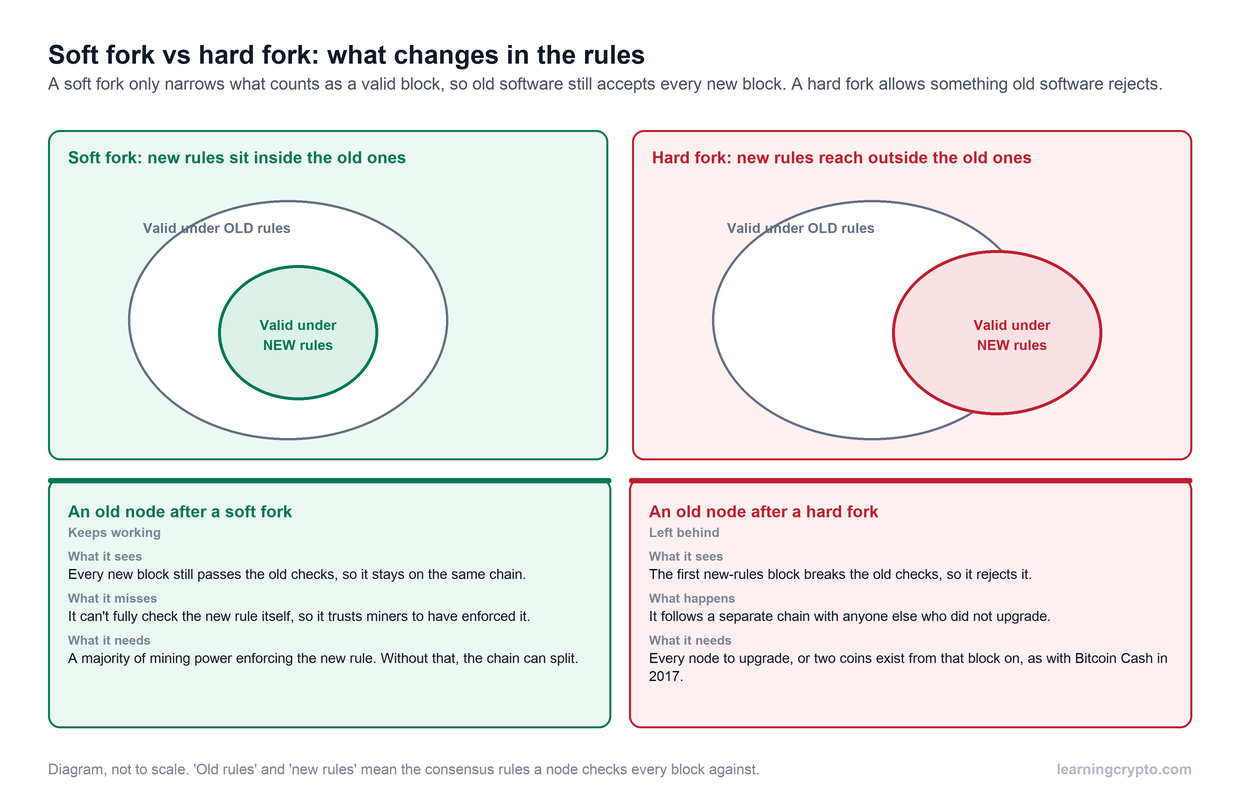
Bitcoin can adopt such signatures through a soft-fork upgrade similar to previous improvements like SegWit (2017) and Taproot (2021) without breaking existing wallets. The likely approach is a gradual rollout:
Introduce new, quantum-safe address types.
Encourage users and exchanges to migrate voluntarily.
Eventually deprecate older, vulnerable address formats.
Developers estimate a full transition could be completed in five to seven years once the need arises, well before a functional cryptographically relevant quantum computer appears.
Multi-Year Warning Period
Unlike sudden hacks or exploits, quantum progress is highly visible. Research milestones, published papers, and hardware announcements all happen in public view. Bitcoin’s open-source nature means the community will have years of preparation time before any genuine risk materializes.
In short, Bitcoin’s security model isn’t static; it's adaptable by design. The same network that integrated SegWit and Taproot can integrate quantum-resistant signatures too. When that day comes, users will simply move their coins to new wallets and carry on.
Quantum computing may change cryptography, but Bitcoin was built to evolve, not vanish.
Other Systems Face the Same Threat
Banking and Financial Infrastructure Face Identical Risks
Here's something the "Bitcoin is doomed" crowd conveniently forgets: literally everything else is vulnerable too.
Banks, credit card networks, SWIFT payment systems, government communications - they all rely on RSA and ECC encryption. The exact same cryptography that quantum computers could theoretically break.
Your bank account? Protected by the same vulnerable encryption.
Credit card transactions? Same deal.
SSL/TLS certificates securing every website you visit? Yep, same problem.
Government and military communications? Also at risk.
If quantum computers crack Bitcoin, they will also crack the entire digital financial system at the same time. This isn't a Bitcoin problem; it's a civilization-wide cryptography problem.
Why Bitcoin Might Actually Be Better Positioned
Ironically, Bitcoin may have some advantages over traditional financial systems when it comes to quantum migration:
Speed of decision-making – Bitcoin's decentralized governance might sound messy, but it can actually move faster than banks buried in bureaucracy and legacy system constraints. No board meetings, no regulatory red tape slowing down critical security upgrades.
Open-source transparency – Every line of Bitcoin's code is public. Every upgrade proposal is visible. There's no trusting that your bank "probably" implemented quantum-safe measures correctly—with Bitcoin, you can verify it yourself.
Global security community – Thousands of researchers and developers worldwide are actively working on Bitcoin's security. That's a lot of eyes looking for problems and solutions.
Financial incentive at scale – With over $1 trillion in network value on the line, there's massive motivation to get this right. Bitcoin holders have skin in the game.
No legacy system baggage – Banks are stuck maintaining decades-old infrastructure. Bitcoin can implement cleaner transitions to new cryptographic standards through proven upgrade mechanisms like soft forks.
Everyone's on the Same Clock
NIST’s post-quantum standards were finalized in 2024, giving both public and private sectors roughly a decade to transition. Banks, governments, and cryptocurrencies alike must move before quantum computers reach the danger zone in the 2035–2045 window.
If Bitcoin were somehow to fail to adapt, so would most of our major institutions and businesses
The race isn’t “Bitcoin versus quantum,” it’s humanity versus math and Bitcoin just happens to be one of the best-prepared players on the field.
What About Other Cryptocurrencies?
The Major Players Are All Vulnerable
If you're thinking about diversifying into other cryptocurrencies to escape quantum risk... don't. Most major cryptocurrencies face identical or worse quantum vulnerabilities than Bitcoin.
Ethereum – Still relies heavily on ECDSA for transaction signatures, just like Bitcoin. Ethereum researchers are exploring zero-knowledge proof (ZK-proof) systems and have discussed quantum resistance as part of their long-term roadmap, but the core cryptography remains vulnerable. The planned transition to quantum-safe algorithms is still theoretical.
XRP – Uses ECDSA signatures and the same elliptic curve cryptography that quantum computers could break. Ripple Labs has acknowledged the quantum threat but has not yet implemented quantum-resistant solutions. Same timeline, same problem.
Solana – Introduced an optional "quantum-secure vault" feature in 2025 for storing funds, which is a step in the right direction. However, the network's core validator infrastructure still runs on classical cryptography. It's more of a band-aid than a comprehensive solution.
The "Quantum-Proof" Crypto Claims
Some newer cryptocurrencies market themselves as "quantum-resistant" or "quantum-proof" from day one. Projects like QAN, Quantum Resistant Ledger (QRL), and IOTA claim to use post-quantum cryptography.
Should you trust them?
The honest answer: maybe, but with caution.
These projects use newer cryptographic schemes like hash-based signatures or lattice-based cryptography that are theoretically quantum-resistant.
But do consider:
They haven't been battle-tested at Bitcoin's scale (16+ years, trillions in transaction volume)
Some use experimental cryptography that hasn't faced the same scrutiny as NIST-standardized algorithms
A "quantum-proof" blockchain with minimal adoption and liquidity isn't necessarily safer than a widely adopted network planning for a transition.
All major cryptocurrencies face the same quantum challenge. Most are taking similar approaches to Bitcoin by monitoring quantum progress and planning eventual migration to post-quantum cryptography.
There's no magic quantum-proof cryptocurrency that solves this problem while everyone else is doomed. Anyone claiming otherwise is either misinformed or trying to sell you something.
What Bitcoin Holders Should (and Shouldn't) Do
Do’s
✓ Use each address only once – Modern wallets do this automatically, but make sure yours generates a fresh address for every transaction. Once you spend from an address, don't use it again.
✓ Move funds from old P2PK addresses – If you have Bitcoin from 2009-2010 in original pay-to-public-key addresses, transfer them to modern P2PKH or SegWit addresses now. These old addresses are permanently exposed.
✓ Stay informed about quantum developments – Follow Bitcoin Improvement Proposals (BIPs) and major quantum computing announcements from reliable sources. Knowledge beats panic every time.
✓ Relax and hold long-term - Quantum computing is a 2035+ problem. You have plenty of time to react when real progress arrives.
What You Shouldn’t Do
✗ Don't panic-sell based on quantum headlines – The timeline is 10-15+ years, minimum. Selling now because of quantum fear means locking in losses over a distant, manageable threat.
✗ Don't assume quantum computers will appear overnight – Quantum progress is public and incremental. There will be years of warning before any practical threat emerges. No surprise attacks.
✗ Don't treat this as Bitcoin-specific – Quantum threatens all digital security equally. Selling Bitcoin to hold dollars in a "quantum-vulnerable" banking system doesn't reduce your exposure.
✗ Don't fall for "quantum-proof" altcoin claims – Projects claiming to be the "only quantum-safe crypto" are usually overstating their case. Bitcoin can (and will) upgrade to the same quantum-resistant algorithms.
Quantum Threat? Real. Bitcoin's Demise? Greatly Exaggerated
There’s no sugarcoating it; quantum computers pose a genuine long-term challenge to Bitcoin's cryptography. But "long-term" 2035-2045 at the earliest, with most estimates pushing even further out.
Bitcoin holders have no reason to panic. This isn't a Bitcoin-specific problem. If quantum computers break Bitcoin, they will likely break everything else first.
From our perspective, if quantum computing advances fast enough to threaten cryptocurrency in the next decade, we'll have much bigger worries than Bitcoin prices. The entire global financial system, internet security, and government communications would be compromised simultaneously.
Bitcoin has survived and evolved through many years of challenges. The quantum threat is just another chapter in that story and not the final one.
For now, focus on what you can control: never reuse addresses, keep your private keys secure, and stay informed about Bitcoin developments.
Want to continue building your knowledge?
Learning Crypto offers AI-driven education, portfolio tracking tools, and real-time market analytics to help you stay ahead.
Start learning with Learning Crypto today →
Resources & Further Reading
Federal Reserve Board
NIST (National Institute of Standards and Technology)
NIST Post-Quantum Cryptography
Bitcoin Improvement Proposals (BIPs)
Track proposed upgrades and quantum-resistant signature schemes
Frequently asked questions
How many qubits would it take to break Bitcoin's encryption?
Roughly 13 million stable, error-corrected qubits, according to the estimates in the article. Today's best machines have just over 1,000 physical qubits, and those are noisy: it can take around 1,000 physical qubits to produce one reliable logical qubit. So IBM's 1,000-qubit Condor chip may amount to only a handful of usable qubits. The gap is measured in decades of engineering, not years.
Which Bitcoin addresses are vulnerable to a quantum attack?
Two groups, totalling about 4.5 million BTC. First, around 2 million BTC in original Pay-to-Public-Key (P2PK) addresses from 2009 to 2010, where the public key is permanently visible; this includes roughly 1.1 million believed to be Satoshi's, most of it probably lost. Second, about 2.5 million BTC in P2PKH addresses that were reused, since spending from an address exposes its public key forever.
How would Bitcoin upgrade to quantum-resistant cryptography?
Through a soft fork, the same upgrade path used for SegWit in 2017 and Taproot in 2021, so existing wallets keep working. NIST finalized its post-quantum standards in 2024, including CRYSTALS-Dilithium, FALCON and SPHINCS+. The likely rollout is gradual: introduce quantum-safe address types, encourage users and exchanges to migrate, then deprecate old formats. Developers estimate a full transition could take five to seven years once it begins.
What can I do now to protect my Bitcoin from quantum computers?
Use each address only once. Modern wallets generate a fresh receiving address automatically, so the main thing is never to send coins back to an address you have already spent from. If you hold coins from 2009 or 2010 in original P2PK addresses, move them to a modern P2PKH or SegWit address, since those old ones are permanently exposed. Beyond that, keep your private keys secure and follow Bitcoin Improvement Proposals.
Keep learning
- Why Bitcoin Was Created: An Introduction To Bitcoin
- What is a Lightning Wallet? [Explained] - How it Works?
- What Are Privacy Coins and Are They Legal?
- More guides in the Bitcoin hub
- Members: Satoshi Indicator, a daily Bitcoin DCA signal for members