
Bitcoin and gold are both hard assets people buy to store wealth outside the traditional financial system. Gold has been doing it for over 5,000 years with a market cap north of $33 trillion. Bitcoin has been doing it for 16 years, peaking above $126,000 in October 2025. They share some properties like scarcity and no counterparty risk, but they behave very differently in practice. One sits in a vault. The other lives on a decentralized network you can access from anywhere with an internet connection. |
Gold bugs think Bitcoiners are gambling on magic internet money. Bitcoiners think gold bugs are clinging to a shiny rock while the world moves on without them. This argument has been running for over a decade now, and neither side has managed to shut the other up.
That could be because they're both partially right.
Gold has survived every empire, every financial crisis, and every currency collapse for 5,000 years. That's not nothing. Bitcoin has gone from literally worthless to over $126,000 in sixteen years. That's not nothing either.
You've probably seen the "Bitcoin is digital gold" take a hundred times by now. We're not doing that here. Gold and Bitcoin both have a case to present.
What You’ll Learn
→ 5,000 years of receipts: why gold still has the strongest CV in finance
→ 16 years and a 100,000x return: Bitcoin's counter-argument
→ The $33 trillion gap: how far Bitcoin still has to climb to match gold, and what that number actually means
→ Head-to-head: scarcity, portability, seizure risk, volatility, and the stuff that actually affects your stack
→ Bitcoiner, gold bug, or both? Why the smartest money might not be picking sides
The Argument for Gold

Look, we're a crypto education platform. You know where our bias sits. But writing off an asset with a 5,000-year track record because we prefer a different one would be lazy. And lazy analysis gets expensive fast.
So here's Gold's case. On its own terms.
Every civilization that ever minted coins figured out the same thing: gold works. The Romans used it. The Byzantines used it. The British Empire ran on it. Five thousand years of humans independently arriving at the same conclusion is a hard data set to argue with.
And it's not just ancient history. Gold has pushed past $4,600 per ounce. Central banks are buying aggressively, with China's PBOC on a purchasing streak that stretched over a year. The total gold market cap sits north of $33 trillion. That's not a relic. That's the single largest store of value on the planet.
Why Gold Works
Gold doesn't need electricity. It doesn't need the internet. It doesn't need a password. You can hold a coin in your hand, and it's yours. No counterparty risk. No exchange to get hacked. No software update that breaks something.
It barely corrodes. You can melt it down and reshape it endlessly without losing anything. It's scarce enough to hold value but available enough to actually use. Nature basically designed the perfect monetary metal, and humans figured that out before they figured out plumbing.
The Crisis Asset
During the 2008 financial crisis, gold climbed while everything else burned. During COVID, it surged past $2,000. Every time people lose faith in the system, gold catches a bid. That pattern has held for longer than any institution on earth has existed.
Gold is one of the few assets with near-zero correlation to equities during crashes. Stocks tank, bonds sometimes follow them down, gold tends to go the other direction. Portfolio managers have used it as a hedge for decades, and it keeps proving them right.
Universal and Useful
You can walk into almost any country on earth, and someone will buy gold from you. No app. No KYC process. No exchange listing required. It's the one asset that doesn't need an ecosystem to function.
And there's a side of gold that gets overlooked in the store-of-value debate. About 10% of annual gold demand comes from industry. Electronics, medical devices, aerospace components. Gold isn't just sitting in vaults looking pretty. It has genuine utility beyond being money, and that industrial demand gives it a price floor that purely monetary assets don't have.
The Bitcoin Case
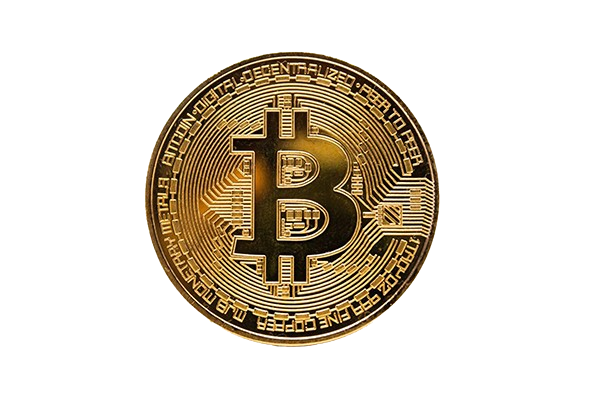
Now for the one we love to talk about.
Bitcoin has existed for less than two decades. In that time, it's gone from a whitepaper on a cypherpunk mailing list to a $126,000 all-time high and a market cap that peaked around $2.5 trillion. Whatever you think about it, that trajectory has no precedent in financial history.
Hard-Capped Scarcity
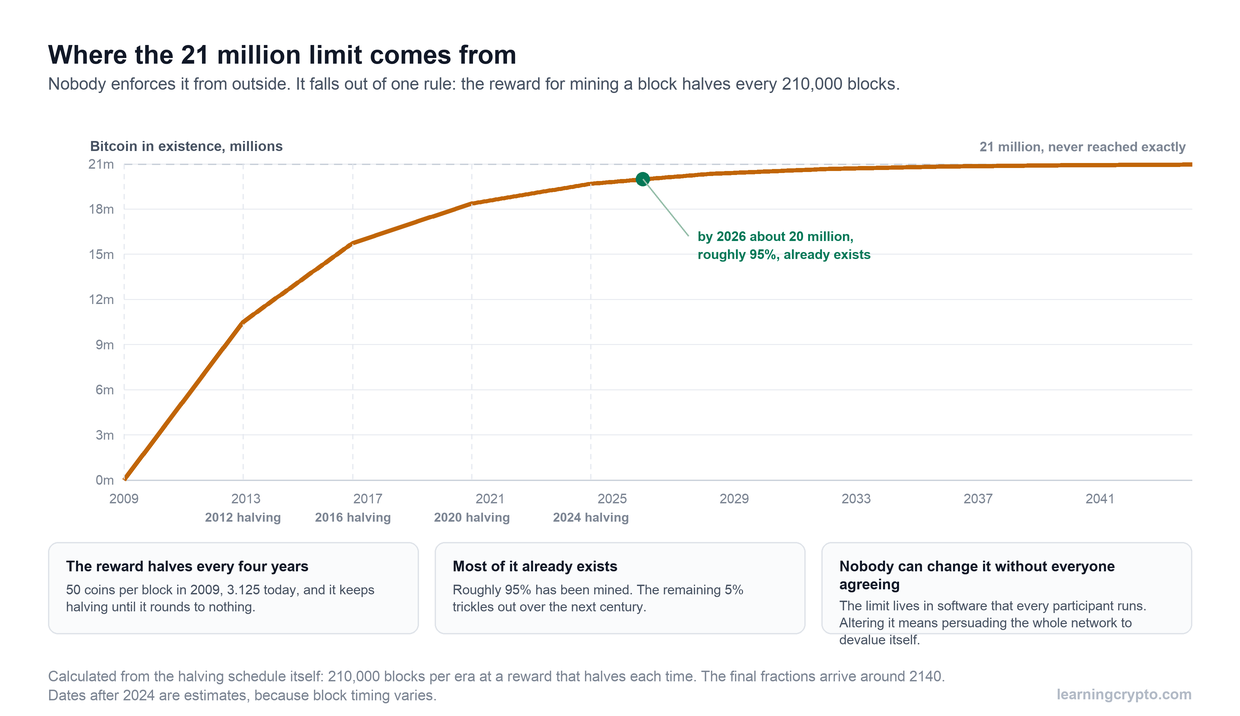
Gold is scarce. Bitcoin is scarcer. And not in a hand-wavy way. There will only ever be 21 million Bitcoin. That's not a target or an aspiration. It's written into the protocol and enforced by a decentralized network of nodes that nobody controls. Over 95% of all Bitcoin that will ever exist is already in circulation.
Gold's supply grows by roughly 1-2% a year through mining. New deposits get discovered. Asteroid mining is no longer science fiction.
Bitcoin's issuance rate drops by half every 4 years through halving events. After the 2024 halving, Bitcoin's annual inflation rate fell below gold's for the first time. The supply curve doesn't bend. It only tightens.
Portability That Gold Can't Touch
You can carry a billion dollars of Bitcoin in your head with a 12-word seed phrase. Cross any border on earth with it. Access it from a phone, a laptop, or a library computer. Send it to someone on the other side of the planet, and it arrives in minutes, not days.
Bitcoin is also divisible down to eight decimal places. You don't need to buy a whole coin. You can own 0.00000001 BTC if that's what you want. Gold doesn't break down like that without industrial equipment and a lot of hassle.
Censorship Resistance
If you hold your own keys, nobody can freeze your Bitcoin. No government, no bank, no CEO. There's no customer support line to call, which is a weakness and a strength depending on your perspective. But for anyone who's ever had a bank account frozen or a payment blocked for no clear reason, the appeal is obvious.
Bitcoin doesn't care about your nationality, your politics, or your credit score. It doesn't ask permission. That's not a side effect of how it was built. That's the entire point.
The Numbers
Bitcoin's market cap currently sits around $1.4 trillion. Gold's is north of $33 trillion. For Bitcoin to match gold's total value, each coin would need to reach roughly $1.6 million. That's about a 20x from current prices. Sounds ambitious, and it doesn't mean it will happen. But the maths isn't as absurd as it sounds on first read.
Gold vs Bitcoin: Head to Head
Both assets get called "stores of value." Both have passionate communities who'll argue about them until the sun burns out.
Feature | Gold | Bitcoin |
Track record | 5,000+ years | 16 years |
Market cap | ~$33 trillion | ~$1.4 trillion |
Supply | Grows 1-2% yearly | Hard capped at 21 million |
Portability | Heavy, slow, expensive to move | Borderless in minutes |
Divisibility | Difficult without industrial tools | Down to 8 decimal places |
Seizure risk | Confiscated before (US, 1933) | Extremely difficult with self-custody |
Volatility | Low | High. 40-50% drawdowns happen |
Needs to function | Nothing. Just exists | Electricity and the internet |
Market cap figures and prices quoted are accurate as of early 2026.
Scarcity
Both are scarce. But they're scarce in different ways. Gold's supply expands slowly through mining, and nobody knows exactly how much is still in the ground. New deposits get found. Deep-sea mining is getting closer. Asteroid mining sounds ridiculous until you remember that people used to say the same thing about private space travel.
Bitcoin's supply is fixed by code. 21 million. Done. The inflation rate drops every four years through halvings, and it's already below gold's. You don't have to trust a geological survey or a mining company's reserves report. You can verify it yourself by running a node. Don't trust, verify. Literally.
Portability
This one isn't close. Gold is beautiful and weighty, and that's exactly the problem when you need to move it. Shipping gold across borders involves armored vehicles, insurance, customs paperwork, and days of waiting. Dividing it for smaller transactions requires specialist equipment.
Bitcoin moves at the speed of the internet. Any amount. Any border. Any time of day. A twelve-word seed phrase in your head is worth whatever you loaded onto it. You could walk through an airport carrying a fortune, and nobody would ever know.
Seizure Risk
Gold bugs love the "no counterparty risk" line. And they're right, sort of. If you're holding physical gold in your own possession, nobody else is between you and your asset.
But governments have taken gold before. Executive Order 6102 in 1933 forced US citizens to surrender their gold to the Federal Reserve at a fixed price. It wasn't a thought experiment. It happened. And it's technically still possible if a government decides the situation calls for it.
Bitcoin with proper self-custody is a different animal. Your keys, your coins. Nobody can freeze a Bitcoin wallet without the private keys. No executive order can force a decentralized network to hand over your funds.
That doesn't mean governments won't try to make your life difficult through regulation or exchange restrictions. But the base layer asset itself? It's built to resist seizure by design.
Volatility
This is where gold wins, and there's no point pretending otherwise.
Gold doesn't drop 45% in three months. Bitcoin does. It did exactly that after hitting its all-time high in October 2025. If you bought at the peak, you were staring at a brutal drawdown within weeks. That kind of move would cause a genuine global crisis in the gold market. In Bitcoin, it’s another day at the office.
For anyone who needs stability above everything else, gold is the safer bet. Period. Bitcoin's volatility is the price you pay for its asymmetric upside. Whether that trade-off works for you is a personal question, not a technical one.
Track Record
Five thousand years versus sixteen. That's the elephant in the room, and Bitcoin maximalists need to sit with it instead of waving it away.
Gold has survived the fall of Rome, two World Wars, hyperinflation, currency collapses, and every financial crisis humans have managed to create. Bitcoin has survived Mt. Gox, the China ban, the FTX collapse, and a whole lot of obituaries. Impressive for a teenager. Not the same as five millennia of battle-testing.
Bitcoin's track record is building fast. But it hasn't been through a true global depression yet. It hasn't been through a multi-decade bear market. It hasn't been through a world war.
Gold has done all of that and come out the other side every single time. That's worth respecting, even if you believe Bitcoin will eventually match it.
Bitcoiner, Gold Bug, or Both?
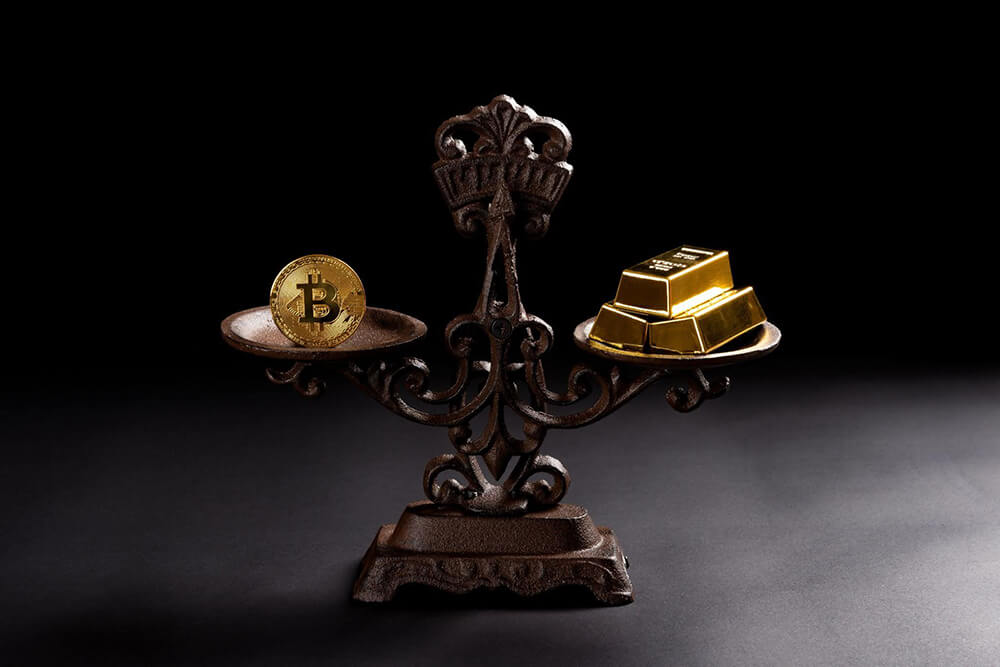
The Twitter wars between gold bugs and Bitcoiners are entertaining. Peter Schiff and the laser-eyes crowd have been going at it for years, and neither side has landed a knockout blow. Probably never will.
But do you have to pick a side?
Gold is the stability play. It's been doing its job for thousands of years, and it's not going to stop because someone invented a better technology.
Bitcoin is the asymmetric upside play. Nothing else in finance has the same combination of fixed supply, decentralization, and growth potential. They're not competing for the same slot in a portfolio.
Some of the sharpest people in finance hold both.
If you are a diehard Bitcoiner or gold is your thing, that’s fine, stand by your convictions, but there’s no rule that you have to hold one or the other.
The allocation between them is personal. There's no magic ratio. But writing off either entirely because of a tribal argument on social media isn't a sound strategy.
Bitcoin vs Gold: Case Closed?
Not even slightly. And that's sort of the point.
Gold isn't going anywhere. It's been the fallback for five thousand years, and a shaky stock market isn't going to change that. But Bitcoin isn't going anywhere either. It's survived everything thrown at it, and the network grows stronger after every crisis that was supposed to kill it.
The real question was never "which one wins." It was always "what are you trying to protect, and from what?" If your answer is inflation and currency collapse, both have a case.
If your answer is government overreach and censorship, Bitcoin pulls ahead. If your answer is stability above all else, gold's your asset.
We're a crypto platform. We believe in decentralization, self-custody, and building wealth outside a system that's rigged to devalue your savings. But we're also not going to tell you gold is worthless just because we prefer Bitcoin. That would be dishonest. And dishonest analysis is exactly what we built Learning Crypto to fight against.
Whichever side you land on, or if you land on both, the important thing is that you understand what you own and why you own it.
Learning Crypto gives you the tools to do exactly that: live on-chain analytics, an AI copilot that pulls verifiable data, and a community of independent learners who care about fundamentals over hype. Join the Classroom on Discord. Track smart money. Build knowledge that holds up when markets move.
FAQs
Why do central banks buy gold but not Bitcoin?
Gold has a centuries-old history as a reserve asset. Central banks understand it, trust it, and have the infrastructure to store and manage it. Bitcoin is still too volatile for most monetary authorities to justify holding.
That said, the picture is shifting. The US now holds seized Bitcoin as a strategic reserve. The Czech National Bank ran a pilot purchase. Deutsche Bank predicts Bitcoin could sit alongside gold on central bank balance sheets by 2030. Most central banks aren't there yet. But "never" is looking less convincing by the year.
Has Bitcoin ever outperformed gold over a full year?
Multiple times, and it's not even close when it does. Bitcoin's annualized return over the last decade is around 230%, compared to gold's 1.5% over the same period. In its best years, Bitcoin has returned thousands of percent while gold moved single digits. But Bitcoin has also had years where it dropped 50-70% while gold held steady or climbed.
Do Bitcoin and gold move in the same direction during crashes?
Gold tends to rise during market panics. That's its whole reputation. Bitcoin has historically dropped alongside stocks in the initial shock phase of a crash, behaving more like a risk asset than a safe haven. During the COVID crash in March 2020, both stocks and Bitcoin fell hard while gold held up. But Bitcoin recovered faster and went on to hit new highs within a year. The pattern so far suggests gold protects you during the crash. Bitcoin rewards you after it.
This guide is part of stage 1 of 8, why crypto exists, in the free Learning Crypto curriculum. Next: CBDCs vs Cryptocurrency: Central Control vs Financial Freedom.
Keep learning
- What Is Wrapped BTC (WBTC)
- How Long Does It Take To Send or Receive Bitcoin? - Understanding Crypto Transactions
- Amir Taaki: Bitcoin Pioneer and Privacy Prophet
- More guides in the Bitcoin hub
- Members: Satoshi Indicator, a daily Bitcoin DCA signal for members