
Our most-watched video of the last two years is about paying zero tax on crypto gains, which tells you how many people are thinking about this. This guide is the written version, with the numbers checked against the 2026 rules. It is for anyone sitting on gains who wants to keep more of them without doing anything that ends in a letter from a tax office. It covers what triggers tax, the seven things that reduce it, what moving country does and does not do, and the three popular ideas that are simply disposals with extra steps.
We are not accountants or tax advisers, and this is education, not advice. Tax law is set by your country, and for Americans by their passport, and it changes every year. Heidi and Toby live in Portugal and hold St Kitts and Nevis citizenship; Heidi gave up her US citizenship after obtaining St Kitts and Nevis citizenship, so US rules no longer apply to her. That shapes what we know first-hand. Rates and thresholds below were checked on 17 September 2026 and are mostly US federal figures; get local advice before acting.
What actually triggers crypto tax?
In the US and most countries, crypto is property. Tax is due when you dispose of it at a gain, and a disposal is broader than most people think.
- Selling for dollars, euros or pounds. The obvious one.
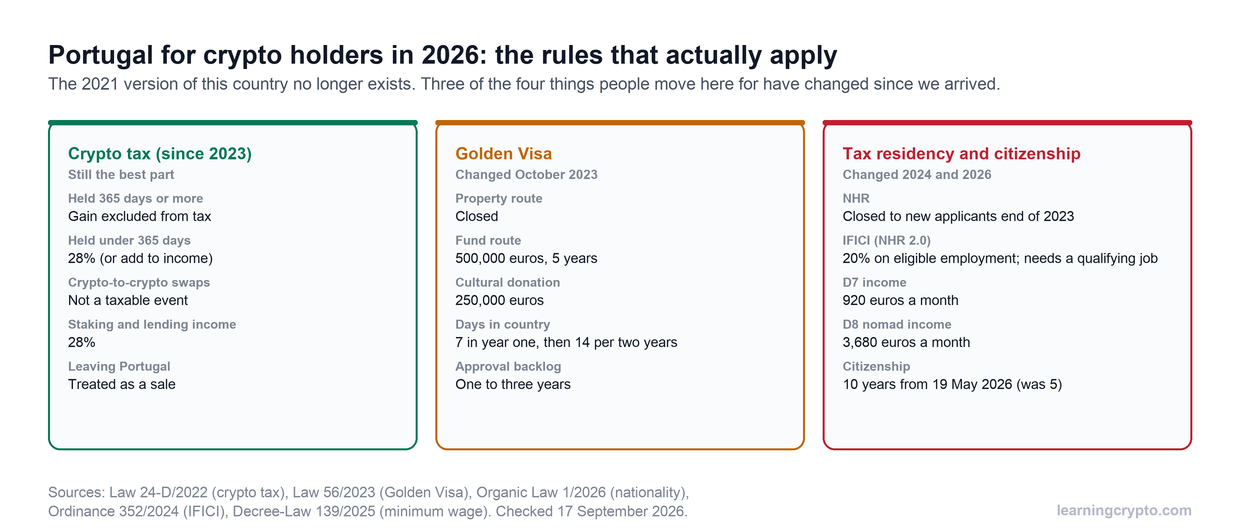
- Swapping one coin for another. Ethereum to Solana is a sale of Ethereum, in the US and in most of Europe. Portugal is a notable exception and does not tax crypto-to-crypto swaps.
- Converting into a stablecoin. Bitcoin to USDC is a sale of Bitcoin. The stablecoin's own later gain is usually trivial, but the first leg is not.
- Spending it. Paying for a flight or a laptop with crypto, including through a crypto debit card, is a sale at that moment's price.
- Receiving it as income. Staking rewards, mining, airdrops and payment for work are ordinary income at the value on the day you received them, and then a new cost basis.
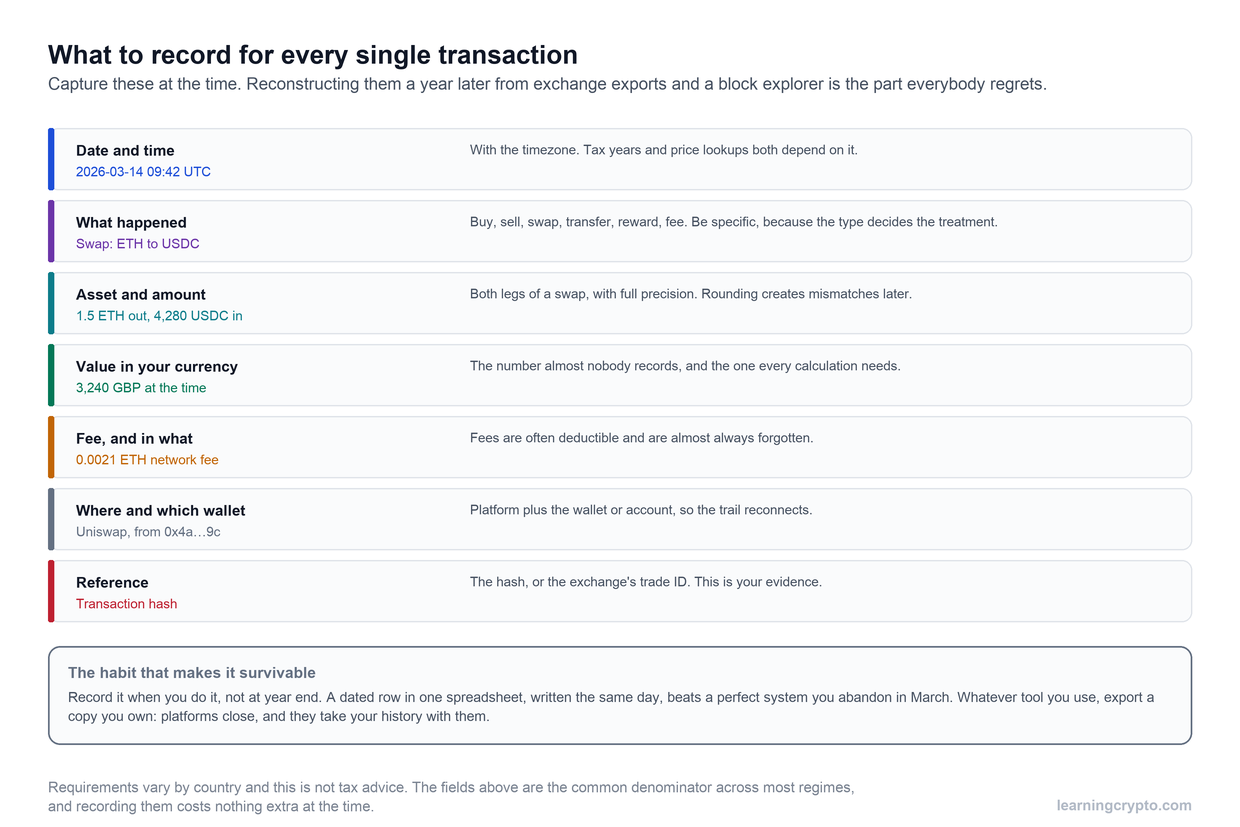
Moving coins between wallets you own is not a disposal. Keep a record of those transfers anyway, because to an exchange or a tax authority a transfer out looks exactly like a sale until you can show otherwise. Our guide to crypto record keeping lists the seven fields to capture for every transaction.
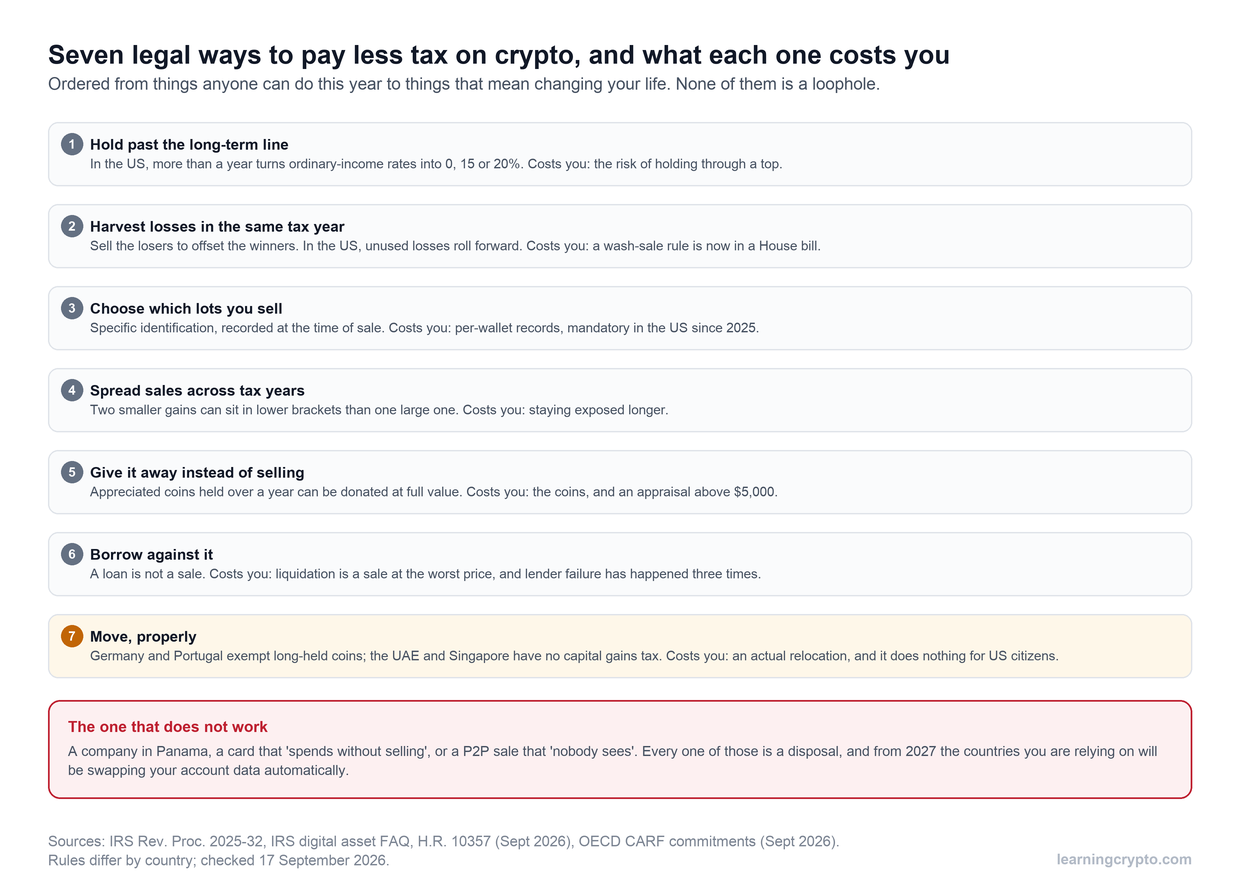
Everything on this list is ordinary tax planning that applies to shares and property too. The order runs from things you can do this year to things that mean changing where you live.
1. Hold past the long-term line
The single biggest lever for most people. In the US, coins held more than one year are taxed at long-term rates of 0%, 15% or 20%, against ordinary income rates of up to 37% for anything sold sooner. For 2026 the 0% band runs to $49,450 of taxable income for a single filer and $98,900 for a married couple, and the 15% band to $545,500 and $613,700, according to IRS Revenue Procedure 2025-32. High earners add 3.8% net investment income tax.
Other countries draw the line differently. Germany exempts coins held more than a year entirely. Portugal excludes gains on coins held 365 days or more. Australia halves the taxable gain after twelve months, though that discount is due to be replaced from July 2027. The UK has no holding-period relief at all. Whatever your country, know where the line is before you sell a large position a few weeks short of it. Heidi's April 2025 video walks through the basics.
Heidi's April 2025 overview: what counts as a taxable event, short versus long-term gains, loss harvesting, and why relocation only works if it is real. Watch it on our CryptoTips channel.
2. Harvest losses in the same tax year
Selling a position that is down locks in a loss that offsets gains you have taken elsewhere. If you made $20,000 on Solana and are holding an altcoin down $10,000, selling the altcoin before the year ends cuts the taxable gain to $10,000. In the US, losses beyond your gains reduce ordinary income by up to $3,000 a year and the rest carries forward.
Two cautions. The loss only helps if it lands in the same tax year as the gain. And the US wash-sale rule, which stops share investors rebuying within 30 days, does not currently apply to crypto, but a bill extending it to digital assets cleared the House Ways and Means Committee on 16 September 2026. Treat selling and immediately rebuying as a window that is closing. The UK already applies same-day and 30-day matching rules to tokens.
3. Choose which coins you sell
If you bought Bitcoin at $10,000 in 2020 and at $60,000 in 2024, selling the 2024 coins realises a much smaller gain than selling the 2020 ones. The IRS allows specific identification of the lots you sell, provided you identify them no later than the time of sale and keep the dates, prices and values. Without that, the default is first in, first out, which usually means the largest gain.
Since 1 January 2025 US taxpayers must track cost basis per wallet or account rather than in one pooled figure. Tax software such as Koinly, CoinTracker or CoinLedger handles this if you connect every wallet, and it is the reason to start the software before the tax year ends, not after.
4. Spread sales across tax years and low-income years
Because rates are banded, one large sale in December can cost more than the same sale split between December and January. A year with low other income, between jobs or in early retirement, can absorb a gain at the 0% or 15% rate that would otherwise be taxed at 20%. This is the least glamorous tactic on the list and, for people with large unrealised gains, often the most valuable. It also pairs with the next point: you do not have to sell into a top all at once. Our guide on how to take profits covers laddering out over time.
5. Give it away instead of selling it
Donating appreciated crypto held more than a year to a qualified charity gives a US deduction for the full market value and no capital gains tax on the appreciation. Above $5,000 you need a qualified appraisal; an exchange price printout does not count, as an IRS chief counsel memo made clear. Gifts to individuals are not disposals for the giver, up to $19,000 per recipient in 2026 without gift-tax paperwork, and the recipient inherits your cost basis. Coins passed on at death get a stepped-up basis, which is why some long-term holders plan never to sell at all; our crypto inheritance plan guide covers the practical side.
6. Borrow against it rather than selling it
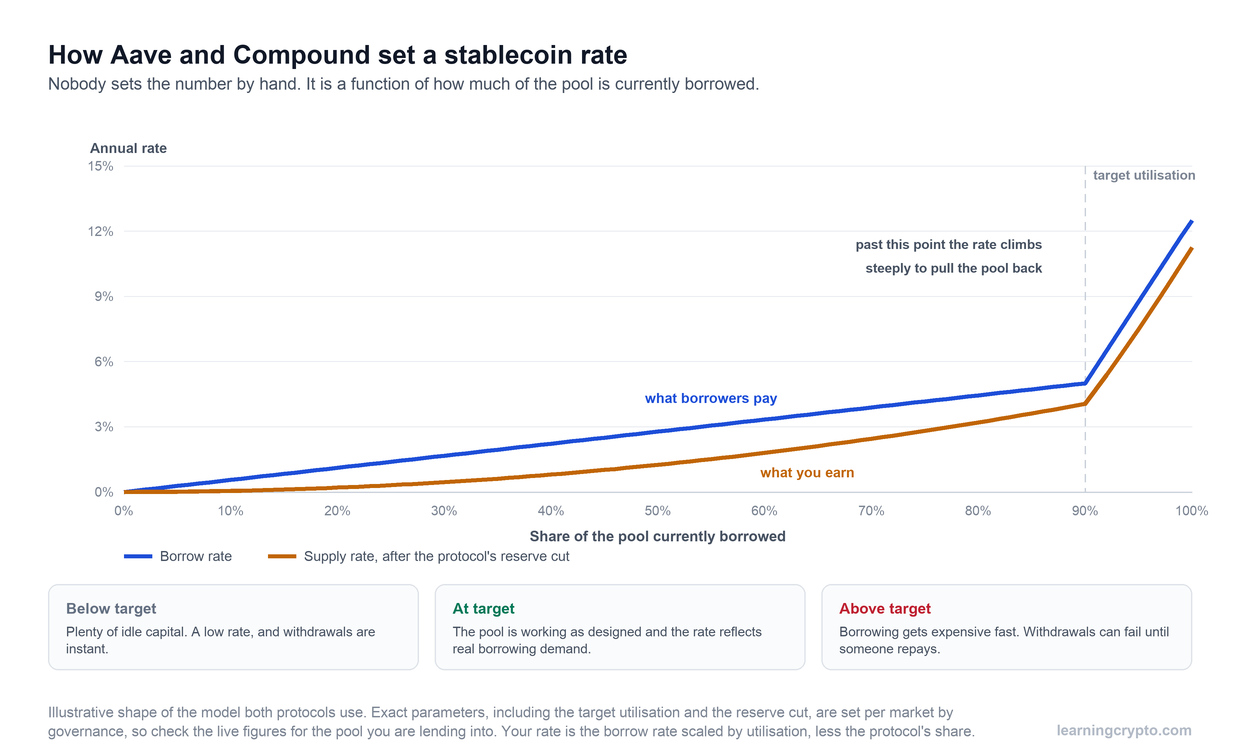
A loan is not income and posting collateral is not a sale, so borrowing against Bitcoin to fund a purchase avoids the tax that selling would trigger. The risks are the reason we mention it last among the ordinary tactics. If the price falls and the lender liquidates your collateral, that is a sale at the worst possible price, and it is taxed. If the lender fails, the collateral goes with it, which is what happened at Celsius, BlockFi and Voyager in 2022. No tax authority has ruled specifically on crypto loans; this rests on general principles. Keep the loan small relative to the collateral, and never lend to anyone paying you a yield to do it.
7. Move, but understand what moving does
This is the part people ask us about most, because we did it. Toby and I moved to Portugal in 2021 on the Golden Visa, and we hold St Kitts and Nevis citizenship. Here is what that changed, and what it did not.
For a US citizen, moving changes nothing. The United States taxes its citizens on worldwide income wherever they live. Dubai, Portugal and a Panama company all leave the federal bill exactly where it was. The foreign earned income exclusion, $132,900 for 2026, covers salary, not capital gains. The only exit is formally renouncing, and that has its own tax: a covered expatriate, meaning net worth of $2 million or more or an average tax bill above $211,000, is treated as having sold everything the day before, with the first $910,000 of gain excluded in 2026, per the IRS expatriation rules. That is a life decision, not a tax tactic, and we will not pretend otherwise.
Everyone else can make moving work, but only if it is real. You have to become tax resident somewhere else, which usually means more than 183 days a year there and cutting the ties that would keep you resident at home, and you have to stop being resident where you were. Some countries charge an exit tax on the way out. Then the destination's rules apply:
| Country | Rule for individuals, 2026 | The catch |
|---|---|---|
| Portugal | Gains on coins held 365 days or more excluded; 28% under that; swaps untaxed | Staking income taxed at 28%; leaving is a deemed sale |
| Germany | Tax-free after one year | A flat 26.375% on coins bought from 2027 is in a draft budget bill |
| Switzerland | Private gains tax-free; annual wealth tax on holdings | Frequent or leveraged trading makes you a professional, taxed as income |
| UAE | No personal income or capital gains tax | Business-scale trading can fall under 9% corporate tax |
| Singapore | No capital gains tax | Trading as a business is taxed |
| El Salvador | No tax on crypto gains | Has not joined the international reporting framework |
| Italy | 33% from 2026, up from 26% | Going the other way; the exemption threshold is gone |
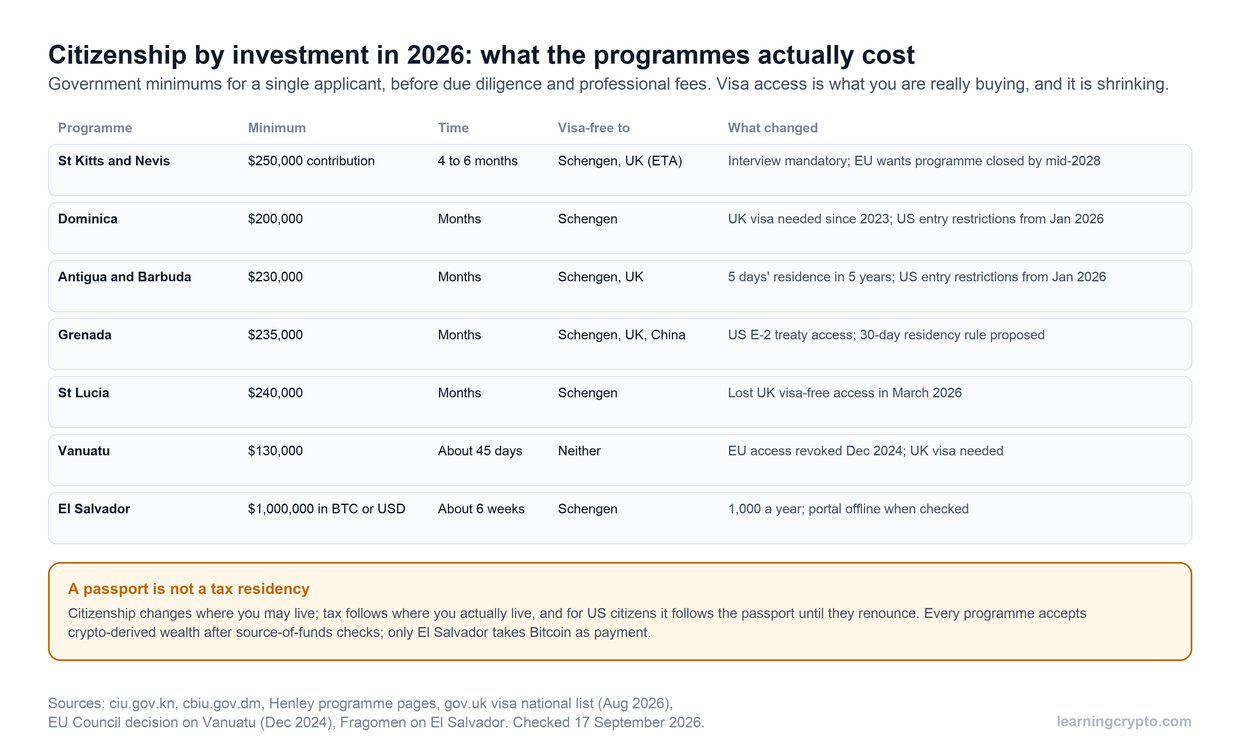
Two other things we learned. First, a second passport is not a tax residency; citizenship changes where you may live, tax follows where you do live. Second, from 2027 the countries in the table start exchanging crypto account data automatically under the OECD's framework, with the UAE, Singapore and Switzerland joining in 2028 and the US in 2029, according to the OECD's commitment list. Heidi covers what that ends, and what it does not, in the March 2026 video below. Our guides to Portugal residency and crypto taxes and second citizenship by investment go into the two routes we took.
Heidi's March 2026 video on jurisdictional arbitrage after CARF: Panama, Switzerland, Liechtenstein, Portugal, second citizenships, offshore trusts, and the US rules that follow Americans everywhere. Watch it on our CryptoTips channel.
What does not work?
- Spending through a crypto card to avoid selling. Every card payment is a disposal at that moment's price. The card is convenient; it is not a tax strategy.
- Swapping into stablecoins to avoid a taxable event. In the US that is the taxable event.
- A company in Panama or a trust in the Cook Islands while you keep living at home. If you are still resident at home, you are still taxed at home, and a US person now has Forms 8938, 3520 and 3520-A to file on top. Offshore structures are for asset protection and estate planning by people who have actually moved, and they reintroduce a custodian between you and your keys. Heidi's video covers that trade-off.
- Not reporting because the exchange is abroad. US brokers issue Form 1099-DA on 2025 sales this year, with cost basis added for coins bought from 2026, and the automatic exchange above closes the rest.
Where to start
- Connect every wallet and exchange to tax software now, and set the lot method before you sell.
- List your positions by purchase date and mark the ones that cross the long-term line in the next three months.
- Decide the sales you plan this year and next, and which losses would offset them.
- If a move is on the table, treat it as a life decision first. Visit, rent, read the rules of the country you are leaving as carefully as the one you are joining, and pay a professional in both.
Members can see the buys and sells we make in the Portfolio Tracker and the trade alerts, which is where the timing questions above get answered in practice. More guides are in the Regulation and Tax hub.
Frequently asked questions
Do I pay tax if I swap one crypto for another?
In the United States, the UK, Germany and most of Europe, yes: a swap is a sale of the coin you gave up, taxed on the gain since you bought it, even though no cash changed hands. Portugal is a notable exception and does not tax crypto-to-crypto swaps. Converting to a stablecoin counts as a swap. Check your own country's rule before rebalancing a large position.
How long do I need to hold crypto to pay less tax?
More than one year in the United States, where long-term gains are taxed at 0%, 15% or 20% instead of ordinary income rates up to 37%. Germany makes coins held over a year tax-free, and Portugal excludes gains on coins held 365 days or more. The UK offers no holding-period relief. Always confirm the current rule for your country before timing a sale around it.
Can I avoid crypto tax by moving to Dubai or Portugal?
Only if you genuinely become tax resident there and stop being resident at home, and never if you are a US citizen, because the US taxes citizens on worldwide income wherever they live. A real move means most of the year in the new country, cutting home ties, and possibly an exit tax on departure. A second passport on its own changes nothing about tax.
Is tax-loss harvesting allowed for crypto?
Yes. Selling a losing position realises a loss that offsets gains in the same tax year, and in the US unused losses reduce ordinary income by up to $3,000 a year and carry forward. The wash-sale rule does not currently apply to crypto in the US, but legislation to extend it advanced in Congress in September 2026, and the UK already applies 30-day matching rules.
Does spending crypto on a debit card avoid tax?
No. Every card payment sells the crypto at that moment's price, and any gain since you bought it is taxable in the same way as a sale on an exchange. Crypto debit cards are useful for spending and travel, but they generate many small disposals that have to be recorded, which is why good tracking software matters more for card users, not less.
What is Form 1099-DA?
A US tax form that crypto brokers send to customers and the IRS. For sales made in 2025, reported in early 2026, it shows gross proceeds; for coins bought from 1 January 2026 at the same broker, it will also show cost basis. Decentralised platforms were exempted when Congress repealed the DeFi broker rule in April 2025, but your own records still have to cover those trades.
Keep learning
- A Complete Guide to Cryptocurrency Taxes
- Crypto Record Keeping: What to Track for Tax
- Portugal Residency and Crypto Taxes in 2026: What Changed and What We've Learned Living Here
- Second Citizenship by Investment for Crypto Holders: What It Costs in 2026 and What We Learned Doing It
- More guides in the Regulation & Tax hub
- Members: Portfolio Tracker, see all your wallets in one place