

142 guides by Heidi.
 Reviews & Safety
Is MetaMask Safe? Risks and Best Practices for Security
Yes, MetaMask is safe as a piece of software. It is open-source, audited by firms like Cure53 and Trail of Bits, and keeps your private keys encrypted on your own device. Nearly every so-called MetaMask hack is a user approving a malicious contract or typing a seed phrase into a phishing site. Pair it with a hardware wallet, review every approval, and bookmark your dApps.
Heidi ChakosReviews & Safety Reviews & Safety
Is Kraken Safe to Use? A Look at Its Security Features
Yes. Among centralized exchanges, Kraken is one of the safest: it has operated since 2011 with no breach that cost customers funds, holds over 95% of crypto in air-gapped multi-signature cold storage, and publishes quarterly proof-of-reserves you can verify with your own Merkle proof. It is still custodial, so keep long-term holdings on a hardware wallet and enable hardware-key 2FA and Global Settings Lock.
Heidi ChakosBitcoin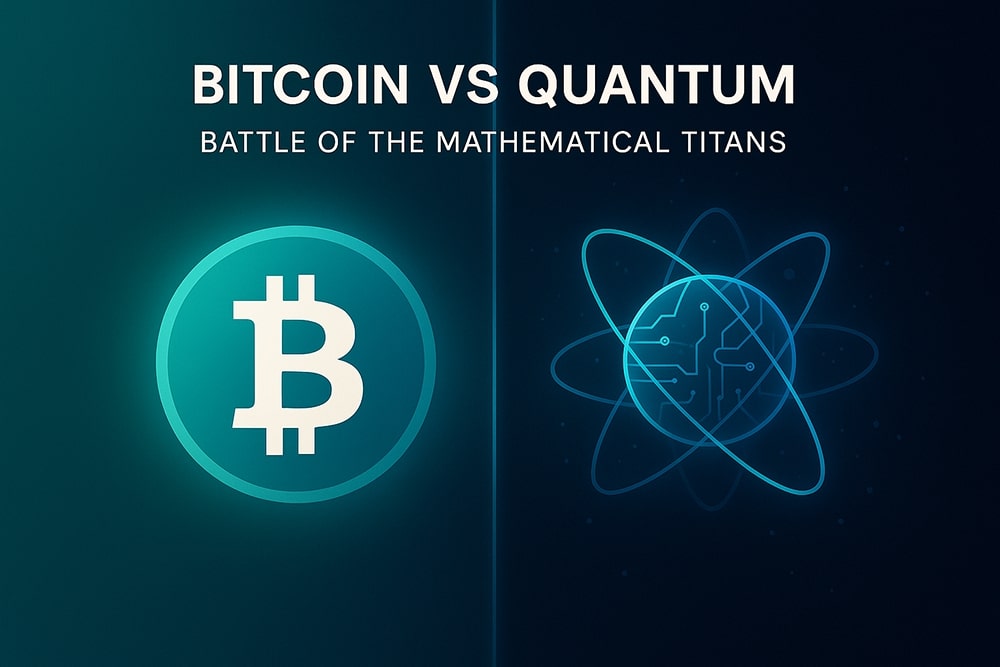 Bitcoin
Will Quantum Computers Break Bitcoin? Battle of the Mathematical Titans
Quantum computers will not break Bitcoin anytime soon. Cracking its ECDSA signatures would need roughly 13 million stable, error-corrected qubits, while today's best machines have fewer than 1,500 noisy physical qubits. Experts put the realistic threat window at 2035 to 2045, and Bitcoin can adopt NIST-standardized post-quantum signatures through a soft fork. Until then, never reuse addresses and move coins out of old P2PK addresses.
Heidi ChakosWallets & Custody Wallets & Custody
Cold Wallet vs Hot Wallet: Key Differences Explained
A hot wallet keeps your private keys on an internet-connected device, so it is free and fast but exposed to malware and phishing. A cold wallet, usually a $50 to $300 hardware device, keeps keys offline and signs transactions internally. Most experienced holders use both: 80 to 90% of long-term holdings in cold storage, with a small hot-wallet balance for trading and DeFi.
24 min read/Heidi ChakosWallets & Custody Wallets & Custody
What Is a Crypto Wallet Address and How Does It Work?
A crypto wallet address is a 26 to 42 character string that acts as your receiving identifier on a blockchain. It is derived one-way from your public key, so sharing it is safe; only your private key and seed phrase stay secret. Bitcoin addresses start with 1, 3, or bc1; Ethereum and EVM chains use 0x. Verify the network and send a small test first.
17 min read/Heidi ChakosWallets & Custody Wallets & Custody
How to Send Bitcoin to Another Wallet: A Step-by-Step Guide
To send Bitcoin to another wallet, open your wallet, tap Send or Withdraw, paste or scan the recipient's address, enter the amount, choose a fee speed, review everything and confirm. Bitcoin addresses start with 1, 3 or bc1; check the first and last six characters, because transactions cannot be reversed. Send a small test amount first, then track the transaction ID on a blockchain explorer.
Heidi ChakosReviews & Safety Reviews & Safety
Is Coinbase Wallet Safe? Pros, Cons, and Security Tips
Coinbase Wallet is safe for moderate holdings and DeFi use. It is a self-custody hot wallet: the 12-word BIP-39 phrase is generated on your device, keys are AES-256 encrypted and never reach Coinbase's servers, and no confirmed incident has compromised its core architecture. Because it is always online, your phone and habits are the real security model, so keep long-term holdings on a hardware wallet.
21 min read/Heidi ChakosReviews & Safety Reviews & Safety
Is Exodus Wallet Safe? Breaking Down Its Security Features
Exodus Wallet is safe for everyday crypto use and moderate holdings. Private keys are generated and stored locally with AES-256 encryption, transactions are signed on your device, and it has had no catastrophic breach of its own making. Trade-offs: the core code is closed-source, there is no 2FA, multi-sig or insurance, and password rules are lenient. Pair it with Trezor or Ledger for larger sums.
Heidi ChakosReviews & Safety Reviews & Safety
Coinbase vs Kraken: Key Differences for Crypto Traders
Coinbase is the better pick for beginners and anyone in New York or Maine, since it is licensed in all 50 states and offers phone support. Kraken wins on cost and range: maker/taker fees start at 0.16%/0.26% versus Coinbase's 0.60% on Advanced Trade, it lists 450+ coins to Coinbase's 300+, adds margin, futures and US stocks, and has 24/7 live chat.
Heidi Chakos