
I have sold early in every cycle I have traded, and I have been glad of it in every bear market that followed. That is the whole philosophy of this guide. It is for anyone holding a position that has gone up a lot, who has noticed that the plan for buying was careful and the plan for selling does not exist. It covers why tops cannot be timed, how a selling ladder works, what breaks at the top, and how tax changes the order of operations.
Education, not financial advice. We share what we do; you decide what fits you. Nothing here is a prediction of where any price goes.
Why does nobody sell the top?
Because the top only exists afterwards. On the day, it looks like every other day of the rally, and the reasons to hold are loudest at exactly that moment. In 2021 the people who "waited for $100,000" watched Bitcoin fall by three quarters. In 2024 the exchange many of them used went down during the sharpest move of the year, as Coinbase did on 28 February 2024, when accounts showed zero balances as Bitcoin ran toward $64,000, according to CNBC. I never advocate trying to time the top or the bottom; it is a way to turn a good position into a story about what you nearly had.
The alternative is dull: sell fixed slices at levels you chose in advance, and accept that most of those sales will look early. Dollar-cost averaging out is the mirror image of the way most people bought.
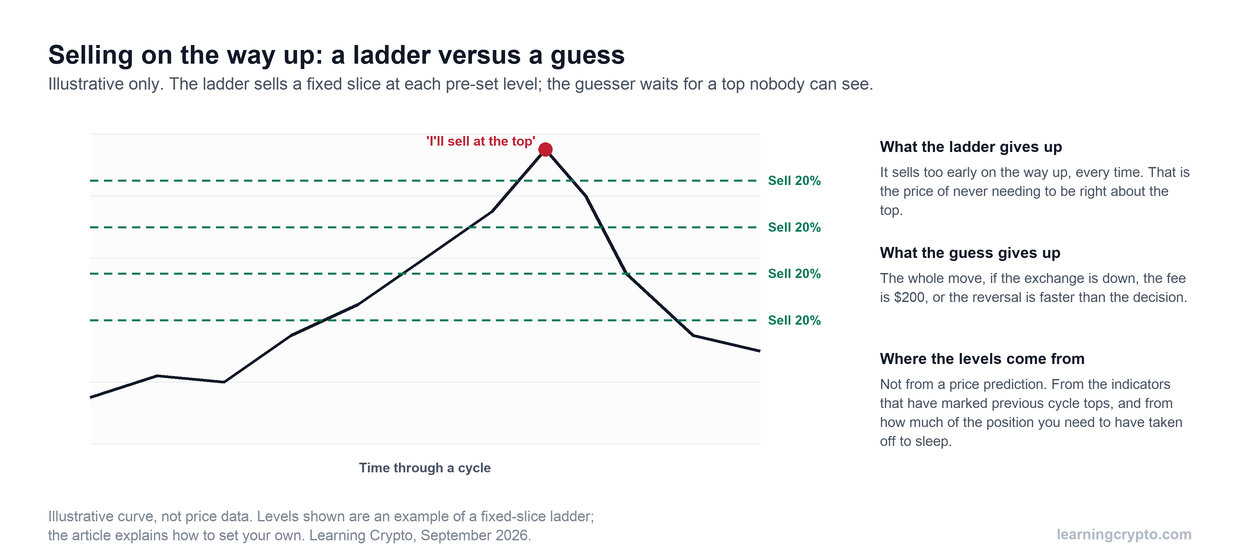
A ladder sells early every time. The guess has to be right once, on a day that looks like all the others, on an exchange that may be down.
How does a selling ladder work?
- Decide the slice. Twenty or twenty-five percent of the position per level is common; the point is that no single decision moves everything.
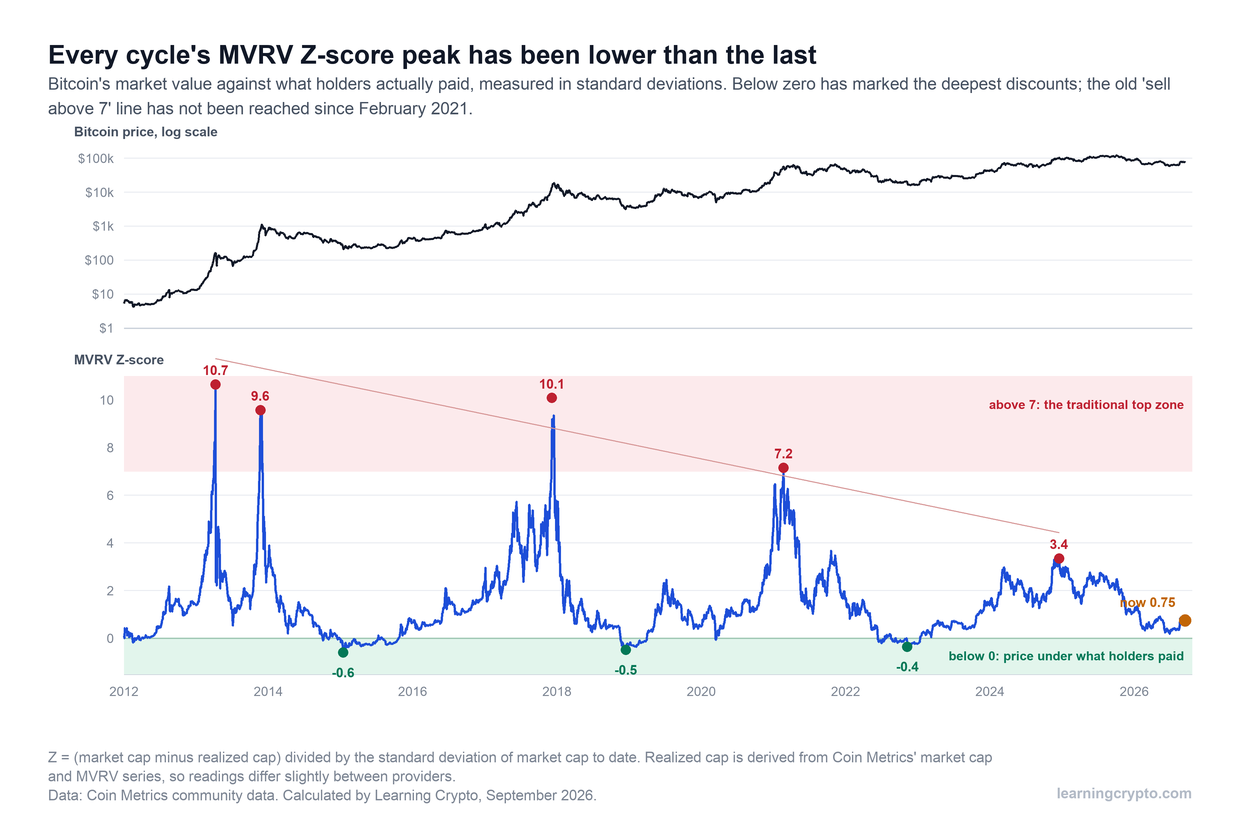
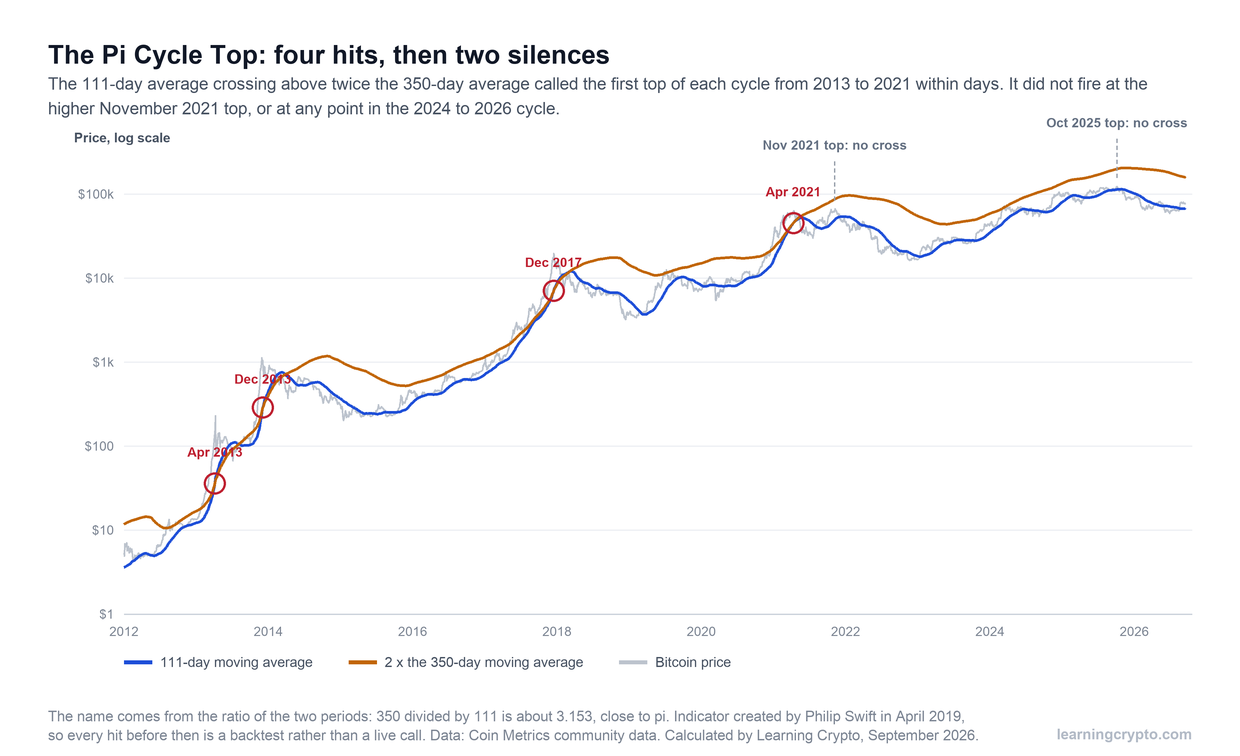
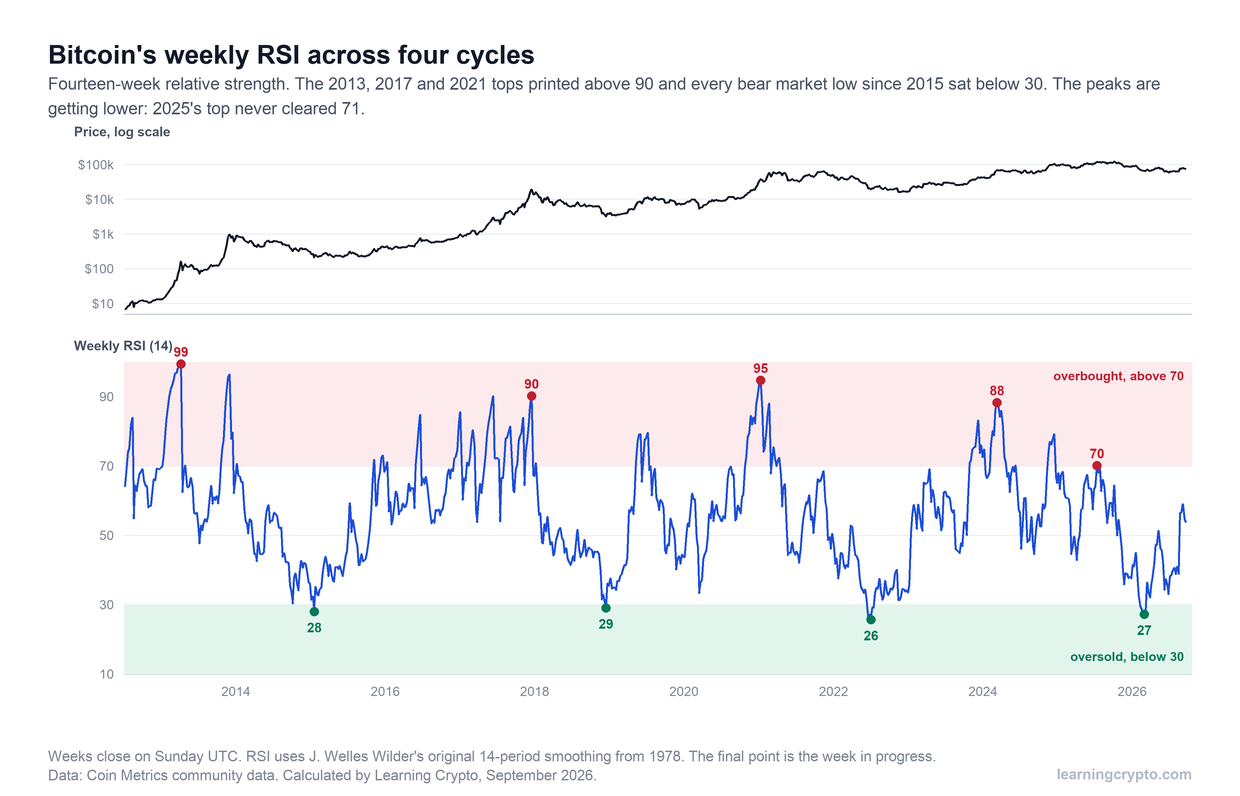
- Set the levels before the move. They can be prices, but they are better tied to the signals that have marked previous tops: the Pi Cycle top indicator, the weekly RSI reaching the levels it hit in 2017 and 2021, the MVRV Z-Score entering its red band, and extreme readings on the Fear and Greed index. None of these is a switch; together they tell you how far into the euphoric part of a cycle you are.
- Place the orders in advance. Limit orders on the venue you will use, so the sale happens while you sleep and while the exchange still works. A limit order is not a guarantee, but it beats a market order typed in a panic.
- Write down what the proceeds are for. Cash, a stablecoin, debt, a house. Money without a purpose finds its way back into the next altcoin.
- Keep a slice you never sell, if that is your conviction, and be honest that it is a separate decision from taking profit.
The ladder does not tell you to sell everything. It tells you to make the decision in pieces, early, and away from the noise. Our March 2024 video below sets out the mechanics.
Recorded in March 2024: why the exit needs a plan before the top, what tax jurisdiction changes, dollar-cost averaging out, limit orders, and the things that fail when everyone sells at once. Watch it on our CryptoTips channel.
What breaks at the top?
- Exchanges. They go down on the biggest days. Test withdrawals, know your daily limits, and have an account on a second venue that you have already verified and funded.
- Networks. Ethereum fees at the 2021 peak made a $40 trade look cheap, and a $200 fee on a small sale is a real cost. Know which chain your coins sit on and what moving them costs when everyone is moving at once.
- Liquidity. A large altcoin position can be the market. Selling five figures of a thin coin moves the price against you; that is what over-the-counter desks such as Kraken's exist for, and why the ladder spreads sales out.
- You. At the top the plan feels wrong. That is the reason to have made it earlier and to have placed the orders.
Where does tax fit?
Before the sale, not after. In the US and most of Europe a swap into a stablecoin is already a taxable sale, so the "park it in USDC and decide later" move decides for you. Holding past your country's long-term line can halve the rate; a loss elsewhere in the same year can offset the gain; and the venue you sell on and the currency you sell into change the fees and the paperwork. Selling directly to euros or dollars on the exchange avoids the extra stablecoin leg. Our guide to legally reducing crypto taxes lays out the seven levers and the three false ones.
Why do we sell into strength, and what comes next?
Because the buyers who arrived through the ETFs in 2024 and 2025 are institutions used to 12% a year, and they will take a 100% gain as readily as they bought. Every cycle so far has been followed by a drawdown of 70% or more, and a position sold a little early is the money that buys the next bear market. Our July 2024 video makes the case, including what we were planning to do with the proceeds.
Recorded in July 2024: why the bear market that follows every bull run is the reason to sell into strength, how institutional buyers behave, and our intention to sell early and buy back lower. Watch it on our CryptoTips channel.
Members see our buys and sells as they happen through the trade alerts and the Portfolio Tracker, which is where the levels above stop being theory. The wider context on where a cycle sits is in our guide to bull runs and the four-year cycle, and more analysis is in the Analysis hub.
Frequently asked questions
When should you take profits in crypto?
In pieces, on the way up, at levels you set before the move began. Nobody identifies the top on the day, so a plan that sells a fixed slice at each pre-set level will sell early on purpose and never needs to be right about the peak. Tie the levels to indicators that marked previous tops rather than to a price prediction, and place the orders in advance.
Should I sell all my crypto at the top of a bull run?
No, and you cannot, because the top is only visible afterwards. Decide separately how much you intend to hold through the next bear market and how much is profit to be taken, then sell the profit portion in slices as levels are reached. Selling everything at once concentrates the whole decision on a single day and a single exchange that may be down.
Is converting crypto to a stablecoin a way to take profit without tax?
Not in the United States or most of Europe, where a swap into USDC or USDT is a taxable disposal of the coin you sold. Stablecoins are useful for parking proceeds you plan to redeploy, but they do not defer the tax bill. Selling straight to dollars or euros on the exchange avoids the extra step. Portugal is an exception that does not tax crypto-to-crypto swaps.
What indicators signal a crypto market top?
No single one does, but several have marked previous cycle tops: the Pi Cycle top indicator crossing, the Bitcoin weekly RSI reaching the extremes of 2017 and 2021, the MVRV Z-Score entering its upper band, and the Fear and Greed index holding at extreme greed for weeks. Use them to judge how far into euphoria the market is, not as a sell button.
Why do exchanges go down when prices spike?
Because volume and logins surge at the same moment and their systems are sized for normal days. Coinbase went down during the February 2024 rally, and outages at earlier peaks were common. Plan for it: place limit orders in advance, test withdrawals in calm periods, and keep a funded, verified account on a second exchange so you are never dependent on one.
How do I sell a large amount of crypto without moving the price?
Spread the sale over time and levels rather than selling at once, and for five- or six-figure amounts use an over-the-counter desk, which most large exchanges offer. OTC trades are negotiated privately at a single price, avoiding the slippage a large market order causes in a thin order book, and the desks can often coordinate with your accountant on documentation.
Keep learning
- The Pi Cycle Top Indicator: How It Works, What It Caught and What It Missed
- Bitcoin Weekly RSI: What It Shows About Cycle Tops and Bottoms
- MVRV Z-Score Explained: How to Read Bitcoin's Most Watched Valuation Metric
- What Is a Crypto Bull Run and When Is the Next One Coming?
- More guides in the Analysis hub
- Members: Portfolio Tracker, see all your wallets in one place