
Crypto fundamentals
Crypto fundamentals cover how blockchains work, what makes Bitcoin and Ethereum different, and the vocabulary every investor needs before touching a wallet or a trade. Start here if you are new — or if you want a clearer mental model of the system underneath the charts.
 Fundamentals
What Is Liquidation in Crypto? Understanding Forced Closures in Trading
Liquidation in crypto is the automatic, forced closure of a leveraged position when losses push your collateral below the exchange's maintenance margin, usually 10% to 20% of the position. The exchange sells at market, deducts a 0.5% to 1% fee and returns whatever is left, often close to nothing. A 5x long on Solana at $200 with 15% maintenance margin dies near $190.
Toby CunninghamFundamentals Fundamentals
Crypto ETFs Explained: What Are They and How Do They Work?
A crypto ETF is a fund that trades on a stock exchange and holds Bitcoin, Ethereum or crypto futures, so you get price exposure through a brokerage or retirement account without managing keys. Spot Bitcoin ETFs were approved in January 2024. The cost is fees of roughly 0.20 to 0.75% a year, no staking rewards, no DeFi access, and no true ownership of the coins.
Heidi ChakosFundamentalsFundamentalsCrypto AI Agents: Transforming Blockchain with Intelligent Automation
Crypto AI agents are software programs that pair machine learning with wallets and smart contracts so they can trade, manage DeFi positions, vote in DAOs or run on-chain services with little human input. The technology is real and improving, but most agent tokens are highly speculative, and any agent holding your keys is a security risk you must contain.
Heidi ChakosFundamentals Fundamentals
Bitcoin Security Explained Simple: How to Protect Your Wallet from Hacks, Scams, etc
The Bitcoin protocol itself is secure; your coins are only as safe as your own key management. Hackers stole over $2.2 billion from crypto platforms in 2024, so hold your own keys, keep long-term funds on a hardware wallet, store encrypted seed phrase backups offline, enable 2FA, and verify every recipient address to defeat clipboard malware and phishing. Multi-sig adds another layer for larger holdings.
11 min read/Heidi ChakosFundamentalsFundamentalsCan You Make $100 a Day with Crypto? [Ultimate Expert Guide]
Yes, some people make $100 a day with crypto, but it is neither consistent nor guaranteed, and most day traders lose money. Passive routes need serious capital: $100 a day is $36,500 a year, which at a 5% yield means roughly $730,000 at work. Treat it as a skill to build over years, not a paycheck you can switch on.
Heidi ChakosFundamentals Fundamentals
How to Make Money with DeFi: Comprehensive Guide for Beginners
The main ways to make money with DeFi are yield farming, lending on protocols like Aave and Compound, providing liquidity on DEXs such as Uniswap, holding governance tokens, and staking. Each pays in fees, interest or tokens, but carries market volatility, smart contract bugs, lock-up periods and impermanent loss. Start with a self-custody wallet, a small amount and audited platforms. Nothing is guaranteed.
12 min read/Heidi ChakosFundamentalsFundamentalsCrypto Security Best Practices: Comprehensive Guide to Secure Crypto Assets in 2025
The crypto security best practices that matter are simple but non-negotiable: keep long-term holdings on a hardware wallet, write your seed phrase on paper or metal and never type it into any device, use app-based or hardware 2FA rather than SMS, switch on withdrawal allowlists at every exchange, and treat every unsolicited message about your crypto as a scam until proven otherwise.
2 min read/Heidi ChakosFundamentals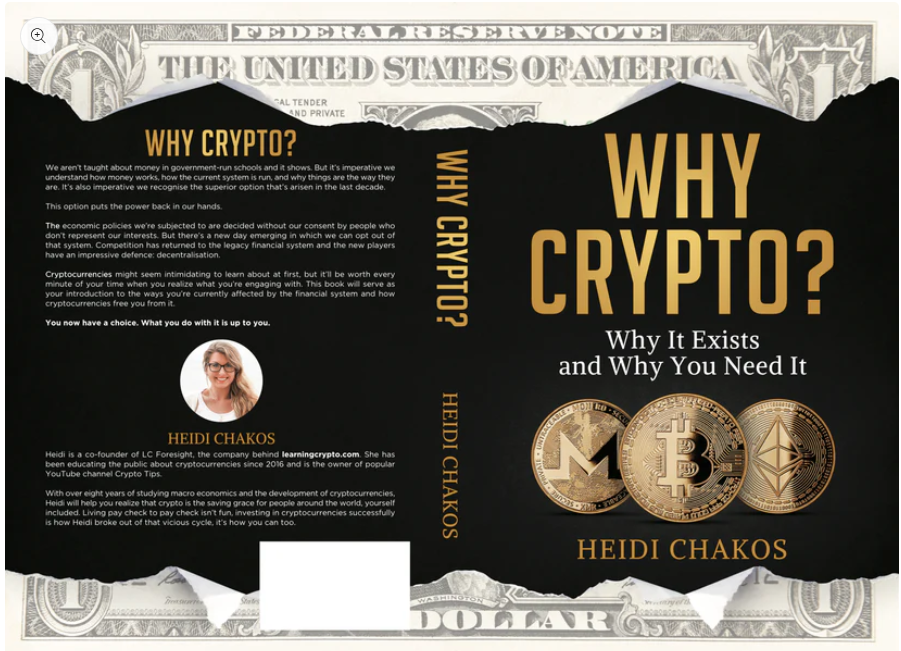 Fundamentals
5 Best Cryptocurrency Books for Beginners [A Complete Guide]
The best cryptocurrency books for beginners are Why Crypto? by Heidi Chakos, The Basics of Bitcoins and Blockchains by Antony Lewis, Cryptoassets by Chris Burniske and Jack Tatar, Digital Gold by Nathaniel Popper, and The Truth Machine by Michael Casey and Paul Vigna. Start with Why Crypto? if you are brand new, Lewis if you already grasp Bitcoin basics, and Digital Gold for Bitcoin's story.
Heidi ChakosFundamentals Fundamentals
New to Crypto? Discover the Best Crypto for Beginners and Start Investing Like a Pro
For beginners, Bitcoin and Ethereum are the best cryptocurrencies to start with: both are widely accepted, easy to buy and sell, and run on the most established networks. Litecoin, BNB and Cardano are reasonable smaller additions. A sample starter portfolio is 50% BTC, 30% ETH, 10% ADA or BNB and 10% stablecoins, bought through dollar-cost averaging and moved to a hardware wallet. Not financial advice.
Heidi ChakosFundamentals Fundamentals
Must Cryptocurrency Terms To Know In 2026 [A Complete Guide]
This A-to-Z glossary defines more than 250 cryptocurrency terms in plain language, from 51% attack, altcoin and blockchain through DeFi, gas, HODL, private key, staking and zkApps. Each entry is a short, simple definition, so beginners, investors and developers can understand what a term means before acting on it and spot common pitfalls sooner.
Heidi ChakosFundamentalsFundamentalsHow Does Blockchain Work? A Beginner's Guide
A blockchain is a shared, append-only ledger kept by thousands of independent computers instead of one company. Transactions are grouped into blocks, each cryptographically linked to the last, and the network agrees on new blocks through consensus rules like Proof of Work or Proof of Stake. Once recorded, data is practically impossible to alter, which is what lets Bitcoin and other networks run without a central authority.
2 min read/Heidi ChakosFundamentals Fundamentals
A Look into Litecoin MWEB Wallet and Privacy Extension Block
Litecoin MWEB (MimbleWimble Extension Blocks) is an opt-in privacy layer that runs alongside the main Litecoin chain. You peg LTC into MWEB to hide transaction amounts and sender and recipient addresses, then peg out when you need normal LTC again. It shipped in Litecoin Core 0.21.3 (March 2024) and requires a supporting wallet. It is not a default-private replacement for Monero.
Heidi ChakosFundamentalsFundamentalsIs Cryptocurrency Hard to Learn? A Beginner’s Guide to Mastering Crypto in 2025
Cryptocurrency is not hard to learn, but it is easy to learn in the wrong order. Most people can grasp the essentials, how Bitcoin works, what a wallet is, and how to buy and store coins safely, in a few weeks of focused reading. The difficulty comes from jargon, hype and trying to master DeFi or trading before the basics.
Heidi ChakosFundamentals Fundamentals
New to Blockchain? Here’s Your Step-by-Step Beginner's Guide To Master
A blockchain is a distributed ledger that stores data across a network of computers (nodes) instead of one central database. Transactions are grouped into blocks, each linked to the previous one by a cryptographic hash, which makes past records practically impossible to alter. Nodes verify transactions through consensus such as Proof of Work or Proof of Stake. Public chains like Bitcoin are open to anyone.
Heidi ChakosFundamentalsFundamentalsBest Cryptocurrency YouTubers to Watch in 2025
The best crypto YouTubers in 2026 depend on what you need. For beginners, 99Bitcoins and CryptoTips explain the basics clearly. For data-driven analysis, Benjamin Cowen and Coin Bureau stand out. For daily news, Altcoin Daily, Digital Asset News and CryptosRUs, and for deeper industry discussion, Bankless and DataDash. Watch all of them with a sceptical eye.
Heidi ChakosFundamentals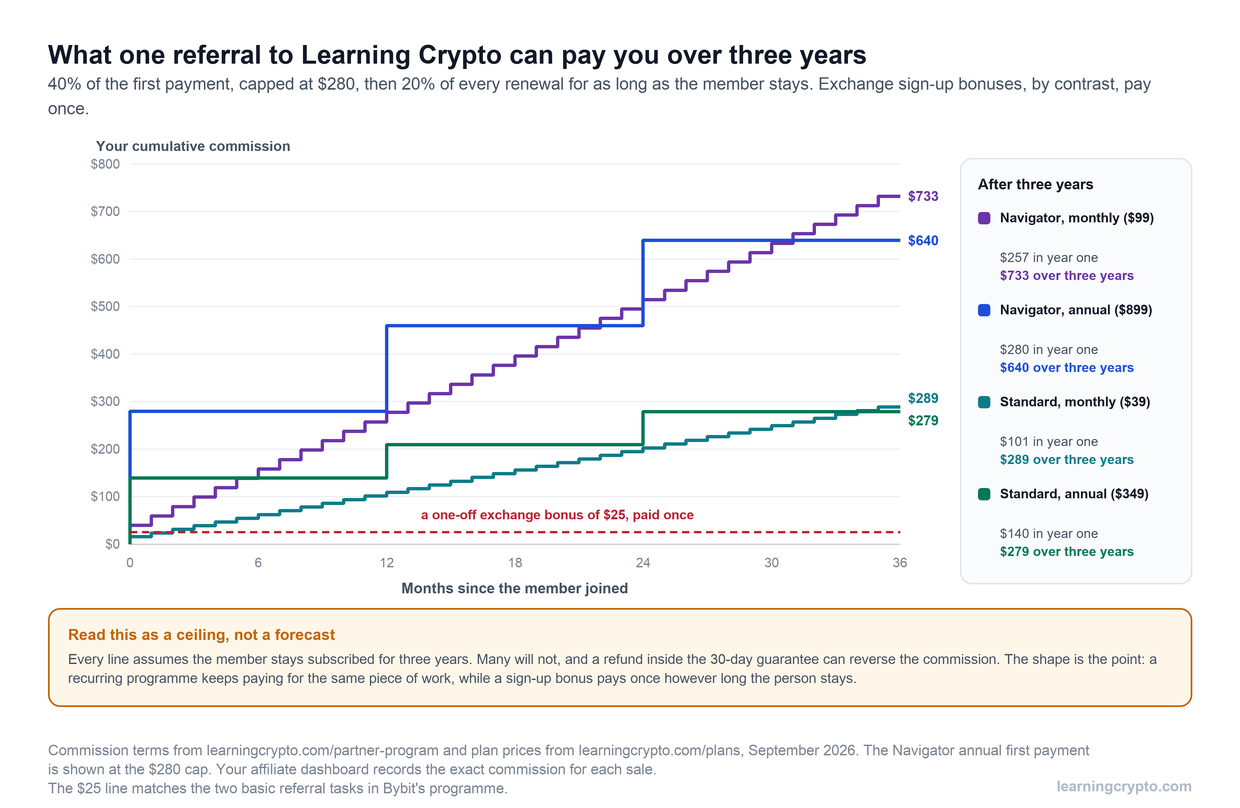 Fundamentals
Best Crypto Referral Programs in 2026: What Each One Actually Pays
A crypto referral program pays you for bringing new users to a platform, either as a one-off bonus when they sign up and trade or as a recurring share of what they spend. Exchange bonuses from Coinbase, Kraken and Bybit are small and easy to earn. Recurring programs, such as Learning Crypto's 20% commission, pay far more over time if you have an audience.
Heidi ChakosFundamentals Fundamentals
Will Cryptocurrency Fail? An In-Depth Expert Analysis
Cryptocurrency has evolved from a niche digital currency into a significant component of the global financial ecosystem. As of early 2025, the cryptocurrency market boasts a total capitalization of approximately $3.8 trillion, encompassing over 25,000 active cryptocurrencies.
Learning Crypto TeamFundamentalsFundamentalsBest Cryptocurrency Learning Resources To Know [A Complete Guide]
The best crypto learning resources depend on your level. Coinbase Learn (free) suits beginners with simple tutorials and earn-while-you-learn rewards; Binance Academy (free) covers all levels including DeFi and smart contracts; CryptoZombies (free) teaches Web3 coding through games; Udemy offers paid self-paced courses; and Learning Crypto, a paid platform, provides structured courses and expert instructors from beginner to advanced.
Heidi ChakosFundamentals Fundamentals
What Backs Up Cryptocurrency? - Explained Simply!
Cryptocurrency is not backed by a physical commodity or a government promise. Its value rests on supply and demand (Bitcoin is capped at 21 million coins), decentralized networks that resist censorship, real utility such as paying for Ethereum transactions, and the social consensus of users, developers and businesses. Fiat currencies, since the gold standard ended, are likewise backed only by government credit and trust.
Heidi ChakosFundamentalsFundamentalsWhat's the Purpose of Cryptocurrency: A Balanced Understanding
The purpose of cryptocurrency is to let people transact directly, securely and without banks or governments in the middle. Bitcoin launched in January 2009 as a response to the 2008 financial crisis, and its Genesis Block references the bank bailouts. Today crypto is used for online payments, cheaper cross-border transfers and DeFi, though volatility, regulation and security remain real risks.
Heidi ChakosFundamentals Fundamentals
Crypto Wallet For Beginners: Types, Factors, How to Setup
For beginners, a hardware wallet such as the Trezor Safe 3 or BitBox02 is the safest choice because private keys stay offline; entry-level models cost roughly $50 to $150. Free software wallets like Exodus, MetaMask and Trust Wallet suit small, everyday balances. Whatever you choose, buy hardware direct from the manufacturer, write the seed phrase on paper, and test with a small transfer.
14 min read/Heidi ChakosFundamentals Fundamentals
What is a Lightning Wallet? [Explained] - How it Works?
A Lightning wallet is a Bitcoin wallet that sends and receives BTC through the Lightning Network, a second layer built on top of Bitcoin. Payments move through off-chain payment channels, so they settle in seconds and cost tiny routing fees instead of miner fees, compared with roughly 10-minute confirmations on the base chain. Popular options include Phoenix, Muun, Zeus, Breez and Wallet of Satoshi.
Heidi ChakosFundamentals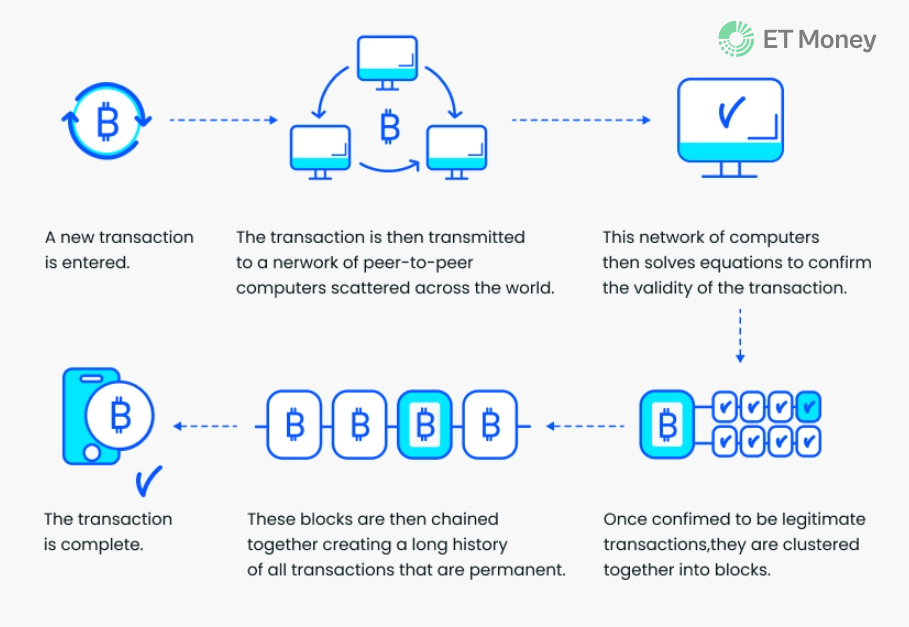 Fundamentals
Crypto Explained Simple: A Beginner’s Guide to Understanding Cryptocurrency
Cryptocurrency is digital money secured by cryptography and recorded on a blockchain, a shared ledger kept by a network of computers rather than a bank. Transactions are signed with a private key, validated by miners (Proof of Work) or stakers (Proof of Stake), and grouped into linked blocks. Bitcoin and Ethereum are the largest examples, bought through exchanges like Coinbase or Kraken.
Heidi ChakosFundamentals Fundamentals
What Does Pegging Mean in Crypto? A Comprehensive Guide
Pegging in crypto means tying a token's value to another asset at a fixed ratio, usually a stablecoin tracking the dollar 1:1. Pegs are held by collateral reserves (USDC, USDT, DAI), by algorithms (TerraUSD, which collapsed in 2022), or a mix. Pegged is not the same as backed, and pegs can break: USDC fell to $0.87 in March 2023 when Silicon Valley Bank failed.
Heidi ChakosFundamentals Fundamentals
8 Best Crypto Movies to Watch in 2026
The best crypto movies to watch are mostly documentaries: Biggest Heist Ever (Netflix, the Bitfinex theft), Money Electric: The Bitcoin Mystery (HBO's Satoshi hunt), Trust No One (Netflix, the QuadrigaCX collapse), Banking on Bitcoin, The Rise and Rise of Bitcoin, and Trust Machine. For drama, Silk Road (2021) dramatizes Ross Ulbricht's dark web market, and the action film G20 adds a crypto-and-deepfake villain.
Heidi ChakosFundamentals Fundamentals
What is Virtual Protocol Crypto? [A Complete Guide]
Virtuals Protocol is a Base-network platform, launched in 2024, that turns AI agents into tokenized, co-owned digital assets. Each agent gets a fixed 1 billion tokens paired with VIRTUAL in liquidity pools, and fees agents earn from users are used to buy back and burn agent tokens. VIRTUAL has a fixed 1 billion supply (60% public, 35% treasury, 5% liquidity).
Heidi ChakosFundamentals Fundamentals
How To Buy Monero? [A Complete Guide]
Buy Monero on a KYC exchange that still lists XMR, such as Kraken (outside the UK and EU/EEA) or Bitfinex, using a card or bank deposit. If you already hold Bitcoin, swap it for XMR through Changelly, SimpleSwap or Cake Wallet. For a no-KYC purchase, use Bisq, Haveno or RetoSwap. Whichever route you take, withdraw the coins to a wallet you control.
Heidi ChakosFundamentalsFundamentalsWhat is Aave? The Future of DeFi [Explained]
Aave is a decentralised lending protocol that lets you earn interest by depositing crypto into liquidity pools or borrow against your holdings without a bank or intermediary. It runs on smart contracts, sets interest rates by supply and demand, and pioneered flash loans. It is one of DeFi's most established projects, but deposits still carry smart-contract, liquidation and regulatory risk.
Heidi ChakosFundamentals Fundamentals
$MELANIA Meme Coin: Everything You Need To Know
Former First Lady Melania Trump has just entered the world of cryptocurrency with the launch of her very own meme coin, $MELANIA. It follows in the footsteps of her husband, Donald Trump, who recently introduced the $TRUMP coin.
Learning Crypto TeamFundamentals Fundamentals
Stablecoins vs Bitcoin: Which Crypto is Right for You?
Stablecoins and Bitcoin do different jobs. Stablecoins such as USDT and USDC are pegged to assets like the US dollar, so they suit payments, remittances and parking value in DeFi, but you rely on the issuer's reserves. Bitcoin has a fixed 21 million supply and no central issuer, making it a long-term store of value, at the cost of large price swings.
Heidi ChakosFAQ
What should I learn first in crypto?
Start with how blockchain works, then Bitcoin versus Ethereum, then wallets and self-custody. Those three pillars unlock almost everything else.
Are crypto fundamentals still useful after years in the market?
Yes. Cycle after cycle, the people who keep capital are the ones who understand settlement, custody, and incentive design — not just price action.