
What if your phone or laptop could help you earn $100 a day, without a traditional 9-to-5 job? For many, crypto is making that possible. From passive income through staking to active trading and DeFi strategies, digital assets have opened new doors to daily income generation.
In just over a decade, crypto has evolved into a multi-trillion-dollar industry. Bitcoin, Ethereum, and countless altcoins have transformed how we invest, transact, and grow wealth. Unlike traditional finance, with its slow returns, high entry barriers, and central control, crypto offers speed, flexibility, and in some cases, significantly higher ROI.
If you invested $1,000 in Bitcoin in 2015, it would have grown to over $70,000 by 2021. And Ethereum? That same $1,000 in early 2016 could have reached $400,000 in just a few years.
Sure, not every crypto investment can get you a jackpot, and those numbers are hindsight. Nobody who bought in 2015 knew what was coming, and plenty of coins from the same era went to zero. But with smart strategies, you can start generating income through staking, trading, yield farming, and even AI-powered bots. The real question is what "$100 a day" demands of you in terms of capital, strategy, and tools.
In this guide we cover the most effective strategies to earn $100 a day, how much capital each one needs, the realistic risks you will run into, and the tools and platforms that can help you get started.
This article is educational, not financial or tax advice. Yields, fees and rules change often; verify with the platform and a professional before acting.
Can you make $100 a day with crypto?
Yes, some people do, but it is neither consistent nor guaranteed, and most people who try to do it through day trading lose money. It requires a mix of capital, skill, time, and risk tolerance, and the honest version of the answer depends on which of those you have most of.
Before attempting to make $100 a day in crypto, ask yourself:
- How much monthly capital do I have?
- Am I ready to dedicate time to learning and managing my investments?
- What is my risk appetite?
- Do I have the technical knowledge to operate in this space securely?
Your answers to these questions will shape which strategies are realistically achievable. Someone with $500,000 and no spare time has a very different path from someone with $2,000 and evenings free.
How much capital does $100 a day actually take?
More than most people expect. $100 a day is $36,500 a year. To earn that passively at a 5% yield you would need roughly $730,000 at work, and at a 10% yield about $365,000. With smaller capital, the only route to $100 a day is active trading, which means taking on far more risk.
Rough figures by method:
| Method | Typical return | Capital for $100/day | Main risk |
|---|---|---|---|
| Staking major coins | 3 to 7% a year | $500,000 or more | Coin price falls, lock-ups, slashing |
| Stablecoin lending | 4 to 10% a year, varies | $365,000 to $900,000 | Platform failure, depeg |
| Yield farming | Highly variable | Less, but unstable | Impermanent loss, exploits |
| Active trading | Unlimited, often negative | $5,000 to $20,000 at 1 to 2% a day | Losing the capital |
Those percentages are illustrative ranges seen in recent years, not promises. The method you choose greatly influences how much initial capital you will need. Here is a second, more aggressive set of assumptions that shows what each strategy would have to deliver to reach $100 a day, with the caveats attached:
| Strategy | Estimated capital needed for $100/day | Assumptions |
|---|---|---|
| Day trading (10% gain a day) | About $1,000 | High skill required. A 10% daily return is extremely difficult to sustain and very risky. |
| Spot trading (2 to 5% gain a day) | About $2,000 to $5,000 | Moderate skill. Requires strong market timing and consistent analysis. |
| Yield farming (15% APY) | About $250,000 | Passive, but subject to impermanent loss, smart contract risks, and APY fluctuations. |
| Staking (10% APY) | About $365,000 | Highly passive. Safer than farming but lower returns, and 10% is at the top of the range for major coins. |
| Crypto mining (Bitcoin, low energy cost) | About $110,000 for around 8 ASIC miners | Requires hardware, space, and cheap electricity. Maintenance and difficulty adjustments must be considered. |
Notice the pattern: the passive rows need six figures, and the rows that need only four figures assume daily returns that almost nobody sustains.
Which methods can realistically produce $100 a day?
Each route trades capital for skill. Passive methods need a lot of money and little time. Active methods need less money but a great deal of skill, and most people who try day trading lose. Bots sit in between and mostly automate whatever edge, or lack of edge, you already have.
- Staking. You lock coins to help secure a Proof-of-Stake network and earn rewards. Returns are steady but paid in a volatile asset. Learn the basics in staking vs mining.
- Lending and stablecoin yield. Predictable in dollar terms, but you are trusting an issuer and a platform. Several lenders collapsed in 2022 and took customer funds with them.
- Yield farming. Providing liquidity to DeFi pools for fees and token rewards. Our beginner's guide to yield farming explains impermanent loss, which catches most newcomers.
- Active trading. Spot, margin or futures trading for daily gains. Leverage can produce $100 a day from a small account and can also wipe it out in an afternoon.
- Bots and AI tools. Useful for discipline and speed, not a source of guaranteed profit. A bot running a bad strategy loses money faster. We compare the main options in our trading bot reviews.
Whatever you choose, market timing still matters. Our Satoshi Indicator exists to show where the broader market sits in its cycle.
How to make $100 a day trading cryptocurrency
To make $100 a day trading cryptocurrency you need enough capital that a realistic daily gain of 1 to 2% covers the target, a tested strategy, and strict risk control, because a few bad days without stop-losses undo weeks of small wins. Most people who attempt it with $1,000 and 10x leverage are liquidated within months, so the first job is understanding what trading actually involves.
What is cryptocurrency trading?
Cryptocurrency trading refers to the buying and selling of digital currencies such as Bitcoin (BTC), Ethereum (ETH), Solana (SOL), and a wide range of altcoins on crypto exchanges like Binance, Coinbase, Kraken, and Bybit.
The main goal is to profit from market price fluctuations, which can be done by going long (buying low, selling high), going short (selling high, buying back lower), and using volatility through advanced tools like options, futures, and margin trading.
According to CoinGecko's 2024 exchange report, over $100 billion is traded daily across centralized and decentralized exchanges, making crypto one of the most liquid and volatile markets globally.
Day trading vs long-term investment: which path to $100 a day is right for you?
When it comes to earning $100 a day with crypto, two primary strategies dominate the space: day trading and long-term investment (HODLing). Here is a breakdown of the key differences:
| Aspect | Day trading | Long-term investment (HODLing) |
|---|---|---|
| Risk level | High: fast swings, emotionally intense, risky without strict control. | Moderate: fluctuations exist but even out over time. |
| Capital needed | About $1,000 or more to trade effectively and manage risk. | $100 or more; start small and let regular contributions compound. |
| Profit potential | Up to $100 a day or more; possible but inconsistent and skill-dependent. | $100 a day over time; achievable via compounding, staking, or dividends. |
| Skills required | Advanced: technical analysis, real-time decisions, discipline. | Moderate: research, trends, and long-term patience. |
| Time required | High: daily monitoring and fast reactions needed. | Low: set and check periodically; suits busy people. |
- Day trading is a skill-based, high-stakes strategy suitable for experienced traders who can commit full-time hours and manage high levels of volatility.
- Long-term investment is better suited for beginners, busy professionals, and those looking for a more passive, compounding growth strategy with less daily stress.
High-frequency trading (HFT)
High-frequency trading involves executing thousands of trades per second to capitalize on tiny price differences between assets, exchanges, or timeframes. It relies on automation, ultra-low latency, and highly optimized algorithms.
Tools required:
- Co-located servers near exchange data centers (for speed)
- Low-latency APIs like those from Binance or Coinbase Advanced (formerly Coinbase Pro)
- Custom trading bots coded in Python, C++, or Rust
- Access to liquidity pools and real-time order books
Capital requirements:
- A minimum of $10,000 to $25,000 is often needed to handle latency fees, slippage, and infrastructure.
- Monthly tech stack costs can include server rentals, trading bot maintenance, and premium API access.
Profit potential: experienced HFT traders can earn $100 to $1,000 or more per day, depending on market volatility and bot performance. In practice this is a professional activity competing against firms with far better infrastructure.
Risks and barriers:
- High technical barrier to entry
- Requires constant monitoring, bot maintenance, and edge-case error handling
- Vulnerable to front-running, latency arbitrage attacks, and network congestion
Using leverage and margin
Leverage trading allows you to borrow funds to amplify your position size, aiming for higher returns on small market movements. Most major crypto exchanges offer leverage ranging from 2x to 100x.
How it works (example):
- With $1,000 at 10x leverage, you control a $10,000 position.
- A 1% price move in your favor earns you $100.
- However, a 1% move against you can wipe out your position.
Popular platforms: Binance, Bybit, OKX, BitMEX, Deribit.
Profit potential:
- With sharp timing and tight risk controls, traders can generate $100 to $500 or more a day even on small capital.
- Many use leverage during high-volatility news events for quick returns.
While leverage increases potential profits, it amplifies losses just as fast. Most exchanges use auto-liquidation engines that can close your position and forfeit your margin if price moves too far against you; our guide to how liquidation works walks through the maths. The risk management tools you need to know are:
- Stop-loss orders
- Isolated vs cross margin settings
- Position sizing frameworks
What knowledge and skills do you need?
Here are the core competencies you need to succeed, whichever route you take:
Technical analysis
- Understand chart patterns, candlesticks, support and resistance
- Use tools like RSI, MACD, Fibonacci retracements, volume profiles
Risk management
- Proper position sizing, using stop-losses, and managing drawdowns
- Avoid over-leveraging and revenge trading
DeFi proficiency (for passive income methods)
- Familiarity with staking protocols (for example Lido and Rocket Pool)
- Comfort using yield aggregators like Yearn Finance or Beefy
- Know how to read a smart contract audit, or stick to platforms with a long track record
Security best practices
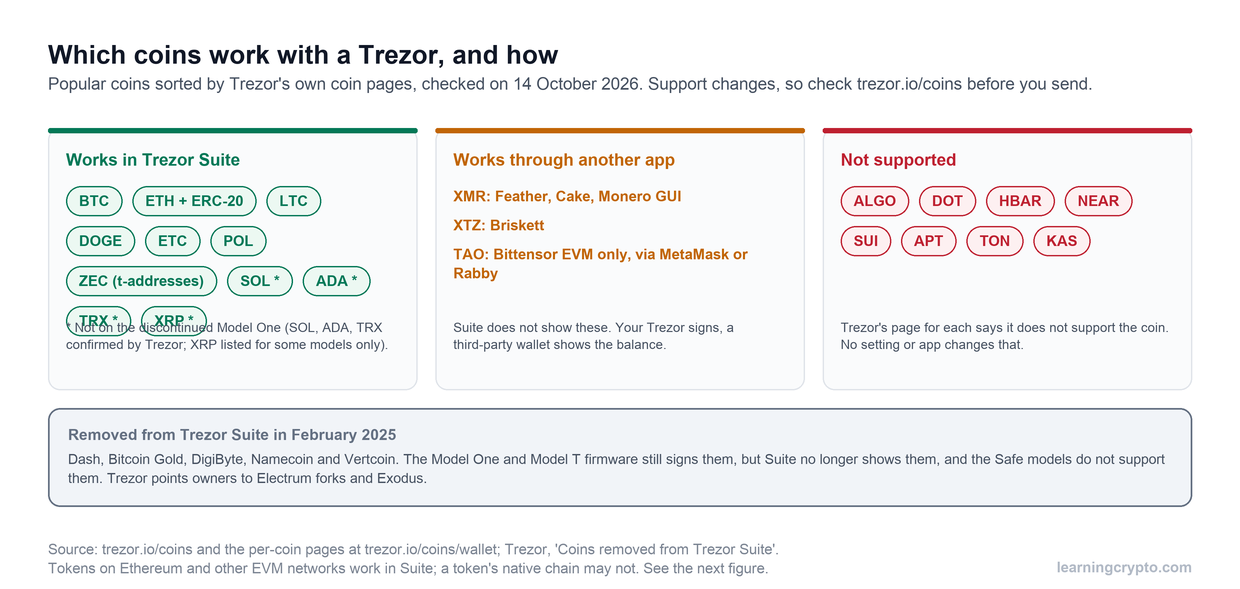
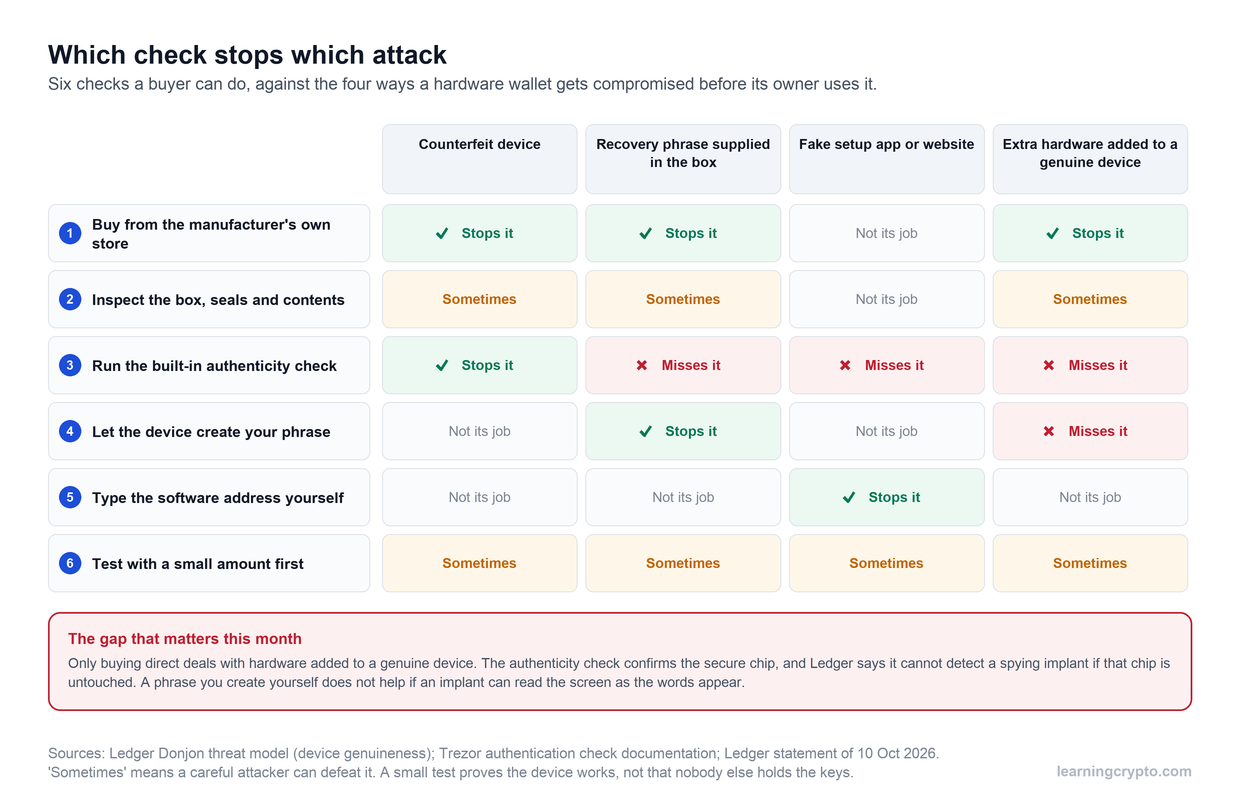
- Use hardware wallets (Ledger, Trezor) for cold storage
- Enable 2FA on all exchange and wallet accounts
- Learn to recognize rug pulls, phishing attacks, and Ponzi schemes
Recommended platforms and tools for earning $100 a day with crypto
Your results depend heavily on where you trade, so choosing a platform is one of the more important decisions you will make. Here are the exchanges most people start with, and their trade-offs:
Binance
- Binance offers a wide range of features including spot trading, futures, margin trading, staking, launchpads, and P2P marketplaces.
- Known for low fees, deep liquidity, and a wide range of cryptocurrencies. Availability depends on your country.
Coinbase
- Coinbase is ideal for beginners with a simple interface, fiat on-ramps, and educational tools like Coinbase Earn.
- Allows users to earn small amounts of crypto by completing tutorials.
- Charges relatively high fees on its basic platform (often over 1.49%) and has limited advanced trading features there.
Bybit
- Bybit is popular among experienced traders for high-leverage futures trading (up to 100x).
- Appeals to professional traders looking to maximize returns, which also means maximum liquidation risk.
Kraken
- Kraken emphasizes security and fiat support, and is compliant with regulations in multiple jurisdictions.
- One of the few exchanges to conduct regular proof-of-reserves audits.
- Offers fewer altcoins than Binance but is highly trusted for safety and regulatory adherence.
Using trading bots and algorithmic automation
Traders and investors are increasingly turning to automated trading bots and algorithmic tools to boost consistency and remove emotion from the process. A bot does not create an edge; it only executes one. These are the platforms most people start with:
Pionex
- Pionex offers free, pre-built trading bots like Grid Bots and Dollar-Cost Averaging (DCA) Bots.
- No API setup required, making it beginner-friendly.
- Particularly useful in range-bound markets, and a liability in strong trends.
3Commas
- 3Commas is a customizable platform featuring smart trading terminals, copy trading, and bot creation via API integrations.
- Supports major exchanges like Binance, KuCoin, and Coinbase.
- Includes automated stop-loss and take-profit tools; operates on a subscription model.
Shrimpy
- Shrimpy is designed for passive investors, offering automated portfolio rebalancing across multiple exchanges.
- Supports social trading, enabling users to mirror top-performing portfolios.
What are the risks you must understand first?
While the idea of earning $100 a day with crypto may sound enticing, the journey is far from smooth. Crypto is a high-risk environment filled with volatility, emotional pitfalls, and security threats. Here are some of the risks that you must be aware of:
- High volatility: Crypto markets often experience 5 to 10% daily price swings. Events like Silvergate's collapse or SEC lawsuits can cause sharp drops, creating both opportunities and major risks.
- Greater risk, greater reward: Bitcoin has had a higher Sharpe ratio than gold or the S&P 500 over long periods, but also much higher volatility, meaning more potential gains come with significantly higher risk.
- Risk management is key: Never risk more than 1 to 2% of your capital per trade. Use stop-loss orders to limit losses and protect your portfolio from sudden moves. If you use leverage, understand how liquidation works before you place a trade.
- Diversify your strategy: Combine active trading with passive income (staking, yield farming, lending). Always keep 3 to 6 months of living expenses in fiat or stablecoins as a safety buffer.
- Discipline over perfection: Even pro traders only win 55 to 60% of the time. Their edge lies in strict risk control, cutting losses fast, and letting winners run, not in perfect predictions.
Read more: What are the best cryptos for beginners?
What does a realistic plan look like?
Start with a target you can hit, not $100 a day. A beginner with $2,000 aiming for $100 daily needs a 5% return every day, which no honest strategy provides. Build in stages instead: protect capital first, learn one method properly, and let the daily figure grow with your account and your skill.
- Fund an emergency buffer outside crypto before anything else.
- Build a base position in major coins with dollar-cost averaging, so you are not forced to trade to make progress.
- Put a portion into one passive method you understand, and weigh it against the risks in the tables above.
- Paper trade or trade tiny size for at least three months before committing meaningful money to active strategies.
- Record every result, including fees and tax.
For a broader framework on reading markets rather than chasing daily targets, browse our analysis hub.
Conclusion
Yes, it is possible to make $100 a day with crypto. But let's be honest: it is not easy, and it is definitely not guaranteed.
You will need a strategy, discipline, and a good handle on how much time, money, and effort you can put in. Whether you are trading actively or using passive methods like staking or yield farming, there is always risk, and no such thing as "easy money."
Active traders need to master charts, market news, and emotions. Passive earners need bigger capital and constant oversight, and even staking is not truly hands-off. Most people do best with a mix: some passive income for stability, some active trading or bots to grow.
At the end of the day, mindset is what separates winners from everyone else. The ones who succeed treat crypto like a craft: they manage risk, stay calm, and keep learning.
Want a smarter way to get started? Join Learning Crypto's Crypto Club for Free. It is where beginners turn into confident earners with step-by-step guidance, expert support, and real community. No shortcuts. Just smart moves, one step at a time.
FAQ
Can you make $100 a day with crypto starting from $100?
Not sustainably. Turning $100 into $100 a day means doubling your money daily, and leverage that aggressive ends in liquidation almost every time. Small accounts should focus on learning and growing capital slowly. Our guide to starting crypto with $100 sets realistic expectations.
Is day trading crypto profitable for beginners?
For most, no. Studies of retail day traders in stock and futures markets consistently show the large majority lose money over a year, and crypto's volatility and 24/7 trading make the emotional side harder. Beginners who survive usually trade small, keep a journal and treat the first year as tuition.
Do I pay tax on crypto earned daily?
In most countries, yes. Staking, lending and mining rewards are typically taxed as income when received, and trading profits as capital gains or income depending on where you live. Rules change, so keep detailed records and check with a professional.
Can you make $100 a day with Bitcoin?
Only with a large position or active trading. Bitcoin has no staking yield, so a passive $100 a day would mean holding enough BTC that a 1% move is worth $100 and selling into rallies, which is trading by another name. Mining Bitcoin at that scale needs roughly $110,000 of ASIC hardware plus cheap electricity. Most Bitcoin holders who reach $100 a day do so over years through price appreciation, not daily income.
How much money do you need to make $100 a day trading crypto?
At a realistic 1 to 2% average daily gain, about $5,000 to $20,000, and that assumes you are consistently profitable, which most traders are not. The often-quoted figure of $1,000 relies on 10% daily returns that nobody sustains. Size your account so that a losing streak of five or six trades at 1 to 2% risk each does not force you to stop.
Keep learning
- Is Kraken Safe to Use? A Look at Its Security Features
- Ethereum Pectra Upgrade Explained: Here’s What Experts are Saying
- Is Coinbase Safe for Beginners? The Ultimate Guide
- More guides in the DeFi hub
- Members: Team Portfolio, see what our analysts actually hold