
Over the past decade, blockchain technology has emerged as one of the most transformative innovations in the digital world. Originally developed as the foundational technology behind Bitcoin, blockchain has evolved far beyond cryptocurrencies to become a powerful tool for decentralization, transparency, and security across industries.
Today, blockchain is redefining how we think about data, value, and trust in a digitally connected society. It is the backbone of a growing number of decentralized applications (dApps), digital currencies, and enterprise solutions that require secure and verifiable record-keeping without the need for centralized oversight. From financial transactions to supply chain tracking, from smart contracts to digital identity, the applications of blockchain are vast - and growing rapidly.
But what exactly is blockchain? How does it work, and why is it considered so revolutionary? If you're a beginner trying to understand the world of blockchain and cryptocurrency, you're not alone. According to a Deloitte survey, while 80% of executives believe blockchain will be critical to their industry in the near future, a majority of people outside the tech world still struggle to grasp the basics of how it functions.
This blog is designed to bridge that gap!
By the end of this blog, you’ll understand that blockchain is more than just a buzzword — it is a groundbreaking shift in how information and value are exchanged in the digital era.
So, if you’re ready to understand why blockchain is being called the “next internet,” let’s dive into the core concepts that make this technology so revolutionary.
What Is Blockchain Technology? The Foundation of Decentralized Systems
At its core, blockchain technology is a type of distributed ledger technology (DLT)—a system that allows data to be stored across a network of computers in a way that ensures transparency, security, and decentralization. Rather than relying on a single centralized database or trusted intermediary (like a bank or government), blockchain distributes the same data across all participants in the network, known as nodes. Each participant has access to the full ledger and can verify transactions independently.
This decentralized architecture fundamentally changes how data is shared and validated. By eliminating the need for middlemen, blockchain increases the efficiency and trustworthiness of transactions in both financial and non-financial settings.
Key Concepts: How the Blockchain is Structured
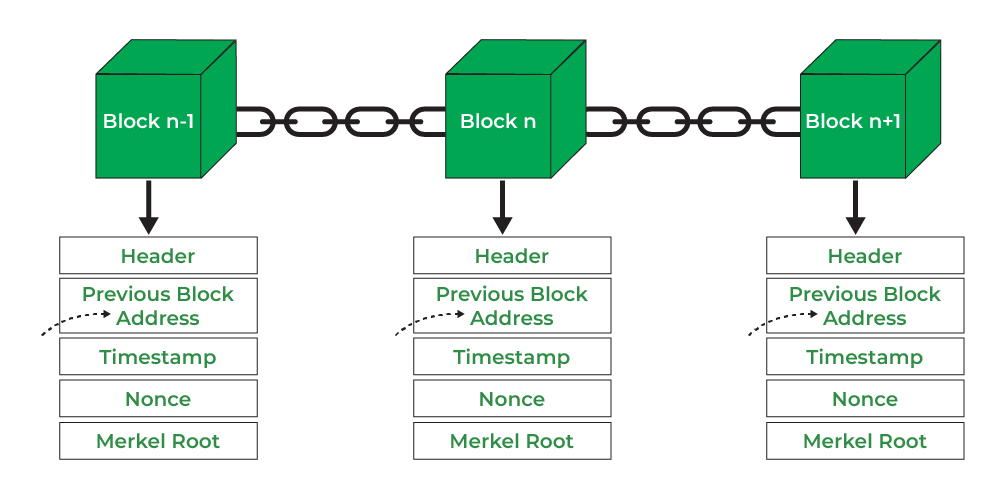
Image: Source
To understand how blockchain works, it’s important to start with its two core components: blocks and chains.
What is a Block?
A block is a digital container that holds three main pieces of information —
Transaction Data, including all the transactions or actions occurred within a specific period.
Timestamp, a digital signature that indicates when the block was created.
Cryptographic Hash of the Previous Block or a unique code that links the block to the one before it, creating a secure chain.
What is the Chain?
Each block is mathematically linked to the block before it through its hash, forming a continuous and immutable chain of records—hence the term blockchain.
Because every block is connected to the one before it, changing any data in a single block would require recalculating the hashes of every subsequent block in the chain.
This would require enormous computing power and the agreement of a majority of the network. As a result, retroactive alteration of blockchain data is virtually impossible, making the system tamper-resistant and highly secure.
Characteristics of Blockchain Technology
#1 Decentralization
Unlike traditional databases that are centralized, blockchain distributes its data across a peer-to-peer network of nodes. Each node maintains a complete copy of the ledger and participates in the validation process, reducing the single points of failure and enhancing resilience.
#2 Transparency
All transactions recorded on a public blockchain are visible to every participant. Anyone can verify the data, and the history of transactions is permanently stored on the ledger.
#3 Immutability
Once a block has been added to the blockchain, it cannot be changed without altering all subsequent blocks and gaining consensus from the majority of the network.
#4 Security
Blockchain uses advanced cryptographic algorithms, such as SHA-256 hashing and digital signatures, to secure data. Each transaction must be verified by the network through consensus mechanisms such as Proof of Work (PoW) or Proof of Stake (PoS) before being added to the blockchain.
Types of Blockchain: Public, Private, Consortium, and Hybrid Models

Photo by Arthur Mazi / Unsplash
Whether you're building a decentralized finance app or implementing internal audit controls, the type of blockchain you choose will determine the success, scalability, and security of your application.
Public Blockchain: Open, Transparent, and Fully Decentralized
A public blockchain is the original and most decentralized form of blockchain. It’s open-source, permissionless, and anyone can join the network, validate transactions, or create smart contracts.
Key features:
Completely decentralized, no single authority controls the network
Operates on consensus mechanisms like PoW or PoS
Immutable and transparent, anyone can verify or audit the data
Open to developers, miners, and users without restriction
Best use cases:
Cryptocurrency networks
Decentralized Finance
Voting systems
Decentralized identity verification
Challenges:
Slower transaction speeds
High energy consumption (in PoW networks)
Limited scalability
Private Blockchain: Controlled Access with Enhanced Privacy
A private blockchain is a permissioned ledger controlled by a single organization or entity. Unlike public chains, access is restricted to invited participants, and data visibility is limited. These networks prioritize speed, efficiency, and privacy, making them ideal for enterprises managing sensitive or regulated information.
Key features:
Centralized control over access and transaction validation
Higher performance and scalability
Designed for internal or organizational use
Common applications:
Internal audits and compliance
Data sharing across departments
Supply chain management within a single company
Read more about ‘Crypto Security Best Practices’
Hybrid Blockchain: Best of Both Worlds
Hybrid blockchains combine elements of both public and private chains to offer flexibility, control, and transparency. In a hybrid model, certain data is kept private (accessible only to authorized participants), while other data can be made public for auditing or verification.
Key benefits:
Allows selective data visibility
Greater control over what is shared
Maintains public verifiability while keeping sensitive operations private
Noteworthy projects:
Dragonchain: Originally developed by Disney for enterprise-grade hybrid use
XinFin (XDC Network): Focuses on hybrid blockchain for global trade and finance
This is our founder, Heid, sharing her 10-year Crypto Journey in this video
How Blockchain Works: A Step-by-Step Overview of the Core Mechanism
At its most basic level, blockchain operates as a distributed ledger that records transactions across a decentralized network of computers.
The Structure of a Block: The Building Blocks of Blockchain
Before diving into how blockchain transactions work, it’s essential to understand what makes up a single block in the blockchain. Each block is a data structure that holds the transaction information and connects it to other blocks to form a chain.
Transaction Data
Every block contains a list of transactions. In the case of cryptocurrencies like Bitcoin, these transactions involve the transfer of digital assets between users. Each transaction records the sender, receiver, and the amount transferred, along with a timestamp to mark when the transaction occurred.
Nonce (Number Used Once)
The nonce is a random number that miners use to create a unique hash for the block. In proof-of-work (PoW) systems, miners are required to find the correct nonce value to solve a computational puzzle, which ensures the security and integrity of the block.
Hash
A hash is a cryptographic function that converts transaction data into a fixed-length string of numbers and letters. This hash acts as a unique fingerprint for the block. Even a minor change in the transaction data would result in an entirely different hash, making any tampering detectable.
Previous Hash
Each block contains a reference to the hash of the previous block in the chain. This linkage creates the “blockchain” structure, as each block is securely connected to the one before it. The previous hash ensures the immutability of the entire blockchain, as altering any one block would require changing all subsequent blocks.
Transaction Process: Step-by-Step Breakdown

Photo by Shubham Dhage / Unsplash
Now that we understand the structure of a block, let’s walk through the transaction process—from initiation to confirmation—using blockchain.
Initiating a Transaction
A blockchain transaction begins when a user initiates an action, such as sending cryptocurrency to another user. The sender creates a transaction and digitally signs it using
Broadcasting to the Network
Once the transaction is initiated, it is broadcast to the blockchain network. The network consists of multiple nodes (computers participating in the blockchain), each of which holds a copy of the ledger and participates in validating transactions.
Validation by Nodes
Nodes validate the transaction by checking whether it meets the blockchain’s consensus rules. This step typically involves checking if the sender has sufficient funds, if the digital signature is correct, and if the transaction is properly formatted.
Blockchain uses different consensus mechanisms, such as Proof of Work (PoW) or Proof of Stake (PoS), to verify transactions:
Proof of Work (PoW): Miners compete to solve complex mathematical puzzles, and the first one to solve it gets the right to add the block to the chain.
Proof of Stake (PoS): Validators (or "stakers") are chosen to propose blocks based on their stake in the network.
Grouping into a Block
Once a transaction is validated, it is bundled with others into a block. Each block typically holds multiple transactions, and these transactions are timestamped, cryptographically signed, and hashed.
Adding the Block to the Chain
After the block is successfully created, it is added to the blockchain. The block contains the hash of the previous block, ensuring that the blocks are linked in a chronological order.
Final Confirmation
Once added to the blockchain, the transaction becomes immutable—meaning it cannot be changed or reversed. Because all network participants have access to the blockchain, they can verify the validity of the transaction, making it publicly transparent and secure.
A Brief History of Blockchain: From Concept to Global Infrastructure
Blockchain's roots go back over 30 years, but it wasn’t until Bitcoin’s 2009 launch that it gained real traction. Once limited to cryptocurrencies, blockchain is now a key digital infrastructure across industries.
1991: The Concept Emerges
Stuart Haber and W. Scott Stornetta proposed a cryptographic method to timestamp digital documents, laying the groundwork for blockchain.
2008: Bitcoin Whitepaper Released
Satoshi Nakamoto introduced Bitcoin as a decentralized digital currency, using blockchain as its core technology.
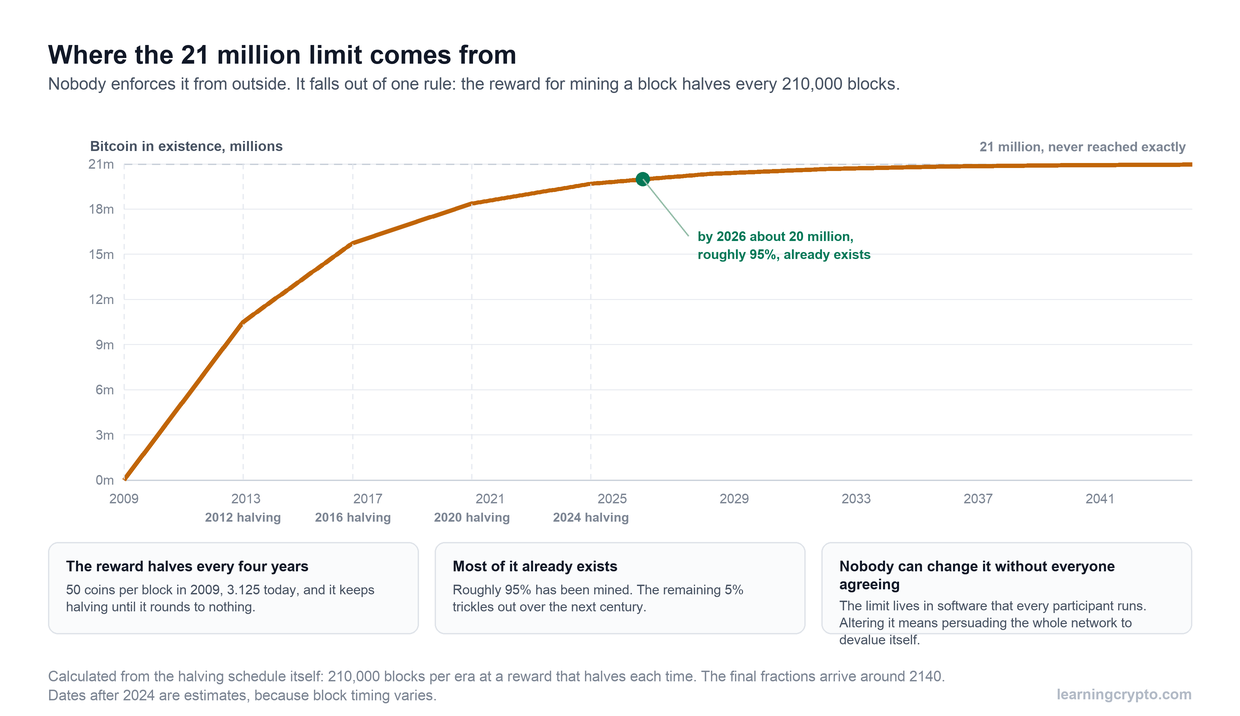
2009: Bitcoin Blockchain Goes Live
The first Bitcoin block—“genesis block”—was mined, kickstarting the era of decentralized digital currencies.
2015: Ethereum and Smart Contracts
Vitalik Buterin launched Ethereum , allowing programmable smart contracts and enabling dApps and DeFi.
2020–2024: Mainstream Adoption
Blockchain powered DeFi, NFTs, gaming, and enterprise solutions, expanding into finance, art, supply chains, and identity management.
Join Free Weekly Newsletter
Crypto Updates Daily to your Inbox
Subscribe
Email sent! Check your inbox to complete your signup.
No spam. Unsubscribe anytime.
Blockchain Security and Privacy: A Closer Look at Safety in Decentralized Systems

Photo by rc.xyz NFT gallery / Unsplash
One of the most appealing aspects of blockchain technology is its robust approach to security and privacy. Unlike traditional centralized systems, blockchain provides a decentralized infrastructure that enhances security and reduces vulnerabilities. However, it’s important to understand both its strengths and potential risks.
Security Advantages
Immutability: Data on the blockchain can't be changed without majority network approval, making tampering nearly impossible.
Cryptographic Integrity: Transactions are encrypted and hashed, with public/private key pairs ensuring data protection and authenticity.
Decentralized Validation: Transactions are verified by multiple nodes, reducing single points of failure and increasing resilience.
Distributed Ledger: Every node holds a full copy of the ledger, protecting against data loss and corruption.
Privacy Considerations
While blockchain offers pseudonymity, meaning users are identified by wallet addresses rather than their real names, it doesn’t offer complete anonymity. For enhanced privacy, privacy-focused projects like Monero and Zcash use advanced cryptographic techniques to obscure transaction details, making it more difficult to trace the sender, receiver, or amount.
Here's the YouTube Playlist For You,
Conclusion: Why Now Is the Time to Learn Blockchain
Blockchain technology is no longer a niche interest. It has become a cornerstone of digital transformation across industries. From cryptocurrencies to decentralized finance, supply chain solutions, and smart contracts, blockchain is driving innovation at an unprecedented pace.
Learning Crypto is a go-to bitcoin learning platform designed for beginners eager to dive into the world of blockchain. If you are looking to get started, here are the key steps:
Understand the fundamentals of blockchain and its core components (blocks, nodes, hashes, etc.).
Explore real-world applications, such as cryptocurrencies, DeFi, and supply chain solutions.
Experiment with blockchain tools like crypto wallets or testnet blockchains.
Stay updated with the latest industry news and educational resources to remain ahead of the curve.
As adoption continues to grow, the opportunities for individuals and businesses to leverage blockchain’s benefits are vast. Now is the time to learn and prepare for a future shaped by this transformative technology.
Read more,
Coinbase Tips for Beginners
Best Cryptocurrency Books for Beginners
How to get started with blockchain
The fastest way to get started with blockchain is to learn the four building blocks (blocks, hashes, nodes and consensus), then open a wallet and make one small transaction so you can watch the ledger work. You do not need to write code or buy any equipment to begin.
Here is the order we recommend for a complete beginner:
- Learn what a block holds. Every block contains transaction data, a timestamp and the hash of the previous block. Once that clicks, the rest of the technology is much easier to follow.
- Understand why the chain cannot be edited. Changing one block would change its hash and break the link to every block after it, which is why blockchain records are treated as immutable.
- Know the two main consensus methods. Proof of Work has miners solve puzzles; Proof of Stake has validators chosen by the amount they have staked. Bitcoin and Ethereum are the reference examples.
- Explore real applications. Cryptocurrencies, decentralized finance, supply chain tracking and smart contracts all run on the same core mechanism.
- Set up a wallet and try a test transaction. Our crypto wallet guide for beginners walks through it. Testnet blockchains let you practise without risking real money.
- Keep learning from reliable sources. Follow industry news and structured learning resources rather than social media hype.
Work through these in order and you will understand what you are looking at the first time you open a block explorer or sign a transaction.
Blockchain basics in five minutes
A blockchain is a shared database, called a distributed ledger, that is copied across many computers instead of being held by one company or bank. Every participant, known as a node, has the full record and can verify transactions independently.
Here are the basics you need, in the order they build on each other:
- Blocks. Each block stores a batch of transactions (sender, receiver, amount), a timestamp, a nonce and a cryptographic hash. The hash works like a fingerprint: change any data and the fingerprint changes completely.
- The chain. Each block also stores the hash of the block before it. That link is what turns separate blocks into a chain and makes past records tamper-resistant.
- Consensus. Before a block is added, the network has to agree it is valid. Proof of Work uses miners and computing power; Proof of Stake uses validators who have locked up coins.
- The four characteristics. Decentralization (no single point of control), transparency (anyone can inspect a public ledger), immutability (records cannot be changed retroactively) and security (cryptography such as SHA-256 hashing and digital signatures).
- Types. Public blockchains like Bitcoin are open to anyone. Private blockchains restrict access to one organization. Hybrid blockchains keep some data private and make some public.
- Privacy. Public blockchains are pseudonymous, not anonymous. You are identified by a wallet address, but every transaction is visible.
A transaction follows the same path every time: it is created and signed, broadcast to the network, validated by nodes, grouped into a block, added to the chain, and then confirmed. That is the whole mechanism; everything else in crypto is built on top of it.
Frequently asked questions
What information is stored inside a block?
Each block holds a list of transactions (sender, receiver, amount, and a timestamp), a nonce, which is the number miners adjust to find a valid hash in Proof of Work systems, the block's own hash, and the hash of the previous block. That previous hash is what links blocks into a chain. Because a hash acts as a fingerprint, even a tiny change to the data produces a completely different hash and exposes tampering.
Can data on a blockchain be changed or deleted?
Practically, no. Once a block is added, altering it would change its hash, which would break the link to every block that follows. An attacker would have to recalculate the hashes of all subsequent blocks and get the majority of the network to agree, which requires enormous computing power. That is what makes blockchain records immutable and tamper-resistant, and it is also why a mistaken transaction cannot simply be reversed.
Is blockchain anonymous?
Not fully. Public blockchains are pseudonymous: users are identified by wallet addresses rather than real names, but every transaction is visible to anyone and permanently stored, so activity can sometimes be traced back to a person. Projects such as Monero and Zcash use advanced cryptography to hide sender, receiver, and amount for stronger privacy. Private and hybrid blockchains restrict who can see the data at all.
Who invented blockchain and when?
The core idea dates to 1991, when Stuart Haber and W. Scott Stornetta proposed a cryptographic way to timestamp digital documents. Satoshi Nakamoto's 2008 Bitcoin whitepaper turned it into a working decentralized currency, and the first Bitcoin block, the genesis block, was mined in 2009. Ethereum, launched by Vitalik Buterin in 2015, added programmable smart contracts, opening the door to dApps and DeFi.
What is blockchain for beginners?
Blockchain is a shared digital ledger copied across a network of computers rather than stored by a single bank or company. Transactions are grouped into blocks, each block is linked to the previous one by a cryptographic hash, and the network must agree before a block is added. That structure makes records transparent and very hard to alter, which is why Bitcoin and other cryptocurrencies run on it.
How can a newbie learn blockchain?
Start with the structure: what a block contains, how hashes link blocks together, and how Proof of Work and Proof of Stake reach agreement. Then look at real uses such as cryptocurrencies, DeFi and smart contracts. Finally, set up a crypto wallet and try a small or testnet transaction. Guided learning platforms, beginner books and reliable news sources keep you moving after that.
What is the difference between cryptocurrency and blockchain?
Blockchain is the underlying technology: a distributed ledger that records data across many computers. Cryptocurrency is one application of it. Bitcoin, launched in 2009, was the first working use of a blockchain, and Ethereum added programmable smart contracts in 2015. Today blockchains also support supply chain tracking, digital identity and decentralized applications that have nothing to do with sending coins.
How does blockchain track money?
Every transaction on a blockchain records the sender, the receiver, the amount and a timestamp. Once validated by the network and added to a block, that record is permanent and, on a public blockchain, visible to anyone. Because each block links to the one before it, you can follow funds from address to address through the whole history of the ledger.
This guide is part of stage 2 of 8, how bitcoin works, in the free Learning Crypto curriculum. Next: What Are Nodes in Crypto and How Do They Power Blockchain Networks?
Keep learning
- How to learn crypto: a free step-by-step curriculum
- What Backs Up Cryptocurrency? - Explained Simply!
- What Does Pegging Mean in Crypto? A Comprehensive Guide
- How Much To Invest In Crypto Monthly? [A Quick Complete Guide]
- More guides in the Fundamentals hub
- Members: Ask Crypto AI, ask it any beginner question, privately