
48 guides by Toby.
 Fundamentals
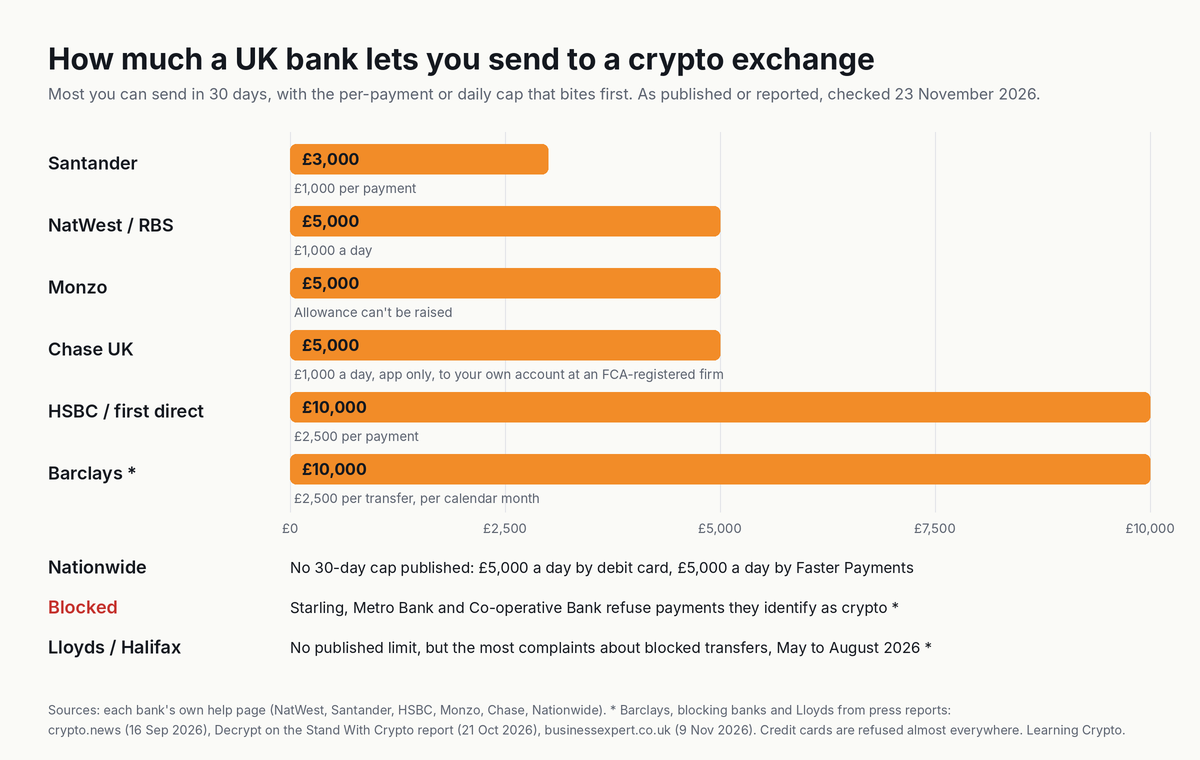
Bank Blocking Your Crypto Exchange Deposit? Why It Happens and What to Do
Most UK banks now cap or block payments to crypto exchanges, usually £3,000 to £10,000 a month, while still letting money come back in. If a deposit fails, find out whether the bank stopped it or the exchange returned it, send only from an account in your own name, and never use a third party to get around the block.
Toby CunninghamDeFi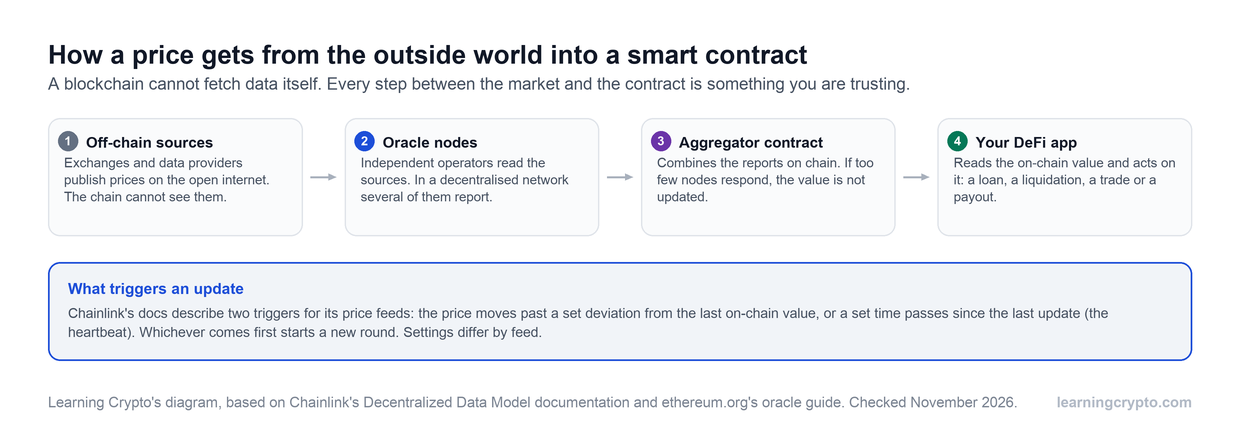 DeFi
Chainlink and Blockchain Oracles Explained: How Smart Contracts Get Real-World Data
A blockchain oracle is a service that brings outside data, such as a price, onto a blockchain so smart contracts can use it. Chainlink is the best-known oracle network. It uses independent node operators and an on-chain aggregator to publish prices, randomness and cross-chain messages. Oracles reduce one risk but remain a trust point, and manipulated or stale data has cost real money.
Toby CunninghamAnalysis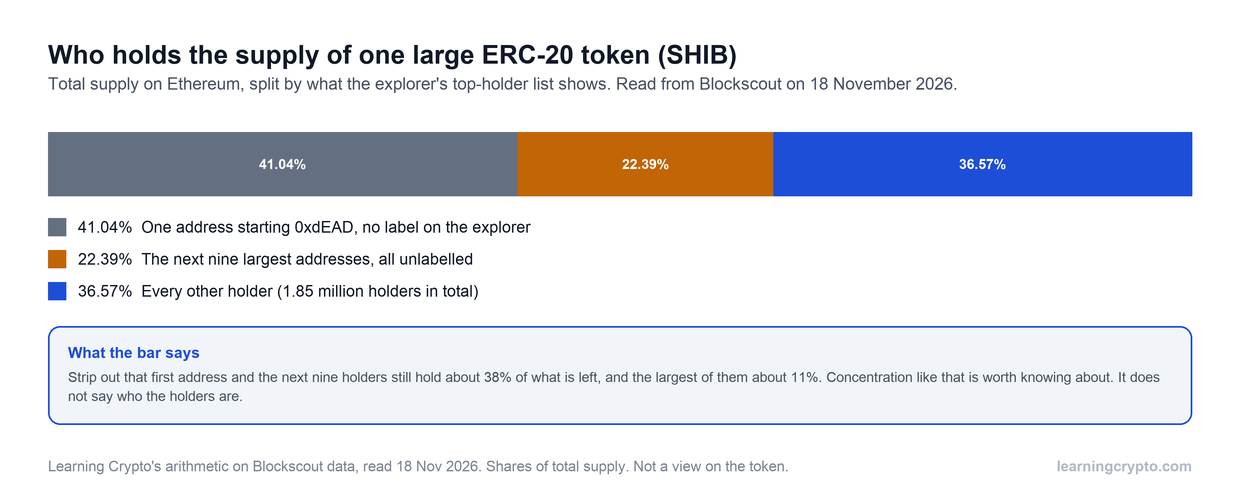 Analysis
How to Analyse a Token On-Chain: A Worked Example With a Real ERC-20 Token
To analyse a token on-chain, find its contract address from the official source, then read its supply, holder count and transfers, check how concentrated ownership is, and read what the verified contract can do. This worked example uses SHIB data from the Blockscout explorer, read on 18 November 2026. It tests method, not value, and says nothing about price.
Toby CunninghamFundamentals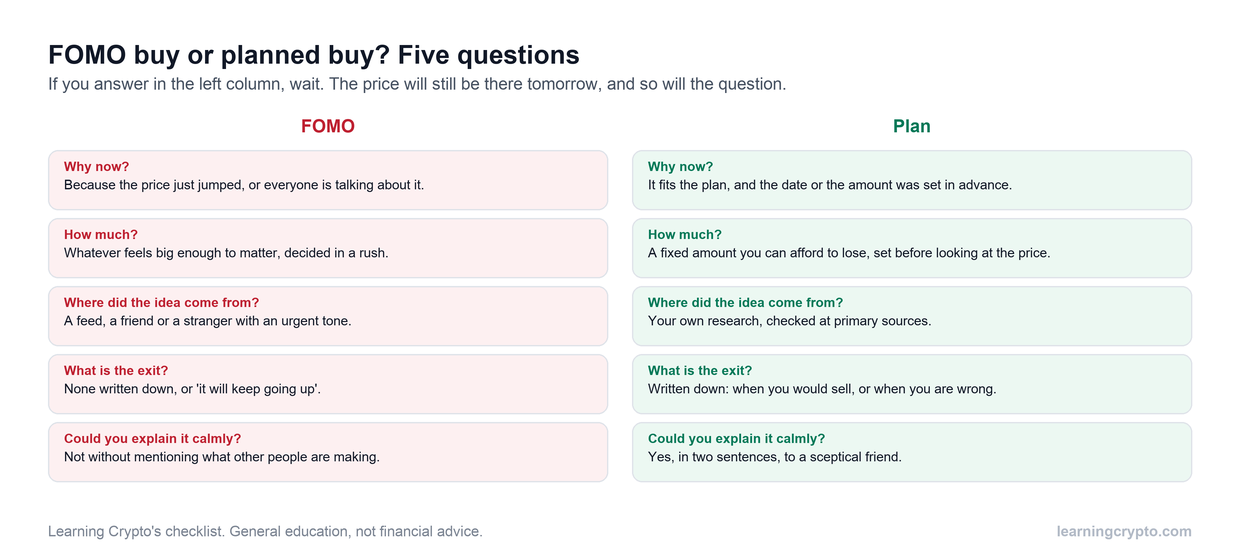 Fundamentals
FOMO in Crypto: What It Is, Why It Costs Money and How to Stop Chasing Pumps
FOMO in crypto is the fear of missing out: the urge to buy because a price has jumped and everyone is talking about it. It usually means buying late, in a hurry, with no exit. The fix is a written plan made before you look at the price: a fixed amount, a reason, and a point where you are wrong.
Toby CunninghamAnalysis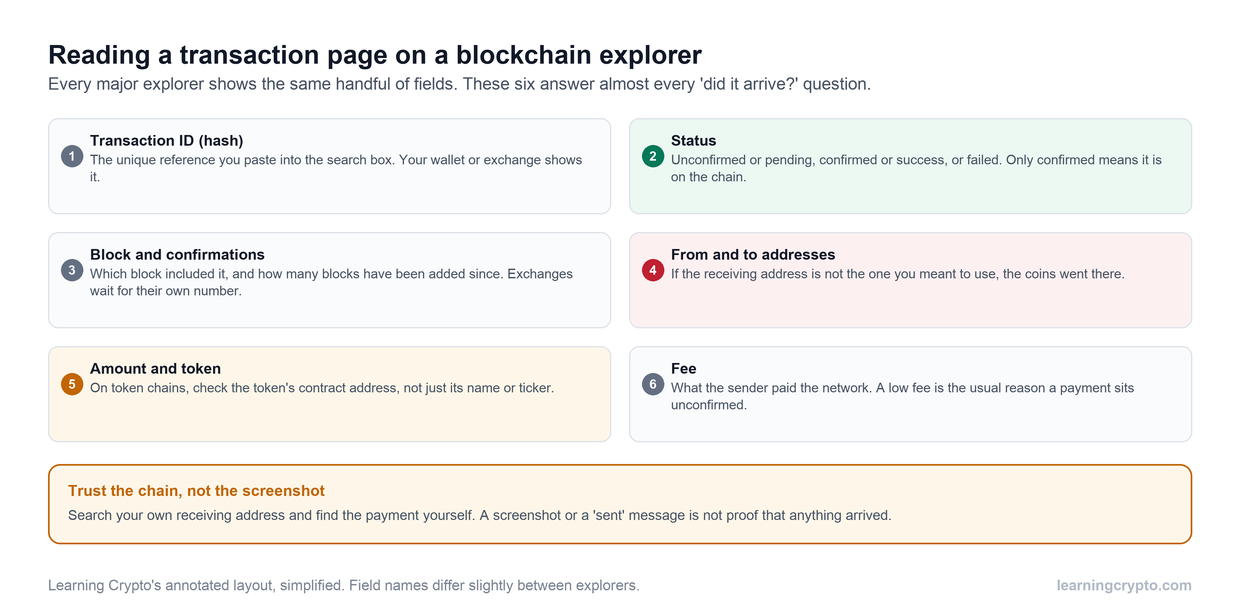 Analysis
How to Use a Blockchain Explorer: Check Any Transaction, Address or Token
A blockchain explorer is a search engine for a public blockchain. Paste a transaction ID, address or token contract into the explorer for that chain, such as mempool.space for Bitcoin or Etherscan for Ethereum, and it shows whether a payment confirmed, the fee paid, the amounts moved and every past transaction of that address. No account or wallet is needed.
Toby CunninghamRegulation & Tax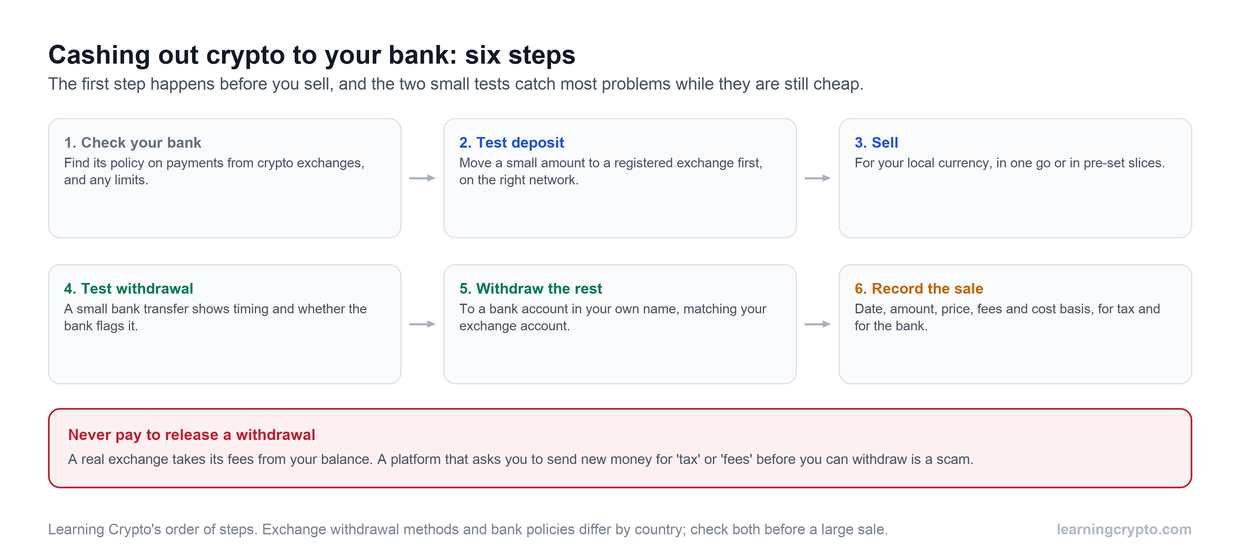 Regulation & Tax
How to Cash Out Crypto to Your Bank Account, and Find a Crypto-Friendly Bank
To cash out crypto, sell it for dollars, pounds or euros on a registered exchange, then withdraw to a bank account in your own name by bank transfer. Test with a small withdrawal first, keep records of every sale for tax, and check before you start that your bank accepts payments from crypto exchanges, because some limit or block them.
Toby CunninghamScams & Risk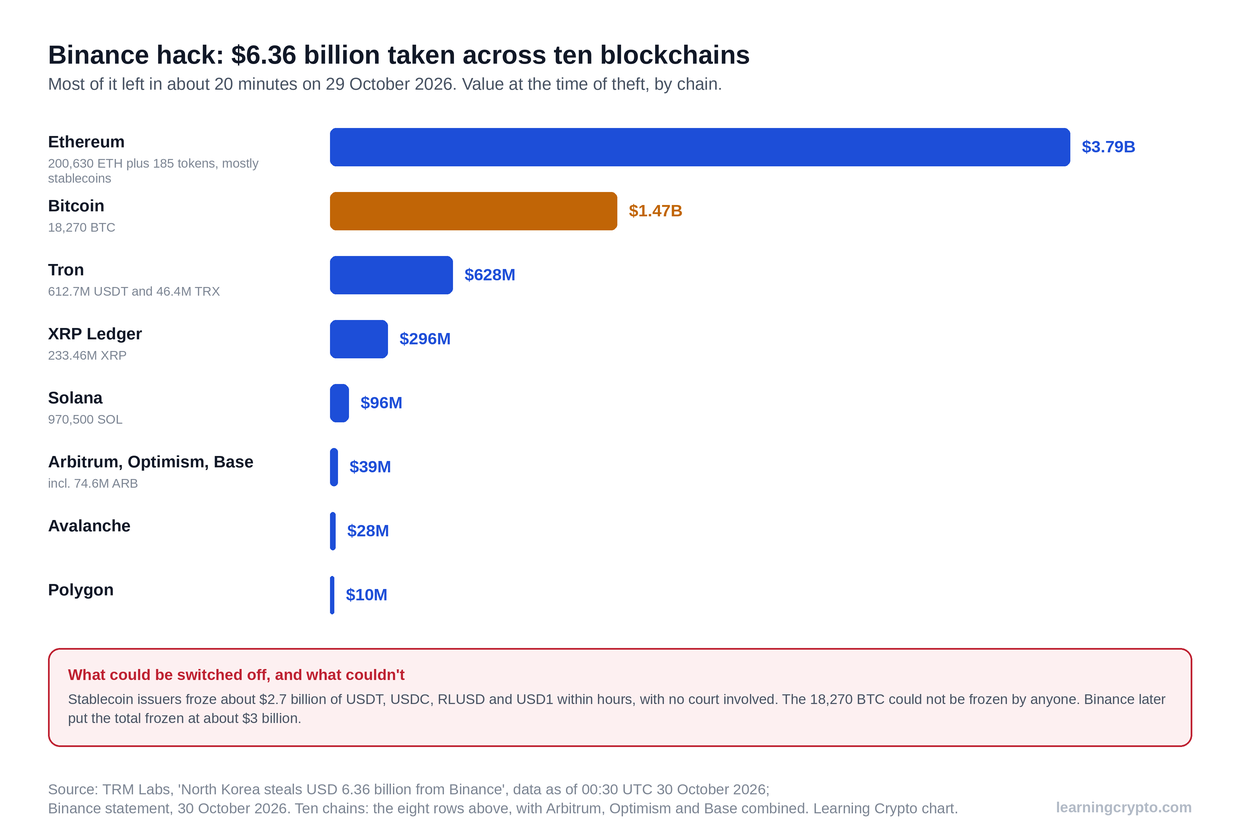 Scams & Risk
Binance Hack Explained: What Happened, Who Did It and How to Protect Yourself
On 29 October 2026 attackers took about $6.36 billion from Binance hot wallets across ten blockchains, the largest crypto theft on record. The FBI says North Korea did it. Binance says user funds are safe and it is covering the losses, and withdrawals are reopening in phases. Expect a wave of fake Binance support emails and calls next.
Toby CunninghamScams & Risk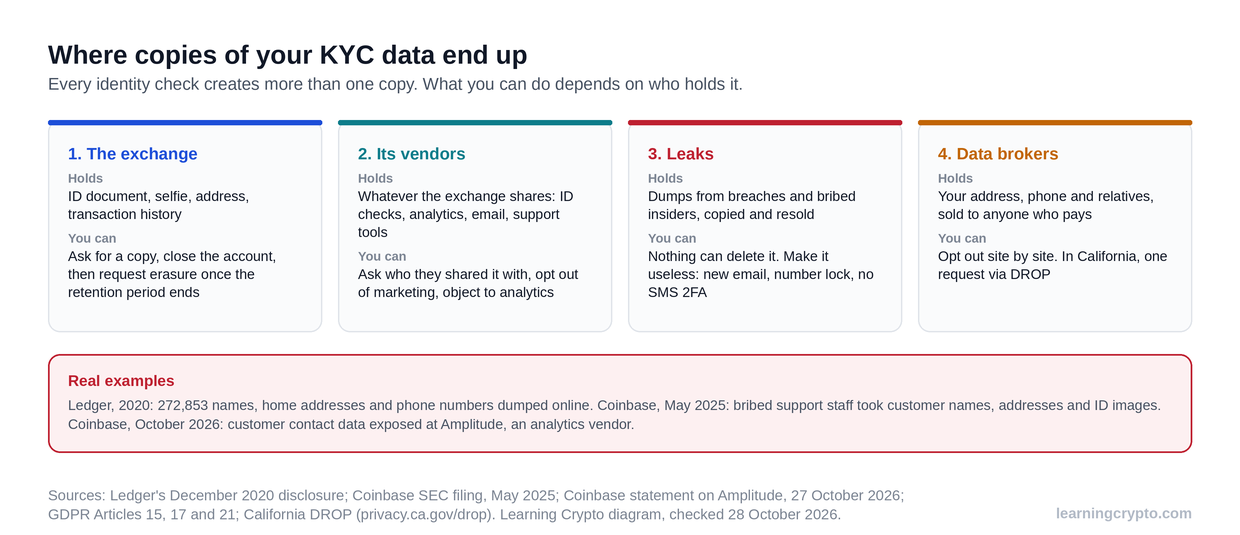 Scams & Risk
How to Delete Your KYC Data From Crypto Exchanges (and Why They Keep It)
You can ask a crypto exchange to delete your KYC data, but not straight away. Anti-money laundering rules in the UK, EU and US make exchanges keep your ID and records for five years, and in the UK and EU that clock starts when you close the account. So close dead accounts, then send an erasure request.
Toby CunninghamRegulation & Tax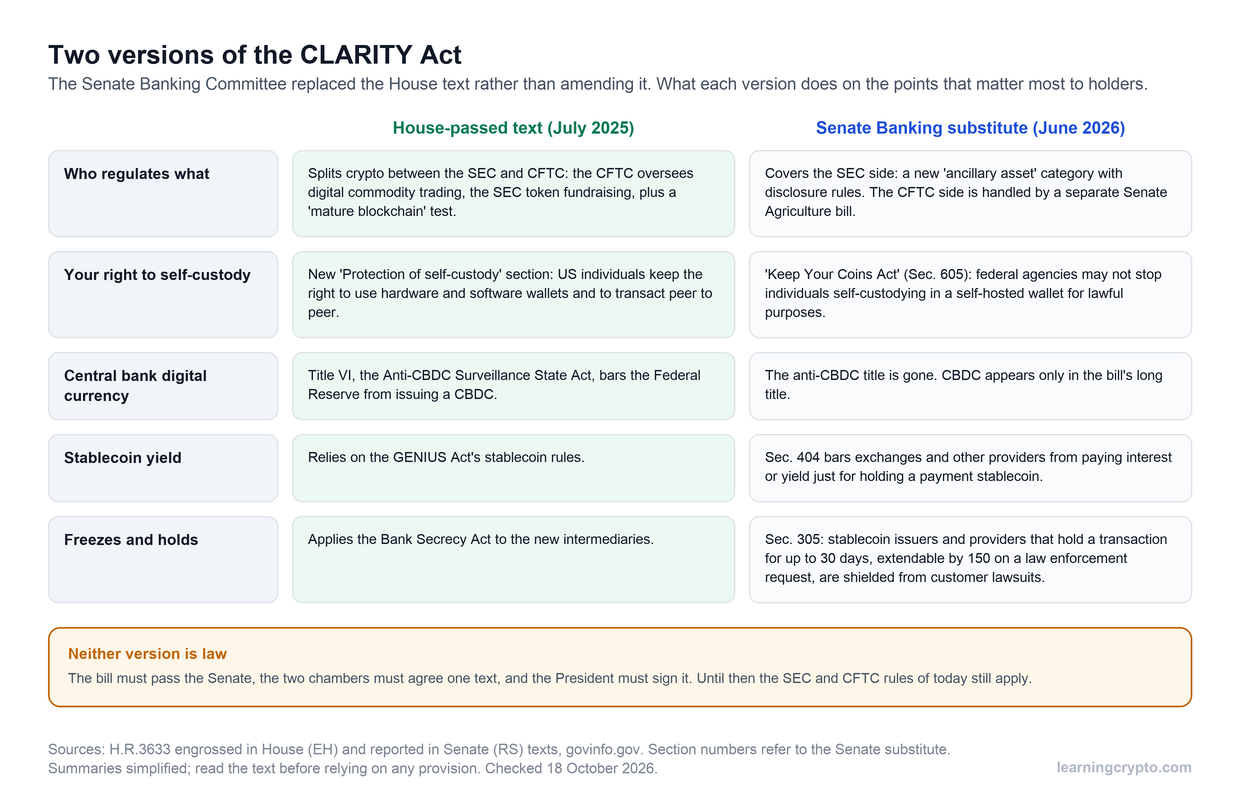 Regulation & Tax
The CLARITY Act Explained: What It Does, Where It Stands, and What It Means for Self-Custody
The CLARITY Act (H.R.3633) is the US crypto market structure bill. It would split oversight between the SEC and CFTC, register crypto exchanges and brokers, and protect self-custody. It passed the House 294-134 in July 2025, but a Senate vote to start debate failed 49-50 on 15 September 2026. As of 18 October 2026 it is not law.
Toby Cunningham