

36 guides by Toby.
 Analysis
The Pi Cycle Top Indicator: How It Works, What It Caught and What It Missed
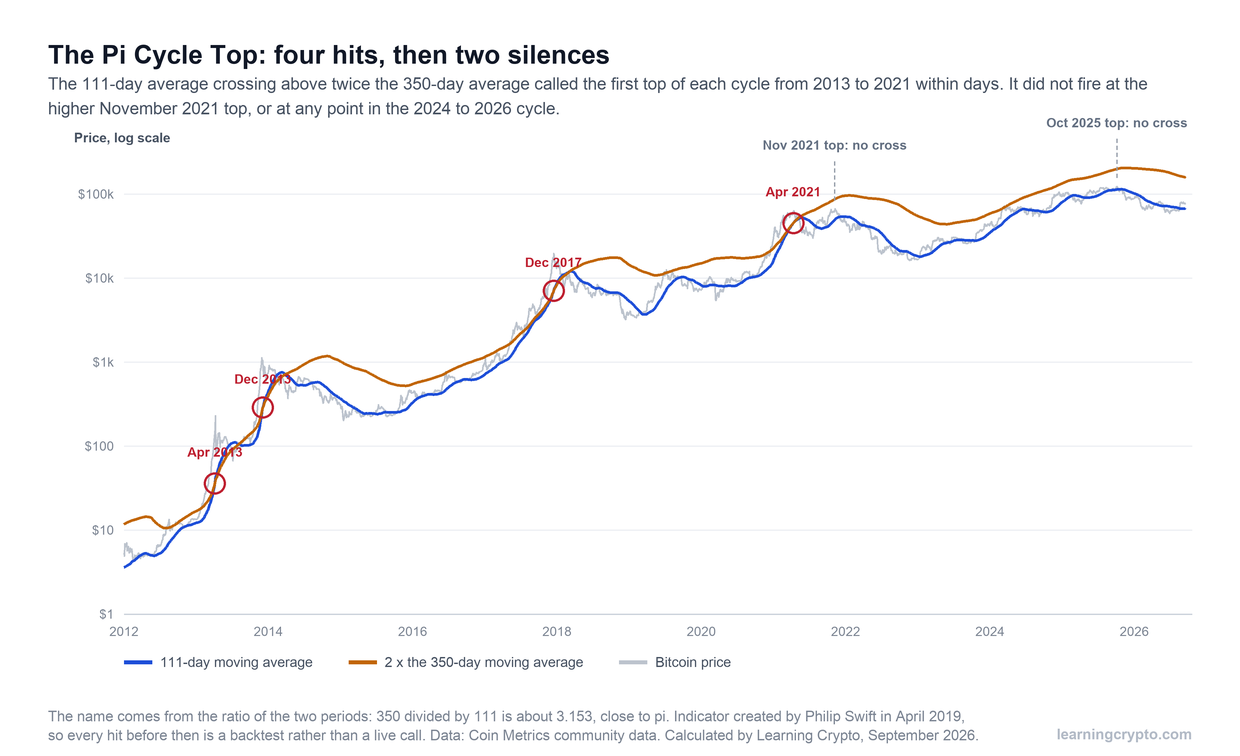
The Pi Cycle Top fires when Bitcoin's 111-day moving average crosses above twice its 350-day average. It caught the April 2013, December 2013, December 2017 and April 2021 tops within days. It did not fire at the November 2021 top or at any point in the 2024 to 2026 cycle, which peaked in October 2025 with the ratio at 0.57.
Toby CunninghamAnalysis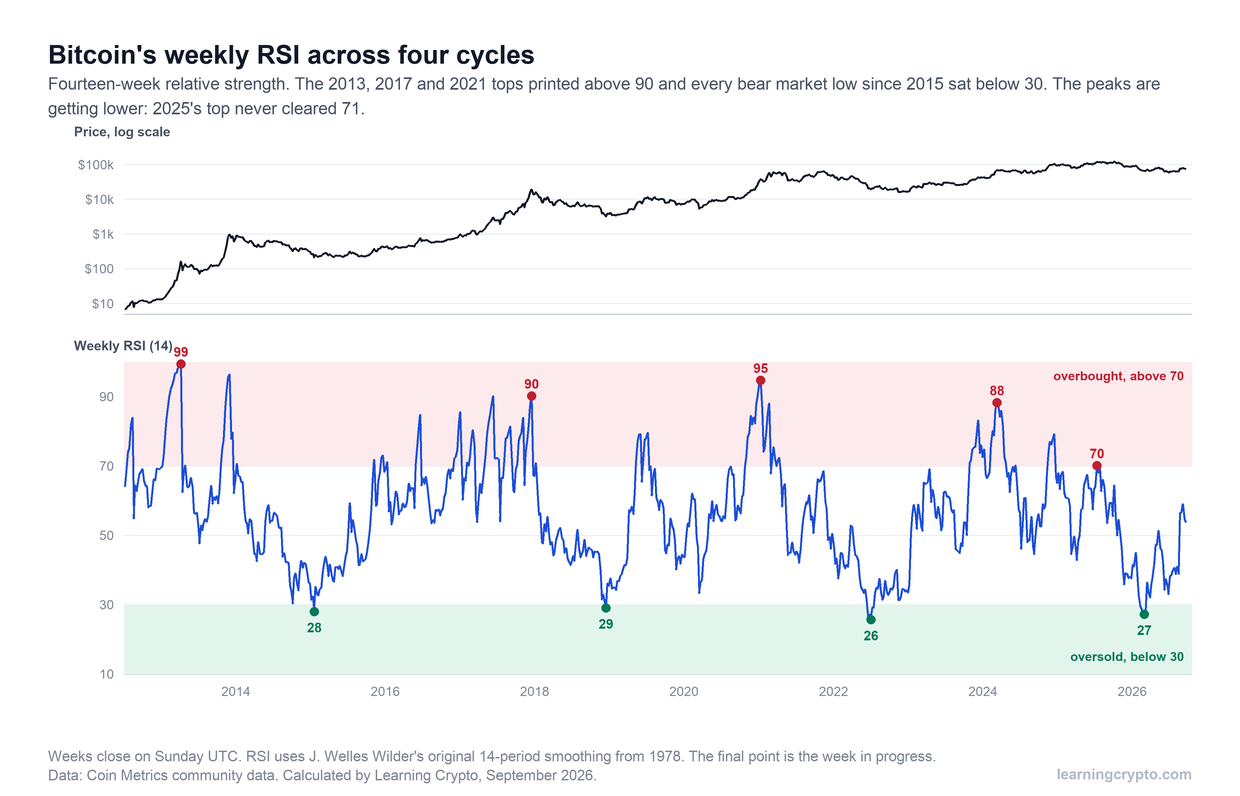 Analysis
Bitcoin Weekly RSI: What It Shows About Cycle Tops and Bottoms
Bitcoin's weekly RSI weighs fourteen weeks of gains against losses on a 0 to 100 scale. Every bear market low since 2015 printed below 30, and the 2013, 2017 and 2021 tops printed above 90. In 2022 and 2026 the oversold reading came months before the final price low, which then arrived with a higher RSI.
Toby CunninghamAnalysis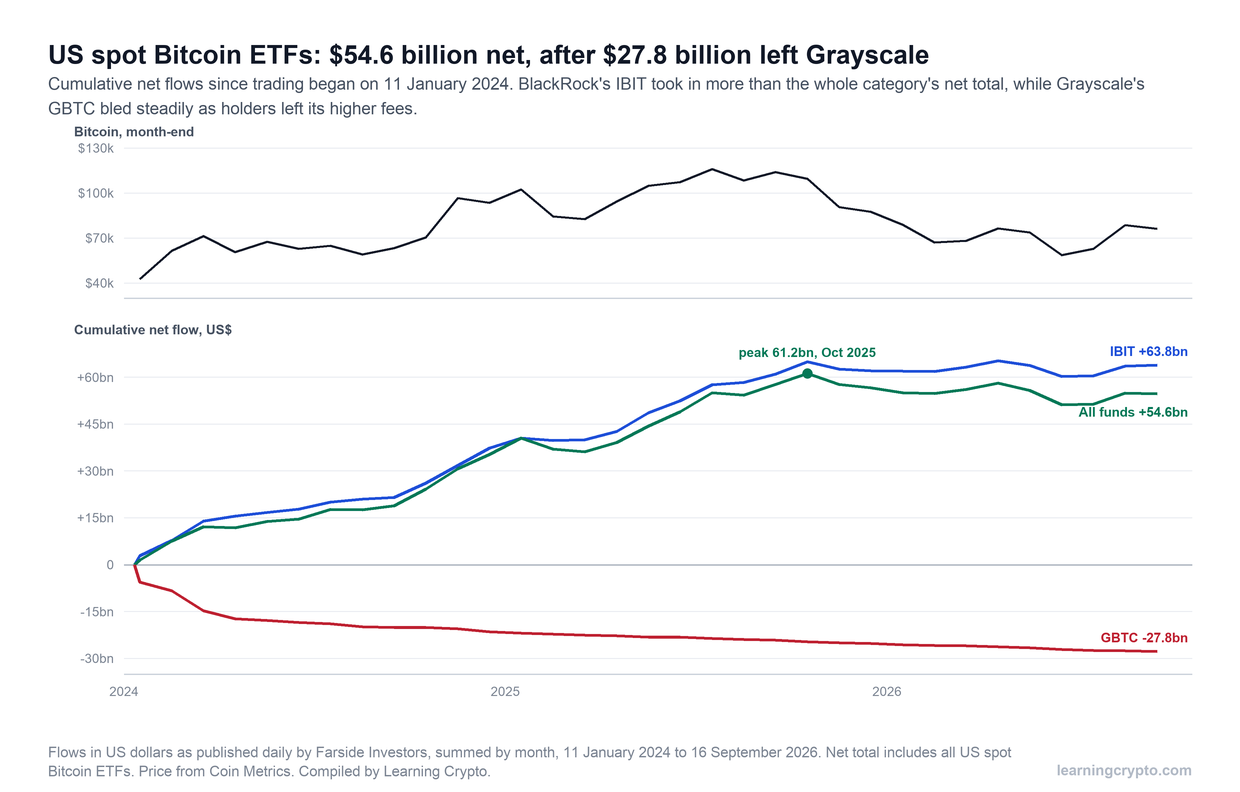 Analysis
Bitcoin ETF Flows Explained: What the Daily Numbers Mean for Price
Bitcoin ETF flows are the net dollars entering or leaving US spot Bitcoin funds each trading day. Since January 2024 they total $54.6 billion net, led by BlackRock's IBIT, while Grayscale's GBTC lost $27.8 billion. Monthly flows have moved with the same month's price, but have said almost nothing about the month after.
Toby CunninghamAnalysis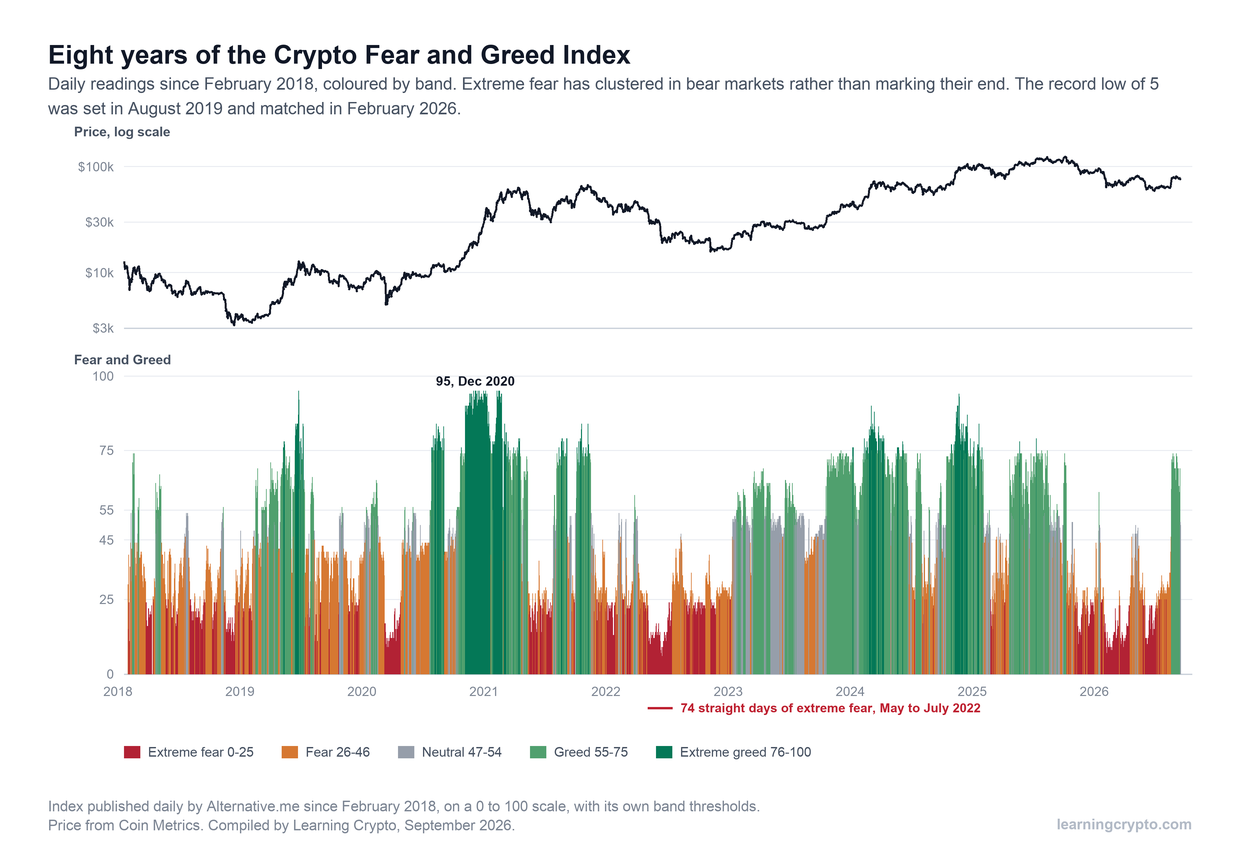 Analysis
Crypto Fear and Greed Index: What It Measures and What Its Record Shows
The Crypto Fear and Greed Index scores market mood from 0 to 100 using volatility, momentum, social media, Bitcoin dominance and search trends. Since 2018, extreme fear has not been a reliable buy signal on its own: three and six months later Bitcoin was lower more often than not, because fear lingers through bear markets.
Toby CunninghamDeFi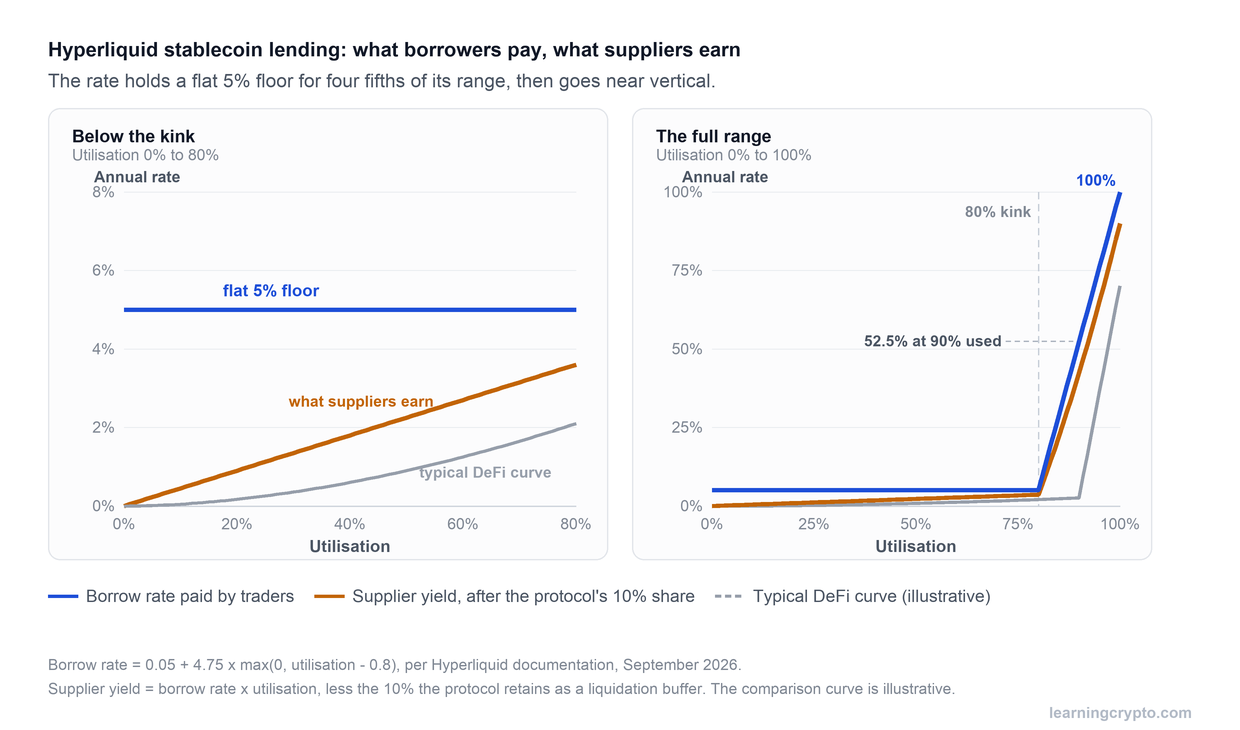 DeFi
DeFiHyperliquid Earn Explained: Where the USDC Yield Comes From
Hyperliquid Earn pays interest on USDC by lending it to traders who borrow against collateral to open larger positions. The rate is set by a formula with a 5% floor below 80% utilisation that climbs steeply above it, unlike Aave where rates fall to almost nothing when borrowing is quiet. The catch is that supplied USDC is also collateral.
Toby CunninghamDeFi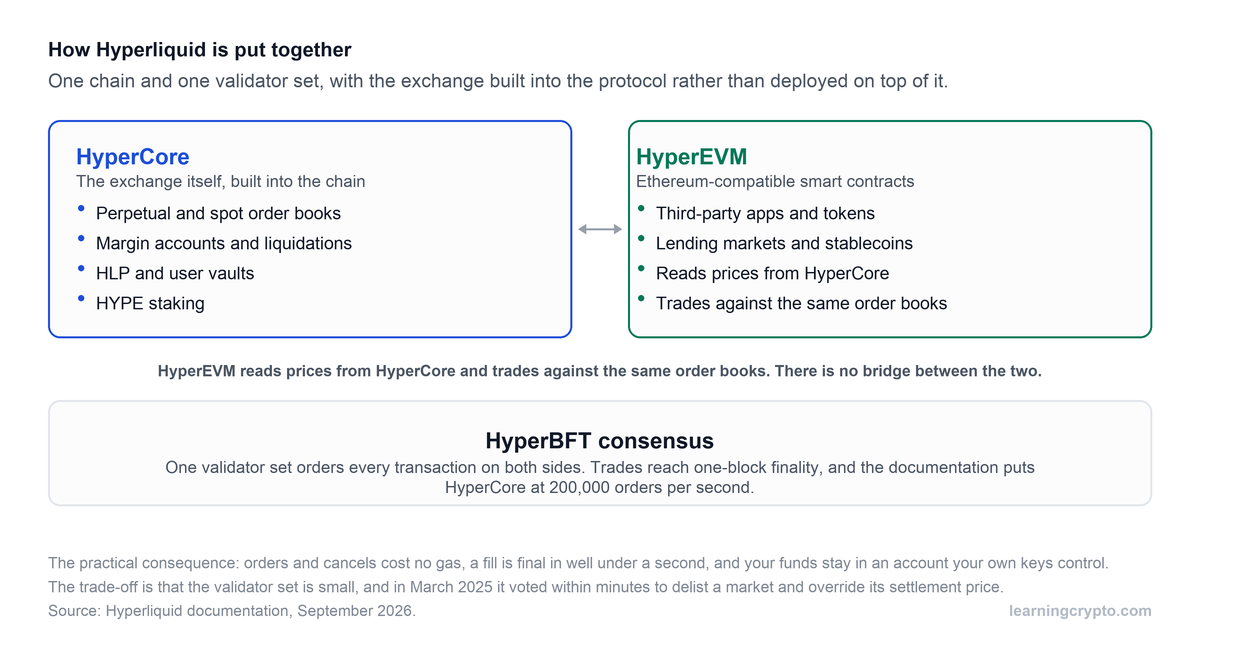 DeFi
DeFiWhat Is Hyperliquid? The Complete Beginner's Guide to the On-Chain Perps Exchange
Hyperliquid is a layer-1 blockchain that runs a fully on-chain order book for perpetual futures, with no gas on trades, no KYC, and up to 40x leverage on Bitcoin. You trade from your own wallet, fees start at 0.045% taker, and the HYPE token was airdropped to users rather than sold. It is not available to US residents, and leverage is the main risk.
Toby CunninghamStablecoins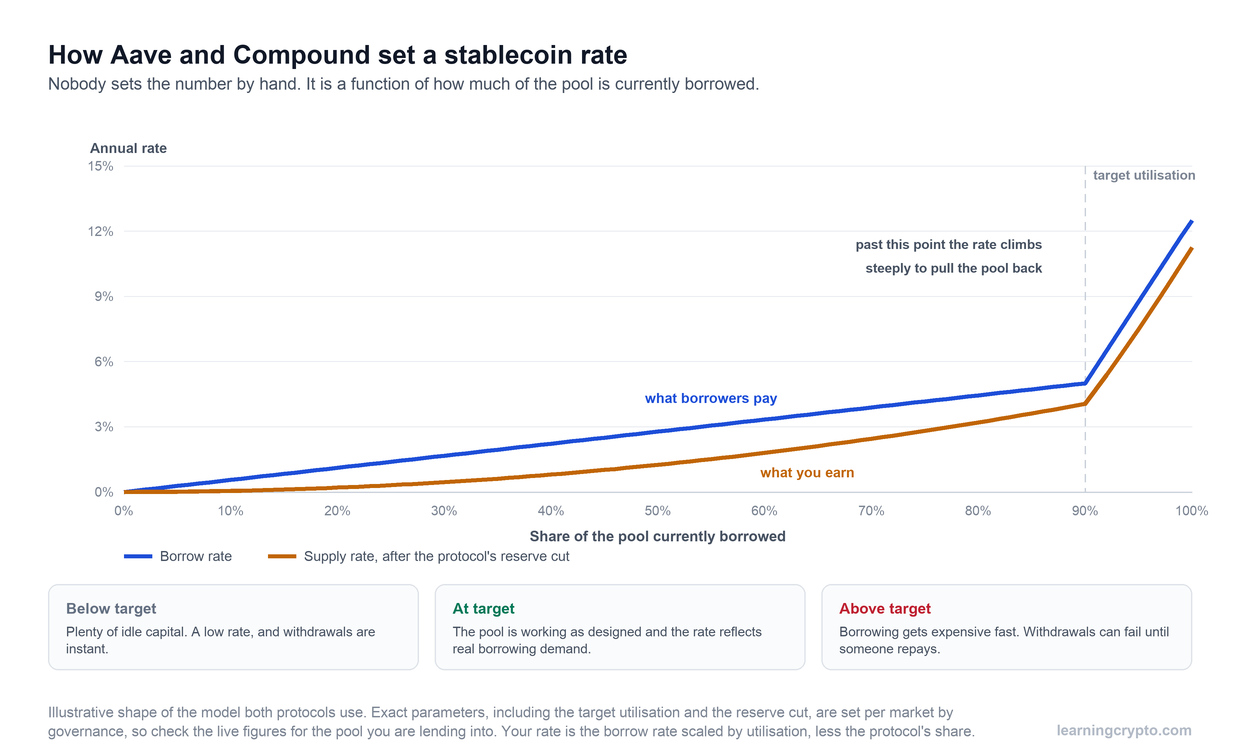 Stablecoins
Stablecoin Lending Explained: How the Rates Work and What Can Go Wrong
Stablecoin lending means depositing USDC or USDT into a pool that borrowers draw from against collateral, and the interest they pay is your yield. On Aave and Compound the rate is set by how much of the pool is borrowed, not by a promise, so it floats daily. Over-collateralisation and liquidations protect lenders from defaults, not from smart contract bugs, bad debt or a depeg.
Toby CunninghamDeFi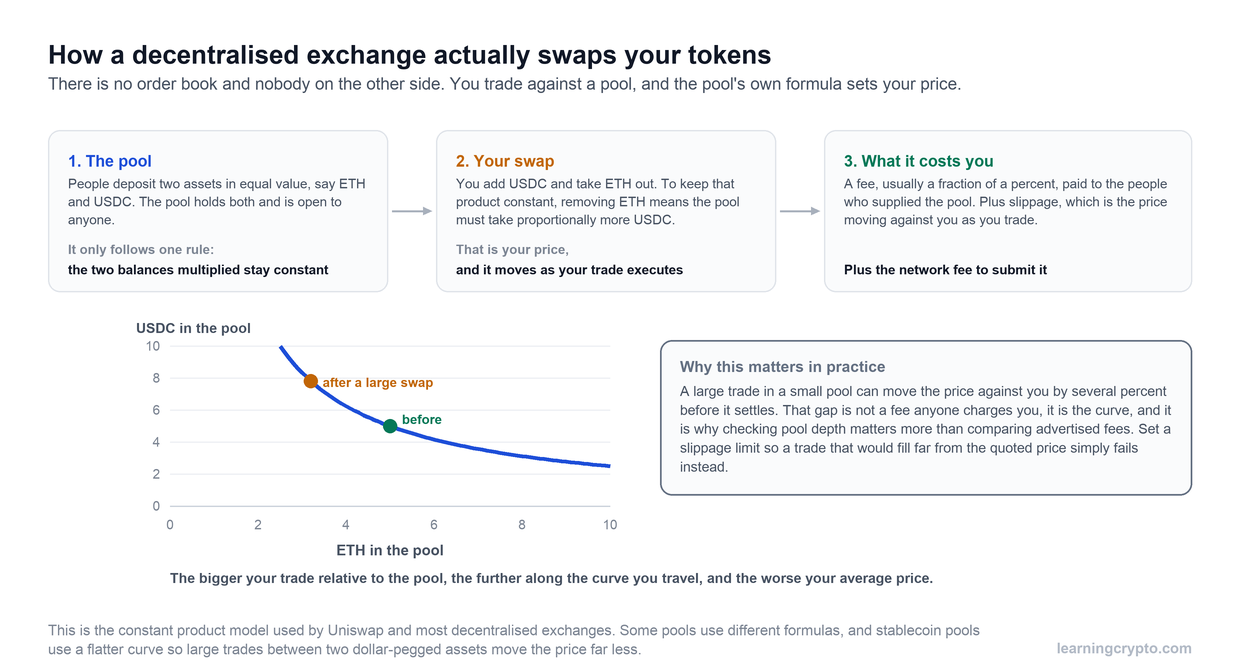 DeFi
DeFiWhat Is DeFi? A Complete Guide to Decentralised Finance
DeFi is financial services run by smart contracts on a public blockchain instead of by a company. You keep custody of your assets and need no approval to use it, which also means no deposit insurance, no reversals and no support desk. The most common way users lose money is approving a malicious contract.
Toby CunninghamStablecoins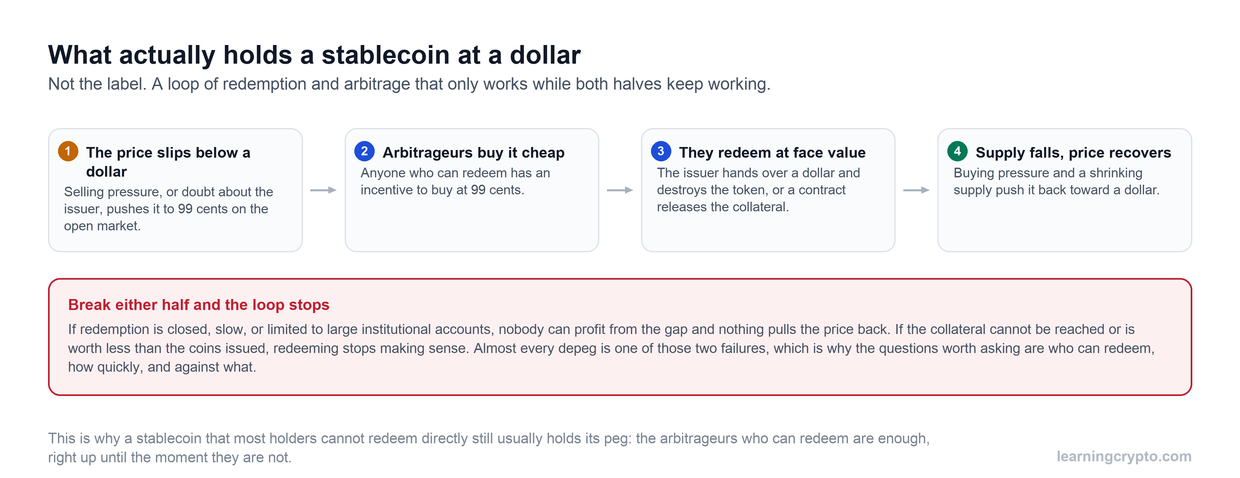 Stablecoins
What Is a Stablecoin? How They Work and the Risks
A stablecoin is a crypto token designed to hold a steady value, almost always one dollar. It stays stable because reserves back it or collateral is locked in a contract, not because of anything inherent to the token. Holding one means holding a claim on an issuer, with no deposit insurance and, for most retail holders, no direct redemption.
Toby Cunningham