
Everything we know,
written down.
190 guides covering wallets, DeFi, stablecoins, on-chain analysis, tax and the ways people lose money. No sponsored posts, no affiliate reviews dressed up as research.
Browse all 190.
 Analysis
Crypto Fear and Greed Index: What It Measures and What Its Record Shows
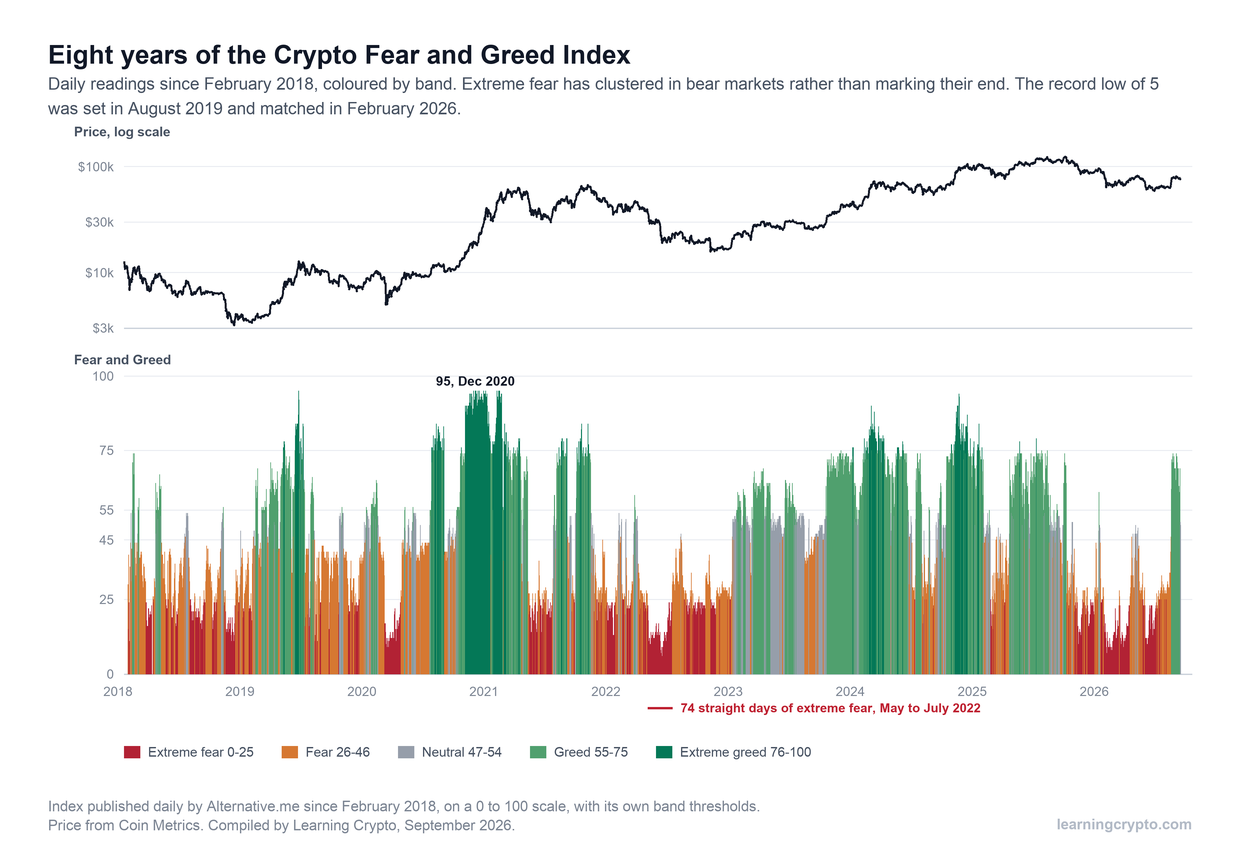
The Crypto Fear and Greed Index scores market mood from 0 to 100 using volatility, momentum, social media, Bitcoin dominance and search trends. Since 2018, extreme fear has not been a reliable buy signal on its own: three and six months later Bitcoin was lower more often than not, because fear lingers through bear markets.
Toby CunninghamDeFi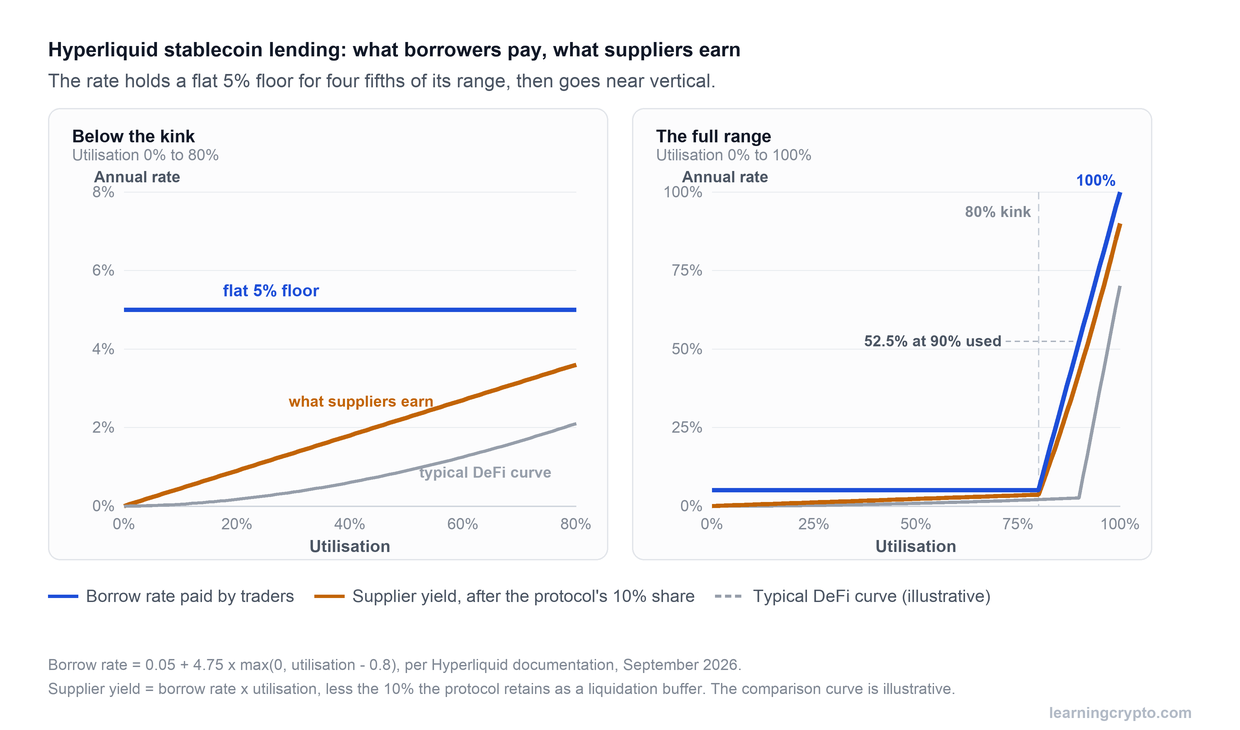 DeFi
Hyperliquid Earn Explained: Where the USDC Yield Comes From
Hyperliquid Earn pays interest on USDC by lending it to traders who borrow against collateral to open larger positions. The rate is set by a formula with a 5% floor below 80% utilisation that climbs steeply above it, unlike Aave where rates fall to almost nothing when borrowing is quiet. The catch is that supplied USDC is also collateral.
Toby CunninghamDeFi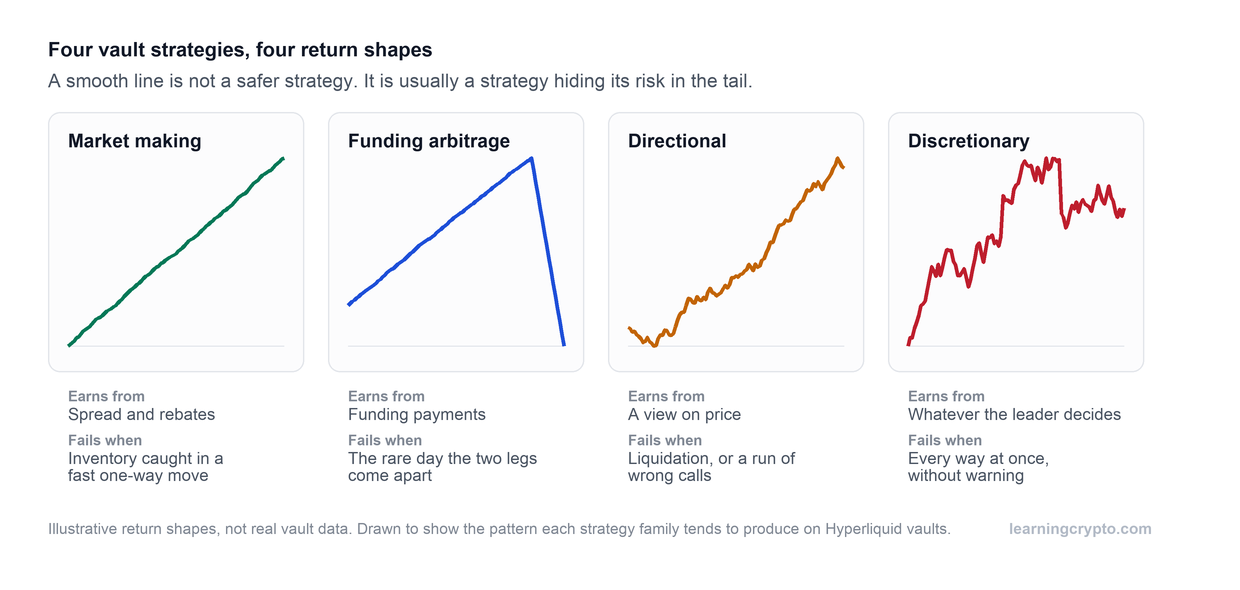 DeFi
Hyperliquid Vaults Explained: Copy Trading, HLP and What You Are Actually Buying
A Hyperliquid vault is an on-chain trading account you can deposit USDC into, where a leader trades the pooled money and everyone shares the profit and loss by ownership share. User vault leaders take 10% of profits above the high-water mark and must keep 5% of the vault themselves. HLP is the protocol's own vault and charges nothing. Both can lose money.
Heidi ChakosDeFi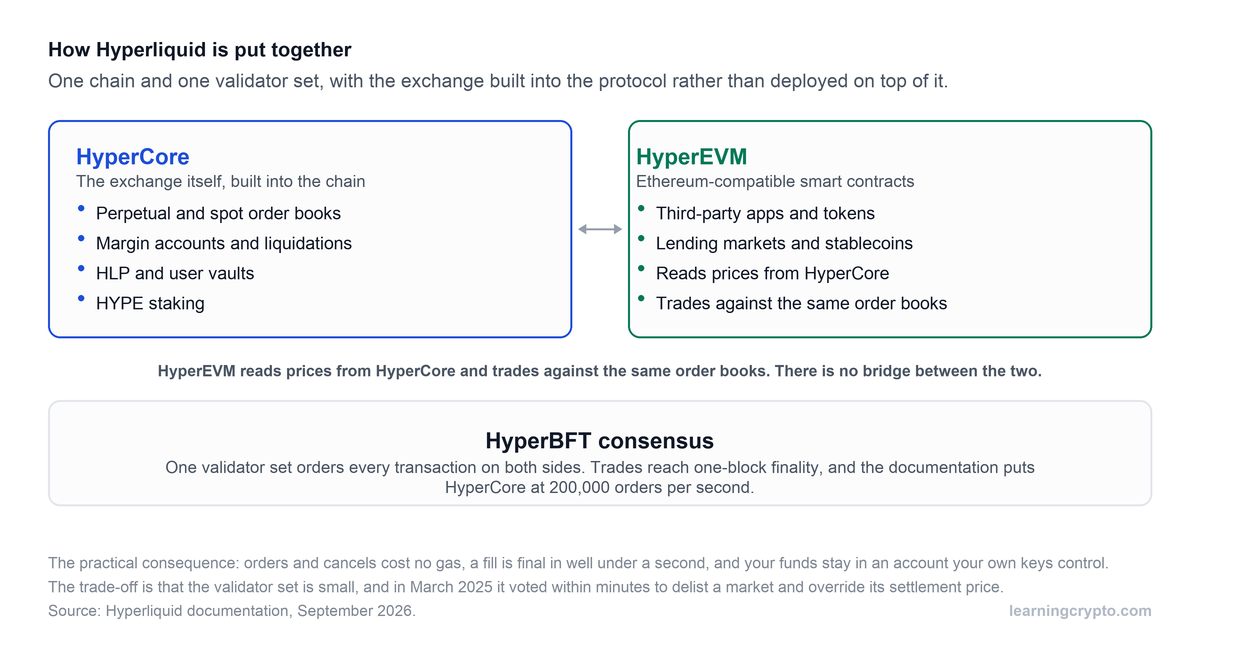 DeFi
Hyperliquid Exchange Explained: How the On-Chain DEX Works and How to Trade on It
Hyperliquid is a layer-1 blockchain that runs a fully on-chain order book for perpetual futures, with no gas on trades, no KYC, and up to 40x leverage on Bitcoin. You trade from your own wallet, fees start at 0.045% taker, and the HYPE token was airdropped to users rather than sold. It is not available to US residents, and leverage is the main risk.
Toby CunninghamStablecoins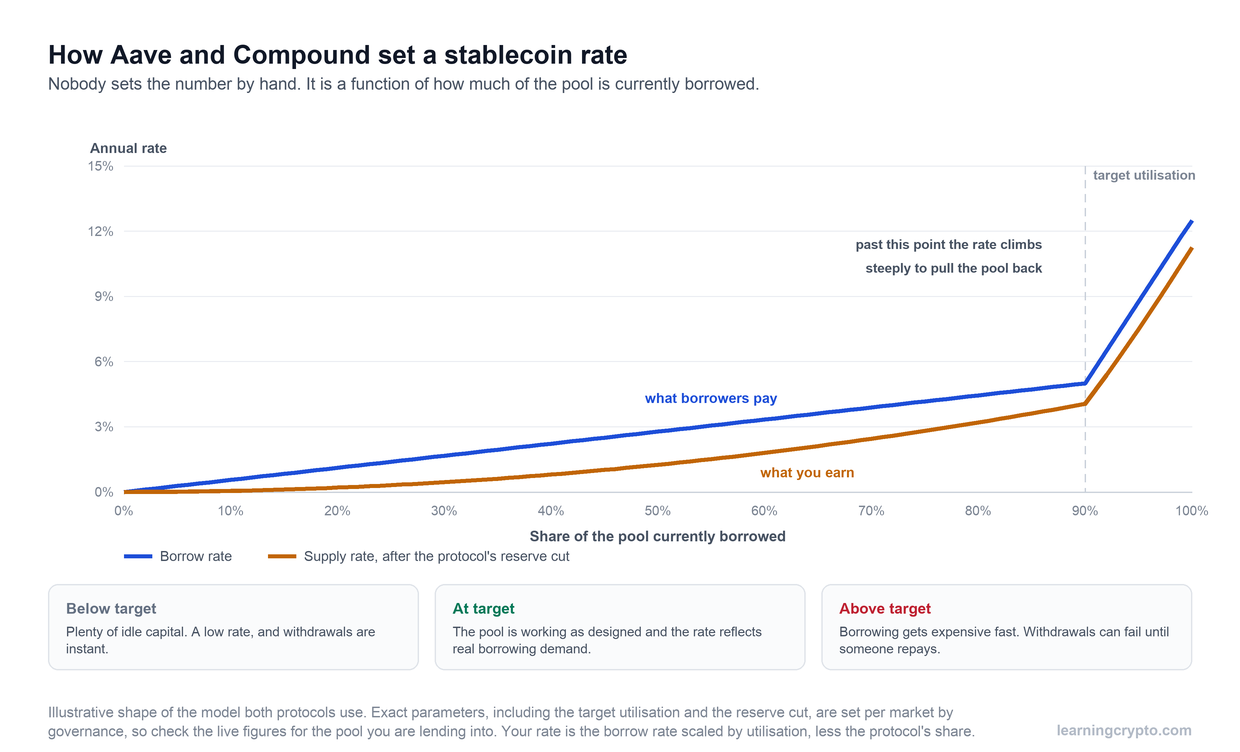 Stablecoins
Stablecoin Lending Explained: How the Rates Work and What Can Go Wrong
Stablecoin lending means depositing USDC or USDT into a pool that borrowers draw from against collateral, and the interest they pay is your yield. On Aave and Compound the rate is set by how much of the pool is borrowed, not by a promise, so it floats daily. Over-collateralisation and liquidations protect lenders from defaults, not from smart contract bugs, bad debt or a depeg.
Toby CunninghamScams & Risk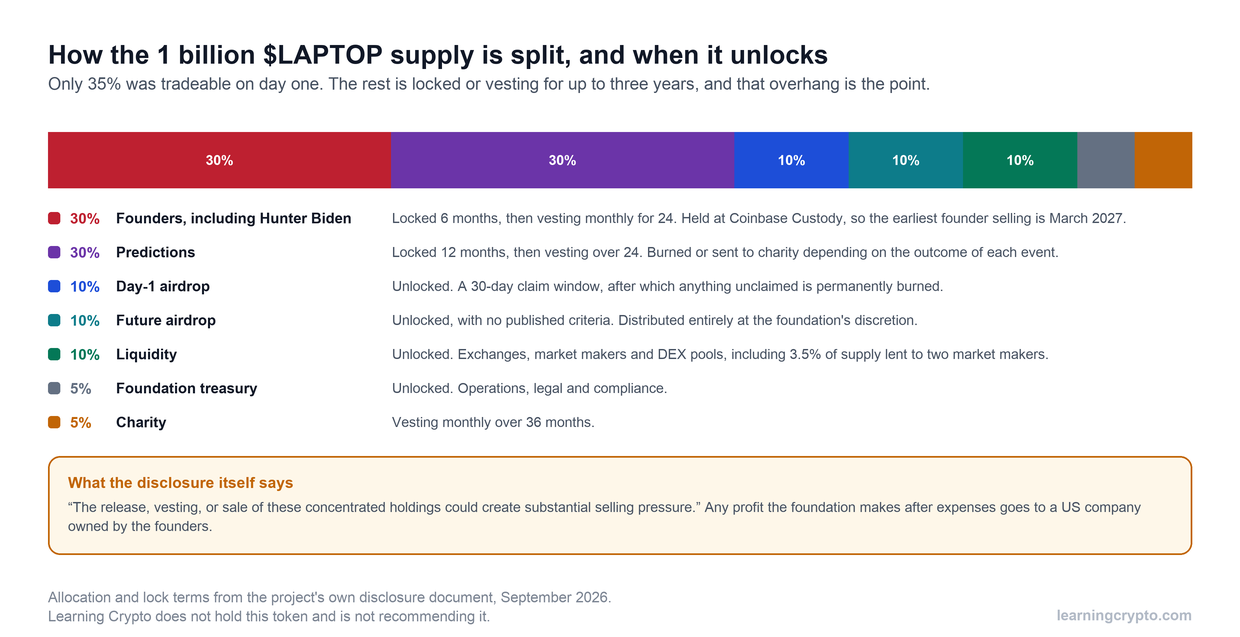 Scams & Risk
$LAPTOP Memecoin: What Hunter Biden's Token Is, and What It Is Not
$LAPTOP is a memecoin co-founded by Hunter Biden, launched on Base in September 2026 and issued via a Cayman Islands foundation and a BVI company. It has no utility and no price floor, by its issuer's own account. Founders hold 30% of the 1 billion supply, 65% is locked or vesting, and hundreds of fake LAPTOP tokens appeared within hours. This is not an endorsement.
Heidi ChakosScams & Risk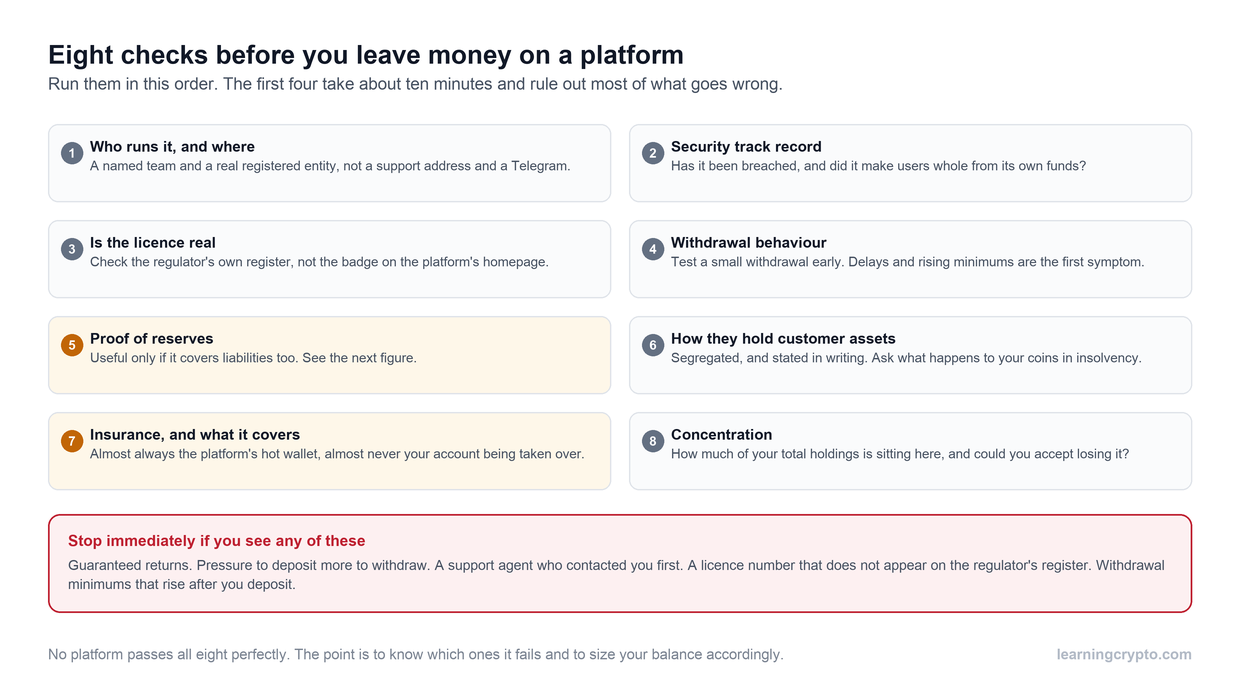 Scams & Risk
How to Tell If a Crypto Exchange or Wallet Is Safe
Judging a crypto platform comes down to eight checks: who holds the keys, the security track record, proof of reserves, licensing, insurance, transparency, account controls and how easily you can withdraw. The most reliable warning sign is difficulty getting your own money out.
Heidi ChakosDeFi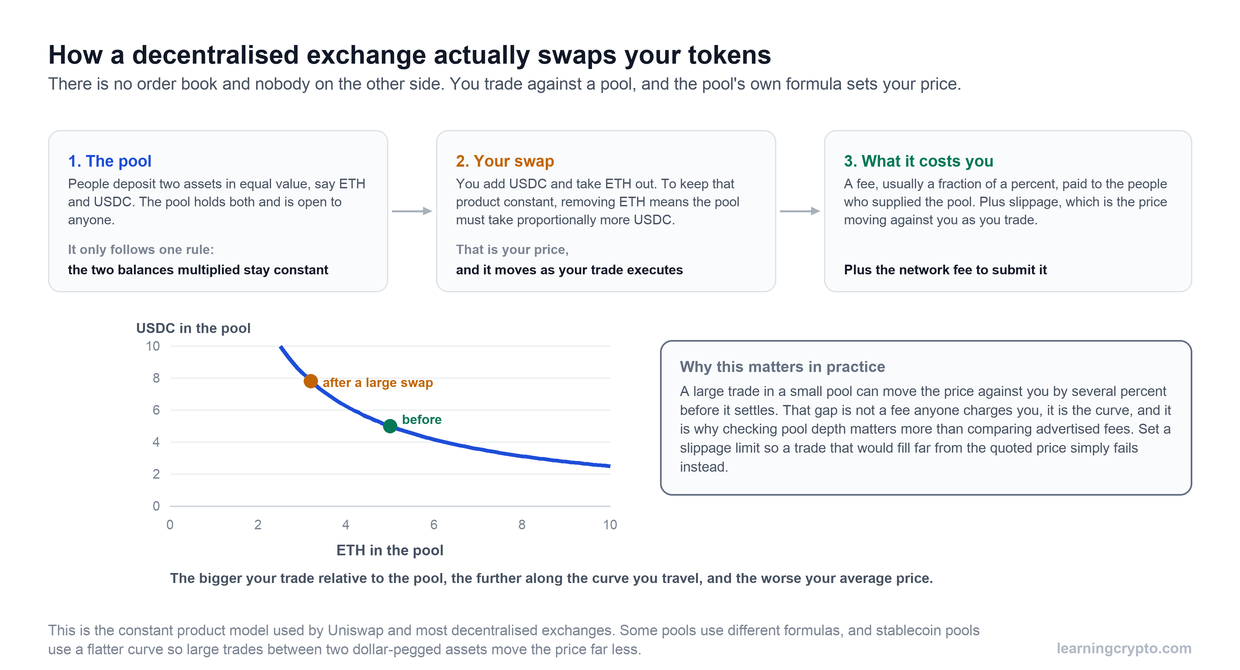 DeFi
What Is DeFi? A Complete Guide to Decentralised Finance
DeFi is financial services run by smart contracts on a public blockchain instead of by a company. You keep custody of your assets and need no approval to use it, which also means no deposit insurance, no reversals and no support desk. The most common way users lose money is approving a malicious contract.
Toby CunninghamStablecoins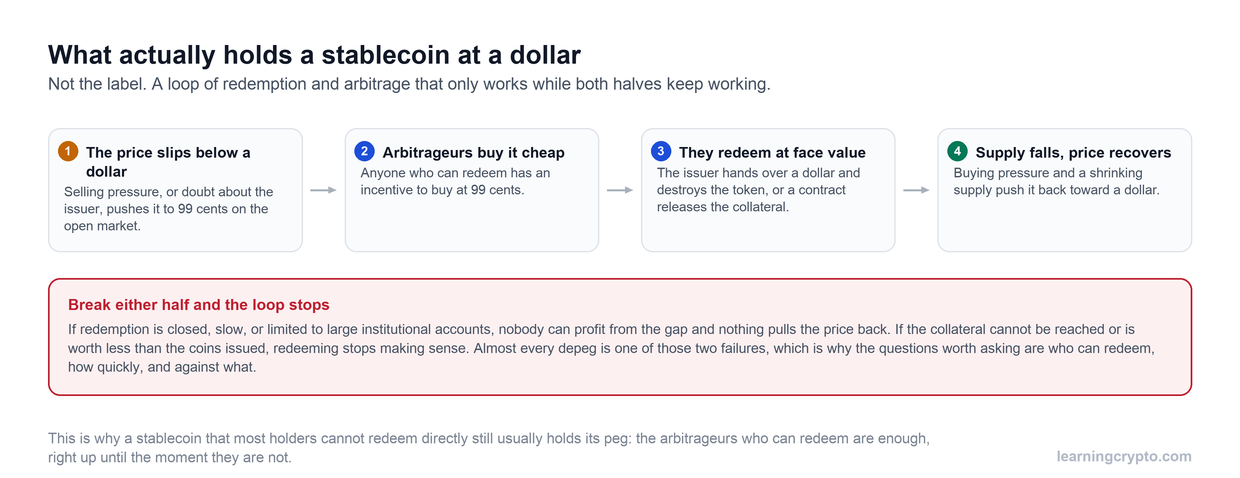 Stablecoins
What Is a Stablecoin? How They Work and the Risks
A stablecoin is a crypto token designed to hold a steady value, almost always one dollar. It stays stable because reserves back it or collateral is locked in a contract, not because of anything inherent to the token. Holding one means holding a claim on an issuer, with no deposit insurance and, for most retail holders, no direct redemption.
Toby CunninghamReading is the cheap part.
The guides give you the grounding. Membership gives you the live on-chain data, the indicators and the analysts, so you can apply it while it still matters.