
Stablecoins are commonly used by investors to earn passive income in the crypto market. This is true for both new and experienced investors. Stablecoin investments often come with minimal fees, which can make these platforms attractive compared with a savings account.
Stablecoins are a popular choice because they offer a stable value compared to other cryptocurrencies. Investors can earn passive income by lending or holding stablecoins on a platform that pays interest. With many platforms offering different rates, how can you find the best stablecoin yield for your money, and how do you avoid the platforms that blow up?
Educational content only, not financial or tax advice. Rates change daily and platform availability differs by country. Verify current yields and terms on the platform itself, and check the tax treatment of interest income where you live.
Top Platforms Offering the Best Stablecoin Interest Rates
The best stablecoin interest rates in 2026 still come from the same three sources they did a year ago: DeFi lending pools such as Aave and Compound, centralised lenders such as Nexo, and exchange reward programs such as Coinbase's USDC rewards. The table below is our last full snapshot of what each was paying.
| Platform | USDT | USDC | DAI |
|---|---|---|---|
| Nexo | Up to 12.00% APY | n/a | n/a |
| Aave | 2.88% APY | 2.46% APY | 2.68% APY |
| Compound | 3.74% APR | 3.94% APR | N/A |
| Coinbase | Not Available | 4.1% APY | Not Available |
*Last updated April 2025. Treat these as a snapshot, not a quote. Aave and Compound rates are set by borrowing demand and can move several points in a week, Coinbase's USDC rate is a reward program it can change at will, and Nexo's headline figure applies only at its top loyalty tier with part of the interest paid in its own NEXO token. For current stablecoin interest rates, open the platform's own markets page; anything quoted on a third-party site, including this one, is already out of date.
Which are the most promising stablecoin yields right now?
The most promising stablecoin yields are the ones you can explain: variable lending rates on Aave and Compound, USDC rewards from a regulated exchange, and the newer Treasury-backed yield-bearing tokens. The stablecoins with the highest interest on any given day are almost always on the smallest or newest platforms, and that is a warning rather than an opportunity.
A useful way to sort the market is by where the yield sits relative to US Treasury bills. In 2026 a plain USDC deposit on a large DeFi protocol or exchange tends to pay somewhere around the T-bill rate, because that is what the borrowers and the reserve income can support. A platform paying two or three times that number is either lending your money to someone risky, subsidising the rate with its own token, or hiding the risk entirely. High APY stablecoin vaults on new chains can be legitimate for a few weeks while incentive programs run, but the rate collapses when the incentives end, and you are left holding a coin you may not be able to redeem at par.
Where does stablecoin yield actually come from?
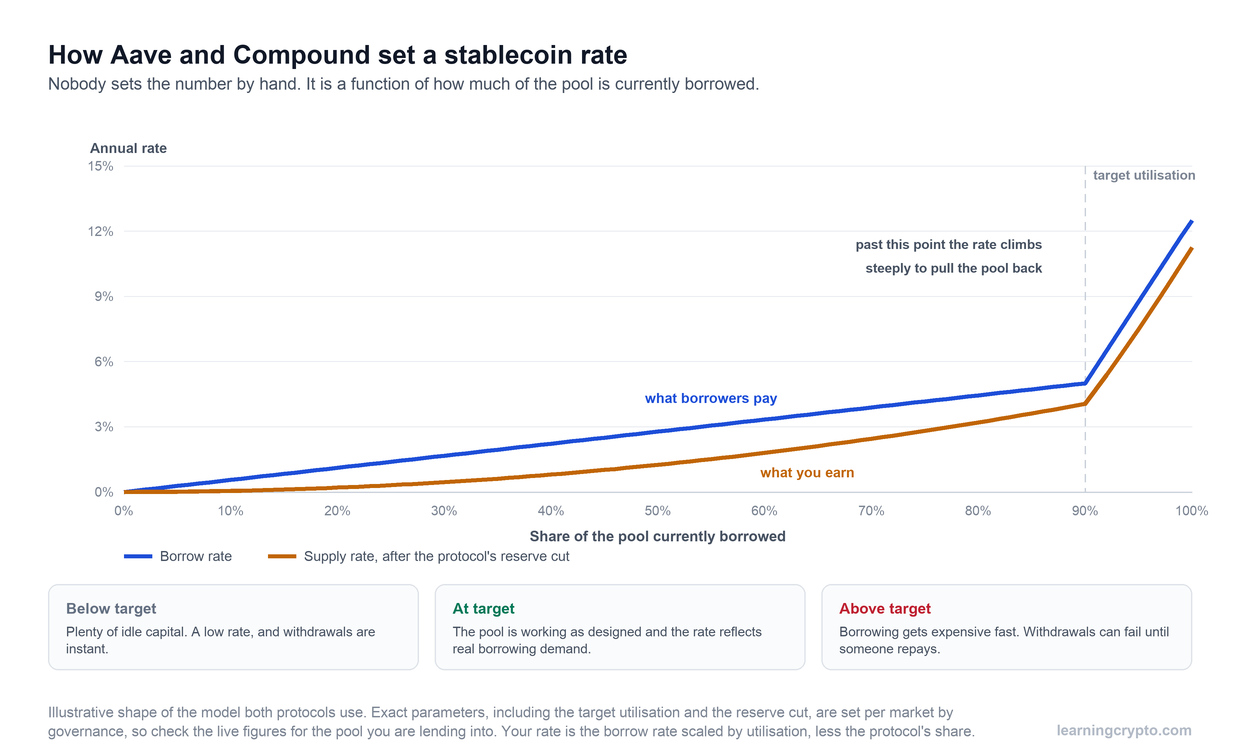
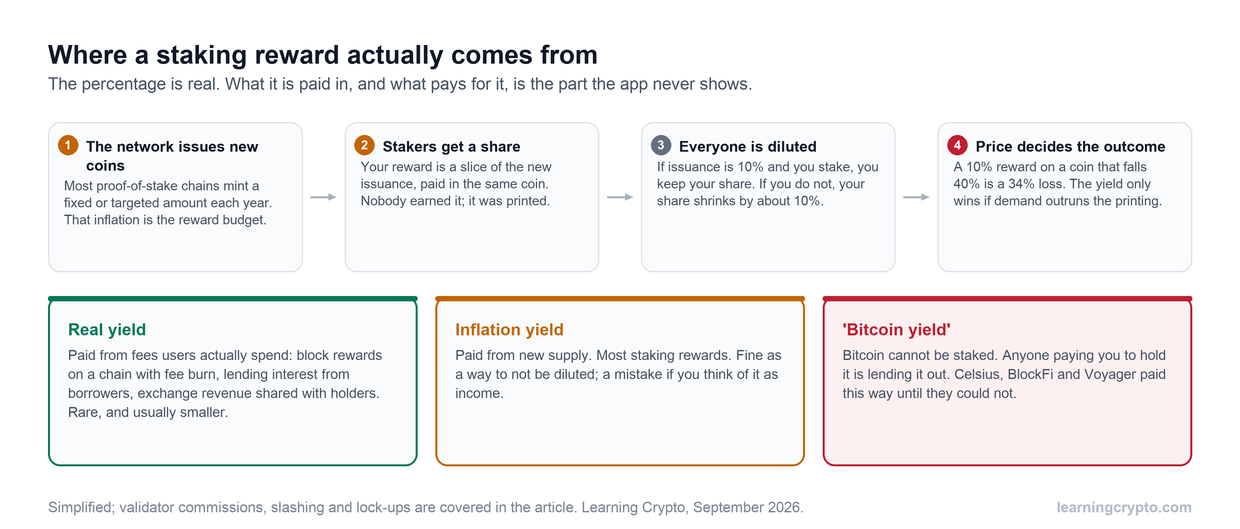
Someone is paying to borrow your dollars. On DeFi protocols like Aave and Compound, traders borrow stablecoins to buy more crypto and pay a floating interest rate that is passed to depositors, minus a small protocol cut. That is why DeFi stablecoin rates spike in bull markets and sag in quiet ones. On centralised lenders like Nexo, the company lends your deposit to institutions and market makers and pays you a fixed rate from the spread.
Exchange reward programs are different again. Coinbase's USDC rewards are funded by the interest Coinbase earns on the US Treasury bills backing USDC, shared through its partnership with the issuer. Since the 2025 GENIUS Act, stablecoin issuers themselves are restricted from paying interest to holders, which is exactly why yield reaches you through exchanges, lenders and protocols instead. A newer category, described in our guide to yield-bearing stablecoins, wraps Treasury income into the token itself, with its own regulatory questions.
If a platform offers a rate far above what Treasuries and DeFi borrowing can support, ask what is really generating it. Historically the answer has been risky lending, a token subsidy, or nothing at all.
Why are stablecoin interest rates higher than a bank's?
Stablecoin interest rates can often surpass those offered by traditional savings accounts, which raises the question: why are they so high? The answer lies in the difference between traditional banking systems and crypto lending platforms. Traditional banks have overhead costs and regulatory burdens that crypto platforms often bypass, allowing the latter to offer higher returns. Banks also have deposit insurance and a central bank behind them, which crypto platforms do not, and part of the extra yield is simply payment for taking on that missing safety net.
Moreover, the demand for borrowing stablecoins on these platforms is high, particularly for trading, liquidity provision, and other financial services in the crypto market. This demand drives up the interest rates, making stablecoin interest rates higher than traditional interest rates and providing attractive yields for those willing to lend their stablecoins.
What are the best stablecoin yields in DeFi?
The best stablecoin yields in DeFi for most people are the plain supply rates on Aave and Compound, because they are transparent, withdrawable and have survived several crashes. Everything more exotic, from leveraged looping to new-chain vaults, adds a layer of risk for each extra point of yield.
Three DeFi approaches come up most often in the questions we get:
- Direct lending. Deposit USDC, USDT or DAI into Aave or Compound and earn the variable rate. This is the baseline. Our explainer on what Aave is covers how the pool sets its rate.
- Cross-chain stablecoin yields. The same protocols are deployed on Layer 2 networks and other chains, and the best cross-chain stablecoin yields in 2025 were often on those newer deployments, where borrowing demand outran deposits for a while. The catch is that bridging your stablecoins to another chain adds bridge risk and sometimes a different, less liquid version of the coin. Compare the native USDC on a chain with a bridged version before you deposit, and be ready for the premium to disappear as deposits catch up.
- Yield aggregators and "autopilot" vaults. Vault products such as Yearn move deposits automatically between lending pools to chase the best rate. The best stablecoin yield platforms with autopilot save you the gas and attention of moving money yourself, but they stack a second smart contract on top of the first, take a performance fee, and can route into strategies you would not have chosen. A stablecoin yield aggregator can give consistent income, but it does not remove the underlying protocol risk, and a vault that advertises a rate far above Aave's is taking a risk somewhere to get it.
Whatever route you take, DeFi rates are quoted as APY and change hour to hour. The number you see on a dashboard is today's rate, not a promise.
Is CeFi or DeFi safer for earning interest?
Neither is safe in the sense a bank deposit is safe, and they fail in different ways. Centralised platforms hold your coins, so you are an unsecured creditor if they go under. In 2022 Celsius, BlockFi and Voyager all froze withdrawals and went bankrupt, and depositors who were being paid 8% and more waited years to recover a fraction of their money. Nexo survived that period, which counts for something, but the structure is the same: your money is on their balance sheet.
DeFi protocols like Aave and Compound never hold your funds. You deposit into a smart contract and can withdraw whenever the pool has liquidity, and their code has run for years through several crashes. The risks are different: a bug or exploit in the contract, a bad asset listed as collateral creating bad debt, and your own wallet security. Rates are also lower and variable. For most people, a well-established DeFi protocol plus self-custody is the more transparent option, and a regulated exchange reward program is the simplest. Our beginner's guide to making money with DeFi explains the wallet setup.
Centralized Platforms: Convenience with a Catch
Centralized platforms like Ledn, Nexo, and Coinbase offer a user-friendly experience that is hard to beat. They often provide higher headline interest rates and more straightforward onboarding processes, making them an attractive option for those new to the crypto space. However, this convenience comes at a cost: you are placing a significant amount of trust in a third party.
When you use a centralized platform, you are handing over control of your assets to an institution. This means you are exposed to risks such as platform insolvency, regulatory crackdowns, or even cyberattacks. The platform might offer insurance or guarantees, but nothing in crypto is ever 100% secure. If a centralized platform were to fail, you could lose access to your funds or be left with little recourse, which is exactly what happened to Celsius and BlockFi customers.
Moreover, centralized platforms are subject to regulatory environments that can change rapidly. Governments and regulatory bodies are still settling how to deal with cryptocurrencies, and a sudden policy shift could impact your ability to access your funds or even the platform's ability to operate in your country.
Decentralized Platforms: Freedom with Responsibility
Decentralized platforms like Aave and Compound offer a completely different approach. By using smart contracts and blockchain technology, these platforms eliminate the need for a central authority. Instead, you interact directly with the protocol, maintaining control over your assets at all times, and users earn accrued interest on their deposits continuously as the rate moves with the DeFi ecosystem.
But with this freedom comes responsibility. Decentralized platforms are often more complex to use and require a deeper understanding of how blockchain technology works. Additionally, while they reduce the risk of platform insolvency and government interference, they introduce other risks, such as smart contract vulnerabilities and market volatility.
Smart contracts are coded instructions that automatically execute transactions, and while they are designed to be secure, they are not immune to bugs or hacks. If a smart contract is exploited, there is no central authority to turn to for help. You are essentially on your own. The decentralized finance space is also still young and changing quickly, which means the rules and best practices are still being established. This can make it a risky environment, particularly for those who are not well-versed in the technical side of crypto.
Read more: CEX vs DEX
Balancing Your Choices: What's Right for You?
Choosing between centralized and decentralized platforms ultimately comes down to your own risk tolerance, technical know-how, and investment goals. Centralized platforms might be easier for those who prefer a hands-off approach, but they require trust in a third party. Decentralized platforms offer more control and full transparency, but they demand a higher level of engagement and understanding.
Whichever path you choose, the most important thing is to stay informed and make decisions based on a clear understanding of the risks involved. This short video walks through how we think about picking a stablecoin and a platform:
Understanding Stablecoins: A Safer Bet in the Crypto Market
Stablecoins remove price volatility from the yield equation, which is what makes the interest meaningful. Earning 5% on an asset that can fall 50% is not income; earning 4% on a dollar-pegged coin is. Stablecoins are a type of cryptocurrency that aims to maintain a consistent value, typically pegged to a traditional fiat currency like the US dollar. Unlike other cryptos that are highly volatile, they offer a haven for investors looking to avoid the dramatic swings often seen in the crypto market.
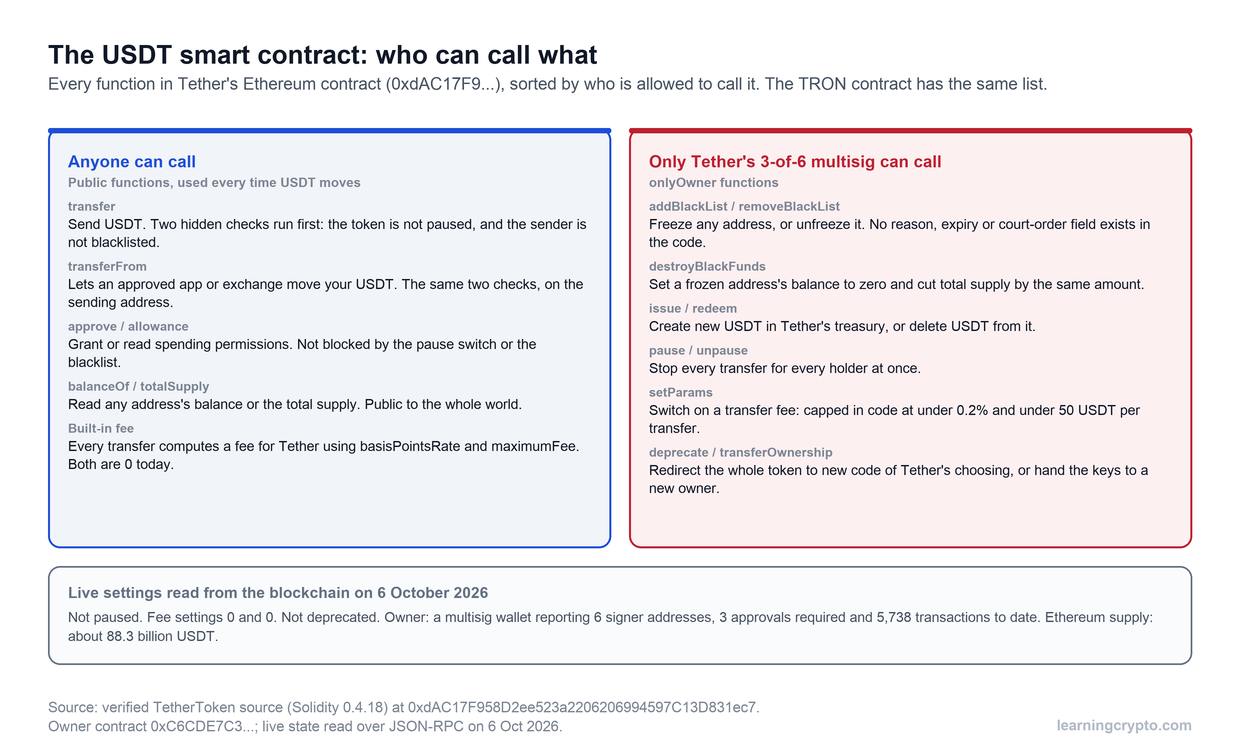
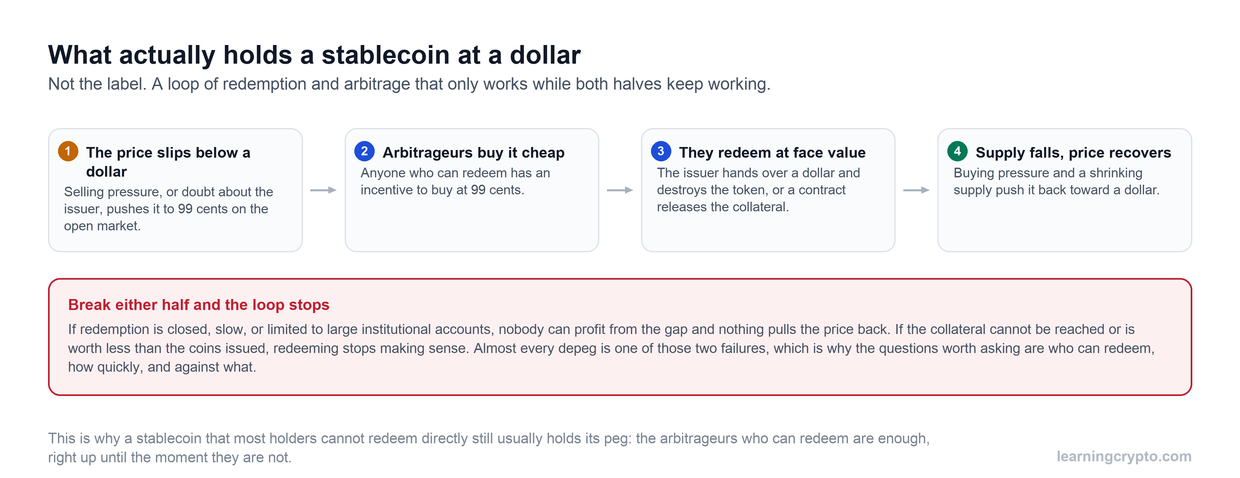
But the coin itself carries risk. Every stablecoin is a claim on an issuer's reserves. Tether and Circle back USDT and USDC with cash and Treasuries; DAI is backed by over-collateralised crypto. In March 2023 USDC briefly traded near $0.87 when one of Circle's banks failed, recovering within days, and a smaller stablecoin could simply not recover. Our USDT vs USDC comparison goes through the reserve differences, and it is worth spreading between two coins rather than concentrating in one.
Benefits of Earning Interest on Stablecoins
Earning interest on stablecoins offers several compelling benefits for investors and users alike. One of the primary advantages is the potential for higher returns compared to traditional savings accounts. While traditional savings accounts often offer minimal interest rates, stablecoin interest rates have at times climbed to 9-13% or more, most recently in the 2021 and early 2022 cycle. Those peak rates came with the platform risks described above, and in 2026 the sustainable range is closer to what Treasuries pay, but it still compares well with most bank accounts.
Additionally, stablecoins offer a sense of security and predictability, as they are pegged to stable reserves like the US dollar, euro, or commodities such as gold. This stability makes them suitable for everyday transactions and as a store of value. Unlike other cryptocurrencies that can experience significant price fluctuations, stablecoins maintain a consistent value, providing a reliable means to earn interest.
Furthermore, earning interest on stablecoins provides a way to generate passive income in the digital economy. By depositing stablecoins into interest-bearing platforms, individuals can potentially earn higher returns compared to traditional savings accounts. This approach combines the familiarity of a savings balance with the features of cryptocurrency, which is why it appeals to both novice and experienced investors.
Best Crypto Stablecoins
When it comes to stablecoins, a few have emerged as leaders in the market due to their stability and widespread adoption. USDT (Tether) is the most liquid and transacted stablecoin, making it a popular choice for traders and investors. USDC (USD Coin) is widely accepted on most large exchanges and has achieved regulatory compliance, adding an extra layer of trust for users.
BUSD (Binance USD) was an ERC20 token issued on the Ethereum blockchain, known for its strong backing and integration with the Binance ecosystem; it was wound down after its issuer Paxos stopped minting new tokens in 2023, which is a reminder that even well-backed stablecoins can disappear for regulatory reasons. USDP (Pax Dollar) is a fiat-collateralized stablecoin based on the Ethereum network, offering transparency and regulatory oversight. Lastly, DAI stands out as a decentralized stablecoin, meaning it does not rely on a single centralized issuer, providing a unique option for those who prioritize decentralization.
Does Stablecoins Pay Interest? Methods to Earn Interest Rates
There are several methods to earn interest on stablecoins, each offering different levels of flexibility and returns. Interest-bearing accounts are the most straightforward method to generate passive income from stablecoin holdings. These accounts allow users to deposit their stablecoins and earn interest over time, similar to a traditional savings account.
Fixed-term deposits involve locking stablecoins for a predetermined period in exchange for higher interest rates. This method is for those who can commit their funds for a set duration to maximize returns, and it is the option we would be most careful with, because a locked deposit is exactly what you cannot get out when a platform starts to wobble. Flexible savings accounts, on the other hand, allow users to earn interest while maintaining the ability to withdraw funds at any time, offering a balance between liquidity and earnings.
Loyalty and reward programs can also boost interest rates or provide additional benefits, usually in exchange for holding the platform's own token. Some platforms offer unique features that provide alternative methods to earn or boost interest. For example, YouHodler's Multi HODL allows users to earn on their stablecoins through a combination of lending and leveraged trading strategies, which carries far more risk than a plain deposit. It is essential to understand the difference between APY and APR and be aware of any hidden fees when selecting a platform.
Understanding Stablecoins: Types, Uses, and Benefits
Stablecoins are digital currencies designed to maintain a stable value, minimizing the volatility commonly associated with cryptocurrencies like Bitcoin. They are categorized into four main types: fiat-backed, crypto-backed, commodity-backed, and algorithmic stablecoins. Algorithmic designs have the worst record; the collapse of Terra's UST in May 2022 wiped out tens of billions of dollars and took several lenders down with it.
Each of the stablecoin types offers different trade-offs, from stability through fiat reserves to decentralized options backed by cryptocurrencies. Stablecoins play a crucial role in the crypto ecosystem, facilitating trading, savings, and international payments. Their reliability makes them useful for anyone looking to preserve value in the volatile crypto market, whether novice or seasoned investor.
Balancing Yield and Risk: What to Consider
While the allure of high interest rates is tempting, it is crucial to consider the risks involved. Platforms can and do go bankrupt, as the 2022 lender failures showed. This means that while high yields are attractive, they often come with increased risk. It is essential to practice proper risk management and conduct your own research to understand the risks and terms associated with these financial options.
Regulatory Uncertainty: The stablecoin market is still relatively new, and regulation is constantly evolving. This uncertainty can affect the stability and safety of your investments. Therefore, choosing platforms with a strong track record and transparent operations, like Ledn and Nexo, is essential.
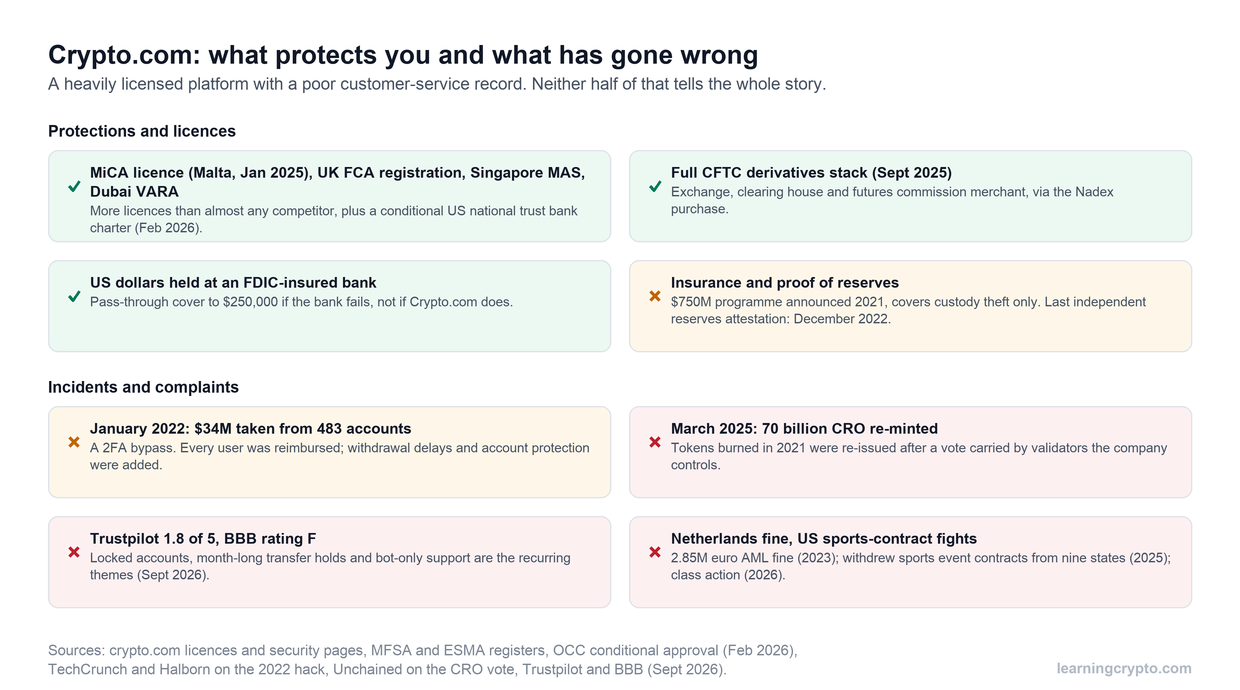
Platform credibility is important for the safety of your money, not just the interest rate. Choose a trustworthy platform. It is advisable to research the platform's history, security measures, and user reviews before making a decision.
How do you choose a stablecoin yield platform?
Look at the source of the yield first, the platform's history second, and the rate last. A useful checklist:
- Can you withdraw at any time, and has the platform ever paused withdrawals?
- Is the yield from borrower demand, Treasury income or a token subsidy?
- Is the rate variable, and what has it averaged over the past year, not just today?
- For DeFi, has the code been audited and running for years, and is the pool large?
- For CeFi, is the company regulated somewhere meaningful, and does it publish proof of reserves?
- Is any of the interest paid in the platform's own token, which you would have to sell?
- Are there minimum balance requirements, lock-up periods or withdrawal fees buried in the terms?
Beyond the checklist, choose a platform that offers a user-friendly interface and supports the stablecoins you already hold, and compare the fees on deposits, withdrawals and conversions, which can quietly eat a year of interest. Some platforms bundle additional features such as staking, lending and borrowing, which is convenient but not a reason on its own to trust them with a large balance. Evaluate the credibility of the platform and its business model before investing, and read the terms and conditions in full before your first deposit into any interest-bearing platform for your stablecoins.
Stablecoin yield is closer to a money-market fund than a savings account in return, with more risk than either. Keep an emergency reserve in the bank, put a portion you can afford to lock up or lose into a platform you have researched, and split it if the amount is significant. If you want a second opinion on a specific platform's risk, Ask Crypto can give you a plain-English breakdown, and our stablecoins hub has our full coverage, along with our regular crypto tips. For comparison with riskier strategies, see our guide to yield farming.
Regulatory Environment and Market Conditions
The regulatory environment and market conditions play a significant role in shaping stablecoin interest rates. Stablecoins are designed to maintain their value relative to a specific fiat asset, which attracts a large number of investors and users, generating a higher demand for lending and borrowing services. The 2025 GENIUS Act in the US brought issuers under a federal framework and barred them from paying interest directly, which pushed yield toward exchanges and protocols, and further rules on those intermediaries are still being written.
Market conditions, such as liquidity and volatility, also move stablecoin interest rates. In a bull market, borrowing demand rises and DeFi rates climb; in a quiet market they fall, sometimes below what a bank pays. It is essential to stay informed about the latest regulatory requirements and market trends to make informed decisions, and to understand the risks associated with earning interest on stablecoins, including platform bankruptcy risk and regulatory uncertainty. By staying vigilant and doing thorough research, investors can make sensible use of stablecoin yield without being the ones left holding the bag when a platform fails.
FAQ
What is the safest way to earn interest on stablecoins?
The safest way to earn interest on stablecoins is by using decentralized protocols with a proven track record, such as Aave or Compound, or a large regulated exchange's reward program. Look for options with strong audits, years of operation, transparent variable rates and, for centralised platforms, published proof of reserves. Avoid anything promising a fixed double-digit return with no clear source.
Are stablecoin yields guaranteed?
No, stablecoin yields are not guaranteed. While stablecoins aim to maintain price stability, interest rates fluctuate with supply, demand and market conditions, and a platform can cut a rate or halt withdrawals entirely. The 2022 failures of Celsius and BlockFi showed that even fixed advertised rates depend on the lender staying solvent. Always assess platform risk before depositing.
Is earning interest on stablecoins taxable?
Yes, in most jurisdictions interest earned on stablecoins is considered taxable income at the value received, whether it is paid in the same stablecoin or in a platform token. Keep a record of each payout's date and dollar value. Always consult a tax professional to report your earnings properly, especially if you are using DeFi protocols where no tax form is issued.
Why does Nexo pay so much more than Aave?
Nexo's headline 12% applies only to its top loyalty tier, which requires holding a large share of your portfolio in the NEXO token, and part of the interest is paid in that token. The base rate for a plain USDT deposit is far lower. Aave's rate is set by open-market borrowing demand with no token requirement, so the two figures measure different things.
What are the best stablecoin yields in DeFi?
For most people, the best stablecoin yields in DeFi are the plain supply rates on Aave and Compound for USDC, USDT and DAI, because the rates are transparent, the funds are withdrawable and the contracts have run for years. Vaults and aggregators can add a point or two but stack extra smart-contract and strategy risk on top.
Are high APY stablecoin vaults safe?
Usually not as safe as they look. High APY stablecoin vaults typically get their rate from short-term incentive tokens, leverage or lending to riskier borrowers, and the yield drops sharply when the incentives end. If the vault's rate is well above what Aave pays for the same coin, assume you are being paid for a risk you have not been shown.
Where were the best cross-chain stablecoin yields in 2025?
The best cross-chain stablecoin yields in 2025 tended to appear on newer Layer 2 and alternative-chain deployments of Aave and similar protocols, where borrowing demand briefly outran deposits. Those premiums shrink as money arrives, and bridging adds its own risk, so compare the native and bridged versions of a stablecoin on the destination chain before moving funds.
Keep learning
- Is crypto staking worth it?
- Hyperliquid Earn explained
- Why stablecoins depeg
- More guides in the Stablecoins hub
- Members: Daily Brief, pre-market context every weekday