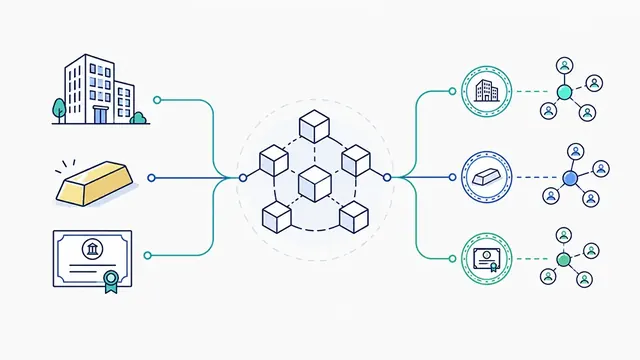

TradFi (traditional finance) and DeFi (decentralized finance) do the same jobs: holding money, moving it, lending it, and paying you to use it. TradFi runs on banks and trust in institutions. DeFi runs on blockchains and trust in code. |
You want to move $5,000 on a Sunday. In TradFi, you wait. The bank's closed, the wire clears Tuesday at the earliest, and somewhere along the way a compliance officer might decide to pause it and ask what it's for.
In DeFi, you open your wallet and send it. Two minutes. No one to ask. No one to stop you.
That's the gap in one example. One system asks permission. The other doesn't even know how.
The interesting part isn't that they're different. It's that the biggest banks on earth are now building on the second system while pretending it's still the first.
What You'll Learn
What TradFi and DeFi actually are, stripped of the jargon
The five real differences: access, custody, yield, regulation, and speed
Two cautionary tales that show what happens when each system breaks
Why the systems are merging through tokenization and stablecoins
What "invisible finance" means and why it might not be the win it seems
How to tell which system you're standing in at any given moment

What is TradFi?
Traditional finance is the system you already live inside. Banks, brokerages, insurers, card networks, central banks. The whole stack you've used your entire life.
When you tap a card to buy a coffee, a chain of middlemen springs into action. Your bank, the merchant's bank, a network like Visa, a couple of clearing houses in between. Each keeps its own private ledger. Each takes a small cut. You see none of it. You just see the balance drop.
TradFi runs on trust in institutions. You trust your bank to hold your deposit and give it back. The bank trusts the central bank. Regulators sit on top making sure everyone roughly follows the rules. It works most of the time. Billions of people have built their lives on it.
But it has a shape, and the shape is the whole point. Permission is the default setting.
Permission Is the Default
You ask to open an account. You get verified. You ask to send a large transfer, and the system decides whether to let it through. Most of the time that's fine. Sometimes it isn't, and people get frozen out for reasons they never get told. Account closures, payment holds, "we've decided to end our relationship with you." No appeal, no explanation.
This isn't a bug. It's how the system is built. The same controls that catch fraud and enforce sanctions also mean a third party stands between you and your own money at every step.
What DeFi Is
Decentralized finance flips the model. Instead of trusting an institution, you trust open-source code running on a public blockchain.
No bank holds your funds. You do, in a wallet only you control. When you want to lend, borrow, trade, or earn, you interact directly with a smart contract, a self-executing program that does exactly what its code says and nothing more. The contract doesn't know your name. It doesn't run a credit check. It checks whether your transaction is valid, then it runs.
That's the pitch. Financial services without the financial institutions. Anyone with an internet connection and a wallet can lend on Aave, swap on Uniswap, or stake with Lido. No application form. No business hours. No manager deciding you're not the right kind of customer.
If you want the hands-on version of how this works, DeFi trading explained walks through what happens when you actually click "swap," and how to make money with DeFi covers the ways people earn on-chain.
The Catch Nobody Mentions in the Marketing
DeFi hands you total control. It also hands you total responsibility, and those are the same thing wearing two faces.
Lose your seed phrase and there's no support line to call. Sign a malicious contract and the funds are gone. Send to the wrong address and it's gone. The exact same code that can't freeze your account also can't reverse your mistake or refund a scam.
Don't trust, verify because nobody else is checking the work for you.
The Five Real Differences
Plenty of comparisons bury you in terminology. Here's what genuinely changes when you switch systems.
Factor | TradFi | DeFi |
Access | Permission required: KYC, approval, geography limits | Open to anyone with a wallet |
Custody | The institution holds your funds | You hold your own keys |
Yield | Set by the bank, historically low | Set by the market, variable, often higher |
Regulation | Heavy, with consumer protections | Light to none, you carry the risk |
Speed | Days to settle, business hours only | Minutes, 24/7/365 |
Access: Who Gets Let In
TradFi decides who participates. There are real reasons for parts of it, like fraud prevention and sanctions enforcement. But the result is that roughly a billion adults sit outside the formal banking system entirely, and plenty of people inside it get debanked without warning.
DeFi doesn't ask who you are. A protocol genuinely cannot tell the difference between a hedge fund in London and a teenager in a country with 80% inflation. To the code, both are just a wallet address with a balance. That's the radical bit, and it's also the bit regulators find hardest to swallow.
Custody: Who Holds the Money
Custody is where everything else starts.
In TradFi, the money in your account is technically a promise. The bank holds the actual funds and owes them to you. Usually that promise is good. Occasionally it isn't, which is what a bank run is.
In DeFi, you hold the asset directly in your wallet. There's no promise to break because there's no one standing in the middle. The flip side, again, is that the safety net comes off with the middleman. No deposit insurance. No chargebacks. Your keys, your coins, your problem.
Yield: Who Sets the Rate
Your savings account pays a rate the bank picks, and for most of the last fifteen years that rate has rounded to nothing. DeFi yields come from actual on-chain activity instead: lending demand, trading fees, staking and yield farming. They move with the market, they can be meaningfully higher, and they can also vanish overnight or turn out to be a trap dressed up as "risk-free." Higher reward, higher risk, no exceptions.
Regulation: Who Protects You
TradFi comes wrapped in consumer protection. Deposit insurance, fraud reversal, an ombudsman, a regulator you can complain to. DeFi mostly doesn't. That's the price of permissionless. The rules that protect you inside a bank are the same rules that let the bank lock your account, and you don't get one without the other.
Speed: How Long You Wait
A wire can take days and only moves during business hours. A blockchain transaction settles in minutes, and the network never closes. No weekends, no bank holidays, no "please allow 3 to 5 working days." For anyone who's ever watched a transfer sit in limbo over a long weekend, this difference alone sells the whole idea.
Two Cautionary Tales
The differences sound abstract until something breaks. Both systems break in their own way, and the failures are the clearest teacher.
When TradFi Fails: The Frozen Account
TradFi's failure mode is exclusion. The bank that holds your money can decide, for its own reasons, that it no longer wants to.
Account freezes and debanking happen constantly, and the person on the receiving end rarely gets a clear reason. Sometimes it's a sanctions flag that turns out to be a name match on someone else.
Sometimes it's a transaction pattern an algorithm didn't like. Sometimes it's politics. The common thread is that the money was never fully under your control, and the moment the institution changed its mind, you found that out the hard way.
This is the structural risk of letting someone else hold the keys. Most days it costs you nothing. The day it goes wrong, it can cost you everything.
When CeFi Pretends to Be DeFi: The FTX Lesson
DeFi's most famous "failure" wasn't actually DeFi at all, and the distinction is the most important thing in this entire guide.
FTX was a centralized crypto exchange. It looked like crypto, talked like crypto, ran ads during sporting events like crypto. But under the hood it worked exactly like a bank: customers handed over their coins, and FTX held the keys.
When it collapsed in late 2022, billions in customer funds went with it, because the customers never actually controlled their assets. They held a promise, same as a bank deposit, and the promise turned out to be worthless.
The lesson took from it was the oldest line in crypto. Not your keys, not your coins. FTX users thought they were in crypto. They were really in TradFi with a worse regulator and a logo. Genuine DeFi, where the code holds the rules and you hold the keys, can't blow up the way FTX did, because there's no operator in the middle to lie about the balance sheet.
So Which One Wins?
Wrong question. They're not really fighting over the same person in the same moment.
DeFi suits people who want sovereignty and will carry the risk that comes with it. TradFi suits people who want a safety net and are happy to ask permission to get one.
And honestly, most people want both, depending on the day and the dollar amount. You might want full self-custody for your long-term stack and a regulated, insured account for your rent money. That's not a contradiction. That's just using the right tool.
Which is exactly what's now happening at the level of the institutions themselves.
The Birth of Invisible Finance
Almost nobody predicted this five years ago. The two systems aren't picking a winner. They're merging. And the merger is happening on DeFi's rails, not TradFi's.
Watch where the big money is actually going.
The Banks Are Building On-Chain
BlackRock, the largest asset manager on the planet, launched a tokenized money-market fund called BUIDL in March 2024, in partnership with Securitize. By early 2026 it held roughly $2.5 billion. JPMorgan followed in December 2025 with its own tokenized fund, MONY, live on Ethereum and seeded with $100 million. Coinbase rolled out a competing tokenized credit product. These aren't pilots anymore.
The wider market for tokenized real-world assets has grown more than 400% since the start of 2025, pushing past $30 billion, with tokenized US Treasuries leading the charge. Larry Fink, who runs BlackRock, has said plainly that he expects every financial asset to eventually be tokenized.
Sit with that for a second. The biggest institution in traditional finance is building on the same kind of infrastructure the cypherpunks designed specifically to route around it.
Stablecoins Are Eating the Wire Transfer
The other half of the story is stablecoins. Dollar-pegged tokens now settle enormous volumes of value every day, and the US passed the GENIUS Act to give them a legal framework. Banks that spent a decade sneering at crypto are now scrambling to figure out custody for digital dollars, because their corporate clients are starting to ask for settlement that clears in seconds rather than days.
What Invisible Finance Actually Is
This is the part to pay attention to. There's no dramatic moment where DeFi defeats the banks. Instead there's a slow absorption, where the plumbing changes underneath while the surface stays comfortingly familiar.
One day you'll use a tokenized fund through your normal brokerage app and never know there's a blockchain underneath it. The technology disappears into the background. That's invisible finance. The rails go on-chain, the experience stays the same, and most users never notice the switch.
But the control question doesn't disappear just because the technology did.
Why This Might Not Be the Win It Seems
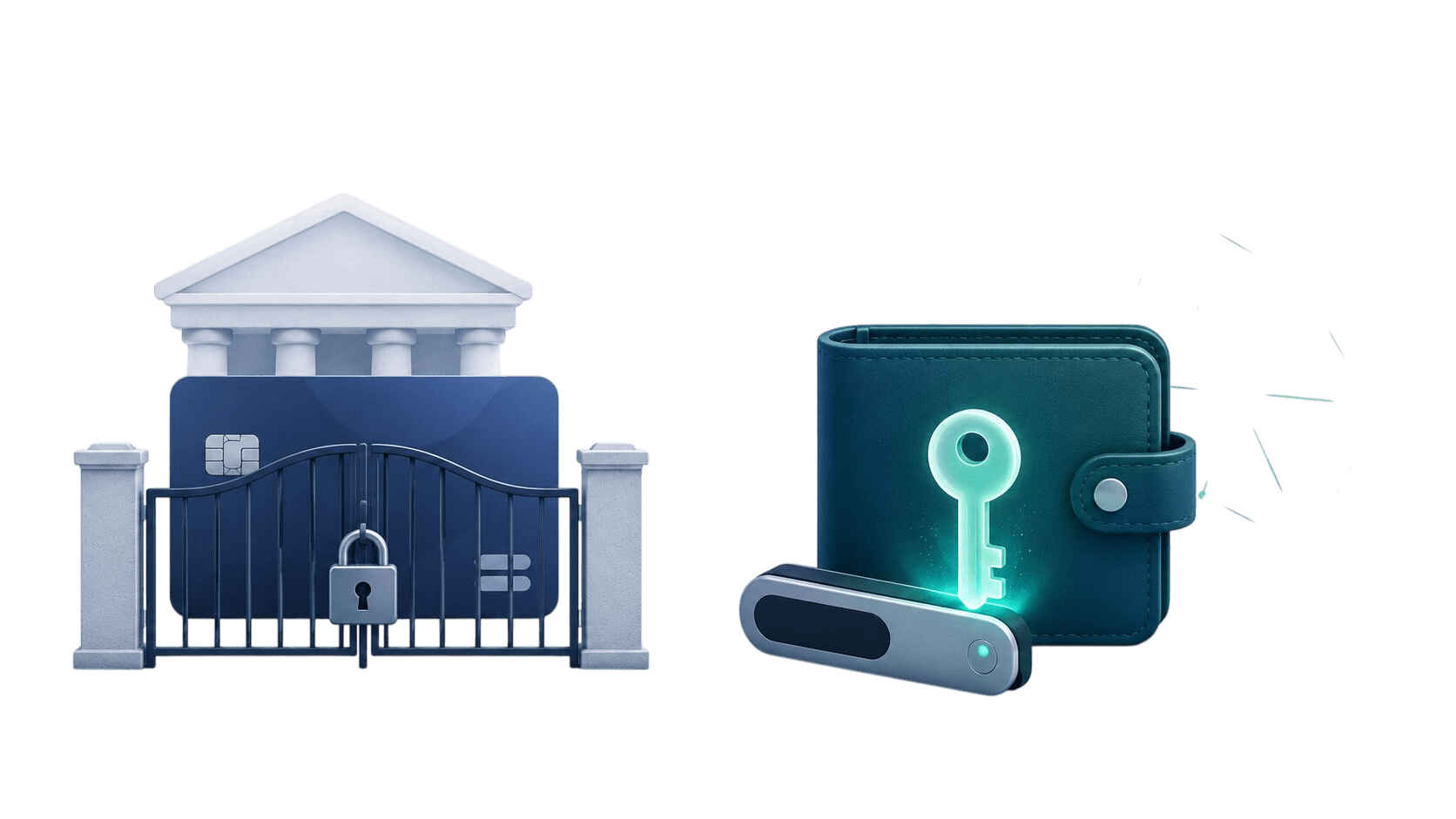
Tokenising a Treasury fund does not make it decentralized. A bank running on a blockchain is still a bank. It can still freeze the wallet, still demand KYC, still decide you're not welcome. The rails changed. The gatekeeper didn't.
So it's worth holding two ideas at once. There's permissionless DeFi, where the code genuinely doesn't care who you are and can't shut you out. And there's institutional DeFi, where the old permission structures get rebuilt on faster rails with a fresh coat of paint and a press release. Both are growing fast. They are not the same thing, and the marketing works hard to blur them.
The blockchain underneath BlackRock's fund is real. The decentralization is optional, and mostly absent. Don't mistake one for the other.
What This Means For You
You don't have to pick a side. You do need to know which system you're standing in at any given moment, because the protections and the risks are completely different.
When you use a centralized exchange or a tokenized bank product, you're in TradFi wearing crypto clothes. Convenient, often regulated, and someone else holds the keys. When you self-custody and interact with a protocol directly, you're in actual DeFi. More freedom, more responsibility, no one to call when it goes wrong.
Neither is automatically better. They're tools with different shapes, and the smart move is matching the tool to the job. If you're building for the long haul, knowing the difference is part of a sensible crypto strategy.
Just keep asking the one question that actually separates the two systems. Who holds the keys? If it's you, you're in DeFi. If it's someone else, you're not, whatever the app happens to call itself.
Learn to Verify, Not Trust
TradFi asks you to trust the institution. DeFi asks you to verify the code yourself. That second skill is the one worth building, because the line between the two systems is only going to get blurrier from here.
LearningCrypto gives you the AI tools, on-chain analytics, and no-hype education to do exactly that: read a protocol before you touch it, hold your own keys safely, and tell real decentralization from a logo on a centralized product. Private community and daily market signals included.
FAQs
Is DeFi safer than a bank?
It depends entirely on what you mean by safe. DeFi removes the risk that an institution freezes or loses your money, because you hold it yourself. But it adds risks a bank protects you from: no deposit insurance, no fraud reversal, and permanent loss if you're hacked or make a mistake. For larger amounts, a hardware wallet is the baseline precaution.
Can TradFi and DeFi actually work together?
They already do. Tokenized funds from BlackRock and JPMorgan, dollar-backed stablecoins, and regulated on-chain Treasuries are all examples of traditional finance running on blockchain rails. The catch is that "on-chain" doesn't automatically mean "decentralized." Many of these products are fully controlled by the issuer.
Do I need to understand blockchain to use DeFi?
A little, yes. You don't need to read code, but you do need to grasp how wallets, keys, and transactions work, because there's no support desk to fix errors. Our guide on how blockchain works and the crypto wallet basics for beginners are the right starting points.
Is my money in a crypto exchange in TradFi or DeFi?
TradFi, functionally. A centralized exchange holds your keys, which means it holds your coins, the same arrangement as a bank deposit. You're trusting the operator. It only becomes DeFi when you withdraw to a wallet you control and interact with protocols directly.
Keep learning
- What Is Market Cap in Crypto: A Complete Guide
- What Is SocialFi? The Future of Social Media on the Blockchain
- What Is a zk-Rollup? Scaling Without Trust
- More guides in the DeFi hub
- Members: Team Portfolio, see what our analysts actually hold