

MiCA is the European Union's attempt to put one rulebook over a market that grew up with none. It decides who can offer crypto services across 27 countries, which stablecoins are allowed to exist there, and what happens to the firms that don't get a license. The transitional period ends on July 1, 2026. After that, the grey area is gone. |
For years, crypto in Europe ran on a patchwork. Germany had one set of rules. France had another. A firm legal in Malta might be operating in a legal vacuum two borders over. Builders shopped jurisdictions. Users had no idea who was actually accountable for their money.
MiCA ends that. It's the first comprehensive crypto framework anywhere covering an entire economic bloc, and it's now in its final, fully enforced phase.
If you trade, build, or just hold crypto and you touch the EU in any way, this affects you. Maybe it already has, if you woke up one morning and found a stablecoin missing from your exchange.
Here's what the framework actually does, where it stands in 2026, and what it means in practice.
What You'll Learn
What MiCA actually regulates and why a single EU-wide rulebook changes the game for builders and users alike
The three token categories MiCA created and why the classification of your token decides almost everything about how it's treated
What CASPs have to do to keep operating, and what the passporting system unlocks for licensed firms
Why USDT got pulled from European exchanges while USDC and EURC sailed through
What the July 1, 2026 deadline means for unlicensed firms and the users still parked on them
What Is MiCA?
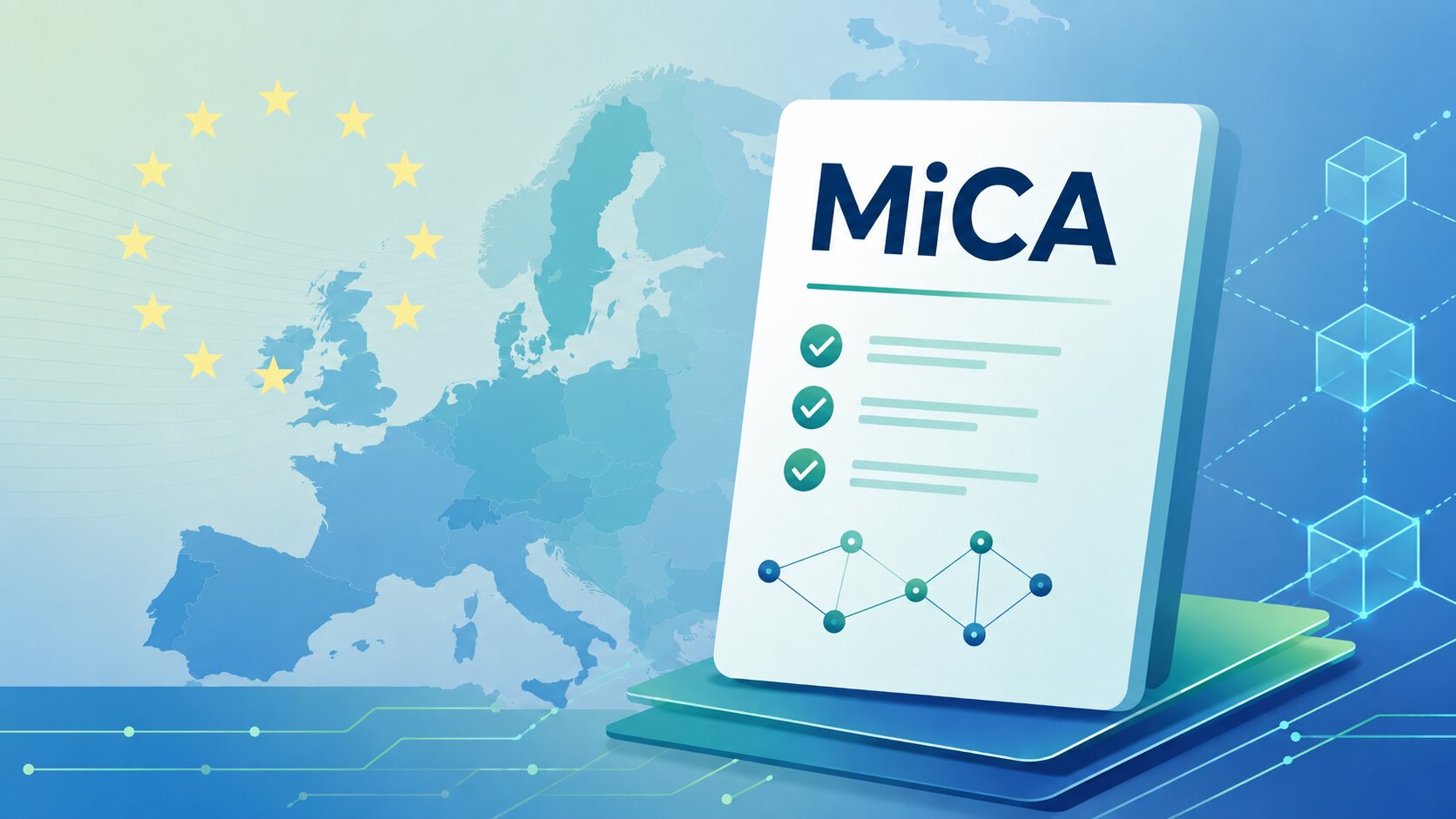
MiCA stands for Markets in Crypto-Assets Regulation. It's an EU law that creates one harmonized framework for crypto-assets and the businesses built around them across all 27 member states, plus the wider European Economic Area.
Before it, crypto sat mostly outside existing financial law. Some countries bolted on anti-money-laundering rules. Most didn't have a dedicated regime at all. That fragmentation was the whole problem MiCA set out to solve.
The law does a few big things. It defines what counts as a crypto-asset and sorts them into categories. It sets disclosure rules for anyone issuing a token to the public. It requires the firms offering crypto services to get licensed and meet real prudential and conduct standards. And it puts stablecoin issuers under serious supervision for the first time.
The goal stated by Brussels was investor protection and financial stability without killing the sector. Whether it struck that balance is still argued over. What's not arguable is that the rules are now live and being enforced.
MiCA isn't price commentary or a tax law. It's market structure. It decides who's allowed to be in the room.
The MiCA Timeline: How We Got to July 2026
MiCA didn't drop all at once. It rolled out in stages, which is part of why it's confused so many people.
Date | What changed |
June 2023 | MiCA enters into force |
June 2024 | Stablecoin rules (ARTs and EMTs) start to apply |
December 2024 | CASP authorization rules take effect |
July 1, 2026 | Transitional period ends across the entire EU |
Then came the messy bit. MiCA let each member state grant existing providers a transitional period, sometimes called grandfathering, to keep running under old national rules while applying for a MiCA license. That window ran anywhere from six to eighteen months depending on the country.
Some states picked short windows. Finland, the Netherlands, Poland, and a handful of others gave firms just six months, so their transition ended back in mid-2025. Germany and Ireland went with twelve, closing at the end of 2025. A larger group, including France, Italy, Spain, and Malta, took the full eighteen, running right up to the July 2026 wall.
That created a patchwork of deadlines on top of a law that was supposed to end patchwork. Annoying, but temporary.
July 1, 2026 is the outer wall. No member state can extend past it. ESMA, the EU's markets regulator, confirmed in an April 2026 statement that the transitional period expires across the entire bloc on that date. After it, providing crypto services to EU clients without a MiCA license is a breach of EU law. Full stop.
The Three Token Categories MiCA Created
MiCA doesn't treat all crypto the same. It sorts tokens into three buckets, and which bucket your token lands in shapes everything about how it's regulated.
Asset-Referenced Tokens (ARTs)
These reference a basket of things. Multiple currencies, commodities, other crypto, or some mix. The original Libra/Diem concept was the archetype. ARTs face the heaviest requirements: reserve backing, governance standards, and ongoing supervision. If an ART gets big enough to be classed as "significant," the European Banking Authority steps in as supervisor and the bar goes up again.
E-Money Tokens (EMTs)
This is where most stablecoins live. An EMT references a single fiat currency, like a token pegged one-to-one to the euro or the dollar. Issuers have to be authorized as a credit institution or an electronic money institution, hold full reserves, and let holders redeem at par. This is the category that reshaped the European stablecoin map.
Other Crypto-Assets
The catch-all. Utility tokens, most layer-1 coins, anything that isn't an ART or an EMT. These face lighter rules, mostly around honest disclosure. Issue one to the public and you generally need to publish a white paper that isn't misleading and notify your regulator.
Bitcoin and Ethereum, being sufficiently decentralized with no issuer, sit largely outside the issuance rules entirely.
The classification matters because firms have spent real money arguing over which box their token belongs in. The difference between an EMT and an "other" crypto-asset is the difference between needing a banking-grade license and needing a decent disclosure document.
What CASPs Have to Do Now
If you run an exchange, custody people's coins, operate a trading platform, execute orders, give crypto advice, or manage portfolios, you're a CASP (Crypto-Asset Service Provider) under MiCA.
To operate legally, a CASP needs authorization from a National Competent Authority, the financial regulator in whatever EU country it's based in. Getting that license isn't a rubber stamp. Firms have to show:
Fit-and-proper management and clear conflict-of-interest policies
Minimum capital appropriate to the services offered
Solid AML controls aligned with the EU's Transfer of Funds Regulation
Honest, clear risk disclosures to clients
Proper segregation of client assets, for custodians
Here's the payoff, and it's a big one. Get authorized in one member state, and you can passport that license across all 27, plus the EEA. One license, the whole single market. A firm registered in Ireland can serve clients in Germany, Italy, and Spain without applying again in each. That's the carrot that makes the compliance cost worth swallowing for serious players.
ESMA keeps a public register of authorized CASPs and updates it weekly. It also flags non-compliant entities. The register is the single best tool a user has for checking whether a platform is actually licensed or just claiming to be. Verify before you trust. You'd think people would.
By late 2025, more than 40 CASP licenses had been issued. That number undersells the real picture, because the register only counts firms with full authorization. It doesn't include the much larger pool still operating under transitional regimes with applications pending. The rush to file before national deadlines has been the dominant story in European crypto compliance for over a year.
One development worth watching: the European Commission has proposed pulling CASP supervision up to ESMA at the EU level, away from individual national regulators. If that goes through, it would centralize oversight considerably. It's a proposal, not law, but it signals where the wind is blowing.
The Stablecoin Shake-Up
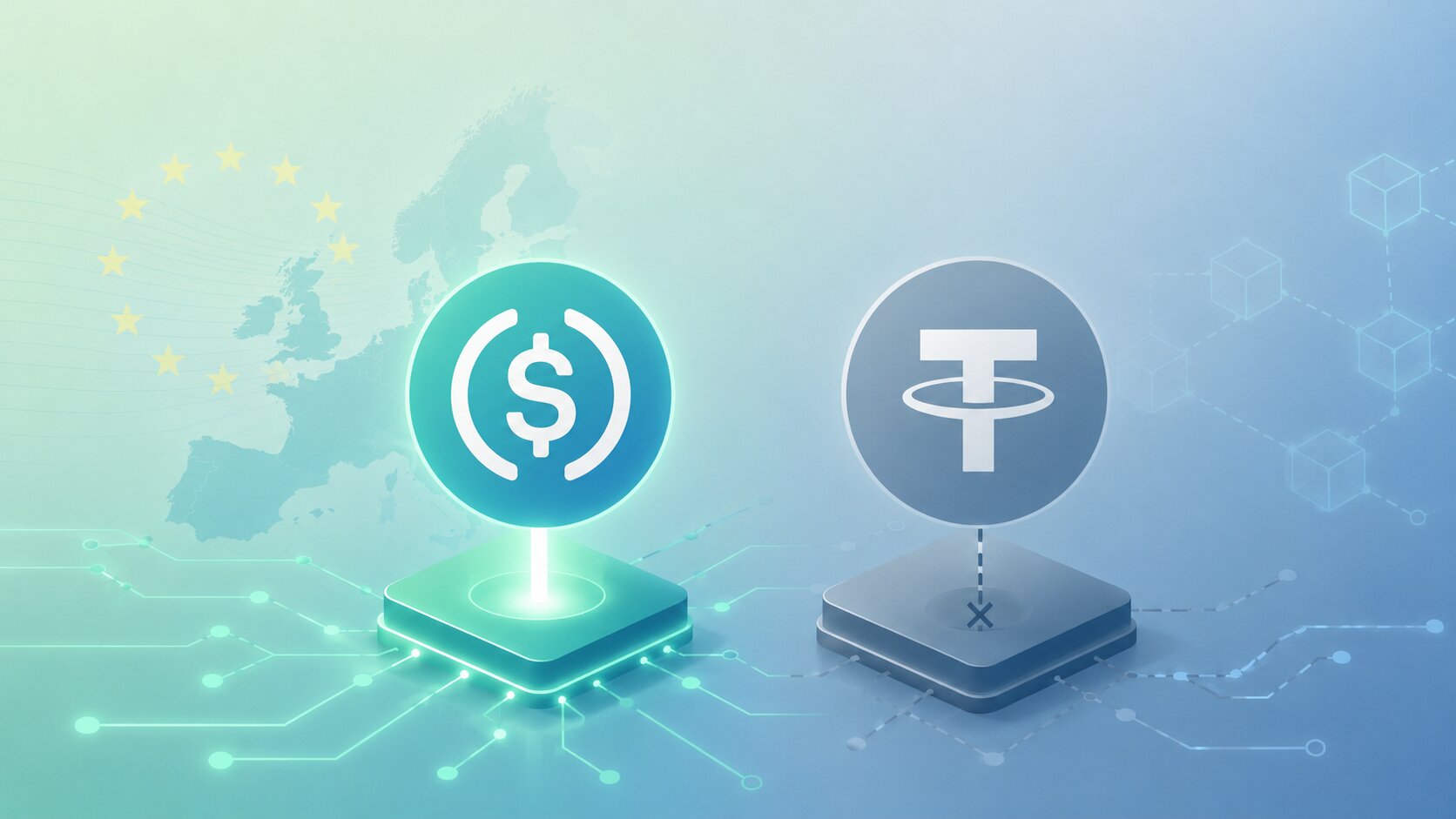
This is where MiCA stopped being abstract and started moving markets.
Under the EMT rules, a stablecoin issuer serving EU users needs authorization, full reserve backing, and a redemption right at par. For "significant" tokens, there's also a requirement to hold a large chunk of reserves, around 60%, in European banks. That last one became a sticking point.
Circle played ball. Its USDC and euro-pegged EURC are MiCA-compliant, and Circle secured authorization through a French license. Those tokens kept their place on European exchanges.
Tether didn't. USDT is the largest stablecoin in the world, and Tether's CEO said flatly the company had no plans to make it MiCA-compliant. The reserve and supervision requirements, plus Tether's long history of questions about its backing, made the math not work for them.
So the exchanges acted. Through 2024 and 2025, Binance, Coinbase, Kraken, Crypto.com, OKX, and others delisted or restricted USDT for users in the European Economic Area. Coinbase pulled it for EEA users back in December 2024. The world's most-used stablecoin became something EU traders couldn't easily buy or trade on regulated venues.
You can still hold USDT in a self-hosted wallet as an EU resident. You just can't trade it through a compliant exchange. The float moved. Euro-denominated and authorized dollar tokens picked up share as users migrated off USDT.
Here's roughly where the major stablecoins stand for EU users as of 2026:
Stablecoin | Issuer | Status for EU users |
USDC | Circle | Authorized |
EURC | Circle | Authorized |
USDT | Tether | Not authorized, delisted on regulated venues |
PYUSD | Paxos | Not authorized in the EU |
DAI | MakerDAO | No central issuer to authorize |
USDe / FDUSD / TUSD | Various | Not authorized |
DAI's the interesting case. It's genuinely decentralized, with no single issuer entity that could even apply. MiCA wrote its rules around the assumption that someone is in charge. When nobody is, the framework doesn't quite know what to do.
The July 1, 2026 Deadline and Wind-Down
The hard date is the part every firm has circled in red.
On July 1, 2026, every national transitional arrangement expires at once. From that day, any entity providing crypto-asset services to EU clients without a MiCA license, or without a timely application already on file, is in breach.
ESMA has said NCAs are expected to enforce. Penalties run from fines and public censure to suspension and outright withdrawal of authorization.
Firms that won't make it are supposed to have wind-down plans ready. ESMA's been specific about what that means. The plans have to be operational, credible, and immediately executable. They need to arrange an orderly exit that doesn't leave clients stranded, which means either transferring client assets to a licensed CASP or helping users move to self-hosted wallets. And clients have to get advance notice before any of it happens.
ESMA also told users directly: check whether your provider is in the interim register. If it isn't, move your assets to an authorized provider or a wallet you control. Don't wait to find out the hard way.
The regulator has been clear that the transitional window was never an indefinite operating license. Several national authorities have warned that last-minute applications will face heightened scrutiny. Translation: the firms that treated grandfathering as a way to stall instead of comply are about to find out it doesn't work that way.
Worth noting alongside all this is DAC8, a separate EU directive on crypto tax reporting that took effect January 1, 2026. It requires crypto service providers to report user information to tax authorities.
It's not part of MiCA, but it lands in the same window and pushes the same direction: crypto in Europe now looks a lot more like regulated finance. If you want the full picture on how reporting affects you, our guide to cryptocurrency taxes covers the taxable-event side.
What MiCA Means for You as a User
Strip away the legal machinery and a few practical things matter for ordinary holders.
Your exchange options narrowed, especially around stablecoins. If you relied on USDT pairs, you've had to adapt. Licensed platforms now run more checks, more disclosure, more reporting. That's the trade: more protection, less of the wild-west freedom that defined early crypto.
A licensed CASP has to segregate your assets, meet capital requirements, and answer to a named regulator. If something goes wrong, there's an actual accountability chain instead of an anonymous Telegram admin. For anyone burned by an offshore exchange that vanished overnight, that's not nothing.
The flip side is friction. Some users will leave regulated venues entirely rather than hand over more data, pushing activity offshore or into pure self-custody. MiCA comes down firmly on the safety side of that old tension.
The single most useful habit now: before you use any platform serving the EU, check the ESMA register. Licensed or not is a binary you can verify in under a minute. This is the same discipline good token research demands, and our DYOR research framework lays out the broader method.
What MiCA Doesn't Cover
For all its reach, MiCA has holes. Knowing them matters as much as knowing the rules.
Fully decentralized protocols sit in a grey zone. MiCA's whole structure assumes there's an issuer or an intermediary to license and hold accountable. A protocol with no central operator doesn't fit the template.
The problem is that ESMA still hasn't precisely defined "fully decentralized," so a lot of DeFi exists in regulatory limbo. Protocols with identifiable teams or governance structures may well get pulled into scope. Genuinely decentralized ones, like the kind of DAO structures crypto keeps experimenting with, are harder to touch.
NFTs are mostly excluded, as long as they're genuinely unique. Issue a "collection" that's really a fungible series in disguise, though, and regulators can reclassify it. Substance over label.
And MiCA only binds the EU. What it's done is set a template others are copying. The
US GENIUS Act on stablecoins, the UK's incoming FCA regime, and Hong Kong's stablecoin rules all rhyme with MiCA's approach. A rough global consensus on regulated stablecoins is forming, and Brussels moved first.
The Rules Are Live. Know Where You Stand.
MiCA turned European crypto from a free-for-all into a licensed market in about two years. The transitional fog clears on July 1, 2026, and after that the question for any platform is simple: licensed or not.
The ESMA register is public. The license status of your exchange is a fact you can check.
That habit, checking the source instead of taking someone's word, is the whole point of how we teach crypto at Learning Crypto.
The Ask Crypto AI Copilot lets you dig into projects and protocols in seconds. The Daily On-Chain Brief tells you what actually moved without the influencer spin. And the community is full of people who learned that "it's compliant, trust me" is not the same as being on the register.
Step outside the system. Verify the truth yourself.
Frequently Asked Questions
What does MiCA stand for?
Markets in Crypto-Assets Regulation. It's the European Union's comprehensive legal framework for crypto-assets and the businesses that provide crypto services, applying across all 27 EU member states and the wider European Economic Area.
When does MiCA fully take effect?
The framework rolled out in stages from 2023. Stablecoin rules applied in June 2024, and CASP licensing rules in December 2024. The transitional period for existing providers ends across the entire EU on July 1, 2026, after which a MiCA license is mandatory.
Why was USDT delisted in Europe?
Tether chose not to seek MiCA authorization for USDT, which would require full reserve backing, redemption rights, and EU supervision. Without that authorization, regulated exchanges including Binance, Coinbase, Kraken, and Crypto.com removed or restricted USDT for users in the European Economic Area.
Can I still hold USDT if I live in the EU?
Yes. You can hold USDT in a self-hosted wallet you control. What you generally can't do is buy or trade it on a MiCA-compliant exchange serving EU users, since those venues delisted it.
What is a CASP under MiCA?
A crypto-asset service provider. That covers exchanges, custodians, trading platforms, brokers, advisors, and portfolio managers. CASPs must be authorized by a national regulator, and once licensed they can passport that authorization across the whole EU.
Does MiCA regulate DeFi and NFTs?
Mostly not, with caveats. Genuinely decentralized protocols and truly unique NFTs fall largely outside MiCA. But ESMA hasn't fully defined "decentralized," and NFT collections that behave like fungible tokens can be reclassified and pulled into scope.
Sources and Further Reading
ESMA: Markets in Crypto-Assets Regulation (MiCA) — esma.europa.eu/.../markets-crypto-assets-regulation-mica
ESMA: List of Grandfathering Periods (Article 143) — esma.europa.eu/.../List_of_MiCA_grandfathering_periods
EU Regulator Clarifies Expectations Ahead of MiCA Deadline — coingeek.com/eu-regulator-clarifies-expectations-ahead-of-mica-deadline
Circle Is First Global Stablecoin Issuer to Comply with MiCA — circle.com/pressroom/circle-is-first-global-stablecoin-issuer-to-comply-with-mica
MiCA Regulation Tracker — lw.com/en/markets-in-crypto-assets-regulation-tracker
Keep learning
- How To Start Investing in Cryptocurrency in 2025 [A Beginners Guide]
- What Are Zero-Knowledge Proofs? A Simple Explanation of ZK Proofs
- What Is a Fork in Crypto? Hard Forks vs. Soft Forks Explained
- More guides in the Fundamentals hub
- Members: Ask Crypto AI, ask it any beginner question, privately