
Everything we know,
written down.
190 guides covering wallets, DeFi, stablecoins, on-chain analysis, tax and the ways people lose money. No sponsored posts, no affiliate reviews dressed up as research.
Browse all 190.
Crypto Security Best Practices: Comprehensive Guide to Secure Crypto Assets in 2025
The crypto security best practices that matter are simple but non-negotiable: keep long-term holdings on a hardware wallet, write your seed phrase on paper or metal and never type it into any device, use app-based or hardware 2FA rather than SMS, switch on withdrawal allowlists at every exchange, and treat every unsolicited message about your crypto as a scam until proven otherwise.
2 min read/Heidi ChakosReviews & SafetyReviews & SafetyKaspa (KAS) Review: What to Know?
Kaspa is a proof-of-work cryptocurrency built on a BlockDAG rather than a single chain, letting it confirm blocks in seconds while keeping Bitcoin-style mining and a fair launch with no premine. It is genuinely innovative and has shipped major upgrades, but it remains a speculative, ASIC-mined asset with unfinished smart-contract plans and no guarantee of adoption.
Heidi ChakosFundamentals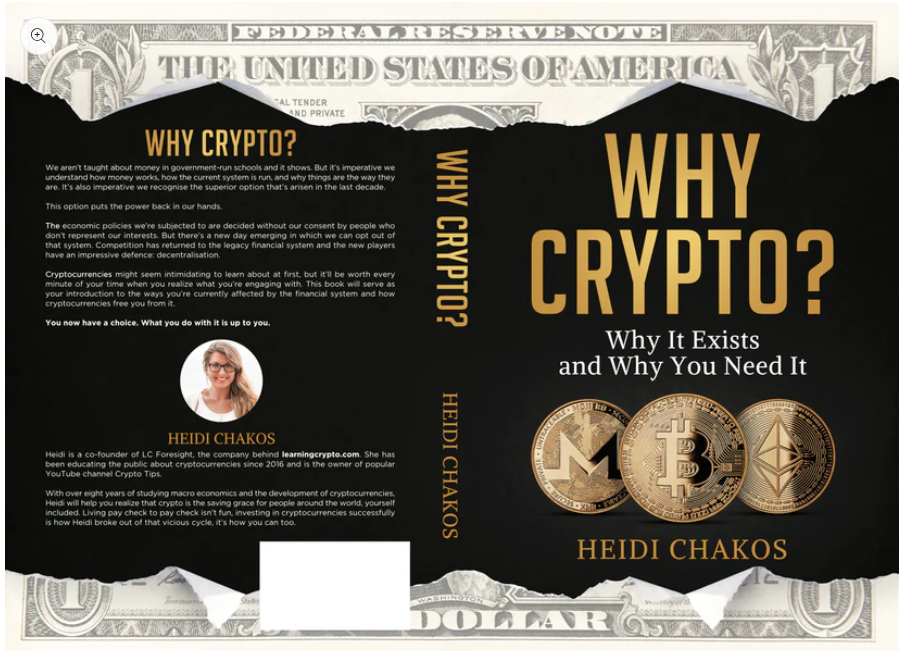 Fundamentals
5 Best Cryptocurrency Books for Beginners [A Complete Guide]
The best cryptocurrency books for beginners are Why Crypto? by Heidi Chakos, The Basics of Bitcoins and Blockchains by Antony Lewis, Cryptoassets by Chris Burniske and Jack Tatar, Digital Gold by Nathaniel Popper, and The Truth Machine by Michael Casey and Paul Vigna. Start with Why Crypto? if you are brand new, Lewis if you already grasp Bitcoin basics, and Digital Gold for Bitcoin's story.
Heidi ChakosFundamentals Fundamentals
New to Crypto? Discover the Best Crypto for Beginners and Start Investing Like a Pro
For beginners, Bitcoin and Ethereum are the best cryptocurrencies to start with: both are widely accepted, easy to buy and sell, and run on the most established networks. Litecoin, BNB and Cardano are reasonable smaller additions. A sample starter portfolio is 50% BTC, 30% ETH, 10% ADA or BNB and 10% stablecoins, bought through dollar-cost averaging and moved to a hardware wallet. Not financial advice.
Heidi ChakosFundamentals Fundamentals
Must Cryptocurrency Terms To Know In 2026 [A Complete Guide]
This A-to-Z glossary defines more than 250 cryptocurrency terms in plain language, from 51% attack, altcoin and blockchain through DeFi, gas, HODL, private key, staking and zkApps. Each entry is a short, simple definition, so beginners, investors and developers can understand what a term means before acting on it and spot common pitfalls sooner.
Heidi ChakosFundamentalsFundamentalsHow Does Blockchain Work? A Beginner's Guide
A blockchain is a shared, append-only ledger kept by thousands of independent computers instead of one company. Transactions are grouped into blocks, each cryptographically linked to the last, and the network agrees on new blocks through consensus rules like Proof of Work or Proof of Stake. Once recorded, data is practically impossible to alter, which is what lets Bitcoin and other networks run without a central authority.
2 min read/Heidi ChakosFundamentals Fundamentals
A Look into Litecoin MWEB Wallet and Privacy Extension Block
Litecoin MWEB (MimbleWimble Extension Blocks) is an opt-in privacy layer that runs alongside the main Litecoin chain. You peg LTC into MWEB to hide transaction amounts and sender and recipient addresses, then peg out when you need normal LTC again. It shipped in Litecoin Core 0.21.3 (March 2024) and requires a supporting wallet. It is not a default-private replacement for Monero.
Heidi ChakosFundamentalsFundamentalsIs Cryptocurrency Hard to Learn? A Beginner’s Guide to Mastering Crypto in 2025
Cryptocurrency is not hard to learn, but it is easy to learn in the wrong order. Most people can grasp the essentials, how Bitcoin works, what a wallet is, and how to buy and store coins safely, in a few weeks of focused reading. The difficulty comes from jargon, hype and trying to master DeFi or trading before the basics.
Heidi ChakosFundamentals Fundamentals
New to Blockchain? Here’s Your Step-by-Step Beginner's Guide To Master
A blockchain is a distributed ledger that stores data across a network of computers (nodes) instead of one central database. Transactions are grouped into blocks, each linked to the previous one by a cryptographic hash, which makes past records practically impossible to alter. Nodes verify transactions through consensus such as Proof of Work or Proof of Stake. Public chains like Bitcoin are open to anyone.
Heidi ChakosReading is the cheap part.
The guides give you the grounding. Membership gives you the live on-chain data, the indicators and the analysts, so you can apply it while it still matters.