
Here's something worth sitting with for a moment: a researcher spends years producing a study funded by public money, publishes it in a journal for free, and then anyone who wants to read it has to pay $40.
The journal keeps the profit. The reviewer who checked the work gets nothing. The data gets filed away on an institutional server that no one else can access.
That broken loop is exactly what Decentralized Science (DeSci) is trying to fix.
Using blockchain, smart contracts, and community governance through DAOs, DeSci is building a different kind of research infrastructure. One where funding is transparent, findings are open, and the people who contribute to science actually get something back.
What You'll Learn
→ Why the current scientific system has serious structural problems that go beyond individual bad actors.
→ What DeSci actually is, the technology behind it, and how it differs from traditional research.
→ How blockchain changes the way science gets funded, published, reviewed, and owned.
→ Real projects are already putting this into practice right now.
→ What the legitimate criticisms are and why DeSci isn't a guaranteed fix.
→ Why any of this matters if you're interested in where crypto is actually going.
What Is DeSci (Decentralized Science)?
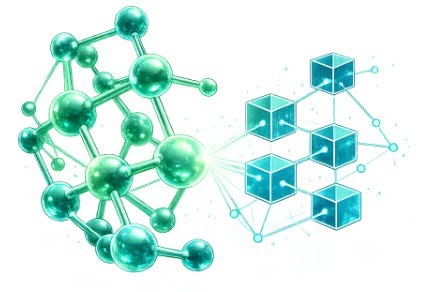
DeSci is what happens when you apply Web3 tools to scientific research. It's a movement built on the idea that science should be a public good, not a product controlled by a handful of journals, funding bodies, and universities.
The "decentralized" part is about who holds the power. Instead of a government agency or private institution deciding which research gets funded and who gets to read it, DeSci spreads that control across communities of researchers, patients, funders, and advocates.
The Core Technology Stack
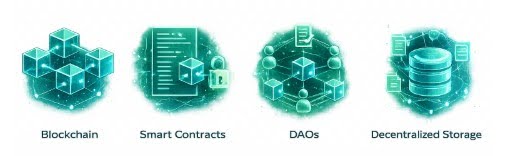
Four technologies do most of the work:
Blockchain technology creates a permanent, tamper-proof record of research data, funding decisions, and ownership. Nothing gets quietly changed or buried.
Smart contracts automate agreements, so funding releases when milestones are hit, and peer reviewers actually get paid without anyone chasing an invoice.
DAOs (Decentralized Autonomous Organizations) let communities vote on which research gets funded, replacing closed-door grant committees with transparent, on-chain governance.
Decentralized storage tools like IPFS and Arweave keep research permanently accessible. No paywalls, no servers going offline, no institution deciding to pull the plug.
Together, these tools shift who controls science and how it gets shared.
Why Traditional Science Is Broken
Imagine spending five years researching a treatment for a disease that affects millions of people. Your study gets accepted by a major journal. You hand it over, the reviewer checks it for free, and the journal publishes it behind a $40 paywall. The public, who largely funded your work through taxes, can't read it without paying. You see none of that money.
That's not a hypothetical. That's Tuesday in academic publishing.
The Funding Problem
Research funding is controlled by a small number of institutions and government bodies, which means the priorities of a few gatekeepers decide what science actually gets done. Controversial or niche areas struggle to attract grants regardless of their merit.
The Reproducibility Crisis
A large number of published studies simply can't be replicated when other researchers try. Part of the reason is that sharing raw data and negative results carries no career reward, so researchers don't bother. Journals prefer positive findings, which creates a skewed picture of what the science actually shows.
The IP Problem
A researcher makes a discovery, often at a publicly funded institution, and the patent goes to the university or a corporate partner. The person who did the work gets a salary and maybe a line of credit.
As crypto tends to do, DeSci picks a fight with the infrastructure, not the people working inside the system.
How DeSci Is Changing the Research Lifecycle
The four areas below are where the biggest structural changes are actually happening, and where you can see real projects doing real things rather than just making promises.
Funding and Governance
Traditional research funding is a slow, bureaucratic process. A scientist writes a grant proposal, submits it to a government body or private foundation, waits months for a decision, and if rejected, starts over. The whole process can eat a year before a single experiment runs.
Research DAOs work differently. Instead of a closed committee deciding behind closed doors, funding decisions happen on-chain, and anyone holding governance tokens can vote.
A researcher submits a proposal, the community evaluates it, and if it passes the vote, funds are automatically released through smart contracts when agreed milestones are hit.
In practice, this means:
Faster decisions with less bureaucracy
Transparent allocation of funds that anyone can verify on-chain
Research priorities set by communities, patients, and advocates rather than institutional agendas
Global participation, not just applicants who know the right people
It's not a perfect system. Token-weighted voting means that larger holders carry more influence, creating its own power imbalance. But compared to a system where a handful of program officers decide what science gets funded, it's a meaningful shift in who gets a seat at the table.
Publishing and Peer Review
Academic publishing has a peculiar business model. Researchers submit work for free. Peer reviewers check it for free. The journal packages it up and charges institutions thousands of dollars a year in subscription fees for access. Everyone in the chain does the work; the publisher collects the money.
DeSci attacks this from two directions.
First, decentralized storage lets researchers publish findings openly and permanently. No subscription required, no institution deciding what stays up, no paywall between the public and publicly funded research.
Second, peer review gets tokenized. Instead of reviewing papers as an unpaid professional obligation, reviewers earn tokens for their work. The incentive flips from "do it out of duty" to "do it because it's worth your time."
Research papers can also be minted as NFTs, creating a verifiable, permanent record of who produced what and when. Attribution becomes something the blockchain proves rather than something academics argue about.
Data Sharing and Reproducibility
Remember the reproducibility crisis from earlier? A big part of why studies can't be replicated is that the underlying data never gets shared. There's no reward for sharing it, no easy way to do it, and no guarantee it stays accessible if it does get published somewhere.
DeSci tackles this by making data sharing economically worthwhile. Researchers can contribute datasets to decentralized marketplaces and earn tokens when others access or use their work. The data itself gets stored immutably on-chain, with a verifiable timestamp proving what existed, when, and who produced it.
Which means in practice:
Other researchers can actually check the numbers behind a published study
Data doesn't disappear when a lab closes or a server gets switched off
Sensitive data, like genomic or clinical trial information, can still be shared with privacy controls built into the smart contract
It won't solve every reproducibility problem overnight, but it removes the main excuse for not sharing in the first place.
Intellectual Property and Ownership
In traditional science, the person who makes a discovery rarely ends up owning it. Universities and corporations capture the patents, license them out, and pocket the returns.
The researcher gets credited but not compensated in any meaningful way. Patients who need the resulting treatments have no say in how the IP gets commercialized or priced.
DeSci flips this through tokenized IP. A researcher can wrap their discovery, dataset, or license agreement into an IP-NFT, which can then be fractionalized into tokens.
This opens up ownership to the community, early funders, patient groups, and advocates, not just the institution that happened to employ the researcher at the time.
In practical terms, this means:
Communities can co-own the research they help fund
Patients with a stake in a treatment outcome can share in its commercial success
Open-source drug discovery becomes financially viable, particularly for neglected diseases where traditional pharma sees little profit motive
IP transfers and licensing happen on-chain, transparently, without lawyers negotiating in private
It's still early, and the legal frameworks around tokenized IP are being worked out in real time. But the model already exists, and projects like Molecule have been running it since 2021.
DeSci vs Traditional Science
The differences between DeSci and traditional science aren't just philosophical. They show up at every stage of how research gets done. Here's how the two models compare.
Traditional Science | DeSci | |
Funding | Government grants, institutions, VCs | DAOs, token sales, community crowdfunding |
Publishing | For-profit journals, paywalls | Open-access, decentralized storage |
Data Storage | Institutional servers, siloed | Decentralized, permanent, publicly verifiable |
Peer Review | Unpaid, slow, opaque | Tokenized, incentivized, on-chain record |
IP Ownership | Universities and corporations | Fractionalized, community-owned |
Incentives | Publications, tenure, patents | Tokens, data sharing rewards, governance rights |
The common thread running through the DeSci column is a shift away from a small number of institutions making decisions behind closed doors, toward open systems where more people have visibility and a genuine stake in outcomes.
That doesn't automatically make DeSci better in every case.
Established institutions bring expertise, accountability, and regulatory experience that DAOs are still developing. But as a framework for who gets to participate in science and who benefits from it, the contrast is hard to ignore.
Real DeSci Projects Making an Impact

These aren't whitepapers and promises. The projects below are actively funding research, moving money on-chain, and in some cases producing results that would look at home in a traditional biotech portfolio.
BTW, they're examples, not endorsements. DYOR
VitaDAO ( Longevity Research)
VitaDAO is probably the most recognised name in DeSci. Launched in 2021, it funds early-stage longevity research through community governance, with VITA token holders voting on which projects receive funding. To date, it has deployed over $10 million across more than 20 research projects, with backers including Pfizer Ventures and Balaji Srinivasan.
One project, VITA-FAST, focused on autophagy research, completed the first-ever public IP token sale, letting the community directly co-own the underlying science.
Molecule (The Infrastructure Layer)
If VitaDAO is the most visible DAO, Molecule is the plumbing that a lot of them run on. It provides the framework for wrapping intellectual property into IP-NFTs and fractionalizing them into tokens, making early-stage research fundable in ways traditional venture capital won't touch.
In 2021, Molecule facilitated the first-ever on-chain biopharma IP transfer, a moment that's become something of a landmark for the whole movement.
Bio Protocol (The DeSci Launchpad)
Bio Protocol functions as a decentralised accelerator for BioDAOs, providing seed funding, governance tools, and infrastructure to help new projects get off the ground. It attracted the first-ever DeSci investment from Binance Labs and raised over $33 million in its genesis phase.
In Q3 2025, it launched BioAgents, AI-powered on-chain research tools that can process scientific data and generate hypotheses autonomously.
The first of these, Aubrai, was built in partnership with VitaDAO and generated over 1,100 research hypotheses in its first weeks. It's an early but concrete example of where AI and DeSci are starting to overlap.
HairDAO (Niche, Patient-Driven Research)
HairDAO might sound like an unusual entry, but it demonstrates something worth paying attention to. In November 2024, it became the first DAO in history to file a scientific patent, a milestone that shows these community-driven organisations can operate with real legal and scientific credibility.
It has funded multiple early-stage hair loss treatment projects and even launched a physical product, FolliCool shampoo, with each purchase tied to governance tokens funding further research.
DeSci Labs ( Publishing Infrastructure)
DeSci Labs builds the tools that let researchers publish openly without going through traditional journals. Its platform DeSci Publish lets anyone share preprints and data for free, with permanent storage and verifiable provenance.
It's less headline-grabbing than a longevity DAO but represents the kind of quiet infrastructure work the movement needs to function at scale.
Challenges and Criticisms
DeSci is worth paying attention to, but it has genuine problems that deserve an honest look.
Token-weighted voting sounds democratic until larger holders start drowning out smaller voices, recreating the same power imbalance DeSci set out to fix
Regulatory frameworks around DAOs and tokenized IP are unresolved in most countries, and projects are largely building legal structures on the fly
Blockchain's immutability clashes with data privacy rights, including an individual's right to have personal data deleted
Most researchers aren't crypto-native, and asking a scientist to work with crypto wallets and governance tokens to access funding is a real barrier
For all the progress, total capital deployed across DeSci is still tiny compared to traditional government research budgets
Does DeSci Replace Traditional Science?
No, and that's probably the wrong way to think about it.
Universities, journals, and regulatory bodies aren't disappearing. The more likely outcome is a hybrid model where DeSci infrastructure fills the gaps traditional science leaves open, such as underfunded research areas, and paywalled findings that should be public.
For crypto, DeSci is one of the cleaner answers to the question of what blockchain actually does beyond trading. It shows that DAOs can govern real decisions, tokenized IP can work in practice, and on-chain incentives can be pointed at something with genuine social value.
If you're interested in the new wave of real-world applications coming to crypto, DeSci is just one of many developments worth understanding.
Next Generation Crypto Learning
Learning Crypto brings together live on-chain data, an AI assistant powered by real blockchain transactions, and education built by seasoned crypto educators with a track record across multiple market cycles.
The Classroom on Discord connects you with a community of serious investors who cut through the noise.
Track smart money, validate ideas with live data, and build the kind of knowledge that actually holds up when markets move.
FAQs
Is DeSci only for crypto investors?
No. Researchers, patients, advocates, and anyone frustrated with how traditional science works can participate. You don't need to be crypto-native, and many projects actively recruit traditional scientists who have never touched a wallet.
What is the difference between DeSci and DeFi?
DeFi (Decentralized Finance) applies blockchain to financial services like lending, borrowing, and trading. DeSci applies the same principles to scientific research — funding, publishing, and IP ownership. They share the same underlying technology but serve completely different purposes. Some DeSci projects do use DeFi mechanisms to fund research.
What is an IP-NFT?
An IP-NFT is a non-fungible token that represents ownership of a piece of intellectual property, such as a patent, dataset, or research license. It lets that IP be owned, transferred, and licensed on-chain, and can be fractionalized so multiple parties share in its value.
How are DeSci projects regulated?
Regulatory frameworks are still being worked out in most countries. DAOs and tokenized IP sit in legal grey areas across different jurisdictions, and most projects are navigating compliance on the fly with legal counsel. It's one of the movement's genuine weak points right now.
Is DeSci open source by default?
The philosophy leans toward openness, but it varies by project. Some are fully open source, others use tokenized IP models that balance openness with commercialization. Generally, more transparent than traditional science, but not automatically free to use.
Keep learning
- How To Buy Monero? [A Complete Guide]
- What Is a Crypto Bull Run and When Is the Next One Coming?
- Stablecoins vs Bitcoin: Which Crypto is Right for You?
- More guides in the Fundamentals hub
- Members: Ask Crypto AI, ask it any beginner question, privately