
Wondering what makes a cryptocurrency successful? The key factors are a skilled development team, clear utility, an active community, a transparent white paper, sound tokenomics and strong market metrics. This article explains each of these elements, how to check them yourself, and what separates a blue chip from the thousands of coins that fade away.
Key Takeaways
- A successful cryptocurrency relies on a strong development team, clear utility, and active community engagement to build trust and drive adoption.
- Key market metrics, such as market capitalization, trading volume, and circulating supply, are essential for assessing a cryptocurrency's health and potential for growth.
- Regulatory compliance and effective communication strategies are critical for fostering investor trust and facilitating broader adoption of cryptocurrencies.
What makes a cryptocurrency successful? The key factors
A cryptocurrency is successful when people keep using it for something real after the launch hype has gone, and when its supply, security and governance are sound enough that they keep doing so for years. Price follows those things over time; it does not create them.
The elements of a successful cryptocurrency, in rough order of importance, are:
- A credible development team and real partnerships
- Clear and valuable utility
- Robust community engagement
- A transparent and detailed white paper
- Strong market metrics: market cap, trading volume and circulating supply
- Innovative technology and security
- Positive market sentiment
- Regulatory compliance
- Real-world adoption and use cases
- Effective marketing and branding
- Price stability and growth potential
- Active and transparent communication
- Strategic tokenomics
The rest of this guide takes each of them in turn.
Strong development team and partnerships
One of the foundational elements of a successful cryptocurrency is a proficient development team. A strong team enhances a cryptocurrency's credibility, fostering trust among potential users and investors. The reputation and past successes of the team can significantly attract more interest and investment to the project, providing a solid foundation for growth.
In addition to a strong team, strategic partnerships play a crucial role. Collaborations with established organizations can improve adoption rates and provide additional technological resources and expertise. These partnerships bolster the project's capabilities and lend further credibility and trust, both essential for long-term success. Check that partnerships are real: a logo on a website is not the same as a signed integration.
Clear and valuable utility
Utility is a core determinant of a cryptocurrency's success. A cryptocurrency must offer significant value by allowing users to perform specific actions, which increases its demand. Ethereum is the prominent example of a cryptocurrency with practical utility, providing access to decentralized applications (dApps), NFTs and programmable computing.
Utility tokens are designed for specific functions within their ecosystems, giving users access to services and products. This intrinsic value can drive demand and user engagement, helped by strategic partnerships and a strong reputation. Without clear utility, a cryptocurrency tends to lose interest and value once the marketing stops.
Several cryptocurrencies offer low-cost and efficient alternatives to traditional financial systems, which enhances their appeal as a medium of exchange. These use cases show how utility tokens can provide real value, especially when compared with fiat currencies for cross-border payments.
Robust community engagement
An active and supportive community is the lifeblood of any successful cryptocurrency. Building trust in the cryptocurrency industry relies heavily on transparency and on engaged communities that support projects through the quiet periods. A dedicated community management team is crucial for fostering effective engagement and maintaining momentum.
Successful marketing in the crypto space emphasizes community collaboration and shared values rather than just transactional interactions. Bounty campaigns and airdrops are popular methods to generate interest around cryptocurrency projects. Platforms like X (Twitter), Reddit and Discord are the usual hubs for these communities.
Indicators of a strong community include high follower counts, but more importantly active, substantive interaction: people building, asking technical questions and answering them. Active participation through events and discussions boosts project visibility and attracts more users and investors, driving the project's success. Be wary of communities where the only topic is price.
Transparent and detailed white paper
A transparent and detailed white paper is essential for evaluating the potential of a cryptocurrency. It outlines the project's goals, strategies and tokenomics, providing a comprehensive overview for potential investors.
The white paper should also cover crucial fundamentals like:
- the utility of the token
- transaction speed
- scalability
- network security
- team transparency
The absence of a detailed white paper can lead to problems such as poor tokenomics and a lack of development, which significantly diminish a project's value. Reading a cryptocurrency's white paper helps you understand the project's viability and potential for success, and our guide to reading a crypto white paper shows what to look for.
Strong market metrics
Strong market metrics are indispensable indicators of a cryptocurrency's success. The key ones are market capitalization, trading volume and circulating supply, all of which provide insight into the health and potential of a cryptocurrency. These metrics are similar to those used in the stock market and help investors make informed decisions based on price and trends.
With around 19,000 cryptocurrencies already in existence by 2022, and many more since, understanding these metrics is crucial for telling the durable projects from the noise. Long-term growth in cryptocurrency prices is often linked to increased institutional investment, which in turn depends on liquidity and supply.
Market capitalization
Market capitalization is a critical metric that reflects the overall value of, and investor confidence in, a cryptocurrency. A higher market cap generally signifies greater stability and safety, much like large-cap stocks in the traditional market. This metric helps investors gauge the relative size and investment potential of a cryptocurrency.
Cryptocurrencies with higher market capitalizations are perceived as safer investments, because they indicate a certain level of maturity and resilience. That stability makes them attractive to people who want to diversify a portfolio with digital assets.
Trading volume
Trading volume is another crucial metric, indicating the liquidity and health of a market. Higher trading volume suggests greater investor interest and participation, which contributes to a healthier and more stable market. Ethereum's daily trading volume, which has regularly exceeded $14 billion in recent years, shows its active market presence and liquidity.
Liquidity is essential for price stability, because it ensures transactions can happen without significant price impact. As in the stock market, higher trading volumes tend to correlate with more stable and predictable conditions.
Circulating supply
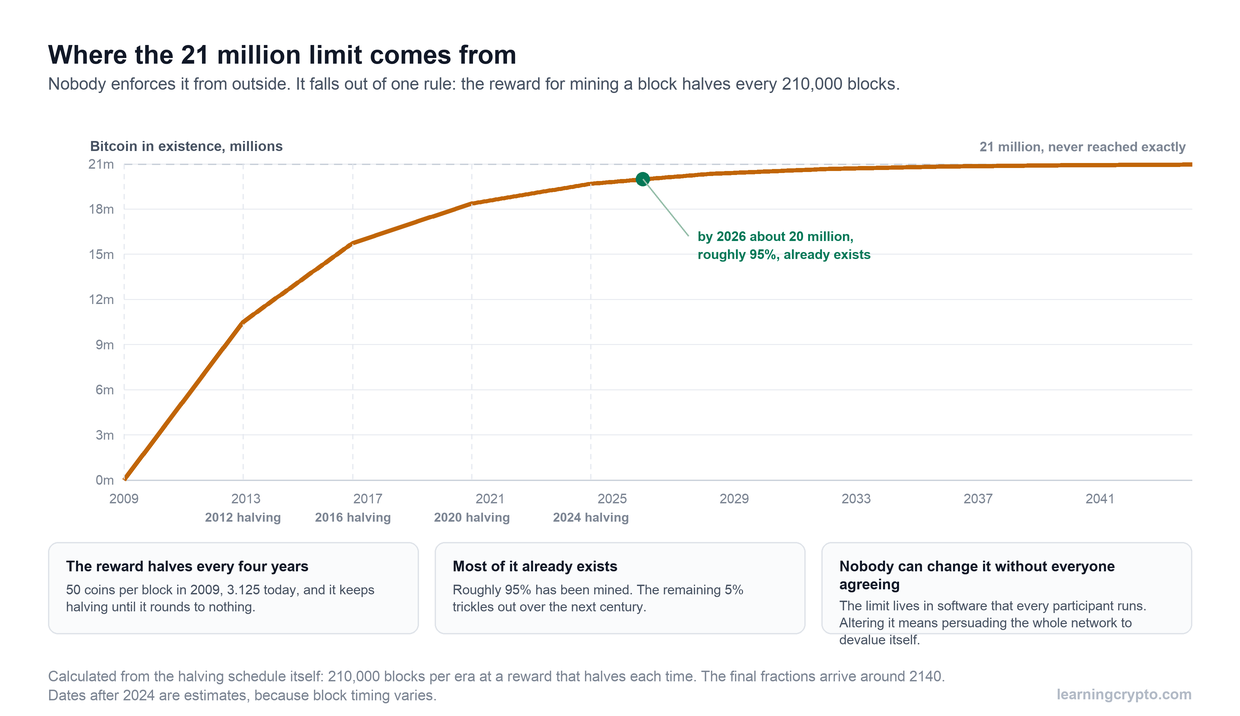
Circulating supply refers to the amount of a cryptocurrency currently being traded or held in wallets. It affects the price dynamics of a cryptocurrency by creating potential scarcity. Bitcoin's fixed supply model, with a maximum of 21 million coins, is the clearest example of how supply shapes market perception and value.
Bitcoin's last coins are expected to be mined around 2140, so its supply remains fixed and predictable. This contrasts with inflationary cryptocurrencies, where the supply can increase over time and potentially diminish value. Always check the fully diluted valuation as well as the circulating supply; a large amount of unreleased tokens still to be released to insiders is a common source of future selling pressure.
Innovative technology and security
Innovative technology and robust security are fundamental to the success of a cryptocurrency. Blockchain technology ensures data integrity and security through a decentralized ledger, reducing the risk of fraud and manipulation. Advances in consensus mechanisms, such as Proof of Stake (PoS), improve transaction verification efficiency and security.
Ethereum's transition to PoS in 2022 improved its energy efficiency and set up the scalability work that followed, and its gas fees remain a core driver of its token value. Privacy enhancements, such as zero-knowledge proofs, allow transaction validation without revealing user identities, further bolstering security. Open communication about these measures reassures users that their investments are protected.
Scalability solutions like Layer-2 protocols improve transaction throughput and address network congestion. Interoperability protocols enable communication between different blockchains, creating a more connected and versatile ecosystem. These technological advances play a significant role in the adoption and success of cryptocurrencies.
Positive market sentiment
Positive market sentiment can significantly drive up cryptocurrency prices. During bullish conditions, positive news and media coverage can lead to substantial price increases. Influencer partnerships and endorsements raise brand visibility and credibility within the crypto market.
Herding behaviour, where investors copy the actions of others, often leads to irrational buying and selling based on sentiment rather than fundamentals. Understanding sentiment indexes can provide insight into potential future movements in speculative markets, and it helps you avoid buying at the top of a hype cycle.
Regulatory compliance
Regulatory compliance is crucial for the long-term success and adoption of cryptocurrencies. The sector faces a complex picture of regulatory scrutiny, with multiple agencies asserting jurisdiction over different aspects of crypto activity, and governments continue to examine rules to manage the risks associated with volatility.
A well-structured anti-money laundering (AML) strategy is essential for crypto firms to avoid regulatory penalties. Compliance enhances trust and facilitates wider adoption, because it reassures investors and users about the legitimacy and safety of their transactions.
Real-world adoption and use cases
Real-world adoption and practical use cases are vital for a cryptocurrency's success. Some businesses accept cryptocurrencies as a payment method, which adds flexibility compared to traditional methods. Cryptocurrencies facilitate quicker and cheaper cross-border transactions, making them appealing for international trade.
Businesses increasingly use cryptocurrencies for B2B transactions, streamlining processes and reducing paperwork. Emerging markets have seen significant adoption of digital currencies because of currency instability and limited banking access. Utility tokens often allow governance participation, letting holders influence decisions within their ecosystems.
Smart contracts automate the execution of agreements, reducing reliance on third parties and the potential for fraud. These real-world applications demonstrate the transformative potential of digital currency and its growing importance across sectors.
Effective marketing and branding
Effective marketing and branding strategies are essential for the success of cryptocurrency projects. Combining traditional marketing techniques with blockchain-specific elements helps reach target audiences more effectively. Content marketing plays a crucial role, focusing on informative and educational content that engages potential investors.
Participating in crypto-related events gives projects visibility and helps build valuable industry connections. Employing SEO strategies is vital for improving the online presence of cryptocurrency projects, driving traffic and boosting engagement.
Price stability and growth potential
Price stability and growth potential are critical factors for any successful cryptocurrency. High trading volume indicates more liquidity, which helps maintain price stability. Liquidity affects how easily a cryptocurrency can be sold at its current market price, ensuring smoother transactions and less volatility.
A gradual increase in price over time, rather than exaggerated highs followed by sharp drops, is what long-term growth looks like. Cryptocurrencies with predictable supply, like Bitcoin, prevent value being diminished by inflation, making them attractive for long-term investment.
Active and transparent communication
Active and transparent communication is vital for building trust and credibility in cryptocurrency projects. Regular and honest updates about progress and challenges foster trust among investors and users. Clear communication about fees, risks and rewards helps potential investors feel informed and secure.
Engaging with the community through social media and forums demonstrates a commitment to transparency and responsiveness. A well-written white paper, kept up to date, is essential for establishing that trust in the first place.
Strategic tokenomics
Strategic tokenomics is crucial for the success of a cryptocurrency project. A well-structured tokenomic model aligns the interests of different stakeholders, ensuring long-term sustainability and value appreciation. Effective burn mechanisms, like those employed by Binance Coin, reduce supply and potentially increase market value.
Incentive models, such as those used by Uniswap, reward users who provide liquidity, fostering active participation. Bitcoin's capped supply of 21 million coins is the original successful tokenomics model, enhancing its long-term value and market perception.
Tokenomics that reward genuine community contributions strengthen members' investment in the project, driving its success. Tokenomics that mostly reward insiders, with large allocations and short lock-ups, usually do the opposite.
What makes a crypto a blue chip?
A crypto becomes a blue chip when it has survived several full market cycles, holds a large market cap with deep liquidity on every major exchange, and has a track record of working as intended under stress. Bitcoin and Ethereum are the clear examples; a handful of others are debated.
The test is not the size of the community or the speed of the chain but longevity and resilience: years of uptime, no critical failures, decentralized enough that no single company can change the rules, and enough real usage that the network would carry on if the founders disappeared. Everything else in this guide feeds into those qualities over time.
Summary
To sum up, the success of a cryptocurrency hinges on several critical factors, including a strong development team, valuable utility, robust community engagement and strategic tokenomics. Each of these elements plays a vital role in building trust, driving adoption and ensuring long-term growth and stability.
Understanding these factors can help investors and enthusiasts make more informed decisions in the ever-changing world of cryptocurrencies. With the right knowledge, you can identify promising projects and judge digital assets with confidence.
Frequently Asked Questions
Why is a strong development team important for a cryptocurrency's success?
A strong development team is crucial for a cryptocurrency's success as it enhances credibility and builds trust with users and investors. Their reputation and expertise can drive interest, investment, and ultimately lead to sustainable growth.
How does utility impact the value of a cryptocurrency?
Utility significantly enhances the value of a cryptocurrency by enabling users to access services and perform actions within its ecosystem, thereby driving demand and increasing intrinsic value. As user engagement grows, so does the potential value of utility tokens.
What role does market capitalization play in evaluating a cryptocurrency?
Market capitalization is essential in evaluating a cryptocurrency as it indicates its overall value and investor confidence. A higher market cap suggests greater stability and potential for crypto investment, helping investors make informed decisions.
Why is regulatory compliance crucial for cryptocurrencies?
Regulatory compliance is crucial for cryptocurrencies as it builds trust and reassures investors about the legitimacy of transactions, facilitating broader adoption. Additionally, it helps companies avoid penalties and ensures stability within the regulatory environment.
What are some examples of successful tokenomics models?
Successful tokenomics models include Binance Coin's burn strategy that sustains value by reducing supply, Bitcoin's capped supply enhancing long-term appeal, and Uniswap's incentive model that rewards liquidity providers, encouraging active participation. These strategies effectively promote value retention and community engagement.
What are the elements of a successful cryptocurrency?
The elements of a successful cryptocurrency are a credible team, real utility, an engaged community, a transparent white paper, sound tokenomics, strong market metrics, solid technology and security, regulatory compliance, real-world adoption and honest communication. A project does not need to be perfect on all of them, but a serious weakness in team, utility or tokenomics is usually fatal.
What makes a cryptocurrency company desirable to investors?
A desirable cryptocurrency company has a team with a public track record, a product people already use, a token whose demand is tied to that product, transparent finances and token allocation, and a clear approach to regulation. Investors also look for steady, honest communication and a treasury that can fund development through a bear market.
Keep learning
- What Does Pegging Mean in Crypto? A Comprehensive Guide
- Is Pi Network Legit or Hype? Comprehensive Expert & Honest Analysis
- What Is Exit Liquidity in Crypto and Why You Should Care
- More guides in the Fundamentals hub
- Members: Ask Crypto AI, ask it any beginner question, privately