
To mine cryptocurrency, you need specialized hardware, mining software, a wallet you control, a mining pool account and, above all, cheap electricity. This guide covers what you need to mine cryptocurrency, why each piece matters, what a crypto mining rig actually is, how to build one, and a step-by-step approach to getting started without wasting money on the wrong gear. The key takeaways:
- Successful cryptocurrency mining requires powerful hardware, specialized software, and proper setup to validate transactions and earn rewards.
- Joining mining pools enhances the chances of profitability by pooling resources and sharing rewards among miners.
- Electricity costs significantly impact mining profitability, necessitating careful management and optimization of energy consumption.
What is a crypto mining rig?
A crypto mining rig is a computer built for one job: running a mining algorithm around the clock to earn cryptocurrency. It ranges from a single ASIC box the size of a shoebox to an open-frame chassis holding six or more graphics cards, and its value is measured in hashes per second per watt rather than anything you would use a normal PC for.
A GPU mining rig, the kind most hobbyists build, typically comprises multiple graphics cards to maximize processing power. Key components of a mining rig include a motherboard with enough PCIe slots, a basic CPU, RAM, a high-wattage power supply unit, storage, PCIe riser cables, and an open frame with fans for airflow. High-end GPUs from manufacturers like AMD and NVIDIA do the actual work, and they are the biggest cost.
Over the years, mining has shifted from CPU mining to GPU mining and then to application-specific integrated circuits. ASIC miners are more power-efficient and are the preferred choice for serious Bitcoin miners because of their specialized nature. Mining with a regular PC is generally not profitable, so anyone serious about mining ends up with dedicated hardware of one kind or another.
What hardware do you need to mine cryptocurrency?
The hardware depends entirely on the coin. Mining is a race to solve a cryptographic puzzle, and each network's algorithm favours a different kind of chip. There are three categories.
CPUs. The processor already in your computer. Almost useless for most coins now, but Monero deliberately uses an algorithm (RandomX) designed to keep ordinary CPUs competitive, which makes it the usual entry point for people who want to try mining with hardware they own. Our guide on how to mine Monero walks through that setup.
GPUs. Graphics cards, the same ones used for gaming. They are flexible and can switch between many smaller proof-of-work coins, and a multi-card GPU rig is what most hobbyists build. Since Ethereum moved to proof-of-stake in 2022 the profitability of GPU mining has dropped sharply, so it is a hobby or a marginal business, not a gold mine.
ASICs. Application-specific integrated circuits built to mine one algorithm and nothing else. Bitcoin, Litecoin and Dogecoin are effectively ASIC-only; a GPU stands no chance against them. A current-generation Bitcoin ASIC costs several thousand dollars, draws 3 to 3.5 kilowatts, and sounds like a vacuum cleaner. They are the only realistic way to mine Bitcoin, and they become obsolete within a few years as more efficient models arrive. For a detailed look at parts and assembly, see our guide to building a crypto mining rig.
If you are searching for the most profitable crypto mining hardware, the honest answer is that it changes every few months with coin prices and difficulty. The latest-generation Bitcoin ASICs with the lowest joules per terahash lead on Bitcoin; for GPU coins the best card is whichever gives the most hashrate per watt at the price you can actually buy it for. Always compare on efficiency, not raw speed.
How to build a crypto mining rig
Building a crypto mining rig means assembling the parts, then setting the machine up so it runs unattended for months. The hardware is the easy half; the setup and the environment decide whether it keeps running.
- Mount the motherboard, CPU, RAM and storage on an open-air frame, and connect each GPU through a riser cable so the cards sit apart with space for airflow.
- Size the power supply with headroom of at least 20% over the total draw of the cards, and use a strong, dedicated power connection rather than a shared household circuit.
- Add cooling, such as 120mm fans across the frame, to prevent overheating. Heat is the main killer of mining hardware.
- Install the operating system (Windows, Linux, or a mining-specific OS such as HiveOS) and then the mining software.
- Connect a stable internet connection. Mining does not need much bandwidth, but it does need to be constant, since every dropout is lost work.
- Configure the miner with your pool address and wallet, then monitor temperatures and hashrate for the first few days before leaving it alone.
Properly setting up your mining rig lays the foundation for a successful and profitable operation. Our dedicated guide to building a crypto mining rig goes through parts lists and assembly in detail.
What do you need for a Monero mining rig?
A Monero mining rig is just a computer with a good CPU, because Monero's RandomX algorithm is designed to be mined efficiently on ordinary processors and to resist ASICs. To mine XMR you need a modern multi-core CPU with plenty of cache, enough RAM for the algorithm's memory requirements, the open-source XMRig software, a Monero wallet address, and a pool.
This is why Monero is the coin most people mine first: the rig you already own can do it. Profit is small at residential electricity prices, but it is the cheapest way to learn how mining works end to end. For wallet setup, the official Monero GUI wallet from getmonero.org is the standard choice, and our guide on how to mine Monero covers configuration step by step.
Understanding cryptocurrency mining
Cryptocurrency mining is the process of validating transactions on a blockchain network, an essential task that ensures the security and integrity of the blockchain. Mining Bitcoin in particular demands more than enthusiasm: it requires serious computing power, dedicated equipment and specialized software to solve cryptographic puzzles.
The primary purpose of Bitcoin mining is to validate transactions and add new blocks to the blockchain. Bitcoin transactions are validated through blockchain technology, eliminating the need for intermediaries and ensuring security through decentralization and cryptography. These transactions cannot be reversed or cancelled, which further distinguishes them from conventional banking transactions.
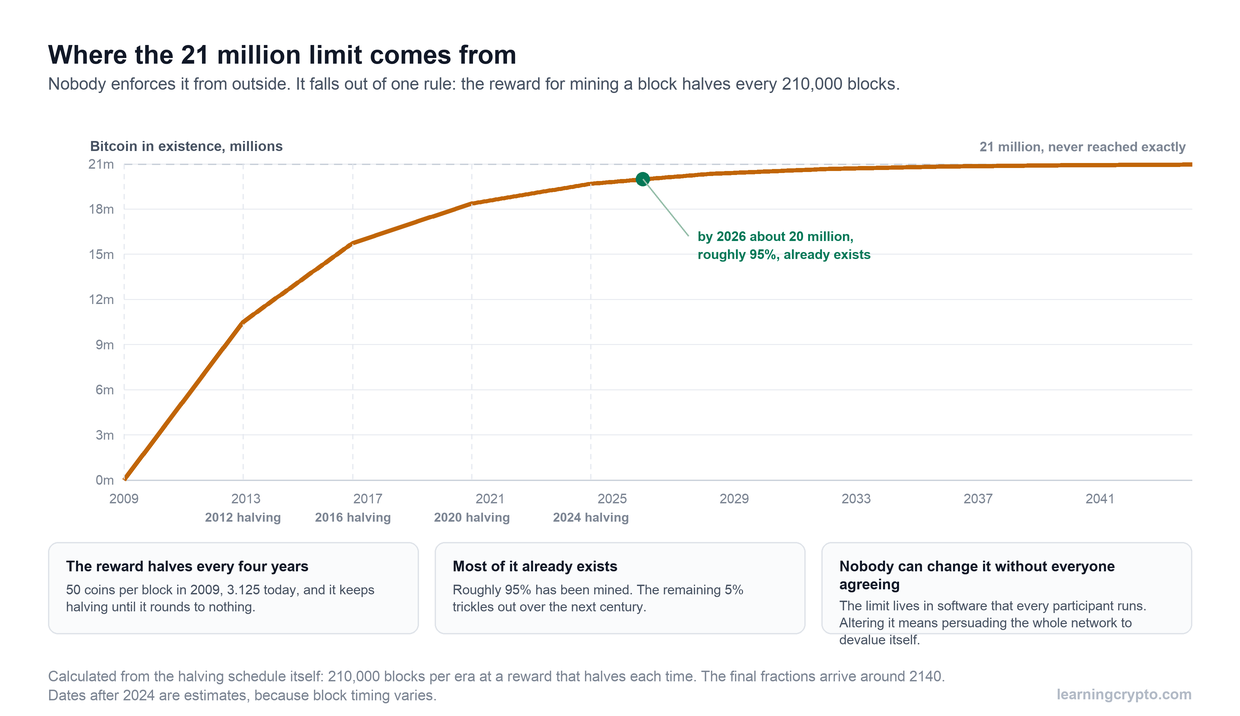
Miners are rewarded with new coins for their efforts. The Bitcoin network creates a new block approximately every ten minutes, and the reward for each block is halved roughly every four years: it was 6.25 bitcoins until the April 2024 halving and is 3.125 bitcoins now, plus the transaction fees in the block. This process secures the network and introduces new bitcoins into circulation at a predictable rate.
The increasing difficulty of mining puzzles and the competition among miners mean that having the right tools and strategies is essential. Choosing the right cryptocurrency to mine and understanding how mining pools work can significantly improve your chances of profitability. Pooling resources allows individual miners to combine their computing power, with rewards shared proportionally, though it also brings centralization risks to the blockchain.
Mining software and a wallet you control
Mining software connects your hardware to the network or pool and manages the work. ASICs ship with firmware and a web dashboard; GPU and CPU miners use programs such as XMRig, T-Rex, lolMiner or the classic CGMiner, chosen according to the algorithm. Download only from the project's official repository, because fake miners bundled with malware are common, and expect your antivirus to complain about legitimate ones too.
Other popular options include EasyMiner, designed for users without a technical background, and MultiMiner, which offers an intuitive interface for newcomers. For experienced miners, BFGMiner and CGMiner provide advanced features and customization options. Whatever you choose, the software must be compatible with your hardware and the specific blockchain you aim to mine.
You also need a wallet address to receive payouts, and it should be one where you hold the keys rather than an exchange deposit address. Payouts arrive frequently and add up, so treat the wallet as the vault it is. Our step-by-step on how to use a cold wallet covers moving accumulated rewards into secure storage.
Wallets for storing mined cryptocurrency
There are three broad types of wallet: software wallets, hardware wallets, and paper wallets. Each offers a different balance of security and convenience, so choose based on how often you need to move coins. For Bitcoin mining, having at least one secure Bitcoin wallet you control is essential, and securing it protects your mined coins from theft.
For other coins, use the project's own wallet where one exists: the Dogecoin Core wallet for Dogecoin mining earnings, or the Monero GUI client for storing mined Monero.
Watch: What Is Monero (XMR): Complete Beginners Guide
Choosing a cryptocurrency to mine
Not all cryptocurrencies are created equal when it comes to mining. Some, like Monero, have algorithms that resist ASIC mining, making them accessible to CPU and GPU miners. Choosing a coin involves weighing mining difficulty, the block reward, and the coin's market value against what your hardware can do.
Research the profitability of different coins before committing. While Bitcoin remains the most popular choice, other cryptocurrencies might offer better opportunities depending on your setup and goals, and spreading your effort across more than one coin reduces the risk of one of them becoming unmineable overnight. Our updated list of the most profitable cryptocurrencies to mine includes the hardware and power assumptions.
Should you join a mining pool?
Yes, unless you are running an industrial operation. Mining solo on Bitcoin with a single machine means you might wait years, or forever, for a block. A pool combines the hashing power of thousands of miners and pays each member a small, steady share of every block the pool finds, minus a fee of typically 1 to 3%.
Pools differ in their payout schemes. PPS (pay per share) gives a fixed amount per unit of work and is the most predictable; PROP (proportional) splits each block reward according to the shares submitted in that round; PPLNS (pay per last N shares) pays out only when the pool finds a block and rewards loyal, continuous miners slightly better. Pick a large, established pool with a public fee schedule and a payout threshold you will actually reach. For a coin like Dogecoin, a pool lets a small miner benefit from far larger processing power than they own.
Joining is simple: create an account with the pool, point your hardware at the pool's address, and assign worker names to each device so you can track them. Concentration of hashrate in a few big pools is a genuine concern for network decentralisation, so spreading between pools is a small contribution to the network's health.
Mining pools do come with some concerns, as Heidi covered in this video
How much does electricity matter?
It is the single factor that decides whether you make or lose money. Hardware is a one-off cost; electricity is a bill that arrives every month for as long as the machine runs. A 3.5 kW Bitcoin ASIC running around the clock uses 84 kWh a day. At $0.10 per kWh that is $8.40 a day, or about $250 a month, before you have earned a satoshi. At $0.20 per kWh, which is normal for residential rates in much of the US and Europe, most machines run at a loss.
The energy consumption of the whole Bitcoin network is often compared to that of entire countries, which tells you how competitive the business is. Profitable home miners usually have one of the following: a very cheap power contract, time-of-use pricing they can schedule around, solar or hydro they own, or a use for the waste heat, such as heating a workshop in winter. Proper ventilation reduces unnecessary power spent on cooling, and government incentives for renewable energy can lower the bill further.
Cooling and noise are the other practical problems. An ASIC needs a garage, a shed or a hosting facility, not a bedroom. Run the numbers before you buy, and if the maths does not work our comparison of staking vs mining explains the alternative. The Bitcoin hub has more on how mining secures the network.
Calculating mining profitability
Calculating whether mining will be profitable is a critical step before spending anything. Tools like Bitcoin mining calculators estimate potential earnings based on your hardware's hashrate and power draw, your electricity price, the current difficulty and the coin's price.
The factors that move the result are electricity consumption, hardware efficiency, competition from other miners, and the price of the coin. All of them change, so update your calculations regularly as prices and difficulty move. A rig that was profitable in a bull market can lose money a few months later without anything changing on your side.
Monitoring and maintaining your mining operation
Effective monitoring and maintenance are key to a successful mining operation. Software like Awesome Miner lets you manage and monitor multiple mining rigs from one dashboard, supports various Antminer models, and provides automation to address issues quickly.
Automation features, such as triggers that reboot a rig or switch mining pools when something goes wrong, keep the operation running while you sleep. Regular maintenance, from cleaning dust out of fans to updating firmware, significantly improves efficiency and the lifespan of the hardware.
Is cloud mining a good alternative?
Cloud mining enables users to mine cryptocurrencies remotely without personal hardware by renting hashing power from a company's data centre. In practice it is a minefield. Be aware that many cloud mining offers are scams, and even honest contracts tend to be priced so that the operator keeps most of the profit.
It also centralizes mining and undermines the decentralized ethos of cryptocurrency, since you are trusting a company rather than running a machine. Only consider an operator with a verifiable physical facility and a long public track record, and assume you may lose what you pay.
Legal and regulatory considerations
The legal and regulatory picture for cryptocurrency mining varies significantly across the globe, and it affects how miners can operate. In the United States, cryptocurrencies are not legal tender, but mining is legal and exchanges must comply with federal regulations; mined coins are taxable income at their value when received. Other countries, like Japan and Australia, have specific frameworks that treat crypto as property and impose capital gains tax, while a few countries have banned mining outright.
Check your local rules on electricity use, noise, and business registration as well as tax. Complying with local regulations keeps a mining operation legal and sustainable.
Common challenges in crypto mining
Crypto mining comes with its own set of challenges. Increased competition and rising difficulty make it hard for small miners to compete profitably, hardware becomes obsolete quickly, and coin prices can fall faster than you can pay off the equipment. Miners also carry the responsibility of verifying transactions honestly, which keeps the blockchain secure.
Addressing these challenges requires planning and adapting to technological advances and market conditions. Joining a mining pool, buying efficient hardware and keeping electricity costs low are the three levers that matter most.
Scaling up your mining operation
Scaling up from a home setup to a larger operation involves significant investment in hardware and infrastructure. Larger operations need dedicated facilities with enhanced cooling and power supply, often a commercial electricity contract, and a plan for the heat and noise that dozens of machines produce.
Tools like Awesome Miner can manage many rigs and pools from a single dashboard, which makes larger operations manageable. Scaling also multiplies the problems, though: more electricity, more heat, more failures to fix. Careful planning and efficient management are what separate a profitable farm from an expensive space heater.
Step-by-step: how to start mining
- Choose a coin and check its algorithm, so you know whether you need a CPU, GPU or ASIC.
- Calculate your electricity cost per kWh and run a profitability calculator before spending anything.
- Buy or build the hardware, and plan for cooling, airflow and noise.
- Set up a wallet you control and note the receiving address.
- Register with a mining pool and configure the software with the pool address and your wallet.
- Monitor temperatures, hashrate and payouts, and log every payout's date and dollar value, because in the US mined coins are taxable income when received. A portfolio tracker makes that record painless.
Summary
Successful mining combines the right hardware, efficient software and strategic planning. From building your mining rig to joining a pool and managing electricity costs, each step matters for profitability. Understanding the legal and tax rules, and calculating profitability honestly before you buy, keeps your mining venture sustainable and compliant.
Continuous learning and adaptation are what keep miners ahead in a competitive business. Curious about mining but don't know where to start? Our crypto club community has exclusive tips, step-by-step guides and expert insights.
FAQ
What is the primary purpose of Bitcoin mining?
The primary purpose of Bitcoin mining is to validate transactions and add new blocks to the blockchain, maintaining the security and integrity of the network. Miners commit electricity and hardware to the job, which makes rewriting history prohibitively expensive, and in return they earn newly issued Bitcoin plus transaction fees as a reward for their work.
What are the different types of mining hardware?
The three types of mining hardware are CPUs, GPUs, and ASIC miners, each with distinct efficiency and power consumption. CPUs suit Monero, GPUs suit a range of smaller coins, and ASICs dominate Bitcoin and Litecoin. Selecting the hardware that matches your target coin's algorithm and your electricity price is the most important decision in the whole process.
How can I reduce electricity costs in Bitcoin mining?
Reduce costs by choosing the most efficient hardware per unit of hashrate, using time-of-use pricing to run during off-peak hours, negotiating a commercial power contract if your scale allows, and exploring solar, hydro or other renewable sources. Capturing the waste heat for a home or workshop turns part of the electricity bill into something useful.
What are the benefits of joining a mining pool?
Joining a mining pool turns a lottery into a steady income by combining computational resources with other miners and sharing every block reward the pool finds. It produces a predictable, frequent payout instead of a rare jackpot, reduces the risk of earning nothing for months, and makes small-scale mining viable at all.
What is cloud mining, and is it a good alternative?
Cloud mining lets you rent hashing power from a remote data centre instead of running hardware yourself, but the sector is full of scams and honest contracts rarely pay much after fees. It also undermines the decentralized ethos of cryptocurrency, so it is not a reliable alternative for anyone who wants transparency and security in mining.
What do I need to mine XMR (Monero)?
You need a modern multi-core CPU, enough RAM for the RandomX algorithm, the XMRig mining software, a Monero wallet address and a mining pool. No ASIC or graphics card is required, which is why Monero is the easiest coin to start mining with the computer you already own.
What is the most profitable crypto mining hardware?
For Bitcoin, the most profitable hardware is the newest generation of ASIC with the lowest energy use per terahash, because efficiency decides profit once electricity is factored in. For GPU-mined coins it is whichever card gives the best hashrate per watt at a price you can actually buy it for. The answer changes with every price move and difficulty adjustment, so recheck a profitability calculator before buying.
Keep learning
- Comprehensive Guide to Bittensor Wallets: Securing Your TAO
- 8 Best Crypto Movies to Watch in 2025
- More guides in the Bitcoin hub
- Members: Satoshi Indicator, a daily Bitcoin DCA signal for members